News you may have missed #681

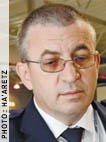
Vladimir NesteretsBy IAN ALLEN | intelNews.org |
►►Mossad ‘bolsters activity in Tunisia’. The Mossad has bolstered its activity in several Tunisian cities since the start of the revolt that ousted President Zine El Abidine Ben Ali last January, Tunisian magazine Al-Musawar has reported. According to the magazine, the Israeli intelligence agency has been working with its US-based counterpart, the CIA, to revive its spy network in post-revolution Tunisia.
►►US ‘used quake’ to send Special Forces into Pakistan. The US Pentagon used the Kashmir earthquake of 2005 to send operatives from the Joint Special Operations Command (JSOC) into Pakistan, reveals a new book by D.B Grady and Marc Ambinder, entitled The Command: Deep Inside the President’s Secret Army. The authors claim that dozens of CIA operatives and contractors entered Pakistan using valid US passports and posing as construction and aid workers, thus avoiding the requisite background checks from Pakistan’s Inter-Services Intelligence spy agency.
►►Russian officer convicted of spying for CIA. A Russian military court last week convicted Lt. Col. Vladimir Nesterets of providing the CIA with secret information on Russia’s new intercontinental ballistic missiles and sentenced him to 13 years in prison. The officer pleaded guilty to passing on that classified information in exchange for money, said the Federal Security Service, the main agency that replaced the Soviet-era KGB. Russia’s RIA Novosti news agency quoted the officer’s wife, Irina, as saying she could not understand the guilty plea because her husband had told her he did nothing wrong and had not betrayed his country.

News you may have missed #678

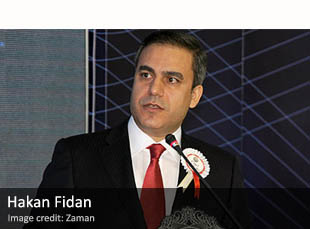
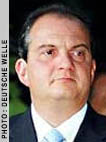
Hakan FidanBy IAN ALLEN | intelNews.org |
►►Russia ‘exposed 199 spies’ last year. Outgoing Russian President Dmitry Medvedev said Tuesday that Russian counterintelligence had exposed 199 spies working for foreign powers last year. He was speaking at a meeting of the Federal Security Service. He also urged the FSB to “take extra measures to protect Russian interests” and reinforce the country’s borders in the Arctic.
►►Germany expels four Syrian diplomats. As tensions mount between Western nations and Syria, the German authorities said Thursday that they had ordered the expulsion of four Syrian diplomats after arresting two men accused separately of spying on opponents of President Bashar al-Assad. The four diplomats —three men and a woman who were not identified by name— have been given three days to leave Germany.
►►Turkey summons spy chief over talks with Kurds. Prosecutors have summoned Hakan Fidan, head of Turkey’s National Intelligence Agency (MİT), as well as his predecessor, Emre Taner, for questioning, over reports of secret peace talks in Norway between Turkish intelligence agents and Kurdish militant leaders. Predictably, MİT has appealed the move.

Ex-KGB spy Litvinenko was working for MI6 when he died

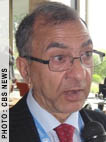
Alexander LitvinenkoBy JOSEPH FITSANAKIS | intelNews.org |
Confidential documents leaked to the British press show that a leading medical examiner wants to reinspect the 2006 death of a former Soviet intelligence officer, in light of new revelations. Alexander Litvinenko was an employee of the Soviet KGB and its successor organization, the FSB, who in 2000 defected with his family to the United Kingdom. He soon became known as an increasingly vocal critic of the administration of Russian President Vladimir Putin. In 2006, Litvinenko came down with radioactive poisoning soon after meeting a former colleague, Andrey Lugovoy, in a London restaurant. The latter is believed by British authorities to have assassinated Litvinenko “with the backing of the Russian state”. Although much of the case remains shrouded in mystery, an important new clue was added to the equation in October, when Litvinenko’s widow publicly admitted that her husband had been a paid employee of British intelligence services MI5 and MI6. Marina Litvinenko told British tabloid newspaper The Mail on Sunday that Alexander had advised both agencies on “combat[ing] Russian organized crime in Europe”. She had previously denied rumors that her husband had been working for British intelligence when he was killed —ostensibly by the Russian government. The revelation appears to have prompted a British coroner to request that the medical investigation into Litvinenko’s death be reopened. Documents leaked to The Mail on Sunday appear to show that Andrew Reid, a coroner at St Pankras Hospital in London, has formally requested that both MI5 and MI6 release all of their internal files on Litvinenko, in the context of a new investigation. Read more of this post

News you may have missed #646

Syed Ghulam Nabi Fai

Syed Fai

►►Analysis: Reorganizing Colombia’s disgraced spy agency. One former director of Colombia’s Administrative Department of Security, or DAS, has been convicted of conspiring to kill union activists. A former high-ranking manager is accused of collaborating with death squads to assassinate a television humorist. Dozens of agents have been implicated in what prosecutors call a systematic effort to illegally spy on the Supreme Court and opposition politicians, which some former DAS agents said was done with US equipment and funding. The new man in charge, however, Ricardo Giraldo, is an affable bankruptcy lawyer and former university professor, and his role is decidedly different from his predecessors’: namely to dismantle the agency.
►►Russian site snubs FSB request to block opposition networking. Russia’s top social networking site on Thursday defiantly rejected a request by the Federal Security Service to block opposition groups from using it to organize street protests accusing the authorities of rigging this week’s election. Over 45,000 people in Moscow alone have pledged on Facebook and the Russian site, VKontakte, to join fresh protests on Saturday against the 12-year rule of Vladimir Putin and the victory of his United Russia party in last Sunday’s parliament vote.
►►American citizen admits he took Pakistan spy money. Ghulam Nabi Fai, who is accused of working in Washington for Pakistan’s Inter-Services Intelligence (ISI) directorate, to lobby for Kashmiri independence, has pleaded guilty to secretly receiving millions of dollars from Pakistan’s spy agency in violation of US federal laws.

Russian spy agencies accused of hacking election monitor sites

FSB officer

FSB officer

By JOSEPH FITSANAKIS | intelNews.org |
Election monitors have accused Russia’s domestic intelligence service of launching a series of coordinated hacking attacks on opposition websites, timed to coincide with last Sunday’s elections. On that day, Russians voted —as they have done every five years since 1991— to determine the composition of the Duma, the country’s lower house. Election results show an unprecedented 14 percent drop for Prime Minister Vladimir Putin’s United Russia party, coupled with an equally sharp rise in the Communist Party share of the votes, which doubled to about 20 percent. But the election drew strong condemnations from international election monitors, including the Organization for Security and Cooperation in Europe, which said that the campaign was “slanted in favor of the ruling party”. Now Russian opposition organizations are accusing the government of launching a series of “massive” distributed denial of service (DDoS) attacks against their websites on the night of the elections. Websites affected include the prominent opposition magazine The New Times, the Ekho Moskvy radio station, the Russian arm of the Livejournal blogging website, business daily Kommersant, popular online news portal Slon.ru, as well as the Western-financed political watchdog group Golos. All of these outlets were simultaneously attacked on Sunday evening; their servers were bombarded with data that overwhelmed their computer systems and eventually knocked them offline. Liliya Shibanova, who directs Golos, told a news conference in Moscow late on Sunday night that the organization’s Internet and telephone systems, including an election violation hotline, had been blocked. She claimed that only Russia’s Federal Security Service (FSB), successor to the domestic intelligence wing of the Soviet-era KGB, had the resources required to launch such a massive attack. Read more of this post

News you may have missed #609

Ilan Grapel

Ilan Grapel

►►Questions over Chinese spy hang over Putin visit. The arrest of a Chinese spy in Moscow has cast a cloud over Vladimir Putin’s two-day visit to Beijing. Tong Shengyong was arrested last October for allegedly trying to buy plans to the Russian S-300 anti-aircraft missile system. But perplexingly, the news of his arrest only emerged last week, in what appears to have been a deliberate leak by Russia’s Federal Security Service (FSB).
►►Egypt steps up charges against suspected Israel spy. Egypt’s State Security Prosecutor has added additional criminal offenses against alleged Israeli spy Ilan Grapel. Meanwhile, there are indications that Egypt seeks the release of 78 Egyptian prisoners held in Israeli jails in return for Grapel. Israel may agree with the proposal.
►►CIA to be last out of Afghanistan. US Special Forces and the CIA are girding for the moment when Afghanistan’s security rests once again with them, working together with Afghan forces against the Taliban. Recent remarks from the White House suggest the CIA and special operations forces will be hunting al-Qaida and working with local forces long after most US troops have left.

Russia reveals arrest of Chinese national on spy charges

FSB officer

FSB officer

By JOSEPH FITSANAKIS | intelNews.org |
Russian counterintelligence officials have revealed the arrest of an alleged Chinese intelligence operative, who has reportedly been imprisoned in Moscow for nearly a year and is awaiting trial on espionage charges. Russia’s FSB domestic intelligence agency said on Wednesday that it arrested Chinese national Tong Shengyong on October 28 last year. In a press statement, the FSB said that Tong’s professional cover was that of an “interpreter for official delegations”, but that in reality he was operating in Russia on an assignment from China’s Ministry of Public Security. The Ministry is the principal police and security authority of the People’s Republic of China, and is considered one of the world’s largest intelligence organizations. The FSB claims that Tong allegedly used his high-level contacts in Moscow and elsewhere to routinely solicit Russian nationals, offering to purchase from them information relating to Russian missile systems. According to the FSB, Tong was particularly interested in the S-300 long-range surface-to-air missile system, which developed for the Soviet Air Defense Forces as protection against American aircraft and cruise missiles. The Soviet-era system has since been replaced by the more advanced S-400, but China, which has historically been Russia’s largest weapons procurer, is already in possession of several S-300s, which it purchased from Moscow in the 1990s. Beijing is therefore desperate to access classified manuals that would allow it to repair and modify S-300s currently in its possession, without giving in to Russia’s insistence to upgrade to the post-Soviet S-400. Moreover, during the past decade, China has begun developing its own missile system technology, which some say is loosely based on Russian blueprints. Read more of this post

Spy archivist discusses fate of Swedish diplomat abducted by KGB

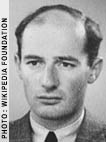
Raoul Wallenberg

Raoul Wallenberg

By JOSEPH FITSANAKIS | intelNews.org |
The fate of Swedish diplomat Raoul Wallenberg, who was abducted by Soviet intelligence officers in the closing stages of World War II, is one of the unsolved mysteries of 20th century espionage. The 33-year-old Wallenberg was a shrewd businessman who, in the summer of 1944, was posted as Sweden’s ambassador in Budapest, Hungary. During his time in Budapest, he was able to save over 20,000 Hungarian Jews from the Nazi concentration camps, by supplying them with Swedish travel documentation, or smuggling them out of the country through a network of safe houses. He is also reported to have managed to dissuade German military commanders from launching an all-out attack on Budapest’s Jewish ghetto. But Wallenberg was also an American intelligence asset, having been recruited by a US spy operating out of the War Refugee Board, an American government outfit with offices throughout Eastern Europe. In January of 1945, as Soviet forces descended on Axis ally Hungary, Moscow gave orders for Wallenberg’s arrest on charges of spying for Washington. The Swedish diplomat disappeared, never to be seen in public again. Some historians speculate that Joseph Stalin initially intended to exchange Wallenberg for a number of Soviet diplomats and intelligence officers who had defected to Sweden. But according to official Soviet government reports, Wallenberg died of a heart attack on July 17, 1947, while being interrogated at the Lubyanka, a KGB-affiliated prison complex in downtown Moscow. Despite the claims of the official Soviet record, historians have cited periodic reports that Wallenberg may have managed to survive in the Soviet concentration camp system until as late as the 1980s. Earlier this week, Lt. Gen. Vasily Khristoforov, Chief Archivist for the Russian Federal Security Service (FSB), one of two successor agencies to the old Soviet KGB, gave an interview about Wallenberg to the Associated Press. Read more of this post

Did Russian secret services avert military coup in Sverdlovsk?

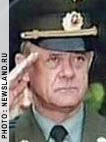
Vladimir Kvachkov

V.V. Kvachkov

By JOSEPH FITSANAKIS | intelNews.org |
The Russian intelligence services arrested members of an illegal paramilitary unit that planned an armed insurrection in one of central Russia’s biggest cities. According to reports from Yekaterinburg, the administrative capital Russia’s Sverdlovsk province, leaders of the alleged paramilitary unit hoped that their action would lead to a nationwide rebellion, eventually resulting in a military coup in Moscow. Several people were arrested by security forces of the FSB, Russia’s Federal Security Service a few days before August 2, the day when the alleged insurrection was to have taken place. Sources from the FSB say that the plotters were working on a four-step plan of action. First, they planned to attack the FSB’s Sverdlovsk district command center, the Russian Ministry of the Interior’s regional headquarters, as well as the offices of Russia’s Ministry of Emergency Situations, and capture or kill all senior staff. They would then blow up key power stations around Yekaterinburg, effectively shutting down the city’s electricity network. Taking advantage of the widespread confusion among the regional security apparatus and the population, they would move to seize local weapons depots. The alleged insurrection plan called for distributing the seized weapons among members of Yekaterinburg’s urban poor, in an attempt to widen the base of the rebellion. The plan’s final step viewed a widening insurrection in Yekaterinburg as a spark that would trigger similar Libya-style uprisings across Russia, resulting in a coup that would depose the current government in Moscow and replace it with a transitional military regime. According to news reports, the FSB arrested several leaders of the alleged insurrection, including former members of the Russian military, who are said to be linked with the People’s Militia, an insurrectionist group composed by former military and intelligence officials, led by Colonel Vladimir Kvachkov. Kvachkov, a retired Colonel in the Russian Military Intelligence Directorate (GRU), was arrested in December of 2010 on charges of planning “an armed rebellion for the forceful seizure of power in Russia”. Read more of this post

Russians ‘uncovered plan to kill Greek prime minister’

Kostas Karamanlis

K. Karamanlis

By JOSEPH FITSANAKIS | intelNews.org |
A Russian counter-surveillance team operating in Athens in 2008 confronted a foreign team from “a country allied to Greece”, which planned to kill Kostas Karamanlis, then Greece’s Prime Minister. The revelation, published in the current issue of Greek weekly newsmagazine Epikera, is allegedly based on a Russian briefing contained in a classified document authored by the Greek National Intelligence Service (EYP). According to the document, the assassination plot was code-named Pythia and was hatched by the intelligence agency of “a country allied to Greece”. It was aimed at preventing Athens from signing on to a series of energy pipeline deals with Moscow. The 19-member Russian counter-surveillance team mentioned in the EYP document had allegedly been set up a few months earlier by the FSB, Russia’s primary foreign intelligence agency. The team was deployed after the Russians realized that that Prime Minster Karamanlis’ telephone calls with Russian leader Vladimir Putin were being intercepted by foreign spies, at least two of which were allegedly British citizens. According to the Epikera article, between April 20 and 25, while shadowing the Greek Prime Minister in the Nea Makri area, just north of Athens, a four-member Russian counter-surveillance team faced off two spy operatives of “a country allied to Greece”. Read more of this post

Expelled Israeli spy was after Russian-Arab arms deals, says FSB

Vadim Leiderman

Vadim Leiderman

By IAN ALLEN | intelNews.org |
The military attaché at the Israeli embassy in Moscow, who was unceremoniously expelled by the Russian government last week, was allegedly gathering intelligence on Russian arms exports to the Arab world. The FSB, Russia’s foremost counterintelligence agency, said Soviet-born Vadim Leiderman, a colonel in the Israeli army, was “caught red-handed” during a sting operation in Moscow, which is said to have occurred on May 12. His arrest led to the first expulsion of an Israeli diplomat from Russia in over two decades. Commenting on the case, a spokesperson from Russia’s Ministry of Foreign Affairs said that the Kremlin had intended to conceal Leiderman’s expulsion from the media, as a “gesture of goodwill” to Israel. But its effort to keep the operation secret collapsed after Russia’s RBC TV aired a surveillance video of Leiderman’s arrest by a group of FSB officers, as the seemingly unsuspecting Israeli diplomat was dining with another man at an exclusive Moscow restaurant. Read more of this post

Did FSB leak Russian double spy’s name to the media?

SVR seal

SVR seal

By JOSEPH FITSANAKIS | intelNews.org |
The revelation that a double agent betrayed the ten Russian deep-cover spies, who were arrested in the United States last summer, may have been leaked to the media as part of a turf war between two rival Russian spy agencies. On November 11, Russian newspaper Kommersant disclosed that a senior officer in Russia’s Foreign Intelligence Service (SVR) had defected to the United States shortly before the arrest of ten Russian deep-cover spies by the FBI, on June 27, 2010. The paper identified the alleged double agent as “Colonel Shcherbakov”, believed by veteran KGB officer Oleg Kalugin to be Aleksandr Vasilyevich Shcherbakov. The Kommersant disclosure was later confirmed by no other than Russian President Dmitry Medvedev. But who leaked Shcherbakov’s name to Kommersant, and why? According to Pavel Felgenhauer, military and intelligence correspondent for Russia’s Novaya Gazeta newspaper, the leak originated from within the Russian intelligence establishment. Specifically, Felgenhauer suggests that it was Russia’s Federal Security Service (FSB) that leaked the information to the media, in an attempt to score points against the SVR. Read more of this post

News you may have missed #439

  • Book critical of Russian FSB published. In a new book entitled The New Nobility, Russian journalists Andrei Soldatov and Irina Borogan claim that the Russian Federal Security Service (FSB) is less repressive but ultimately more dangerous than its predecessor, the Soviet KGB.
  • Senior-most North Korean defector dies. Hwang Jang-yop, the theoretician behind North Korea’s Songun and Juche state doctrines, who defected to South Korea in 1997, has died at his home in Seoul, aged 87. Last April, South Korea charged two North Korean government agents with attempting to assassinate Hwang.
  • ‘Low morale’ leads MI6 spies to apply for Australian jobs. More than 50 spies at Britain’s MI6 have allegedly responded to a recruitment drive by the Australian Secret Intelligence Service (ASIS). According to insiders, there has been growing uncertainty among MI6’s 2,600 staff over looming budget cuts and inquiries into alleged complicity in the torture of terrorism suspects.

‘Lord of War’ weapons smuggler enjoys Russian protection

Viktor Bout

Viktor Bout

By JOSEPH FITSANAKIS | intelNews.org |
The case of notorious arms smuggler Viktor Bout is well known. Born in Dushanbe, Soviet Tajikistan, in 1967, Bout served in the GRU (Soviet military intelligence) until the collapse of the USSR, at which point he began supplying weapons to shady groups, ranging from Congolese rebels and Angolan paramilitaries to the Taliban and al-Qaeda. In March of 2008, Bout, known as ‘Lord of War’, was finally arrested by the Royal Thai Police, after a tip by US Drug Enforcement Administration (DEA) officers. The latter had managed to lure Bout to Thailand by pretending to be Colombian FARC arms procurers. Recently, Washington scored a second victory by convincing Thai authorities to extradite Bout to the United States on terrorism charges. Presumably, Bout will be tried as an arms smuggler acting on his own accord. But is this right? Read more of this post

Russia, Romania, expel diplomats in spy tit-for-tat

Gabriel Grecu

Gabriel Grecu

By IAN ALLEN | intelNews.org |
The Russian and Romanian governments have expelled each other’s diplomats in a spy scandal that made headlines in both countries last week. The spy affair began last Monday, August 16, when Russia’s Federal Security Service (FSB) announced the arrest of a Romanian diplomatic official, who was allegedly caught in the act of espionage. The official was later named as Gabriel Grecu, who was First Secretary of the Political Department of the Romanian embassy in Moscow. According to a laconic FSB press release, Grecu was detained while “attempting to solicit classified military information from a Russian national”. According to Russian media, the Romanian official was found “in possession of various pieces of espionage equipment”. Read more of this post