News you may have missed #571 [updated]

Markus Wolf

Markus Wolf

►►East German spymaster’s widow loses pension battle. Andrea Wolf, The widow of Markus Wolf, the shadowy spymaster of communist East Germany, lost a court battle on Monday to reclaim his honorary pension. Dubbed “The Man Without a Face” because Western intelligence services long lacked even a photograph of him, Wolf directed the General Intelligence Administration, the foreign intelligence division of East Germany’s Stasi. He died in 2006, at the age of 83.
►►Dominica government officials deny spying accusations. Dominican officials have strongly denied accusations that the government of the former British colony, through the National Joint Intelligence Committee (NJIC), has been spying on the activities and actions of political activists over the last few months. According to the allegations, in one case, in April 2009, a member of the Dominica Police Force was sent to Brooklyn, New York, to spy on a conference on the political situation in Dominica, on orders from the country’s Prime Minister. But Dominica’s Police Commissioner, Cyril Carrette, denied the existence of NJIC, and called the accusations unfounded.
►►British spy agency called in to crack BlackBerry encryption. The British intelligence service, MI5, has been drafted in to assist its sister service, GCHQ, in cracking the BlackBerry encryption code, in order to find those responsible for Read more of this post

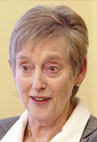
Former Finnish diplomat reveals she worked for the CIA

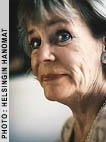
Marja-Liisa Linkoaho

Linkoaho

By JOSEPH FITSANAKIS | intelNews.org |
A Finnish diplomat in Cold-War East Germany has revealed how she was recruited by the US Central Intelligence Agency in the 1960s, shortly after the construction of the Berlin Wall. Marja-Liisa Linkoaho spoke to the Sunday edition of Finland’s Helsingin Sanomat newspaper, and admitted that she worked for American intelligence. She did so despite representing Finland, which was notably pro-Soviet during the presidency of ‘neutralist’ Finnish statesman Urho Kekkonen. She told the paper that, in 1961, at age 27, she became an assistant at the Finnish trade mission in East Germany, which at the time served as Finland’s de facto embassy in the communist country. The trade mission was headed by Consul General Olavi Wanne, and was centrally located on Mauerstrasse, within walking distance from the border between East and West Berlin. In August of 1961, less than three months after Linkoaho moved to East Germany, the country’s government, under Walter Ulbricht, took the decision to begin the construction of the Berlin Wall. However, as a foreign diplomat, Linkoaho was able to travel freely between East and West Germany despite the construction in Berlin of the heavily policed partition barrier. Several months later, Linkoaho borrowed a sum of money by one of her Finnish co-workers at the trade commission, which she used to purchase a German-made Volkswagen Beetle, from an American car dealership in West Berlin. However, shortly after she returned to East Berlin with her new car, it was stolen. Interestingly, Linkoaho said that, soon after the theft of her car, she was contacted by the CIA and asked to work for them as an agent, in return for money and a new car. The Finnish former diplomat told the Helsingin Sanomat that she had been contacted by the CIA “a few times before”, but had politely declined the Agency’s offers for work. This time, however, she needed the money, and the car, so she took up the offer. Read more of this post

CIA shot own planes, used napalm in Bay of Pigs, documents show

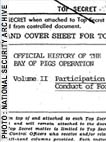
CIA documents

CIA documents

By JOSEPH FITSANAKIS | intelNews.org |
Newly declassified documents show that the CIA mistakenly fired at its own assault planes and resorted to using napalm to stave off successive Cuban counterattacks during the Bay of Pigs invasion. The revelations are included in a multi-volume Official History of the covert operation, which the CIA was forced to declassify after a lawsuit by George Washington University’s National Security Archive. On April 17, 1961, a brigade of 1,300 CIA-funded and -trained anticommunist Cubans mounted a surprise assault on the Caribbean island. But prior intelligence collected by spies working for Havana, and stiff resistance by pro-Castro troops, resulted in the CIA’s biggest known covert action failure. Approximately 1,200 surviving members of the CIA’s army were captured by pro-Castro forces, many of whom were severely interrogated or executed in subsequent years. According to the declassified documents, CIA forces eventually resorted to bombing Cuban government troops with napalm. Initially, operation planners were hesitant about using napalm, because of fears that doing so “would cause concern and public outcry”. But all hesitation had dissolved by the early hours of April 18, as American military commanders faced the possibility of seeing invading troops completely annihilated by successive waves of counterattacks. The documents also reveal that at least one CIA paramilitary officer opened fire on the Agency’s B-26 planes, which had been disguised to resemble those used by the Cuban Revolutionary Air Defense Force. Read more of this post

British spies considered giving Hitler female hormones

Adolf Hitler

Adolf Hitler

By JOSEPH FITSANAKIS | intelNews.org |
Thanks to the tireless effort of intelligence historians, we now have a brand new revelation from spy archives that can proudly stand alongside the CIA’s acoustic kitty, and the plan to poison Cuban leader Fidel Castro with a chemical that would make his beard fall out. This latest disclosure, however, surely tops the list of lunatic covert-operation schemes. According to newly discovered documents, British intelligence planners seriously considered secretly administering small doses of estrogen into the food of Adolf Hitler, in order “to make his character less aggressive”. According to the documents, British intelligence had managed to recruit a number of agents who were close enough to the German Chancellor to have physical access to his daily meals. It would have been possible, therefore, to tamper with the Nazi leader’s food intake on a routine basis, in an effort to alter his brain chemistry, which, it was hoped, would “soften his character”. The obvious question to ask, of course, is: if British intelligence had access to the Führer’s food, and if his military policies were considered a clear and present strategic threat to Britain’s security, then why not lethally poison him altogether? According to Cardiff University Professor Brian Ford, who discovered the cunning estrogen plan, British intelligence planners knew that Hitler systematically employed food tasters; it would therefore have been close to impossible to employ food poisoning as a method of assassination. Estrogen, on the other hand, is tasteless, odorless, and —if properly dispensed— could have a subtle and gradual effect on Hitler’s brain chemistry and personality. Read more of this post

News you may have missed #563 [updated]

Mike McConnell

Mike McConnell

►►Colombia spy official imprisoned for illegal wiretapping. Gustavo Sierra Prieto, the former analysis chief of Colombia’s soon-to-be-dismantled DAS intelligence agency, has been sentenced to eight years and four months in jail for his role in the illegal wiretapping of government opponents, judges and journalists. But the main culprit in the wiretapping scandal, former DAS Director Maria Pilar Hurtado, is still hiding in Panama.
►►Cold War documents detail CIA interest of Canada. The CIA has declassified some of its Cold-War-era reports on Canada. The documents show that the Agency’s interest in America’s northern neighbor was mostly related to the its satellite R&D, as well as its economic sector, with a particular focus on Canada’s energy and minerals sector. There is also discussion in some documents of how to best utilize Canada’s energy resources in a possible war with the Soviet Union.
►►Ex-intel official says US must engage in cyberspying. Is it just me, or is there a calculated echo chamber developing by former senior US spy officials? Read more of this post

News you may have missed #562 (East German Stasi edition)

Stasi emblem

Stasi emblem

►►Archive photos show East German spy service disguises. While sifting through the archives of the East German secret state police, the Stasi, Berlin-based artist Simon Menner unearthed a series of images used by the organization for an internal course called The Art of Disguising. He reproduced the photos and has put them on display in a new exhibition entitled Pictures from the Secret Stasi Archives.
►►Former German leftwing radical was Stasi informant. In the 1960s and 1970s, Horst Mahler was a leader of the German left and a lawyer for the militant-left Red Army Faction. Now he is a member of the radical right, sitting in jail for denying the Holocaust. But he has reportedly verified reports that he also worked as an informant for East Germany’s secret police, the Stasi, from 1967 to 1970.
►►Thousands of Stasi informants still unidentified. Fifty years after the construction of the Berlin Wall, thousands of West German spies for the former East German Stasi secret police have yet to be identified, according Read more of this post

Soviet KGB may have killed Albert Camus, claims paper

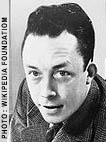
Albert Camus

Albert Camus

By JOSEPH FITSANAKIS | intelNews.org |
Albert Camus, one of France’s most revered intellectuals, who died in a mysterious accident in 1960, may have been killed by Soviet intelligence, according to an article in one of Italy’s most reputable newspapers. Camus, a philosopher, novelist and journalist, who won the 1957 Nobel Prize for Literature, died on January 4, 1960, during a road trip from Provence to Paris. Camus had initially planned to accompany his wife and children on a train ride to Paris, but changed his mind at the last minute, after his trusted friend and publisher, Michel Gallimard, offered him a ride in his car to the French capital. That evening, as Gallimard and Camus were driving through the small town of Villeblevin, Gallimard’s Facel Vega FV3B rammed into a tree at high speed. Camus was killed instantly, while Gallimard died in hospital several days later. But an article published last week in one of Italy’s oldest newspapers, Corriere della Sera, claims that the two men may have been killed after Soviet intelligence agents sabotaged Gallimard’s car. The allegation is based on Italian literary scholar Giovanni Catelli, who reportedly unearthed a written testimony by Czechoslovakian author and translator Jan Zábrana. The testimony is included in the Czech-language edition of Zábrana’s personal diary, in which he claims that “a man who knew lots of things and had very informed sources” had told him that Camus’ assassination was “ordered personally” by Dmitri Shepilov, who was the Soviet Union’s Minister of Foreign Affairs from 1956 to 1957. Read more of this post

News you may have missed #553 (Canada edition)

Northrop Frye

Northrop Frye

►►Analysis: Are Chinese spies getting an easy ride in Canada? Carl Meyer, of Embassy magazine, asks why Canada’s counterintelligence agencies are unwilling or unable to bring Chinese spies to court in recent years. Readers of this blog may recall controversial comments made last year by the director of CSIS, Richard Fadden, who claimed that some Canadian politicians work for foreign powers.
►►Canadian agency ‘illegally spying on Canadians’. Canada’s ultra-secret Communications Security Establishment, which engages in electronic communications interception, is prohibited from spying on Canadian citizens. But a new Canadian government report appears to instruct it to engage in mining ‘metadata’ from digital communications of Canadians. Readers of this blog may remember that, in 2009, a court permitted for the first time the CSE and the Canadian Security Intelligence Service to eavesdrop on Canadian nationals traveling overseas.
►►RCMP spied on Canadian academic Northrop Frye. Speaking on spying on Canadians… Read more of this post

News you may have missed #552

Nikolai Kuznetsov

Nikolai Kuznetsov

►►This just in: South Korea arrests five for spying for North. South Korean prosecutors have arrested five people on charges of “setting up an underground communist group on the instructions of an espionage unit of North Korea’s ruling Workers Party”, a report from South Korea’s Yonhap news agency said on Friday. According to the report, South Korean authorities are “investigating about 20 other people including union activists and opposition party members”. We will publish more information as it comes in.
►►Some US intel analysts believe al-Qaeda near collapse. Citing classified intelligence reports and closed-door Capitol Hill briefings from the CIA, the National Counterterrorism Center and other agencies, some US officials are telling The Washington Post that bin Laden’s death has “pushed al-Qaida to the brink of collapse”. One official told the paper that al-Qaeda is now “largely incapable” of mass-casualty attacks against the United States. Could the ‘Leon Panetta Legacy Committee’ be the source of this report?
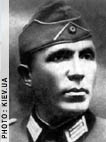
►►Russia and Ukraine commemorate legendary Soviet spy. Russia and Ukraine are celebrating 100 years from the birth of legendary Soviet spy Nikolai Kuznetsov. Kuznetsov, who operated in Nazi-occupied Ukraine, uncovered Read more of this post

Nixon White House may have bugged Pentagon leadership

Richard Nixon

Richard Nixon

By JOSEPH FITSANAKIS | intelNews.org |
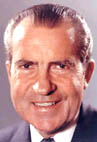
Everyone familiar with American political history knows about the ‘White House Plumbers’, a covert special investigations unit established during the Presidency of Richard Nixon, and tasked with spying on his political opponents. The unit’s bungled attempt to burgle the Watergate offices of the Democratic National Committee, in 1972, eventually led to Nixon’s resignation. But the Watergate burglary was but one of many operations conducted by the ‘Plumbers’, who were one of several ‘dirty tricks’ units managed by the Nixon White House. Now, nearly 40 years after the Watergate scandal erupted, veteran intelligence correspondent Jeff Stein provides new information that suggests the Nixon White House may have bugged the Pentagon telephones of senior American military officials. Stein managed to track down Dave Mann, a former member of the Pentagon’s Counterintelligence Force, who in 1971 stumbled upon a classified report claiming that listening bug signals had been detected emanating from offices in the Joint Chiefs of Staff. The signals had been picked up by a technical surveillance countermeasures (TSCM) team during a routine sweep of the Pentagon, in search of unauthorized interception devices. Mann run some tests to verify the TCM team’s report, and discovered that the bug signals originated from the personal office telephone line of General William Westmoreland, who was then the US Army’s Chief of Staff. He also discovered that the telephone of his assistant had been compromised, as well as the telephone lines belonging to the US Army’s assistant secretary, its logistics director, and at least one general. Mann’s personal conclusion was that the phone lines were most likely bugged with the cooperation of the Chesapeake and Potomac Telephone Company, which was at that the time considered an operational wing of the FBI, under Director J. Edgar Hoover. Read more of this post

News you may have missed #549

Lo Hsien-che

Lo Hsien-che

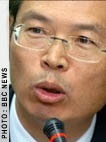
►►Taiwan general who spied for China gets life. A court in Taiwan has sentenced Lo Hsien-che to life imprisonment, for spying for the People’s Republic of China. As intelNews reported before, Major General Lo gave national secrets to his mistress, a “tall, beautiful and chic” Chinese female operative, who held an Australian passport. Taiwanese counterintelligence investigators said this was Taiwan’s most serious espionage scandal in almost fifty years.
►►Did German intelligence protect world’s most wanted Nazi criminal? The German intelligence service, the BND, destroyed the file of the world’s most-wanted Nazi criminal, Alois Brunner, and may have tried to recruit him into its ranks, German newsmagazine Der Spiegel reported over the weekend. The order to destroy Brunner’s file came “at some point between 1994 and 1997”, according to the magazine. Few of those knowledgeable of BND’s history will be surprised. Incidentally, intelligence observers may remember that, in 1961 and 1980, Brunner, who lived in Syria, was injured by postal bombs sent by Mossad agents.
►►Analysis: New Czech spy law will not curtail abuse. Authorities in the Czech Republic have drafted a new law aimed, partly, at limiting the mandates of the country’s domestic Security and Information Service (BIS) and the Office of Foreign Relations and Information (ÚZSI) –the Czech foreign espionage agency. Read more of this post

Lithuania recalls Austria ambassador over ex-KGB general’s release

Mikhail Golovatov

Mikhail Golovatov

By JOSEPH FITSANAKIS | intelNews.org |
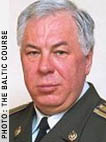
The government of Lithuania has recalled its ambassador to Vienna, in protest over the release by Austria of a former Soviet intelligence official, who is wanted in Vilnius for war crimes. Last Thursday, Austrian authorities arrested Russian citizen Mikhail Golovatov, a former general of the KGB, who was stationed in Lithuania during the final years of the Soviet Union. Golovatov’s detention was facilitated by a European arrest warrant issued by the office of the Lithuanian prosecutor. The latter accuses Golovatov of authorizing crimes of war as head of Alpha Group —also known as Spetsnaz Grupp Alfa— a special forces unit within the KGB’s First Chief Directorate. On January 13, 1991, Alpha Group forces spearheaded a counterinsurgency attack on the State Radio and Television Building and the Vilnius TV Tower in the Lithuanian capital, in an attempt to quash the Soviet Republic’s growing secessionist movement. The latter had unilaterally declared Lithuania’s independence on March 11, 1990. The attack resulted in the death of 14 and the injury of over 700 people. During the past two decades, the Lithuanian state has sponsored an international campaign for the arrest of numerous officials who represented the Soviet security apparatus in Lithuania during the final months of the USSR’s existence. But, to Vilnius’ shock, Austrian authorities released Golovatov 24 hours after arresting him, arguing that the European arrest warrant issued by the Lithuanian prosecutor’s office was “too vague” to justify the former KGB general’s continued detention. Read more of this post

News you may have missed #535

Stella Rimington

Stella Rimington

By IAN ALLEN | intelNews.org |
Last Monday’s Daily Telegraph carried a lengthy interview with Dame Stella Rimintgon, who headed MI5, Britain’s domestic intelligence agency, from 1992 to 1995. The interviewer notes that Rimington’s answers are often “so long you forget what you asked in the first place”, and when it comes to questions on MI5, she appears “practiced in the use of abstract generalities. I suspect is intentional”, she adds. No kidding. On July 10, the same newspaper revealed that, in the 1980s, an internationally renowned cancer researcher used his post at Britain’s Imperial Cancer Research Fund laboratories to steal samples and equipment on behalf of Eastern Bloc intelligence services. Jiri Bartek was working for the StB, Czechoslovakia’s secret intelligence service, says the paper. The paper notes that the revelation, which is based on declassified documents from the time, shows that Bartek (codename ‘Raki’), was probably “only one of dozens of Czech spies who used scientific positions in the West as cover for espionage”. Meanwhile, in South Africa, the country’s troubled National Intelligence Agency (NIA) has been hit an embarrassing revelation. It appears that Andre Vorster, a NIA specialist technical adviser at the agency’s Pretoria headquarters, claimed to have two doctorate degrees, both of which are fake. He also tried to swindle a leading British charity foundation by claiming to be acting on behalf of South African President Jacob Zuma. Vorster’s duties at the NIA included countersurveillance and the safeguarding of South African embassies and key installations around the world.

News you may have missed #532

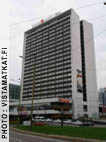
Viru Hotel

Viru Hotel

By IAN ALLEN | intelNews.org |
A new exhibition in Tallinn, called The Viru Hotel and the KGB, showcases the Soviet KGB operations in the Estonian capital’s most prestigious Soviet-era hotel. According to the curators, the 23rd floor of the hotel served as the KGB’s operational center in the city. The exhibition focuses specifically on KGB bugging technology during the last stages of the Cold War. Speaking of the Cold War, The Oak Ridger hosts an interesting interview with Francis Gary Powers Jr., son of the CIA pilot who was shot down over the USSR and later captured by the Soviets in 1960. Powers insists his father “never divulged America’s secrets” during his two-year imprisonment in Moscow. Interestingly, declassified documents from that time show that the CIA doubted Powers’ plane had been shot down by the Soviets, and believed the pilot had willingly defected to the USSR. In Canada, meanwhile, a new report to parliament by the Canadian Security Intelligence Service’s (CSIS), claims that cyber-spying is fastest growing form of espionage in the country. The report also states that, as a matter of policy, CSIS views some private-sector cyberattacks as a national security issue.

US helped France go nuclear to keep Europe divided, documents show

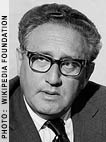
Henry Kissinger

Henry Kissinger

By JOSEPH FITSANAKIS| intelNews.org |
The government of the United States secretly helped France expand its nuclear arsenal, in order to promote its rivalry with Britain, according to newly declassified documents. The clandestine assistance to France, which tested its first nuclear bomb in Africa in 1960, began during the Richard Nixon administration, and was actively directed by Henry Kissinger, Nixon’s senior National Security Advisor. The documents, which were obtained by researchers at the George Washington University and the Woodrow Wilson International Center for Scholars, include a 1973 memorandum authored by Kissinger, in which he writes: “We want to keep Europe from developing their unity as a bloc against us. If we keep the French hoping they can get ahead of the British, this would accomplish our objective”. Toward that goal, the US ought to provide the French with information that will make them “drool but doesn’t give [them] anything but something to study for a while”. By doing so, Washington would be able to force Britain to stop “behaving shitty” and conform to American foreign policy objectives: “if they know we have another option, they might buck up”, writes Kissinger. Read more of this post