News you may have missed #581
September 1, 2011 Leave a comment

Jin Yinan
►►CIA wants to censor book by ex-FBI agent. The agent, Ali H. Soufan, argues in the book that the CIA missed a chance to derail the 9/11 plot by withholding from the FBI information about two future 9/11 hijackers living in San Diego. He also says that torture interrogation methods against terrorism detainees were unnecessary and, ultimately, counterproductive. Both these things are known and have been publicly discussed. As The Independent correctly notes, the CIA’s objections are “less for national security reasons than out of a desire to avoid re-airing incidents that show the Agency in an unflattering light”.
►►New scandal at India’s SIGINT agency. The Indian government founded the National Technical Research Organisation (NTRO) in 2004, as a potential communications nerve center for all of India’s intelligence agencies. But the SIGINT agency has been involved in one financial scandal after the other, most recently relating to an elaborate procurement scam.
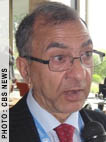
►►China silent about spy lecture leak. China has remained quiet as a recently leaked video of a Chinese general’s candid remarks on sensitive spying cases continued to draw international attention. The ministries of defense and foreign affairs have not responded to media inquiries, and numerous phone calls to National Defense University, where the general, Jin Yinan (pictured), teaches, went unanswered. State media made no mention of the story.












 intelNews.org
Did US agencies fail to heed warnings of 2008 Mumbai attacks?
November 24, 2011 by Joseph Fitsanakis 6 Comments
David Headley
By JOSEPH FITSANAKIS | intelNews.org |
We have written before that the CIA alerted Indian authorities prior to the 2008 Mumbai attacks, which killed 166 people, including six American citizens. The incident, which was perpetrated by Pakistani-based militant group Lashkar-e-Taiba, is routinely described as the most sophisticated and spectacular terrorist strike since 9/11. But there are numerous questions about the complex relationship between the United States, Lashkar-e-Taiba, and Pakistan’s Inter-Services Intelligence (ISI) directorate, which is widely believed to be protecting the terrorist group. Many of these questions center on David Coleman Headley, an American citizen, born in Washington, DC, who is currently in US custody, having confessed to helping plan the Mumbai attacks. According to Headley’s own court testimony, he worked for the ISI; moreover, despite early denials, the US government eventually admitted that Headley was a paid informant for the US Drug Enforcement Administration. There is, however, intense speculation in India and Pakistan that Headley, who is of Pakistani background, is in fact a CIA agent-gone-rogue, who used his CIA connections to pursue his militant plans undisturbed (something with the CIA flatly denies). Such rumors are reinforced by the US authorities’ puzzling refusal to allow Indian government investigators of the Mumbai attacks access to Headley. The curious relationship between US intelligence agencies and David Headley has been probed by several media outlets, including The New York Times, which in March of 2010 pointed out that Headley “moved effortlessly between the United States, Pakistan and India for nearly seven years, training at a militant camp in Pakistan on five occasions”. Now a new documentary by investigative group ProPublica, which aired on Tuesday as part of PBS’ Frontline television series, has unearthed new information that shows US government agencies failed to heed “repeated warnings over seven years”, which might have helped prevent the Mumbai attacks. Read more of this post
Filed under Expert news and commentary on intelligence, espionage, spies and spying Tagged with 2008 Mumbai attacks, Analysis, Charles "Sam" Faddis, Charles Faddis, Charles S. Faddis, CIA, David Coleman Headley, DEA, double agents, Gopal Krishna Pillai, India, informants, ISI, Lashkar-e-Taiba, Pakistan, United States