News you may have missed #432

  • French spy agency chief warns of high terror risk. Bernard Squarcini, director of France’s Direction de la Surveillance du Territoire (DST) counterintelligence agency, has warned that the country’s military presence in Afghanistan is among the reasons that have made France a prime target for radical Islamist groups.
  • Iran frees one of three Americans held on spy charges. American Sarah Shourd, who has been held in Iran for more than a year on suspicion of spying, has been released by authorities in the Islamic Republic.
  • American civil rights photographer was FBI informant. New information shows that celebrated civil rights-era photographer Ernest Withers had been a paid informant for the FBI, reporting on the whereabouts and activities of the movement’s leaders, many of whom considered him a personal friend.

British informant sues MI5 for breach of contract

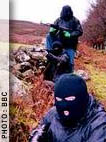
RIRA gunmen

RIRA gunmen

By IAN ALLEN | intelNews.org |
An informant, who was used by British intelligence to infiltrate an Irish Republican dissident group, is suing the British government claiming he was forced to give evidence in court despite his will. The case, which is believed to be the first of its kind in British legal history, has been brought before the court by a man identified only as “Amir”. Britain’s domestic intelligence agency, MI5, has admitted recruiting Amir in 2004, and using him to infiltrate the Real Irish Republican Army (RIRA), a Provisional IRA splinter group that continues its armed campaign against British presence in Northern Ireland. But the informant claims that he accepted payment from MI5 on condition that he would never be expected to testify as a witness in court. Read more of this post
News you may have missed #428 (history edition)

  • US government study of Soviet-era spy services released. A historiographic blog has released a study by the US Federal Office of Criminal Investigations on Practices and Methods of East-Bloc Intelligence Services, which examines the spy craft and operations of Soviet-aligned secret services active in Germany.
  • Simon Wiesenthal worked for Mossad, claims book. A new book claims that famous Israeli Nazi hunter Simon Wiesenthal worked as an informant for Israel’s Mossad spy agency. Written by Tom Segev, the book, entitled Wiesenthal: The Life and Legends, claims that Wiesenthal gave the Mossad valuable information during Operation DAMOCLES.
  • UK spies did ‘very bad things’ in Cold War, says Le Carre. But even though they assassinated individuals and engaged in “a lot of direct action”, “decent humanitarian instincts came into play” in Western intelligence agencies’ operations, claims the former MI5 and MI6 spy and novelist. Raw Story‘s Daniel Tencer offers an interesting response.

Taliban operate ‘very extensive’ spy network in British Afghan bases

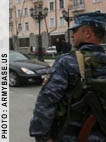
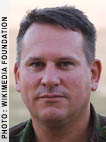
Richard Kemp

Richard Kemp

By IAN ALLEN | intelNews.org |
The former head of British troops in Afghanistan has warned that the Taliban are gathering intelligence from a “very, very extensive network of intelligence” operating inside British military bases in the Central Asian country. Colonel Richard J. Kemp, who was Commander of British Forces in Afghanistan in 2003, said the spy network includes “sources in many places” throughout the country, such as NATO military bases and Afghan security forces outposts. He also told Britain’s Daily Telegraph that the network is so effective that it tends to possess more information about the itineraries of foreign officials visiting Afghanistan than Western diplomats, NATO or Afghan military commanders realize. Read more of this post

News you may have missed #404 (Wikileaks Afghan War Diary edition II)

  • Wikileaks posts mysterious ‘insurance’ file. WikiLeaks, the whistleblower website that recently published hundreds of thousands of classified Afghan War documents, has posted a mysterious encrypted file labeled “insurance”, whose size dwarfs the size of all the other files on the page combined. Cryptome, a separate anti-secrecy site, speculates that the file may be insurance in case something happens to the WikiLeaks website or to its founder, Julian Assange. In either scenario, WikiLeaks volunteers, under a prearranged agreement with Assange, could send out a password to allow anyone who has downloaded the file to open it.
  • Ex-CIA officer Baer comments on Wikileaks files. Robert Baer, the retired CIA field officer whose bestselling memoir, See No Evil, formed the basis of the 2005 motion picture Syriana, has called the quality of intelligence revealed in the Wikileaks Afghan War files “just awful. Basically, we don’t know who the enemy is”, says Baer, adding that “much of the information looks to be the result of walk-in informers –intelligence peddlers looking for a cash payment or some other reward for passing on gossip”.
  • Wikileaks informant suspect had help, says informer. Hacker-turned government informant Adrian Lamo, who is assisting the US government investigate thousands of leaked secret war records to Wikileaks, says Army intelligence analyst Bradley Manning, who is the suspected culprit of the leak, had civilian help.

Bookmark and Share

British government to investigate death of former Mossad agent

Ashraf Marwan

Ashraf Marwan

By JOSEPH FITSANAKIS | intelNews.org |
In June 2007, Dr. Ashraf Marwan, son-in-law of the late Egyptian president Gamal Abdel Nasser, fell to his death from the balcony of his London home. Last week, British authorities initiated a previously announced official investigation into Dr. Marwan’s death, following accusations by his widow, Mona Nasser, that he had been murdered. Undoubtedly, the late Dr. Marwan had plenty of enemies. In 1969 he walked in the Israeli embassy in London and told diplomatic officials that he wished to be employed as an agent for Israeli intelligence. After several interview sessions with Mossad officers, some involving the use of polygraph techniques, the Mossad employed him as an agent. It is said that Dr. Marwan proved invaluable to the Israelis, over a number of years. Read more of this post

News you may have missed #386 (Israel edition)

Bookmark and Share

News you may have missed #379

  • Lebanon arrests Palestinian for spying for Israel. Lebanese police have arrested a Palestinian refugee from the Burj al-Shemali refugee camp on suspicion that he was spying for Israel’s Mossad intelligence agency, a police spokesman said last week. More than 70 people have been arrested in a nationwide crackdown on alleged Israeli spy rings in Lebanon, launched in April 2009, some of them policemen and security officials.
  • US spy agency chief nomination held up by Congress. US Senate Intelligence Committee chairwoman Dianne Feinstein says she won’t hold confirmation hearings for James Clapper, President Barack Obama’s nominee for the next Director of National Intelligence, until she completes her top priority, namely congressional passage and presidential signature on the 2010 Intelligence Authorization Bill. 
Bookmark and Share


News you may have missed #376

  • Dubai plans more cameras after Mossad operation. Dubai will beef up its surveillance capability by installing more cameras around the city-state after the Israeli hit squad that murdered a senior Hamas operative was caught on a hotel video. As intelNews has reported before, Mossad has really helped the Gulf surveillance industry.
  • Iran hangs ‘spy’ with alleged US connections. Iran hanged Sunni militant leader Abdolmalek Rigi last weekend for allegedly having connections with foreign secret services, including “intelligence officers of the US and Israel working under the cover of NATO and certain Arab countries” as well as “anti-revolutionary expatriate groups such as the MEK”, the People’s Mujahedeen Organization of Iran.
  • Analysis: FBI use of Muslim informers now part of daily life. Gathering information on people in Muslim communities in the United States has become part of daily life. After 9/11, all data is considered useful. But, Stephan Salisbury of The Philadelphia Inquirer asks, is that how America should be?

Bookmark and Share

News you may have missed #354

  • Germany arrests Libyans on spy charges. Two Libyans have been arrested in Berlin on suspicion of working as secret agents, spying on members of the Libyan opposition in Germany. The two, identified only as 42-year-old ‘Adel Ab’ and 46-year-old ‘Adel Al’, are being held in custody in Berlin, pending possible spying charges.
  • Israeli handler discusses relationship with Hamas spy. Israeli broadsheet Ha’aretz has aired a fascinating interview with ‘Captain Loai’, a Shin Bet operative who handled Mosab Hassan Yousef, son of a senior Hamas official, who was an informant for Israeli intelligence for at least a decade. Note the strong personal connection between handler and informant, which would be considered unprofessional in US intelligence culture.
  • Analysis: Iran’s murky link to al-Qaeda confounds CIA. It’s one of the enduring mysteries of the US ‘war on terrorism’: what will become of the al-Qaeda leaders and operatives who fled into Iran after 9/11 and have been detained there for years?

Bookmark and Share

Analysis: Europe Offers Different Counterterrorism Approach

Counterterrorism

Counterterrorism

By JOSEPH FITSANAKIS | intelNews.org |
I have in the past posed the intriguing question of whether US intelligence agencies should learn from the French approach to counterterrorism. This issue has now come up again in an interesting Washington Post essay, which examines the different approaches to Islamic militancy by American and European intelligence organizations. Some of these differences are undoubtedly contextual: there are no First Amendment rights in Europe, and European law enforcement and intelligence organizations enjoy a somewhat wider legal latitude in which to operate domestically. Moreover, the Europeans, especially the French and the British, have a longer experience than the Americans in dealing with armed insurgencies. But there are also critical differences in tactics. Importantly, the European approach to Islamic militancy has not only been more pro-active than the American, but also a lot more discreet and clandestine. Read more of this post

New book on Canada’s mysterious Agent 235

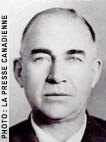
Johann Heinrich Amadeus de Graaf

De Graaf

By IAN ALLEN | intelNews.org |
A new book published by the Pennsylvania State University Press sheds new light into the life and work of mysterious Agent 235, Canada’s mysterious mid-20th-century spy known as ‘Johnny’. In Johnny: A Spy’s Life, R.S. Rose and Gordon Scott present the outcome of 14 years of research on ‘Johnny’, whose real name was Johann Heinrich Amadeus de Graaf. De Graaf was born in Germany in 1894, but later moved to Britain, and at the start of World War II worked as an informant for MI6. Although he conducted some of his operations in Germany, most of them took place in the UK, where he unmasked a number of native pro-Nazi sympathizers and agents of the Gestapo. Read more of this post

News you may have missed #331

  • CIA deputy director to step down. The Agency has denied it for months, but now the longtime rumor that its powerful deputy director, Stephen R. Kappes, was planning to resign has came true. Jeff Stein reports that “recently, grumbling about Kappes from within the CIA and without, on issues ranging from his nit-picking management style to his ties to the old order, has gotten louder. And now, apparently, Kappes has heard enough”.
  • US eyes cash deal for Kyrgyzstan base. How will the recent coup in Kyrgyzstan affect US-Kyrgyz arrangements on the Manas Air Base? A lot will depend on oil purchase deals between the US military and Kyrgyz autocrats.
  • Court case may reveal IRA spy’s role. Freddie Scappaticci, an IRA spy alleged to be the British army agent ‘Stakeknife’ could be forced into court by the wife of another IRA informer, who claims she suffered nervous breakdown after being kidnapped by him.

Bookmark and Share

News you may have missed #329

  • Iran insists US hikers had intelligence links. Iran’s intelligence minister, Heydar Moslehi, has said that Americans Shane Bauer, Joshua Fattal and Sarah Shourd, who were arrested on Iranian soil last July, “were in contact with intelligence services”. The evidence would “soon be made public”, he said.
  • Gerdes case shows difficulty of CIA jobs. The case of CIA employee Kerry Gerdes, who was recently convicted for falsifying interview reports while performing background checks on CIA employees and potential employees, reveals how difficult the job is for young CIA recruits, who expect it to be exciting or glamorous, according to seasoned investigators.
  • US still denying India access to Headley. There has been intense speculation in India and Pakistan that David Coleman Headley, a former US Drug Enforcement Administration informant, who was arrested by the FBI in October for plotting an attack on a Danish newspaper, is in fact a renegade CIA agent. Could this be why the US is denying India access to Headley?

Bookmark and Share

News you may have missed #319

  • CIA asks Gulf countries to monitor terrorist funding. The CIA has reportedly asked Arab/Persian Gulf countries “to tighten surveillance and look for any suspicious movement of funds” in regional banks.
  • Questions remain in Headley terrorism case. The New York Times has aired an update on the court case of Pakistani-American David Coleman Headley, a former US Drug Enforcement Administration informant, who was arrested by the FBI in October for plotting an attack on a Danish newspaper. The paper points out that Headley “moved effortlessly between the United States, Pakistan and India for nearly seven years, training at a militant camp in Pakistan on five occasions”. There has been intense speculation in India and Pakistan that Headley is in fact a renegade CIA agent.

Bookmark and Share