News you may have missed #756 (analysis edition)
July 2, 2012 2 Comments
 By IAN ALLEN | intelNews.org |
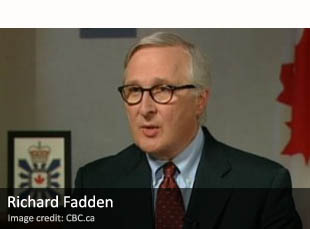
►►Intel analysts taking over leading role in spy game. In a recent speech obtained by the Canadian press under Canada’s access-to-information laws, Richard Fadden, Director of the Canadian Security Intelligence Service, said that the role of the undercover operative is starting to take a back seat to the job of the behind-the-scenes intelligence analyst. Speaking at a conference of the Canadian Association of Professional Intelligence Analysts in November 2011, Fadden said that, “suddenly the ability to make sense of information is as valued a skill as collecting it”.
►►US intel doesn’t see Syrian regime cracking. Despite major defections and an increasingly tough and brutal resistance, intelligence officials in the United States say that Syria’s government is unlikely to fall anytime soon. A report from Reuters quotes members of the intelligence community who say that Bashar al-Assad’s inner circle is showing no signs of cracking, and without a wide international consensus to intervene militarily —a consensus that does not exist— the ongoing conflict has no end in sight. Officials also describe the war as a “see-saw” battle with rebel forces gaining strength and improving tactics, only to see the military escalate the size and intensity of it own response, with neither side maintaining a decisive edge.
►►Arrests of Iranians in Kenya spark fears of plot. The recent arrest of two Iranians in Kenya on suspicion of plotting bomb attacks has heightened fears that Tehran is widening its covert war against Israel and the United States, as Washington expands its secret intelligence operations across Africa. Kenya security authorities, aided by US and British agents, arrested the two Iranians June 20 in Nairobi, the West African country’s capital. The men reportedly led authorities to a cache of 33 pounds of military-grade explosive, believed to be RDX.











 intelNews.org
Analysis: Should the CIA kill less and spy more?
November 16, 2012 by Joseph Fitsanakis 11 Comments
The Central Intelligence Agency’s awkward silence about the recent resignation of its Director, General David Petraeus, is indicative of an organization that remains distinctly uncomfortable with publicity. The added layer of the sexual nature of Petraeus’ impropriety has increased exponentially the degree of unease at Langley. Yet sooner or later the news media will move on to something else and General Petraeus will fade into the distance. For seasoned intelligence observers, however, the question of the CIA’s future will remain firmly in the foreground. In an interview earlier this week with Wired magazine, former CIA Director General Michael Hayden (ret.) opined that Petraeus’ resignation presents the Agency with the opportunity to return to its operational roots. Hayden, who led the CIA from 2006 to 2009, said that the Agency has been “laser-focused on terrorism” for many years. Consequently, much of its operational output “looks more like targeting than it does classical intelligence”, he said. His views were echoed by the CIA’s former Acting Director, John McLaughlin, who told Wired that the most significant challenge for the post-Petraeus CIA “may be the sheer volume of problems that require [good old-fashioned] intelligence input”. Yesterday, meanwhile, saw the publication of two opinion pieces by two of America’s most experienced intelligence watchers. In the first one, The Washington Post’s Walter Pincus urges United States President Barack Obama to pause and think about the role of America’s foremost external intelligence organization before appointing a successor to General Petraeus. For over a decade, argues Pincus, the CIA’s focus has been to fulfill covert-action tasks in the context of Washington’s so-called “war on terrorism”. But through this process, the Agency “has become too much of a paramilitary organization” and has neglected its primary institutional role, which is to be “the premier producer and analyst of intelligence for policymakers, using both open and clandestine sources”. Read more of this post
Filed under Expert news and commentary on intelligence, espionage, spies and spying Tagged with Analysis, CIA, covert action, David Ignatius, David Petraeus, intelligence analysis, intelligence reform, John McLaughlin, Michael Hayden, United States, Walter Pincus