MI5 concealed report on Soviet penetration from CIA

Kim Philby

Kim Philby

By IAN ALLEN | intelNews.org |
British counterintelligence officials decided to conceal from their American counterparts a report detailing Soviet spy penetration of the UK, because it showed London’s permissive attitude towards intelligence infiltration. The secret report, entitled “Survey of Russian Espionage in the UK 1935-1955”, was authored by the D Branch of MI5, which was tasked with countering Soviet intelligence operations on British soil. It was declassified on Monday by Britain’s National Archives, 55 years after it was initially authored. The survey was apparently commissioned following the embarrassing defections of Guy Burgess and Donald Maclean, MI5 and MI6 officers respectively, who escaped to Moscow in 1951, after several years of spying for the Soviet Union. Its pages detail the cases of over 50 Soviet intelligence operatives and double agents who were believed at the time to be mostly at large in the UK or abroad. But senior MI5 officials decided to limit the report’s distribution, fearing that it revealed too many weaknesses in Britain’s counterintelligence posture. Instead, they decided to print only about 25 copies of the report, which were to be distributed strictly within MI5. Read more of this post

News you may have missed #490

  • How Moussa Koussa defected to Britain. This is the best account (so far) of the recent defection of the Libyan former intelligence chief, by The Independent of London, republished here by The New Zealand Herald.
  • Mossad does not play by the rules, says ex-MI6 director. “Israel plays by a different set of rules than the rules that we observe in the UK”, said former MI6 director Sir Richard Dearlove in a conference Wednesday, adding that British intelligence isn’t always forthcoming with sharing information with the Mossad.
  • Kuwait may expel Iranian diplomats over spying affair. Kuwait’s foreign minister said yesterday that three Iranian diplomats may be expelled over a spying row in the Gulf Arab state, and that his government had withdrawn its ambassador from Tehran.


News you may have missed #487 (Canada edition)

  • Canadian MPs want spy services director to quit. A group of Canadian parliamentarians have asked for the resignation of the country’s Security Intelligence Service director Dick Fadden, who claimed last summer that several Canadian politicians were under the control of foreign governments.
  • Canada agencies still not sharing intelligence. Almost a decade after 9/11, the many arms of Canada’s national security network still do not share all their intelligence about terrorist threats with sister agencies, according to a new parliamentary report by the special Senate Committee on Anti-terrorism.
  • Chinese intelligence are after us, say immigrants to Canada. A spokesman for a Falun Gong group in Ottawa has accused the Chinese government of planting spies among the Chinese ex-pat community in the country. According to an unnamed former employee at China’s embassy in Sydney, Australia, who defected in 2005, there are more than 1,000 Chinese spies operating in Canada.

News you may have missed #485

  • Gaza engineer describes abduction my Mossad. Dirar Abu Sissi, who was abducted by Israeli spy agency Mossad from the Ukraine on February 19, has described details of his abduction in a report issued Monday by the Gaza-based Palestinian Center for Human Rights.
  • Gaddafi regime fed names of jihadists to the CIA and MI6. Diplomatic cables obtained by WikiLeaks paint eastern Libya as a fertile ground for radical extremism. One source told US officials in 2008 that for young men from Derna, a city east of Benghazi, “resistance against coalition forces in Iraq was an important act of ‘jihad’ and a last act of defiance against the Gaddafi regime”.
  • Investigators say secret CIA files could aid Chile. Chile’s truth commission has determined that 3,065 opponents of US-supported Chilean dictator Augusto Pinochet were killed in the 1970s. Most of these cases were investigated, and some 600 military figures and civilian collaborators have been put on trial. Now campaigners are trying to get the CIA to open its files on Pinochet.

News you may have missed #476

WikiLeaks revelations keep coming, but few pay attention

WikiLeaks

WikiLeaks

By JOSEPH FITSANAKIS | intelNews.org |
Most Western news outlets are now focusing almost exclusively on the fate of WikiLeaks founder Julian Assange. Few are paying attention to the details of Assange’s rape allegations in Sweden, which have sparked an interesting —though limited— debate about possible links between Assange’s accusers and American intelligence. Even fewer are paying attention to the actual US diplomatic cable revelations by WikiLeaks, which keep appearing daily, mostly in British quality broadsheet The Guardian (The New York Times has largely lost interest at this point). One such revelation, published on Monday, concerns allegations by the Director of the Shabat, also known as Shin Bet (Israel’s internal security service), that Palestinian group Fatah asked Israel to attack rival Palestinian group Hamas, in 2007. The leaked cable claims Shin Bet director Yuval Diskin told US diplomats that Fatah, the secular Palestinian nationalist faction that controls the West Bank, was “demoralized” and “desperate” to halt the rapid rise of Islamic Hamas, which controls the Gaza Strip. Diskin further told US officials that Fatah understood it could only survive with Israeli support, and had thus directly “asked us [Israel] to attack Hamas”. Perhaps more importantly, the leaked cable appears to confirm intense speculation among some intelligence observers that Fatah is “actively gathering information on behalf of Israeli intelligence”. Read more of this post

Leaked cable confirms end of US-NZ spy quarrel

Hillary Clinton

Hillary Clinton

By JOSEPH FITSANAKIS | intelNews.org |
To regular readers of this blog, this is not so much a revelation, as it is a confirmation. Back in October of 2009, we wrote about a peculiar comment made Hillary Clinton. The United States Secretary of State had told a press conference that “we [the US] are resuming our intelligence-sharing cooperation [with New Zealand], which we think is very significant”. Resuming? When had it been disrupted, and why? Most intelligence observers agree that the only glitch that could have caused the cooperation to end would have been New Zealand’s nuclear ban. It was in 1984 when, under mounting popular pressure, the Labour government of David Lange voted to bar nuclear-powered or nuclear-armed ships from entering New Zealand territorial waters. At the time, the ban was heralded by the global nuclear disarmament movement as a major victory. But Washington did not see it that way. Successive US administrations pressured Wellington to repeal the nuclear-free legislation and allow US warships to make use of strategic New Zealand ports. Washington’s pressure increased in the years after 9/11, culminating in 2006, when it threatened to cancel a free-trade agreement between the two countries if New Zealand refused to repeal the ban. It appears that, at some point in time, possibly after 9/11, the US actually terminated intelligence sharing between the two countries in order to force New Zealand to comply. Read more of this post

CIA spies consider Mossad ‘most unfriendly’ agency

Mossad seal

Mossad seal

By JOSEPH FITSANAKIS | intelNews.org |
This blog frequently considers the issue of US-Israeli intelligence relations, said to be undergoing a turbulent period in recent times. Indeed, the change of guard at the White House, the rearrangement of Washington’s policy priorities following the economic crash, as well as the dramatic rightwing shift in Israeli politics have rapidly altered the political playing field between the two nations. To this extent, it is worth noting that Meir Dagan, director of Israeli intelligence agency Mossad, told a Knesset committee last July that “Israel is gradually turning from an asset to the United States to a burden”. How is this evident in intelligence relations between Washington and Tel Aviv? The Washington Post’s security correspondent Jeff Stein may be able to help fill in the picture. He wrote a few days ago that an internal poll, which was recently administered to CIA operatives, found that Israeli intelligence agencies are considered the world’s least friendly and most uncooperative with their US counterparts. Read more of this post

Comment: Is Lebanon Using US Assistance to Capture Israeli Agents?

Lebanon

Lebanon

By JOSEPH FITSANAKIS | intelNews.org |
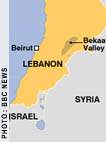
A minor revolution has been taking place in Lebanon over the past 16 months. Since April of 2009, Lebanese authorities have arrested nearly 100 individuals on charges of spying for Israel, three of whom have been sentenced to death. Judging by numbers alone, this may be one of the most astonishing coups in the annals of counterintelligence. There are several reasons why this is happening.

Read more of this post

Pakistanis question validity, timing, of Wikileaks files

Hamid Gul

Hamid Gul

By JOSEPH FITSANAKIS | intelNews.org |
Senior Pakistani government and intelligence officials have reacted angrily to leaked reports, which suggest that Pakistani spy agencies are secretly working with the Taliban to oppose US-led coalition forces in Afghanistan. The accusations have emerged as part of the largest document leak in US military history, which was made public on Sunday by anti-secrecy activist website Wikileaks. Among the nearly 92,000 intelligence and military files disclosed by Wikileaks are several reports suggesting that General Hamid Gul, who headed Pakistan’s Inter-Services Intelligence (ISI) directorate in the late 1980s, is among a number of high-profile Pakistanis who regularly help the Taliban organize strikes against US-led coalition troops and their supporters in Afghanistan. But on Monday General Gul, who is a well-known critic of the 2001 US-led invasion of Afghanistan, vehemently rejected the leaked reports, calling them “a pack of lies” and “utterly wrong”. Read more of this post

News you may have missed #388

  • Political policing rising in US, ACLU report warns. A new report by the American Civil Liberties Union chronicles government spying and what it describes as the detention of groups and individuals “for doing little more than peacefully exercising their First Amendment rights”.
  • Mistrust still marks ISI-CIA ties, say US officials. John Tierney, chairman of the US House Armed Services Committee, told a Pakistani delegation that there is mistrust between the CIA and ISI, according to a report by the Pakistan Senate’s Standing Committee on Defence. Regular intelNews readers should not be surprised.
  • Britain releases secret document at heart of UKUSA agreement. Authorities in the UK have released a six-page document dating from 1946, which describes the “British-US Communication Intelligence Agreement”, known as BRUSA, later UKUSA. The deal has tied the US, UK, Canada, Australia and New Zealand into a worldwide network of electronic listening posts.

Bookmark and Share

News you may have missed #355

Bookmark and Share

News you may have missed #330

  • Pakistan released captured Taliban behind CIA’s back. IntelNews has not joined the chorus of commentators who have been claiming that the relationship between Pakistan’s Inter-Services Intelligence (ISI) directorate and the CIA has warmed up. It now appears that even as the ISI was collaborating with the CIA, it quietly freed at least two captured senior Afghan Taliban figures.
  • Kiwi activists accuse police of spying. New Zealand’s Peace Action Wellington has submitted an Official Information Act (OIA) request relating to domestic police surveillance, after accusing the police of “heavily spying on and running operations on protest groups”. It is not the first time that similar accusations have been directed against the country’s police force.
  • CIA suspected existence of Israeli nukes in 1974. Israel will neither confirm nor deny the rumored existence of its nuclear arsenal. But the CIA, which has kept an eye on Israel’s nuclear weapons project since at least the early 1960s, was convinced of its existence by 1974, according to a declassified report.

Bookmark and Share

Analysis: Inside the US-Israeli intelligence relationship

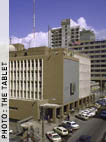
US embassy in Tel Aviv, Israel

US embassy, Israel

By JOSEPH FITSANAKIS | intelNews.org |
Yossi Melman and Dan Raviv, authors of Friends in Deed: Inside the US-Israel Alliance, have produced a lengthy, well-researched and up-to-date essay on US-Israeli intelligence relations. The essay, which appears in the latest issue of Tablet, carefully examines the highly complex subject of the CIA’s associations with the Mossad and Shin Bet. The fact is that, despite their unquestionable alliance Israel and the US have for years been among each other’s primary intelligence targets. Melman and Raviv correctly remind us that, by as early as 1954, US officials at the US embassy in Tel Aviv had already discovered several microphones in the office of the ambassador. Two years later, US counter-surveillance experts uncovered electronic bugs at the Tel Aviv residence of a US military attaché. Since then, the use of bribes and even women by the Shin Bet to lure US embassy guards has been frequent –and mostly unsuccessful. Read more of this post