Senate report: CIA misled US government about torture

CIA headquartersBy JOSEPH FITSANAKIS | intelNews.org
A United States Senate report on the use of torture to extract intelligence from terrorism detainees accuses the Central Intelligence Agency of severely overstating the usefulness of the information gained. Details of the long-awaited report, produced after a four-year investigation by the Senate Select Committee on Intelligence, have been leaked to The Washington Post. The paper reports that the probe is a damning indictment on the CIA’s ‘enhanced interrogation’ program, implemented during the administration of President George W. Bush. The report contains over 20 different conclusions. But the most critical are that the CIA misled the government and the American public by: (a) understating the severity of the interrogation methods used; and (b) overstating the actionable intelligence extracted through torture. The Post cites unnamed “US officials” who have reviewed the Senate report as stating that the CIA’s ‘enhanced interrogation’ program “yielded little, if any, significant intelligence”. According to one source, in some cases the Agency proceeded to waterboard terrorism detainees after recognizing that all actionable intelligence had already been extracted from them. In one instance, says the paper, nearly all valuable intelligence gained from al-Qaeda operative Abu Zubaida was extracted by CIA interrogators before he was subjected to waterboarding nearly 100 times. Notably, the Senate report also highlights deep divisions within the CIA, as many units protested the practices employed under the Agency’s interrogation program. But The Post also quotes “current and former officials” who are critical of the Senate report for containing “factual errors” and “misguided conclusions”. One CIA veteran told the paper that the 6,300-page document reflected “Federal Bureau of Investigation biases”, and that CIA officials are critical of the fact that one of the report’s main authors is a former FBI analyst.
Read more of this post

Obama comments on Senate-CIA dispute, fails to mention Feinstein

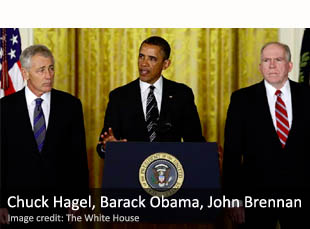
Chuck Hagel, Barack Obama, John BrennanBy JOSEPH FITSANAKIS | intelNews.org
Yesterday in a radio interview I opined that I would not be surprised if the White House stepped in to mediate the ongoing dispute between the Central Intelligence Agency (CIA) and the Senate Select Committee on Intelligence. Today, President Barack Obama broke his silence “with respect to the issues that are going back and forth between the Senate committee and the CIA”, as he said. But he refused to take sides —or did he? On Wednesday afternoon, the President responded to a question on the matter by a White House pool correspondent. The question related to the increasingly heated public spat between the CIA and the Senate Intelligence Committee. The latter is tasked, along with its sister body in the House of Representatives, with exercising legislative oversight of the Intelligence Community. Many members of the Committee, which is currently investigating the CIA’s use of enhanced interrogation against terrorism detainees, believe that, not only was the CIA’s use of harsh interrogation methods illegal, but that it also failed to generate useful intelligence. The CIA, however, denies this, and has been quite possessive of documents relating to the issue, which the Committee believes has a right to access. The Agency has now asked the Federal Bureau of Investigation (FBI) to look into whether Congressional staffers illegally removed classified documents from the CIA’s archives that were beyond the scope of the Committee’s investigation. The Committee has in turn asked the Bureau to investigate whether the CIA illegally searched the computers used by staffers to carry out their research into CIA files.
Read more of this post

Comment: The significance of the spat between Congress and the CIA

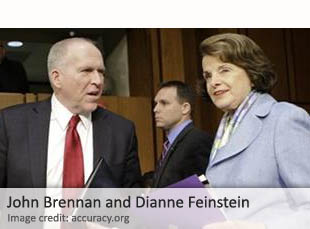
John Brennan and Dianne FeinsteinBy JOSEPH FITSANAKIS | intelNews.org
Dianne Feinstein, the chair of the United States Senate Select Committee on Intelligence, had gone out of her way in recent days to avoid commenting on the ongoing quarrel between her Committee and the Central Intelligence Agency (CIA). That ended yesterday, when she gave a press conference accusing the CIA of illegally spying on her Committee’s Congressional staffers. Her stunning announcement came shortly after her tense meeting with the Director of the CIA, a bad-tempered John Brennan. She told the media that at the meeting she requested from Brennan an apology and acknowledgement that the alleged CIA spying was “inappropriate”. By her own account, she failed to get either, so she decided to go public. In an interview I gave yesterday to Michigan’s WILS 1230 AM’s Capital City Recap, I argued that the quarrel between the two government bodies is not in itself important. What is important, I told radio host Mike Cohen, is that the dispute has entered the public arena. A routine ‘push and shove’ mêlée has turned into an all-out fistfight in full view of the media. One Republican Senator, Lindsay Graham, told the Associated Press on Tuesday that the time had come for “the legislative branch [to] declare war on the CIA”. In response to the Committee’s accusations, the CIA has apparently instructed the Department of Justice to investigate the alleged removal by Congressional staffers of classified documents that were “protected by executive privilege [and were] beyond the scope of the Committee’s investigation”.

Read more of this post

Rift between US Congress and CIA biggest in 40 years, say observers

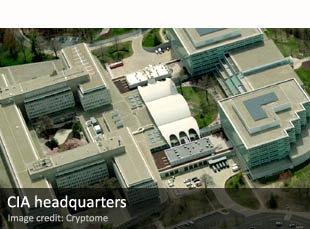
CIA headquartersBy IAN ALLEN | intelNews.org
The system of checks and balances that defines the relationship between America’s legislative branch and the Intelligence Community has been strained more than any other time in nearly 40 years, according to insiders. The rift is especially wide between the Central Intelligence Agency (CIA) and the United States Senate’s Select Committee on Intelligence, which was formed in the mid-1970s after the Watergate scandal. Led by Senator Frank Church (D-Id) the congressional investigations into unlawful domestic intelligence activities by American spy agencies shaped the current oversight arrangements between the Senate and the CIA. But the two bodies are now engaged in what Foreign Policy magazine calls “a rare public feud” over the Committee’s ongoing investigation into the CIA’s harsh interrogation techniques. Foreign Policy cites interviews with “ten current and former congressional staff member and US government officials”, all of whom painted a “grim picture” of Senate-CIA relations. The Foreign Policy article quotes former Justice Department lawyer Dan Metcalfe, who opines that the current imbroglio “might well be the most acrimonious public moment between the CIA and a Senate committee [in] nearly 40 years”. Both sides accuse each other of violating longstanding agreements during the investigation into CIA’s use of torture in interrogations of terrorism detainees. Committee members have been claiming that the Agency’s interrogation methods have failed to produce useful information in pursuit of America’s national security. The CIA, on the other hand, accuses Committee staffers of illegally removing documents from an Agency facility, which the Committee was not supposed to see because they fell outside the scope of its inquiry. But some Senators on the Committee claim that the CIA did not want to hand over the documents precisely because they prove that no useful intelligence was extracted under torture. They also claim that the CIA effectively spied on Committee staffers by searching through their activity on computers used to access classified information. Read more of this post

News you may have missed #864

Otis G. PikeBy IAN ALLEN | intelNews.org
►►Germany says Obama’s NSA promise fails to address concerns. German Chancellor Angela Merkel’s government said yesterday that President Barack Obama’s pledge for new restrictions on mass surveillance by US spy agencies so far offered “no answer” to Germany’s concerns over spying. Merkel’s chief spokesman, Steffen Seibert, told reporters that Berlin would “look very closely at what practical consequences the announcements of the US president carry”, but added that key German concerns had not yet been addressed.
►►Longtime US Congressman who took on CIA dies. Otis G. Pike, a longtime Democratic Congressman from New York, who took on the CIA following the Watergate revelations, has died, aged 92. In 1975, he became chairman of the House Select Committee on Intelligence, which began examining suspicions that the CIA had had its hand in coups in Chile and other countries and was spying on American citizens. The inquiry paralleled one in the Senate, chaired by Frank Church. These committees marked the first time that Congress looked into allegations of abuse by the CIA and other US intelligence agencies.
►►East Timor slams Australia at The Hague over alleged spying.  The International Court of Justice in The Hague, Netherlands, is hearing a case brought against Australia by the government of East Timor. The small island nation accuses Australia of bugging the offices of key Timorese officials in an attempt to acquire inside information on a crucial energy deal. It alleges that a group of Australian Secret Intelligence Service (ASIS) officers disguised themselves as a refurbishing crew and planted numerous electronic surveillance devices in an East Timorese government office. The information collected from the listening devices allegedly allowed Australia to gain an upper hand during negotiations that led to the Certain Maritime Arrangements in the Timor Sea (CMATS) treaty.

News you may have missed #636

Lebanon

Lebanon

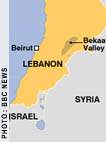
►►Careless codeword may have cost CIA its Lebanon network. Hezbollah have reportedly just rolled up the CIA’s network of spies in Lebanon. If so, it’s because of one of the stupidest, least secure code words in history. According to ABC News, Hezbollah operatives figured out that CIA informants, who had infiltrated the Iranian proxy group, were meeting with their agency handlers at a Beirut Pizza Hut. How could Hezbollah deduce that location? “The CIA used the codeword ‘PIZZA’ when discussing where to meet with the agents,” ABC reports.
►►UK spy chiefs to be publicly questioned for first time. The heads of British intelligence agencies are set to be questioned for the first time in public, under plans to make spies more accountable. The directors of MI5, MI6 and GCHQ will face Parliamentarians on the Intelligence and Security Committee. Although, they have recently begun to make rare public appearances, and deliver speeches, it will be the first time the intelligence agency heads will face public cross-examination over their activities.
►►Documents reveal largest domestic spy operation in Canadian history. Police organizations across Canada co-operated to spy on community organizations and activists in what the Royal Canadian Mounted Police called one of the largest domestic intelligence operations in Canadian history, documents reveal. Information about the extensive police surveillance in advance of last year’s G8 and G20 meetings in southern Ontario comes from evidence presented in the case of 17 people accused of orchestrating street turmoil during the summits.

News you may have missed #616

CSIS seal

CSIS seal

►►S. Koreans say several N. Korean assassination bids stopped. South Korea has arrested several North Korean agents for plotting to assassinate anti-Pyongyang activists, according to Won Sei-Hoon, head of South Korea’s National Intelligence Service, who spoke to the parliament’s intelligence committee. Earlier this month, Seoul prosecutors charged a North Korean agent with trying to murder Park Sang-Hak, an outspoken activist in Seoul, with a poison-tipped weapon.
►►MI5 inspectors’ website shut down after security blunder. A new website for the former High Court judges responsible for oversight of MI5, MI6 and wiretapping has been shut down after it emerged that anyone could edit any page of it. The security blunder forced the Intelligence Services Commissioner, Sir Mark Waller, and the Interception of Communications Commissioner, Sir Paul Kennedy, to pull the plug on their new website.
►►Report urges Canadian spies to share more info with diplomats. Canada’s spy agency needs to share more information with the Department of Foreign Affairs so the department is better prepared for negative reactions to Canadian intelligence work overseas, according to a new report by Canada’s Security Intelligence Review Committee. The Committee, which reports to Parliament on the work of the Canadian Security Intelligence Service, found the organization had “limited exchanges” with Canada’s diplomats on its operations.

News you may have missed #536 (US edition)

James Risen

James Risen

By IAN ALLEN | intelNews.org |
►►US federal agencies sitting on decade-old FOIA requests. In the United States, as Freedom of Information Act (FOIA) requests are growing, a new study has found that eight government agencies are sitting on requests filed over ten years ago. According to the Knight Open Government Survey, conducted by the National Security Archive at George Washington University, the single oldest request is now 20 years old. FOIA requires agencies to process and respond to a request within 20 business days. ►►US journalist seeks to avoid testifying at CIA agent’s trial. A sizeable percentage of FOIA requests are filed by journalists, who are also on the receiving ends of most intelligence-related ‘leaks’ in the United States. One of those journalists, James Risen, of The New York Times, has been subpoenaed by the Obama administration to testify at the trial of Jeffrey Sterling. Sterling is a former CIA employee, who has been arrested under the Espionage Act for allegedly revealing details about Operation MERLIN to Risen. MERLIN was a botched US effort to provide Iran with a flawed design for building a nuclear weapon, in order to delay the alleged Iranian nuclear weapons program. Times lawyers argue that the First Amendment should shield Risen from having to testify at Sterling’s trial. ►►US intel research agency works on 3-D holographs. Also in the United States, IARPA, the US intelligence community’s technical research wing, has announced that it is working on a system that lets intelligence analysts collaborate with each other using “interactive 3-D holographic displays”. Through this system, IARPA hopes that intelligence personnel could take simultaneous virtual strolls through real-life target locations, help plan raids, etc.

Controversial Swiss master-spy dies in Ireland

Albert Bachmann

Albert Bachmann

By JOSEPH FITSANAKIS | intelNews.org |
One of Switzerland’s most controversial Cold War figures, who set up a clandestine guerrilla unit to combat a feared Soviet invasion, has died in Cork, Ireland. Swiss newspaper Tages-Anzeiger has said last week that Colonel Albert Bachmann, who headed Switzerland’s military intelligence force, the Untergruppe Nachrichtendienst der Armee (UNA), from 1976 until 1979, died on April 12. Although Bachmann was a communist in his student years, he later headed Projekt-26 (P-26), a clandestine project to set up a ‘left-behind’ force of Swiss guerrillas trained in sharp shooting, bombing and assassination techniques. The guerrilla force was designed to engage the Soviet military if it ever invaded Switzerland. In the late 1970s, Colonel Bachmann also secured government funds to purchase the 200-acre Liss Ard country estate near the Irish town of Skibbereen, in west Cork. The estate was to be used as a base for a Swiss government-in-exile following a feared Soviet invasion of central Europe. Furthermore, the basement of one of the two manors on the estate was designated as a secret depository of Switzerland’s gold reserves, in the event of a Soviet invasion of the Alpine country. Read more of this post

News you may have missed #412

Bookmark and Share

Comment: Washington Post’s ‘Top Secret America’

Dana Priest

Dana Priest

By JOSEPH FITSANAKIS | intelNews.org |
Like most intelligence observers, we at intelNews have monitored with interest The Washington Post’s recent investigation into the current state of the US intelligence complex. Authored by longtime investigative reporter Dana Priest and national security correspondent William Arkin, the three-part series offers a long-overdue examination of some of the most pressing issues in American intelligence. The articles are well written, detailed and informative, and intelNews recommends that they be read by all those interested in understanding broad trends in contemporary American intelligence. However, those readers interested in a sneak peak of some of the most important findings of the Post’s investigation, may wish to browse the helpful summary provided by Liz Goodwin, of Yahoo! News’ Upshot blog. In it, she delineates the main conclusions of the report, which –broadly speaking– focuses on three critical issues.

Read more of this post

News you may have missed #387

  • Blackwater to ‘abandon US government market’. Erik Prince, occasional CIA operative and CEO of Xe Services, formerly known as Blackwater Worldwide, has said in an interview that he is tired of Congressional oversight regulations and plans to abandon US government business forever. Meanwhile, there are reports that Xe has just won a $100 million contract to guard CIA facilities in Afghanistan and elsewhere.
  • Congress won’t back down on CIA oversight battle. House Speaker Nancy Pelosi is battling a veto threat by US President Barack Obama, as well as against the CIA and powerful House and Senate Democrats and Republicans, over Congressional oversight of US intelligence services.
  • Mossad chief to step down after eight years. Mossad Director Meir Dagan’s request to extend his term by another year has been denied, and he will step down in three months’ time, according to Israeli media reports. The chief of Dubai Police, which exposed a January 2010 Mossad assassination of Hamas operative Mahmoud al-Mabhouh, said Dagan’s ousting is related to the botched operation.

Bookmark and Share

News you may have missed #379

  • Lebanon arrests Palestinian for spying for Israel. Lebanese police have arrested a Palestinian refugee from the Burj al-Shemali refugee camp on suspicion that he was spying for Israel’s Mossad intelligence agency, a police spokesman said last week. More than 70 people have been arrested in a nationwide crackdown on alleged Israeli spy rings in Lebanon, launched in April 2009, some of them policemen and security officials.
  • US spy agency chief nomination held up by Congress. US Senate Intelligence Committee chairwoman Dianne Feinstein says she won’t hold confirmation hearings for James Clapper, President Barack Obama’s nominee for the next Director of National Intelligence, until she completes her top priority, namely congressional passage and presidential signature on the 2010 Intelligence Authorization Bill. 
Bookmark and Share


Comment: Major changes in Australian, NZ spy agencies

Kevin Rudd

Kevin Rudd

By IAN ALLEN | intelNews.org |
This website has been keeping tabs on the ongoing transformation of New Zealand and Australian intelligence agencies. Recent media reports from both countries indicate that the changes, many of which are still underway, will mark the broadest reorganization in New Zealand and Australian intelligence agencies’ operational focus and mission in over half a century. Read more of this post