Austria: Arrest raises broader questions about counterintelligence capabilities
April 10, 2024 6 Comments
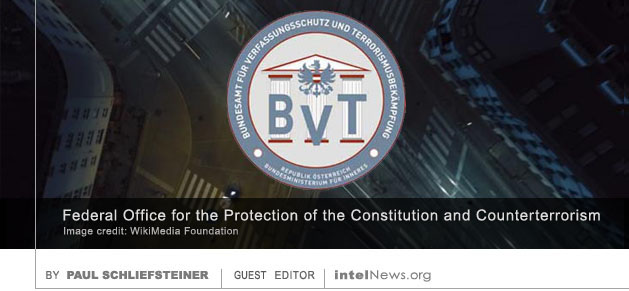 ON GOOD FRIDAY, MARCH 29, Egisto Ott, a former member of Austria’s now-dissolved domestic intelligence agency, the Federal Office for the Protection of the Constitution and Counterterrorism (BVT), was arrested in his house in Carinthia, Austria’s southernmost state. Ott had frequently been at the center of media attention in the past year, in connection with the network surrounding the fugitive financier and alleged spy Jan Maršálek, as well as alleged misconduct relating to carrying out illegal investigations of persons. Ott also seems to have been involved in an alleged attempt to create an intelligence unit, or even an entire shadow intelligence service, embedded inside Austria’s foreign ministry. Now the veteran police and intelligence officer stands accused by the state attorney of abusing his authority and of being part of an “intelligence activity to the disadvantage of Austria” —the only form of spying that is illegal under § 256 of the Austrian criminal code.
Ott’s arrest came several years after intelligence was first shared with Austria by Western partner services —allegedly the Central Intelligence Agency— that reportedly date from as early as November 2017. Back then, Ott allegedly received classified material from his service’s email address to his personal Gmail account. However, Peter Gridling, director of the BVT from 2008 until its dissolution in 2021, stated in a recent interview that the ensuing investigations did not yield actionable results that could be used in criminal proceedings. This statement is highly interesting, as Gridling filed accusations about Ott with the State Prosecutor’s Office himself, and would hardly have done unless he had access to hard evidence. Ott was consequently removed from the BVT and placed in Police Academy Austria (SIAK), which is responsible for training police officers and conducts research related to police and domestic security.
Nevertheless, according to media reporting, Ott seems to have kept and illegally used certain forms of identification that presented him as a police officer. He is also alleged to have maintained access to several police databases and to have retained his network of trusted informants that provided him with intelligence.  These included contacts in friendly foreign police services, whom Ott knew from his time as a liaison officer in Italy and Turkey. According to Gridling, these contacts were unaware that Ott had been removed from the BVT under suspicion of being unreliable and potentially even working for Russia. They therefore continued to help him when asked. Ott allegedly deceived his contacts by claiming that he needed information on cases relating to different kinds of extremism. As it turned out, according to the leaked arrest warrant, several of the individuals referred to by Ott as “suspects” in terrorism investigations were in fact Russian dissidents or intelligence defectors who were living as protected persons in Austria and elsewhere outside Russia.
It appears highly probable that Ott also had people inside the Austrian bureaucracy, including former colleagues in the BVT, who continued to provide him with information and assistance, even after the first allegations against him arose in 2017. As of now, at least one other officer from LVT Vienna (the state unit of the BVT) has been found to have illegally provided Ott with Information. It is likely, given the publicly available descriptions of Ott’s activities, that other individuals may be implicated. It also remains to be seen whether individuals involved in this case were able to join the BVT’s successor agency, the new Directorate of State Protection and Intelligence (DSN). Read more of this post
 AUSTRIAN GOVERNMENT OFFICIALS SIGNALED on Thursday the beginning of a major overhaul of the country’s intelligence community, in response to this week’s terrorist attack in Vienna, which killed four people. Another 20 people were wounded by a lone gunman, who used an automatic weapon to spread panic in the Austrian capital before he was shot dead by Austrian police.
 The former president of Argentina, Mauricio Macri, has been indicted as part of a widening investigation into a domestic spying program, which allegedly targeted opposition politicians, journalists and other public figures. The alleged espionage took place between 2015 and 2019, when Macri occupied the country’s highest office.
 The Saudi royal who is suspected by the international community of having ordered the state-sponsored murder of journalist Jamal Khashoggi is now leading a committee to reform the Kingdom’s spy services. Khashoggi, 59, was a Saudi government adviser who became critical of the Kingdom’s style of governance. He moved to the United States and began to criticize Saudi Arabia from the pages of The Washington Post. He was
 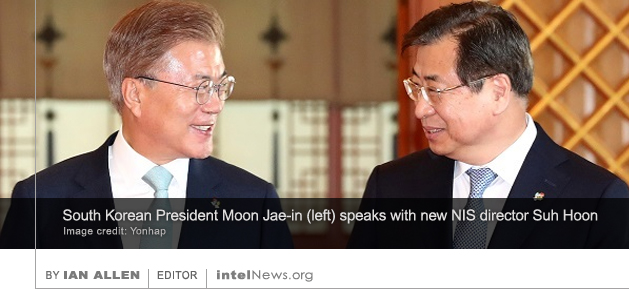 The new president of South Korea has officially banned the country’s spy agency from engaging in domestic intelligence gathering, in a move that some say signals an era of sweeping security reforms in the country. South Korea’s intelligence agency, the National Intelligence Service (NIS) fell into disrepute in recent years, after many of its officers were found to have secretly sided with conservative political candidates for public office. In 2015, the NIS’ former director, Won Sei-hoon, was
  Last week, following the results of Russia’s parliamentary election, Russian media run a story suggesting that the Kremlin is planning to implement far-reaching changes to the country’s intelligence apparatus.
 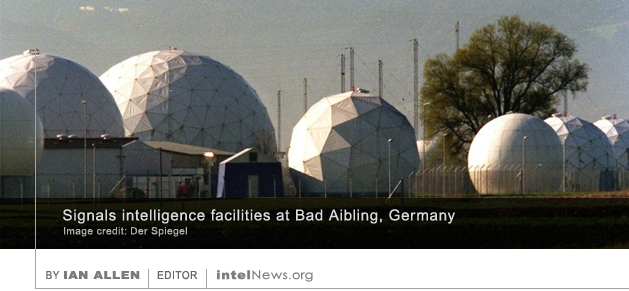 A major parliamentary inquiry into the operations of Germany’s main intelligence agency has concluded that it spied on nearly 3,500 foreign targets in recent years, most of which belonged to allied countries. The inquiry was initiated by the German government in response to a number of recent public controversies involving the Bundesnachrichtendienst, Germany’s Federal Intelligence Service, known as BND.
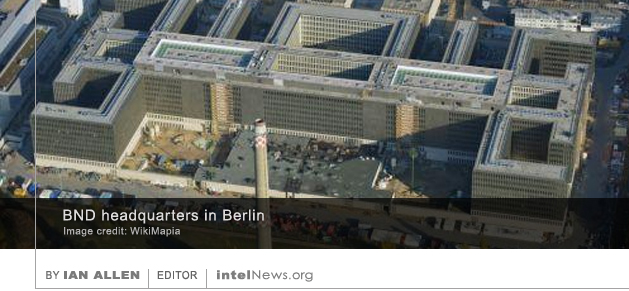 The senior executive body of the German government has approved draft legislation that reforms the country’s intelligence services, following revelations that Germany helped the United States spy on European states. The legislation is seen as a response by the German government to a number of recent public controversies involving the Bundesnachrichtendienst, Germany’s Federal Intelligence Service, known as BND.
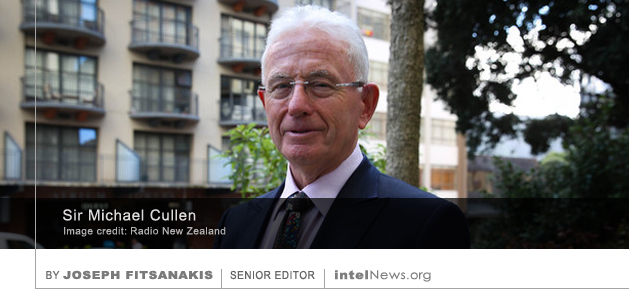 A former deputy prime minister of New Zealand, who is heading a major review of intelligence practices in the country, has said in an interview that spy agencies hurt their mission by practicing excessive secrecy. Sir Michael Cullen served as finance minister, education minister and attorney-General before serving as deputy prime minister of New Zealand, from 2002 to 2008. He was recently appointed by the government to co-chair a broad review of state intelligence agencies, with particular focus on updating the applicable legislative framework and evaluating the oversight exercised by lawmakers and the executive. The review is expected to affect the work of New Zealand’s two most visible intelligence agencies, the Security Intelligence Service and the Government Communications and Security Bureau.
 By IAN ALLEN | intelNews.org |
 By IAN ALLEN | intelNews.org |






 intelNews.org
Review calls for Europe-wide intelligence agency to prevent hybrid attacks
November 4, 2024 by Joseph Fitsanakis 4 Comments
Ursula von der Leyen, who presides over the EU’s powerful executive branch, known as the European Commission, assigned the review last March. It was led by Sauli Niinistö, former president of Finland, who was tasked with providing a set with proposals aimed to enhance the resilience of the EU in the face of current threats in the tactical and strategic domains. The final report, available here in PDF, was made publicly available in Brussels on Wednesday.
Among several recommendations, the report proposes the establishment of a “fully fledged intelligence cooperation service at the EU level”, which could serve the EU’s urgent “strategic and operational needs”. Such needs include countering espionage threats within EU institutions, as well as devising Europe-wide networks of defense against sabotage targeting EU critical infrastructure. Part of the new agency’s mission should be to prevent foreign intelligence services from operating “anywhere in the EU”, the report said.
In her public statement upon receiving the report, President von der Leyen stated that the EU should begin to think pre-emptively, rather than reactively, about conventional and unconventional threats to its security. Such a process should begin through “improving the flow of information gathering and intelligence gathering”, initially through existing EU-wide security bodies, such as the European Union Intelligence and Situation Centre (EU-IntCEN) and the European Centre for Information Policy and Security (ECIPS).
► Author: Joseph Fitsanakis | Date: 04 November 2024 | Permalink
Filed under Expert news and commentary on intelligence, espionage, spies and spying Tagged with ECIPS, EU-IntCEN, European Centre for Information Policy and Security, European Commission, European Union, European Union Intelligence and Situation Centre, intelligence reform, new, Sauli Niinistö, Ursula von der Leyen