News you may have missed #626

Katia Zatuliveter

Katia Zatuliveter

►►Analysis: On largely forgotten CIA officer Jim Thompson. The CIA’s longtime man in Southeast Asia, Jim Thompson, fought to stop the agency’s progression from a small spy ring to a large paramilitary agency. He was in many ways unique, but by the 1950s and early 1960s he would become part of a larger, growing, and much less idealistic machine, one that would expose his naiveté –and punish him for it. Interesting historical analysis from Foreign Policy.
►►Court blocks naming NATO official who had affair with alleged Russian spy. We have written before that Katia Zatuliveter, who is accused by British MI5 of being a spy for Russia, has admitted having a four-year affair with Liberal Democrat MP Mike Hancock, as well as with a Dutch diplomat and a NATO official. The latter, a German diplomat, was pictured in a newspaper last week. However, his face was obscured because of the terms of a court order that means he cannot be identified.
►►Promises made about Colombia’s new spy agency. Colombia’s disgraced DAS intelligence agency has finally been dissolved. Now the government’s senior National Security adviser, Sergio Jaramillo, has said that Colombia’s new intelligence service will focus on combating “government infiltration by criminal organizations”. I guess it doesn’t hurt to be ambitious.

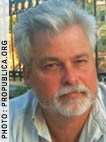
Exclusive: Interview with ex-CIA officer Charles S. Faddis

Charles S. Faddis

Charles S. Faddis

By JOSEPH FITSANAKIS | intelNews.org |
Yesterday I reviewed Charles S. Faddis’ new book, Codename Aphrodite (Orion, 2011), a gripping novel about a former CIA case officer’s freelance operation in Athens, Greece, in pursuit of November 17, one of Europe’s most notorious urban guerrilla groups. Today intelNews hosts an exclusive interview with Faddis, a straight-talking ex-CIA clandestine operations officer, who admits that his novel “is based on some very personal experiences” and that many of the book’s characters “are drawn much more from memory than they are from imagination”. Most regular readers of this blog probably know Charles “Sam” Faddis as the former head of the US National Terrorism Center‘s WMD Unit. His 20-year career as a CIA operations officer, with posts in South Asia, Near East and Europe, arguably culminated in 2002, when he led a CIA team into Iraq to help prepare the ground for the US invasion. He documented this in his 2010 book (co-authored with Mike Tucker) Operation Hotel California: The Clandestine War Inside Iraq. Following his 2008 retirement, Faddis, who was CIA Chief of Station in his last overseas tour, frequently comments on intelligence matters, most notably in his 2009 exposé Beyond Repair: The Decline and Fall of the CIA. Faddis’ answers to intelNews‘ questions are below. Read more of this post

News you may have missed #527

  • Has Microsoft broken Skype’s encryption? The US Congress has finally discovered Skype. But the timing may be bad, since there are rumors that Microsoft has found a way to break the encryption behind Skype communications, rendering all Skype calls potentially open to surveillance by governments. The company (Microsoft) has even filed a related patent application. Communications interception experts have been trying for some time to achieve this.
  • Ex-CIA agent loses legal battle over ‘unauthorized’ book. A former CIA deep-cover operative, who goes by the pseudonym ‘Ishmael Jones’, may have to financially compensate the Agency for publishing a book without the CIA’s approval, after a US judge ruled against him. Jones maintains that the CIA is bullying him because of his public criticism of its practices.
  • Family of accused Australian spy seeks support. The family of Australian-Jordanian citizen Eyad Abuarga, who has been charged with being a technical spy for Hamas, have called on the Australian government to do more to help him, with less than a month before he is due to face trial in Israel.

News you may have missed #486

  • Hundreds of US officials to leave Pakistan in Davis deal [unconfirmed]. Pakistani newspaper The Express Tribune claims that 331 US officials in Pakistan have been identified by Islamabad as spies and are “to leave the country”, under a secret deal between Pakistan and the United States. The alleged deal was reportedly struck between the two sides as part of the release of Raymond Davis, a CIA operative who shot dead two people in Lahore.
  • Australian government unveils new spy legislation. The Intelligence Services Legislation Amendment Bill, which has been unveiled by the Australian government, contains changes to the intelligence services and criminal code legislation designed to “improve the operational capabilities of key spy agencies“, according to the country’s Attorney-General.
  • Dutch military intelligence: closed on Sundays. A Dutch government-commissioned report has revealed that the country’s military intelligence service, the MIVD, played no role in the decision, earlier this month, to attempt an evacuation operation by helicopter near the Libyan city of Sirte. The reason is because the evacuation took place on a Sunday, and requests for intelligence went unnoticed at MIVD headquarters.

News you may have missed #476

News you may have missed #462

  • CIA secrets could surface in Swiss nuclear case. A seven-year effort by the CIA to hide its relationship with the Tinners, a Swiss family who once acted as moles inside the world’s most successful atomic black market, hit a turning point on Thursday when a Swiss magistrate recommended charging the men with trafficking in technology and information for making nuclear arms.
  • Pakistan spy chief to ignore US summons. The Pakistani government has announced that hat there is “no possibility” that Lt. Gen. Ahmad Shuja Pasha, the head of Pakistan’s powerful Inter-Services Intelligence Directorate, would obey a summons requesting his appearance before a court in the United States relating to the 2008 Mumbai terrorist attacks.
  • Australia told to prioritize spy recruitment. Carl Ungerer, from the Australian Strategic Policy Institute, has advised the Australian intelligence agencies to “look at ways to improve information gathering from human sources”, as they undergo a period of reform.

News you may have missed #440 (USA edition)

News you may have missed #409

  • Probe unearths secrets of Bulgaria’s assassination bureau. Previously unknown details on Service 7, Bulgaria’s Cold War-era assassination bureau, have been unearthed by one of Bulgaria’s leading newspapers, following a probe into 5,000 pages of declassified archives from the country’s former communist intelligence service, the First Directorate of the Committee on State Security.
  • US Pentagon bars troops from reading WikiLeaks. Any citizen, any foreign spy, any member of the Taliban, and any terrorist can go to the WikiLeaks web site, and download detailed information. Members of that same military, however, are now banned from looking at those internal military documents, because “doing so would introduce potentially classified information on unclassified networks”.
  • Analysis: Chasing Wikileaks. “[W]hatever the imperfections of WikiLeaks as a startup, its emergence points to a real shortcoming within our intelligence community. Secrets can be kept by deterrence –that is, by hunting down the people who leak them […]. But there are other methods: keep far fewer secrets, manage them better –and, perhaps, along the way, become a bit more like WikiLeaks. An official government Web site that would make the implementation of FOIA quicker and more uniform, comprehensive, and accessible”.

Bookmark and Share

News you may have missed #369

  • UN official criticizes US over drone attacks. The use of targeted killings by the CIA, with weapons like drone aircraft, poses a growing challenge to the international rule of law, according to Philip Alston, United Nations special rapporteur on extrajudicial killings.
  • Russian spies less active during Obama administration. The Czech Republic’s Military Intelligence Service said in its annual report on Tuesday that Russian agents have reduced their activities in the country since US President Barack Obama abandoned Bush-era plans for missile defense systems in Eastern Europe.
  • Analysis: A look back at US intelligence reform. The 2004 US Intelligence Reform and Terrorism Prevention Act was supposed to “address institutional obstacles that had complicated the intelligence community’s struggle to adapt to new technologies and a changing national security environment”. But five years later, many of those original obstacles remain in place.

Bookmark and Share

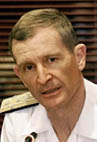
Analysis: Axing of US DNI points to structural issues

Dennis Blair

Dennis Blair

By IAN ALLEN | intelNews.org |
Although few American intelligence observers were astonished by last week’s involuntary resignation of the Director of National Intelligence (DNI), the silence by the White House on the subject has raised quite a few eyebrows in Washington. Admiral Dennis C. Blair, who became DNI in January of 2009, announced his resignation on Friday. Blair’s announcement came after a prolonged period of controversy, which included bitter infighting with the CIA, and culminated with the recent partial publication of a report by the Senate Select Committee on Intelligence, which blamed “systemic failures across the Intelligence Community” for the so-called Christmas bomb plot of last December. The problem is that Admiral Blair’s replacement will be the fourth DNI in five years, after John Negroponte, Mike McConnell and Blair himself. Read more of this post

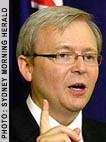
Comment: Major changes in Australian, NZ spy agencies

Kevin Rudd

Kevin Rudd

By IAN ALLEN | intelNews.org |
This website has been keeping tabs on the ongoing transformation of New Zealand and Australian intelligence agencies. Recent media reports from both countries indicate that the changes, many of which are still underway, will mark the broadest reorganization in New Zealand and Australian intelligence agencies’ operational focus and mission in over half a century. Read more of this post

News you may have missed #337

  • Another Iranian nuclear researcher reportedly defects. An academic linked with Iran’s nuclear program has defected to Israel, according to Ayoub Kara, Israel’s deputy minister for development in the Negev and Galilee. Kara said it “is too soon to provide further details”, adding that the defector is “now in a friendly country”.
  • Dutch spies to become more active abroad. The Dutch secret service, the AIVD, has announced a shift in strategy, deployed increasingly more officers abroad: “in Yemen, Somalia, and the mountains between Afghanistan and Pakistan”.
  • Why did the CIA destroy waterboarding evidence? It has been established that Porter J. Goss, the former director of the CIA, in 2005 approved the destruction of dozens of videotapes documenting the brutal interrogation of two terrorism detainees. But why did he do it? Former CIA officer Robert Baer examines the question.

Bookmark and Share

News you may have missed #334

  • Analysis: Split up the CIA, says veteran officer. A 15-year CIA veteran, who goes by the pseudonym Ishmael Jones, reveals in a new book that the Agency now has only “a handful” of non-official-cover officers, i.e. spies not affiliated with a US diplomatic mission abroad. In The Human Factor: Inside the CIA’s Dysfunctional Intelligence Culture, Jones argues the CIA should be broken up and its pieces absorbed by other US intelligence agencies.
  • Turkey appoints new intelligence director. It is expected that Turkey’s National Intelligence Organization (MİT) will soon be headed by Dr. Hakan Fidan, who will replace Emre Taner. MİT’s reputation has recently been severely hit by the involvement of some of its personnel in the notorious Ergenekon affair.

Bookmark and Share

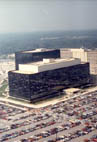
Analysis: US commentator argues in favor of breaking up NSA

NSA Headquarters

NSA HQ

By IAN ALLEN| intelNews.org |
The US National Security Agency (NSA) is a gigantic intelligence organization –the world’s largest– which is tasked by the US government with worldwide communications surveillance, as well as communications security. But Wired magazine’s Noah Shachtman explains that the NSA’s two-fold mission forces two essentially distinct agencies to coexist under one roof. There’s the signals-intelligence directorate, the Big Brothers who, it is said, can tap into any electronic communication. And there’s the information-assurance directorate, the cybersecurity nerds whose job is to make sure the US government’s computers and telecommunications systems are hacker- and eavesdropper-free. Read more of this post

News you may have missed #312

Bookmark and Share