CIA suffered ‘catastrophic’ compromise of its spy communication system
November 5, 2018 4 Comments
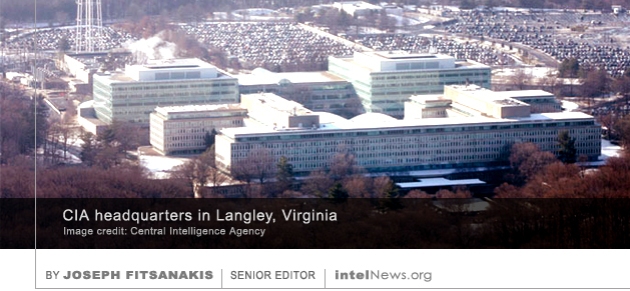 The United States Central Intelligence Agency suffered a “catastrophic” compromise of the system it uses to communicate with spies, which caused the death of “dozens of people around the world” according to sources. This is alleged in a major report published on Friday by Yahoo News, which cites “conversations with eleven former US intelligence and government officials directly familiar with the matter”. The report by the online news service describes the compromise of an Internet-based covert platform used by the CIA to facilitate the clandestine communication between CIA officers and their sources —known as agents or spies— around the world.
According to Yahoo News, the online communication system had been developed in the years after 9/11 by the US Intelligence Community for use in warzones in the Middle East and Central Asia. It was eventually adopted for extensive use by the CIA, which saw it as a practical method for exchanging sensitive information between CIA case officers and their assets in so-called ‘denied areas’. The term refers to regions of the world where face-to-face communication between CIA case officers and their assets is difficult and dangerous due to the presence of ultra-hostile intelligence services or non-state adversaries like the Taliban or al-Qaeda. However, it appears that the system was flawed: it was too elementary to withstand sustained scrutiny by Internet-savvy counterintelligence experts working for state actors like Iran, China or Russia.
In September of 2009, Washington made a series of impressively detailed revelations about the advanced status of Iran’s nuclear program. These angered Tehran, which redoubled its efforts to stop the US and others from acquiring intelligence information about the status of its nuclear program. Some sources told Yahoo News that one of the CIA assets inside Iran’s nuclear program was convinced by the Iranians to become a double spy. He proceeded to give Tehran crucial information about the CIA’s online communication system. Based on these initial clues, the Iranians allegedly used Google-based techniques “that one official described as rudimentary” to identify an entire network of CIA-maintained websites that were used to communicate with assets in Iran and elsewhere. The Iranians then kept tabs on these websites and located their users in order to gradually unravel an entire network of CIA agents inside their country. Around that time, Iranian media announced that the Islamic Republic’s counterintelligence agencies had broken up an extensive CIA spy ring consisting of more than 30 informants.
The Yahoo News report says that the CIA was able to successfully exfiltrate some of its assets from Iran before the authorities were able to apprehend them. The agency also had to recall a number of undercover officers, after they were identified by the Iranians. The effects of the compromise, however, persisted on a global scale, according to former US intelligence officials. In 2011 and 2012, another network of CIA spies was busted in China, leading to the arrest and execution of as many as three dozen assets working for the US. Many, says Yahoo News, believe that the Iranians coached the Chinese on how to use the CIA’s online communication system to identify clandestine methods and sources used by the agency.
Along with other specialist websites, IntelNews monitored these developments as they took place separately in Iran and China. However, the Yahoo News report is the first to piece together these seemingly disparate developments and suggest that they were likely triggered by the same root cause. What is more, the report suggests that the CIA had been warned about the potential shortcomings of its online communication system before 2009, when the first penetrations began to occur. In response to the compromise, the CIA has reportedly modified, and at times completely abandoned, its online communication system. However, the implications of the system’s compromise continue to “unwind worldwide” and the CIA is “still dealing with the fallout”, according to sources. The effects on the agency’s operational work are likely to persist for years, said Yahoo News.
► Author: Joseph Fitsanakis | Date: 05 November 2018 | Permalink
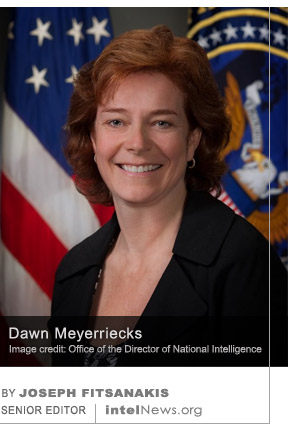 In a rare public appearance on Sunday, a senior member of the United States Central Intelligence Agency discussed ways in which ongoing technological changes pose challenges to concealing the identities of undercover operatives. Dawn Meyerriecks worked in industry for years before
  Ukrainian security service personnel raided the offices of a Russia-based internet search engine firm in two cities on Tuesday, as part of a treason investigation. The probe is reportedly related to the ongoing dispute between Kiev and Moscow, which intensified after 2014, when Russia unilaterally annexed the Russian district of Crimea. The Ukrainian government also accuses the Kremlin of clandestinely supporting pro-Russian insurgents in southeastern Ukraine, something that Moscow denies.
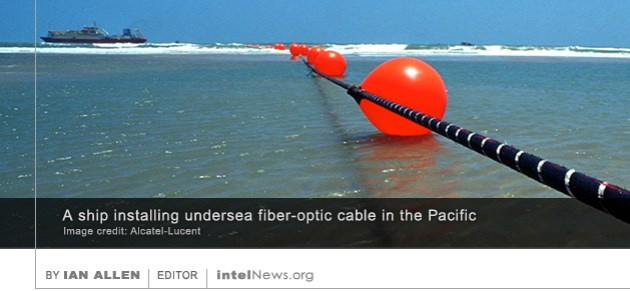 An increased presence of Russian submarines near American territorial waters appears to correspond to the location of undersea Internet cables used for commercial and military communications, according to officials.












 intelNews.org
Al-Baghdadi’s ISIS hideout was equipped with frequently used internet connection
November 15, 2019 by Joseph Fitsanakis Leave a comment
The region that surrounds Barisha is under the control of Turkey and can most accurately be described as a Turkish protectorate inside Syria. Moreover, it is heavily monitored by several intelligence agencies that have been looking for al-Baghdadi for years. It has therefore been generally assumed that the Islamic State leader’s hideout was kept isolated from the outside world and that no digital telecommunications means were used by its inhabitants, out of fear that they would be monitored by the Syrian authorities, Turkey, the United States, or others.
But a new report from the Dubai-based Al-Aan TV claims that the hideout was equipped with a frequently used internet connection and that it was active almost up to the moment US troops stormed the compound. The exclusive report, which aired on Thursday, alleges that the internet connection was set up in February of this year, and that it was used almost daily. The last time it was active was just 12 hours prior to the raid that killed al-Baghdadi and several members of his family.
The bill for the internet connection was approximately $8.00 a month and was paid by Abu Muhammad al-Halabi, a Syrian smuggler whose name also appears on tax records as the owner of the property, according to Al-Aan. The report provides no information about the type of online activity that the internet connection at the Barisha compound was used for.
► Author: Joseph Fitsanakis | Date: 15 November 2019 | Permalink
Filed under Expert news and commentary on intelligence, espionage, spies and spying Tagged with Abu Bakr al-Baghdadi, Barisha (Syria), Internet, Islamic State, News, Syria