Interview with agent who caught US-Israeli spy Jonathan Pollard

Jonathan PollardBy JOSEPH FITSANAKIS | intelNews.org |
Twenty-six years ago this month, a United States court convicted Jonathan Jay Pollard, a US Navy analyst who had been caught spying on his country for Israel. Pollard, who is still serving his life sentence, enjoys tremendous popularity in Israel as well as among pro-Israeli public figures in the US. His supporters in Israel and elsewhere view him as a hero who is serving an unfairly harsh sentence and they pressure the US government to release him. In light of that, it is worth paying attention to a recent radio interview with the man who caught him spying on America. The interview was conducted by Mike Lanchin, a reporter and producer for BBC radio’s Witness program. Lanchin managed to trace Ron Olive, a retired Assistant Special Agent at US Navy Counterintelligence, who in June 1986 cracked the Pollard case, leading to the spy’s arrest and eventual conviction. Olive, who now runs his own security consultancy firm in Arizona, told Witness that it took him and his fellow investigators over six months to piece together their case against Pollard. He added that, according to his investigation, “Pollard stole so many documents, so highly classified, more so than any other spy in the history of this country, in such a short period of time”. The case, said Olive, was the worst he had ever seen and it “devastated the entire [US] Intelligence Community”. The reason was not only the volume of stolen classified material, but also the fact that Pollard “could have been stopped from the very beginning”. Read more of this post

News you may have missed #741

Glenn CarleBy IAN ALLEN | intelNews.org |
►►MI6 role in rendition could be concealed in new bill. Libyan government officials Sami al-Saadi and Abdel Hakim Belhaj, who allege that they were taken by rendition by Britain to Libya eight years ago, are expected to begin legal proceedings against the British government and Jack Straw, Britain’s former foreign secretary, next month. However, after pressure from the security services, MI5 and MI6, the British government is preparing to publish a Justice and Security Bill that could allow these cases to be held in their entirety behind closed doors.
►►Aussie spy agency defends new headquarters. The Australian Security Intelligence Organisation says its new headquarters in Canberra is not at risk of being spied upon, despite the use of a lot of glass. ASIO director general David Irvine told a senate committee on Thursday it would be impossible for someone with a high resolution camera on the other side of Lake Burley Griffin to spy on the nation’s spies. Australian Greens senator Scott Ludlam had asked whether the design of the “glass palace” could threaten the secrecy of its work.
►►Good interview with ex-CIA officer Glenn Carle. In this interview, Carle, a retired CIA case officer who wrote The Interrogator: An Education, says his former employers have called his publisher asking them to pulp his book; they rang every major network to prevent him going on air. They are, he says several times, “vicious” and have perpetrated a stain on America’s national character.

News you may have missed #733

Stella RimingtonBy IAN ALLEN | intelNews.org |
►►Women in US intelligence seek balance in life. Nada Bakos (photo) was one of many women serving as CIA analysts before 9/11, who then moved to the operations side after the terrorist attacks. She didn’t yet have a family when she accepted her assignment as a targeting officer in Iraq. After a couple of years, as Bakos was deep into her career on the operations side, she decided she wanted to start a family. That was a problem. At least 160 other women feel her pain. Women from the CIA, the National Security Agency, Naval Office of Intelligence and dozens of other agencies met last week at the Women in National Security conference in McLean, Virginia, to try and find a better way.
►►Interview with ex-MI5 Director Stella Rimington. Australian Radio hosts an interesting audio interview with Dame Stella Rimington, who headed MI5, Britain’s domestic intelligence agency, from 1992 to 1995. She speaks about the experience of being the first director of MI5 to be publicly identified and the sometimes sinister invasions to her privacy as a result. Moreover, she says the only thing that surprised her about the Leveson inquiry into phone hacking and the conduct of the British media is that nobody recognized it was going on before.
►►US government think-tank warns against strikes on Iran. The RAND Corporation, a think tank which advises the United States Department of Defense, warned last week Tuesday against an Israeli or American attack on Iran’s nuclear reactors, and recommended that the administration of Barack Obama try to “quietly influence the internal Israeli discussion over the use of  military force”. In 2009, before Stuxnet, a RAND report had argued that the US may be better off focusing on cyber-defense instead of resorting to cyberattacks.

News you may have missed #732 (interview edition)

Thomas DrakeBy IAN ALLEN | intelNews.org |
►►Interview with H. Keith Melton. A well written interview with H. Keith Melton, one of the world’s best-known intelligence historians, who describes himself as “a historical consultant within the US intelligence community”. Melton has been a guest lecturer at the Federal Bureau of Investigation, the National Security Agency and the Joint Military Intelligence College. He also says he is “an ongoing adviser to other US intelligence agencies”.
►►Interview with editor of Eye Spy magazine. An extensive interview with Mark Birdsall, editor of the only independent publication dedicated to espionage and intelligence. He shares the story behind the magazine, his take on the current state of espionage and security, and on global security issues. Among other things, Birdsall says that some claim Eye Spy is “a government organ, [while] others an attempt to glean information that should not be published”. He also states that “it has taken a decade of hard work for the title to get recognition in some intelligence circles”.
►►Interview with NSA whistleblower Thomas Drake. Drake began his NSA career as a contractor in 1991, and formally joined the Agency in 2001, working until 2008 in the Agency’s Signals Intelligence and Engineering directorates. The US government took Drake to court, accusing him of leaking secrets about the NSA to a journalist. But the judge in his case, Richard D. Bennett, refused to sentence him to prison, recognizing that his genuine intention in leaking the secrets was to expose mismanagement at the NSA.

News you may have missed #715 (Israel edition)

Dan MeridorBy IAN ALLEN | intelNews.org |
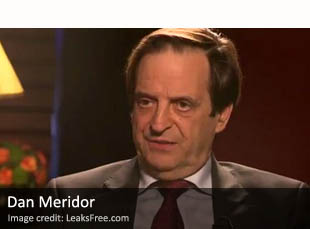
►►Israeli Deputy PM says “attack on Iran won’t help us”. In this interview conducted at Israel’s embassy in London, the country’s Deputy Prime Minister and Minister of Intelligence and Atomic Energy, Dan Meridor, says that “an attack on Iran wouldn’t add anything to [Israel’s] security”. He adds that “it’s possible that we have to use force”. But, he notes, “I don’t think Israel should use the military option. I don’t agree with some of my colleagues who support a military strike”. Compare that with the last time he spoke about this issue.
►►Analysis: Beware of faulty intelligence on Iran. The experienced Israeli intelligence correspondent Ronen Bergman argues that the decision to attack Israeli militarily “will be driven to an extraordinary extent by intelligence reports” produced by Washington and Tel Aviv. For this reason, he argues, “even a slight intelligence gaffe could have an outcome of historic proportions”. Furthermore, he calls on America and Israel not to rely on “scraps of information […] as the basis for action against Iran”, insisting that “a miscalculation could be the worst possible outcome”.
►►Israeli spy Pollard back in prison after hospitalization. Israeli President Shimon Peres sent a letter to United States President Barack Obama last week urging him to consider granting clemency to convicted spy Jonathan Pollard based on his ill health. The White House rejected the appeal and now Pollard, who was convicted in 1987 for selling classified US government information to Israel, is back in prison.

Interview with ex-Mossad director Meir Dagan

Meir DaganBy JOSEPH FITSANAKIS | intelNews.org |
The former director of Israel’s most revered intelligence agency has given an extensive interview on why he believes a military strike against the Iranian nuclear program “should be the last option” for Israel. In November 2010, Meir Dagan stepped down from his post as the head of the Mossad after having led the agency for over eight years —the longest tenure of any Mossad director. During his leadership, the Israeli intelligence agency augmented its notoriety by assassinating Imad Mughniyah, security chief of the Lebanese militant group Hezbollah, and allegedly killing Islamic Hamas weapons procurer Mahmoud al-Mabhouh. The Mossad is also said to have played a role in Operation ORCHARD, the 2007 Israeli air attack on what is thought to have been a secret nuclear reactor in Al-Kibar, Syria. However, when it comes to the Iranian nuclear program, the 67-year-old retired spy is adamant that the military option would be a strategic error of gigantic proportions. Last year, Dagan admonished calls by hawkish Israeli politicians to bomb Iran as “the stupidest idea” he had ever heard. In an interview with Reuters news agency published on Thursday, April 5, Dagan said the word “stupid” was “a harsh expression” and “not something [he is] very proud of”. But he insisted that the military option should be last on the table, and said that it would be a mistake for Israel to lead international action against the Iranian nuclear program. Instead, the “Iranian problem” should be “left in the hands of the international community”, said Dagan. The Mossad veteran went on to identify three main problems with the military option. To begin with, he said, military action, no matter how damaging in the physical sense, “cannot disarm the core factor of the Iranian program: knowledge” about how to build a nuclear device. Second, Dagan argued that, even if a military strike managed to eliminate a considerable portion of the Iranian nuclear program’s infrastructure —which is not at all assured— it would likely cause a significant backlash. That backlash would culminate in “a regional war” that would involve simultaneous actions by non-state forces allied with Iran, including Hamas, Islamic Jihad, and Hezbollah. Read more of this post

News you may have missed #690

Katya ZatuliveterBy IAN ALLEN| intelNews.org |
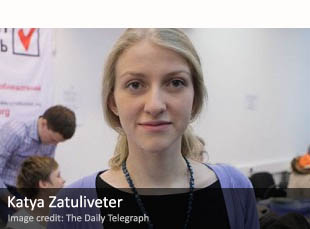
►►Interview with Katia Zatuliveter. Just over three months ago Katia Zatuliveter was fighting to clear her name over claims she was a Russian spy who had passed British military secrets to Moscow. Now, in her first newspaper interview since winning her appeal against deportation from the UK, Katia Zatuliveter has told The Daily Telegraph why she does not support Vladimir Putin.
►►US Special Forces in Afghanistan to transfer to CIA. Top US Pentagon officials are considering putting elite special operations troops under CIA control in Afghanistan after 2014. If the plan were adopted, the US and Afghanistan could say there are no more U.S. troops on the ground in the war-torn country because once the SEALs, Rangers and other elite units are assigned to CIA control, even temporarily, they are not considered soldiers.
►►Indian army accused of spying on government officials. The Indian army is accused of using two surveillance vehicles to snoop near the offices and houses of senior Indian Defense Ministry officials. The vehicles with “off the air interceptors” were alleged to be parked in various localities in the New Delhi. Similar equipment is said to be used by the National Technical Research Organisation to listen to conversations without bugging the premises. The Defense Ministry has reportedly ordered a probe by the country’s Intelligence Bureau.

Analysis: The How and Why of Modern Assassinations

Bomb blast site in New Delhi, IndiaBy JOSEPH FITSANAKIS | intelNews.org |
Reports on the discovery last week of a synchronized plan to attack Israeli diplomats in India, Georgia, and Thailand, are still unfolding. At least four people —including the wife of an Israeli diplomat— were injured in New Delhi, when a bomb ripped through a van belonging to the Israeli embassy there. Another bomb was defused by Georgian counterterrorist forces after it was found fastened under an Israeli diplomatic vehicle in Tbilisi. And in Bangkok, two Iranian nationals were arrested after a bomb they were manufacturing exploded prematurely in a rented house in the Thai capital. In an interview I gave this past weekend to The Journal, one of Ireland’s most popular newsmagazines, I noted that the use of targeted assassinations as a means of achieving broader political goals is, of course, not new. But there are definite trends that we have been able to see developing during the past decade or so. For starters, even though the methods of assassination vary greatly, there are common trends one can point out, particularly in the organizational infrastructure of state-sponsored assassination operations. There is, to be precise, an increasing complexity in the way these operations are planned prior to their execution by specialized hit teams. I told The Journal’s interviewer, Susan Ryan, that the increasing sophistication of these types of operations can be appreciated by comparing older examples with case studies that are more recent. Take, for instance, the Black September killings, conducted by Israeli intelligence in response to the 1972 massacre of Israeli athletes at the Munich Olympics. Read more of this post

News you may have missed #627

Omar Suleiman

Omar Suleiman

►►Egyptian ex-spy chief appointed security adviser to Saudi Crown Prince. Saudi Arabia’s Crown Prince Nayef bin Abdul Aziz has appointed Egypt’s former Director of General Intelligence, Omar Suleiman, as his security advisor. From 1986 until his forced resignation in spring this year, Suleiman had been the main conduit between Washington, Tel Aviv and the government of Hosni Mubarak.
►►Russia’s spy chief in rare interview. It is very rare that the men that run Russia’s powerful intelligence services give detailed interviews. But that’s just what Alexander Shlyakhturov, the head of military intelligence service, known as the GRU, did earlier this month with the Russian newspaper Rossiyskaya Gazeta.
►►US intel agencies brace for budget cuts. After seeing spending double over a decade, US intelligence agencies are bracing for about $25 billion in budget cuts over the next 10 years. “We’re going to have less capability in 10 years than we have today”, said Director of National Intelligence James Clapper, who sits atop the 16 departments, agencies and offices that comprise the US intelligence community and spend a combined $80 billion a year.

US misused our intel to justify Iraq War, says German ex-spy chief

August Hanning

August Hanning

By JOSEPH FITSANAKIS | intelNews.org |
The former Director of Germany’s foreign intelligence service has accused the Bush administration of consciously falsifying intelligence supplied by Germany in order to justify going to war in Iraq. August Hanning, who served as Director of Germany’s Bundesnachrichtendienst (known as BND) from 1998 to 2005, said that the BND had no part in the deception, and that “the responsibility for the war lies solely with the Americans”. In an interview to the Sunday edition of German national newspaper Die Welt, Hanning explained that the administration of US President George W. Bush was especially interested in intelligence collected by the BND from an Iraqi defector codenamed ‘Curveball’. The defector, whose real name is Rafid Ahmed Alwan al-Janabi, arrived in Germany in 1999 and applied for political asylum, saying he had been employed as a senior scientist in Iraq’s biological weapons program. Among other things, he told his BND debriefing team that Saddam Hussein had built a fleet of biological weapons labs on wheels, in order to avoid detection from America and other countries. After consulting with biological weapons experts, the BND expressed serious doubts about Curveball’s reliability, but kept him in Germany nonetheless. Several years later, al-Janabi confirmed the BND’s suspicions, by admitting that he had invented his allegations in order to help bring down the regime of Saddam Hussein. He also admitted that he was in reality a taxi driver from Baghdad, who had used his undergraduate knowledge of engineering to get asylum in Germany. At the time, said Hanning, the BND strongly and repeatedly communicated to the CIA its doubts about Curveball’s claims, something which is known. What is not known, however, is that Hanning personally wrote to then CIA Director George Tenet and urged him to adopt a skeptical approach to the defector’s allegations. The former BND chief told Die Welt that he was “assured by the Americans that our intelligence would not be used in Powell’s speech”. Read more of this post

Exclusive: Interview with ex-CIA officer Charles S. Faddis

Charles S. Faddis

Charles S. Faddis

By JOSEPH FITSANAKIS | intelNews.org |
Yesterday I reviewed Charles S. Faddis’ new book, Codename Aphrodite (Orion, 2011), a gripping novel about a former CIA case officer’s freelance operation in Athens, Greece, in pursuit of November 17, one of Europe’s most notorious urban guerrilla groups. Today intelNews hosts an exclusive interview with Faddis, a straight-talking ex-CIA clandestine operations officer, who admits that his novel “is based on some very personal experiences” and that many of the book’s characters “are drawn much more from memory than they are from imagination”. Most regular readers of this blog probably know Charles “Sam” Faddis as the former head of the US National Terrorism Center‘s WMD Unit. His 20-year career as a CIA operations officer, with posts in South Asia, Near East and Europe, arguably culminated in 2002, when he led a CIA team into Iraq to help prepare the ground for the US invasion. He documented this in his 2010 book (co-authored with Mike Tucker) Operation Hotel California: The Clandestine War Inside Iraq. Following his 2008 retirement, Faddis, who was CIA Chief of Station in his last overseas tour, frequently comments on intelligence matters, most notably in his 2009 exposé Beyond Repair: The Decline and Fall of the CIA. Faddis’ answers to intelNews‘ questions are below. Read more of this post

Analysis: Interesting interview with a CIA psychiatrist

David Charney

David Charney

By IAN ALLEN | intelNews.org |
Veteran national security correspondent Jeff Stein has published some interesting highlights of an interview with psychiatrist Dr. David L. Charney, who has worked for the US intelligence community for over 20 years. Charney is one of several medical professionals whom the CIA has appointed to assist its personnel in dealing with a variety of emotional issues. Additionally, he has previously been appointed to supervise the psychiatric assessment of a number of American double spies, including Robert Hanssen, the former FBI agent who spied for the Soviet Union and Russia for over two decades. In the interview, Charney identifies a number of psychological disorders that tend to burden CIA officers, including post-traumatic stress disorder (PTSD), which often plagues agents who have survived “death-defying escapes after their covers were blown”. Read more of this post

Former MI5 head warns UK turning into a police state

Rimington

Rimington

By JOSEPH FITSANAKIS | intelNews.org |
It is one thing for the British government to be accused of exploiting anxiety over terrorism to restrict civil liberties. It is quite another for these accusations to be made by the former Director-General of MI5, Britain’s foremost counterintelligence organization. Dame Stella Rimington, who headed the secretive agency between 1992 and 1996, recently gave an interview to Spanish daily La Vanguardia, in which she accused the British government of “scaring people to pass laws restricting freedoms”. She criticized the government of Prime Minister Gordon Brown of failing to strike the proper balance between civil liberties and security, thus gradually giving in to “one of the goals of terrorism”, namely living “in fear and under a police state”. She also criticized the US for going “too far with Guantánamo and torture, [which] has the opposite effect [to security]: there are more and more suicide bombers who find greater justification”, she said. Read more of this post