Israeli soldiers working for Iranian intelligence spied on the Iron Dome
February 17, 2025 3 Comments
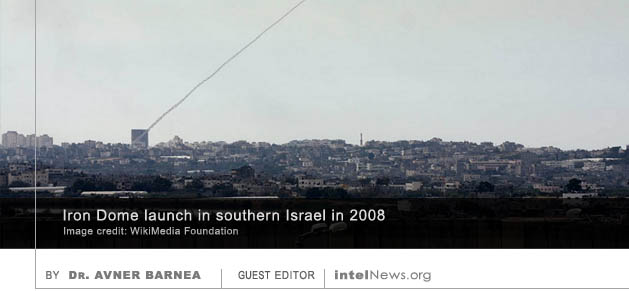 LAST MONTH, ISRAEL ARRESTED two reservists following an investigation that lasted several months and centered on uncovering espionage for an Iranian state entity during wartime. The two reservists had completed their regular military service before joining the reserves.
The two soldiers, identified as Yuri Eliasfov and Georgi Andreyev, held sensitive positions, and a least one was serving as a member of staff in Israel’s Iron Dome air defense system. The soldier serving in the Iron Dome is accused by the police, the Israel Security Agency (ISA), and the Israel Defense Forces (IDF), of aiding the enemy during wartime, for which the penalty is life imprisonment or death without the discretion of the court. A prosecutor’s statement has been filed against the two soldiers.
According to the investigation, the espionage affair began when one of the suspects, who served in a classified security system, sought to make contact with Iranian intelligence on social media. During his search, he contacted an Iranian operator, who asked him to complete various tasks in exchange for payments. The investigation revealed that the two soldiers were recruited by Iranian intelligence through the Internet to carry out missions in exchange for payments.
They two men were initially required to spray anti-government graffiti in Tel Aviv and in Israel’s the northern region. Giorgi Andreyev, fearing the consequences of such actions, withdrew from the operation. “We are working for Iran and doing something dangerous,” he told Eliasfov. Despite this, however, Eliasfov, who is reportedly the main suspect in the case, continued his activities.
The undercover investigation revealed that Eliasfov, who serves in the Iron Dome system, filmed a video while participating in a classified information, which he then sent to his Iranian handler. He received $3,500 from the same Iranian official, while his at-times accomplice received $70. During his interrogation, Eliasfov claimed that he committed the acts due to being in a difficult financial situation and because he sought to obtain money easily.
One of the interesting findings that emerged from the investigation of the suspects was that other soldiers and family members were aware of Eliasfov’s initial actions and warned him that he was connecting himself with Iranian elements. Despite that, Eliasfov continued his espionage activities, which included filming a video from inside an Iron Dome facility. The footage reportedly contained classified material that could significantly endanger the security of the State of Israel. Read more of this post
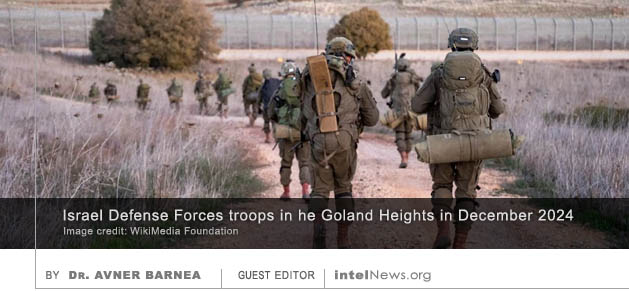 THE COLLAPSE OF THE regime of Syrian President Bashar al-Assad on December 8 caught the Israel Defense Forces (IDF) and Israel’s intelligence community —mainly Israel Military Intelligence (IMI) and the Mossad— by surprise. Assad’s collapse occurred much faster than Israel had estimated. Israel did not expect that the Syrian Arab Army would disintegrate so resoundingly, within 48 hours of the attack by the Syrian rebels.
 southern Syria, as well as what is happening at the Syrian and Russian military bases in Latakia and Tartus. Moreover, the IDF is monitoring the activities of Iranian elements in Syria, including on the border with Lebanon, to prevent the possibility of military equipment being transferred from Syria to Hezbollah.
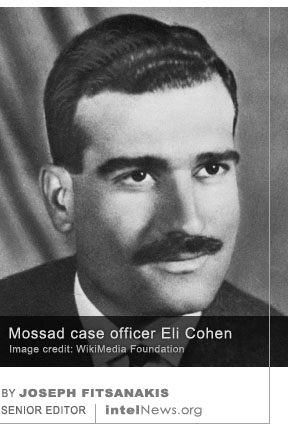 ISRAELI OFFICIALS ARE REPORTEDLY trying to recover the remains of Eli Cohen, an Israeli spy who was hanged in Syria in 1965, after his espionage activities were discovered. Born in Alexandria in 1924, Cohen was an Egyptian Jew, whose family immigrated to Israel after 1949. After joining the Mossad, Israel’s primary external intelligence agency, Cohen became a katsa, or case officer.
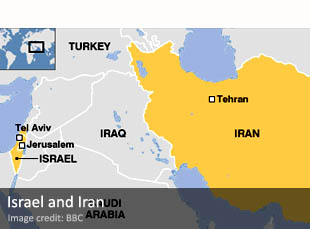 THE ISRAEL SECURITY AGENCY (ISA) recently
  THE ISRAELI SECURITY AGENCY (ISA) has announced the
  LEAKED INFORMATION PUBLISHED BY leading German media outlets has revealed Russia’s plans for an influence campaign targeting Israel. The information was leaked earlier this month by the German newspaper Süddeutsche Zeitung and German television stations Norddeutscher Rundfunk (NDR) and Westdeutscher Rundfunk (WDR), as well as by
  parliament— would support a possible transfer of military aid to Ukraine.
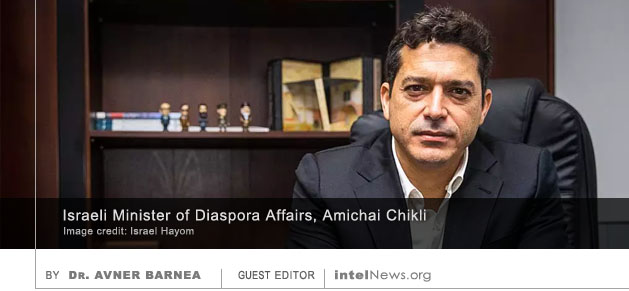 SEVERAL WEEKS AGO, ISRAEL’S Minister of Diaspora Affairs, Amichai Chikli, reportedly met with the chief executive officer (CEO) of Israeli private intelligence company Black Cube.
  THE OFFICIAL INTERNAL INVESTIGATION into the performance of Israel’s Military Intelligence Directorate (MID) during the run-up to the Hamas attack of October 7, 2023, has been released. Known as The Road to War, the report addresses the central question of: how did the MID –the main military intelligence body of the Israel Defense Forces, or IDF– miss all the signs of the pending Hamas attack, and how did all the available warnings go unheeded?
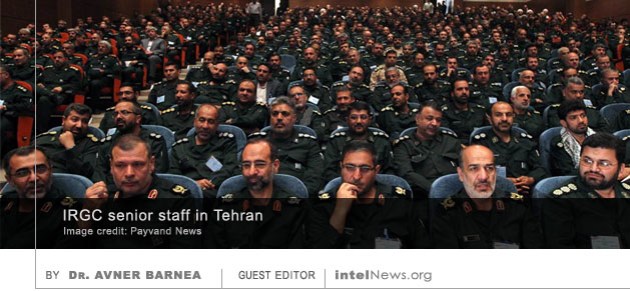 THE TARGETED KILLING OF Hassan Mahdawi, a high-ranking member of Iran’s Islamic Revolutionary Guards Corps (IRGC) and the commander of the Quds Force in Syria and Lebanon, was carried out by Israel on April 1, 2024. The actual assassination was based on precise operational intelligence, while Israel’s assessment of Iran’s response was wrong.
 ON MARCH 23, CHANNEL 12 of Israeli television aired a remarkable interview with Sassi Elya, the former director of technology at the Israel Security Agency (ISA). Better known by the acronyms Shin Bet or Shabak, the ISA is Israel’s domestic security service. The interview had initially been scheduled for broadcast as part of the evening news on October 7, 2023. However, its airing was canceled due to the attack on Israel by Hamas, which occurred that morning.
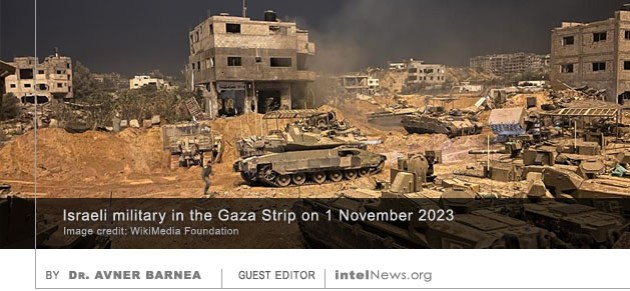 SINCE OCTOBER 7, 2024, when Israel was caught off guard by a sudden and highly damaging attack from Hamas, more information has surfaced regarding why there was no prior warning about the attack and the failures of Israeli intelligence in this regard.
 capabilities. Another important insight is that the counterintelligence structures inside Hamas were successful in preventing Israeli intelligence from recruiting agents who were close enough to Sinwar to be able to alert Israel about the impending attack. Furthermore, Israel’s collection and analysis of signals intelligence was unproductive, possibly because Hamas was successful in countering Israel’s ability to produce effective intelligence from signals intercepts.
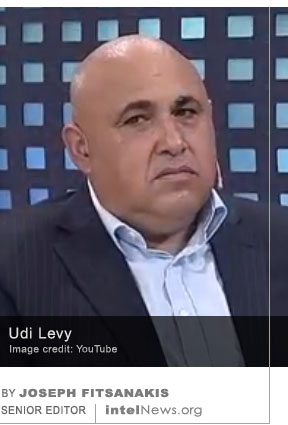 A RETIRED SENIOR MOSSAD official has alleged that Israeli Prime Minister Benjamin Netanyahu repeatedly ignored, and even frustrated, efforts to stop the flow of hundreds of millions of dollars to Hamas. This inaction may have enabled the Palestinian militant group to plan, organize and execute Operation Al-Aqsa Flood, which killed over 1400 Israelis on October 7, 2023, and sparked the current war between Israel and Hamas.
 THE OCTOBER 7 ATTACK on Israel was a total surprise. There was no warning. There were very few signs of a possible attack. Israeli intelligence evaluated these signs as elements of a routine military exercise by Hamas, and even assessed them as parts of an imaginary scenario. It therefore gave no warning to those Israeli Defense Forces (IDF) units that were stationed on the border with Gaza. Meanwhile, what we know about the intelligence failure of October 7 will likely pale before what the commission of inquiry will reveal once it is established. That was precisely what happened in the case of the Agranat Commission of Inquiry, which made significant revelations while investigating the intelligence failings of the IDF in the run up to the 1973 Yom Kippur War.
 time, in the first two days of the conflict the IDF was confused and acted without direction, in the apparent absence of relevant action plans for what to do in the event of a massive invasion. The IDF was clearly not ready for such a scenario.
 for those conclusions to become public. What is to be done in the meantime? There is public pressure to launch the inquiry soon.
 MIDDLE EAST OBSERVERS WERE hardly surprised by yesterday’s news of the apparent assassination of Hamas leader Saleh al-Arouri in Lebanon. Not only was al-Arouri a
  Yesterday’s assassination at the very heart of Hezbollah’s lair was nothing short of a demonstration of the Mossad’s competency in special operations.








250 ex-Mossad members sign letter criticizing Netanyahu’s stance on hostages
April 14, 2025 by Joseph Fitsanakis 5 Comments
The letter is signed by dozens of former Mossad department heads and deputy department heads, one former deputy director, and three former directors: Tamir Pardo, Efraim Halevy and Danni Yatom. It openly criticizes the administration of Prime Minister Netanyahu for prioritizing the war against Hamas over the lives of 59 Israeli hostages, who are believed to remain captive by the militant Palestinian organization in the Gaza Strip. It also calls on Israeli officials to “make brave decisions and act responsibly for the security of the country and its citizens”.
The letter claims to voice the views of “Mossad and special services veterans, who have dedicated many years to safeguarding the country’s security”. It lambasts the Netanyahu government for refusing to negotiate with Hamas to secure the release of the Israeli hostages, and warns that Mossad and special services veterans “will not continue to stand by” any longer. It also expresses “full support” for an earlier letter written by Israel Air Force pilots, some of whom were subsequently dismissed form the service for criticizing the government.
The letter by the ex-Mossad service members shares the authors’ “deep concern for the future of the country” and calls for Prime Minister Netanyahu “to act immediately to reach an agreement to return all 59 abductees home, without delay, even at the cost of ceasing fighting.” It concludes with a direct message to the embattled Netanyahu: “The sanctity of life, Mr. Prime Minister, takes precedence over ‘God of Revenge’”.
► Author: Joseph Fitsanakis | Date: 14 April 2025 | Permalink
Filed under Expert news and commentary on intelligence, espionage, spies and spying Tagged with 2023 Israel-Hamas War, Danni Yatom, Efraim Halevy, Israel, Mossad, News, Tamir Pardo, Unit 8200