June 12, 2023
by Joseph Fitsanakis
 THE 49-PAGE GRAND JURY indictment, filed last week in Florida by the United States Department of Justice, contains 37 criminal charges against former president Donald Trump. The charges can be summarized into a two-fold accusation: Trump is alleged to have stolen more than 300 classified documents upon leaving the White House in January 2021. Moreover, he allegedly schemed with a group of advisors and aides in order to obstruct efforts by the government to retrieve the stolen documents. Both accusations are spelled out in stark detail in the pages of the indictment.
What remains unanswered, however, is the motive. Why did Trump allegedly take several hundred classified documents from the White House? Did he select specific documents to purloin? And, if so, why these specific documents? Lastly, why did the former president go to such pains to frustrate the government’s efforts to recover the documents? There has been intense public speculation about the answers to these questions. Yet the grand jury indictment does not appear to attempt to establish the possible motive behind the alleged crime. Nor  does it need to. Establishing a motive is not required in order to demonstrate the need for a trial, or indeed a conviction. Given the high stakes of this case, however, establishing a motive can provide much-needed clarity in the public sphere.
Accidental or Malicious?
It is important to clarify with precision what the grand jury indictment does not state: its pages do not contain any suggestion that Trump took possession of the classified documents in order to share them with specific individuals or entities, American or foreign. Nor does the indictment suggest that the former president intended to use the classified information in his possession for personal financial gain —for instance to promote his investment ventures at home or abroad, or to gain leverage and win over potential business partners.
So, why did Trump do it? As The New York Times explained on Sunday, the indictment does offer some hints of motives, if one reads between the lines. One possible explanation stems from Trump’s time in the White House, during which he learned to associate his access to classified information as a paramount perk that came with being president of the United States. It follows that, retaining access to classified information was a way for him to maintain control over the office of the presidency. That strong need intensified even more after January 2021, as Trump was clearly “not ready to let go of the perks of holding the highest office in the country”. Indeed, the indictment describes several examples that reveal the strong sense of ownership that the former president felt about the classified documents he kept at his private residence at Mar-a-Lago, as well as  his determination to keep them in close proximity to his office and sleeping quarters.
Tertiary Motives
A plausible tertiary motive for Trump’s alleged crimes is the leverage and status that access to secrets can bestow upon an individual. It is possible that Trump viewed the classified documents as the apogee of the long list of his material prizes and trophies —as an important physical legacy of the zenith of his career. That would also explain why he allegedly fought so determinedly to keep the documents in his possession, even after he was told in no uncertain terms by the government that they did not belong to him. Moreover, as The Times notes, the former president may view his classified document collection as a way to insure his legacy —for instance as a means of rebutting critics of his policies and decisions while he was in office, or even as potential “payback against perceived enemies”.
But these motives are probably less prominent in Trump’s mind. A strong and deeply held sense of ownership of government information, no matter their classification grade, is likely the driving motive behind the alleged crimes. As The Washington Post noted in an insightful article in 2022, aides to the former president said that he appeared sincere and genuine about his conviction that the classified documents “were his, not the government’s”. When he was advised otherwise by his own aides, he noticeably “gravitated toward lawyers and advisers who indulged his  more pugilistic desires”, according to the paper. His attitude was not a show. It was sincere. Moreover, there is no reason to believe that it has subsided since his indictment.
A Genuine Conviction of Ownership
Trump’s latest legal woes are rooted in his genuine belief that access to classified information is something he is owed —not simply because he served as president of the United States, but because, in his mind, he should still be in the Oval Office. These deeply entrenched beliefs are unlikely to be abandoned by the former president, regardless of the cost. More importantly, these same beliefs are passionately shared by millions of his supporters. The latter are sufficient in number to wreak havoc in the Republican Party and radically reshape American politics for years to come. If Trump avoids trial or a prison sentence, his support base will view such an outcome as a form of noble victory against the “deep state”. It is therefore likely to be energized, possibly like never before. Should Trump be jailed or seek political asylum abroad in order to evade incarceration, the American political landscape will undergo a major earthquake. Regardless of the outcome of this unprecedented saga, stormy waters seem to lie ahead.
► Author: Joseph Fitsanakis | Date: 12 June 2023 | Permalink
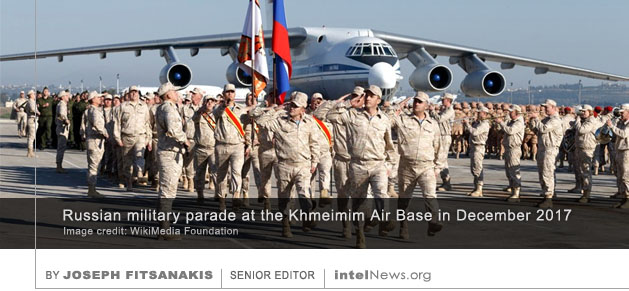 THERE ARE CONFLICTING REPORTS about the fate of Russia’s military bases in Syria, following the complete collapse of the 54-year-long Assad dynasty. Late on Sunday it was announced on Russian state media that the Kremlin had extended Bashar al-Assad and his family political asylum “on humanitarian grounds”. Attention quickly turned to the fate of the Russian embassy in the capital Damascus and the Russian military facilities in Tartous and Khmeimim.
 facility outside of the former Soviet Union. Furthermore, it constitutes the sole warm-port fueling and repair facility that is exclusively available to the Russian Navy. It is home to the Russian naval group in Syria, which consists of a submarine and five warships.
 THE UNITED STATES SECRET Service is among the world’s most prestigious law enforcement agencies. Its institutional experience in protecting US presidents and presidential candidates dates to 1901. Given its high-stakes protective mission —safeguarding the executive leadership of the world’s most powerful nation— the agency has historically placed emphasis on flawlessness: it simply can’t afford to fail.
 NO COUNTRY HAS BETTER intelligence on the Islamic State-Khorasan Province (known as ISIS-K) than the United States. American forces have faced ISIS-K almost from the moment the group was founded in 2015 in Pakistan, just a few miles from the Afghan border. It was there that a group of disaffected members of the Tehreek-e-Taliban-e-Pakistan (TTP, commonly referred to as the Pakistani Taliban) began turning their backs on al-Qaeda, which they saw as a failing brand, and joined the Islamic State of Iraq and Syria (ISIS).
 not being taken into consideration by the group’s primary targets, namely Afghanistan, Iran, and Russia. Indeed, despite the Washington’s best efforts, its warnings about pending ISIS-K attacks have been ignored by the group’s primary targets. A few days after an ISIS-K attack killed nearly 100 people in Kerman, Iran, The Wall Street Journal
  MIDDLE EAST OBSERVERS WERE hardly surprised by yesterday’s news of the apparent assassination of Hamas leader Saleh al-Arouri in Lebanon. Not only was al-Arouri a
  Yesterday’s assassination at the very heart of Hezbollah’s lair was nothing short of a demonstration of the Mossad’s competency in special operations.
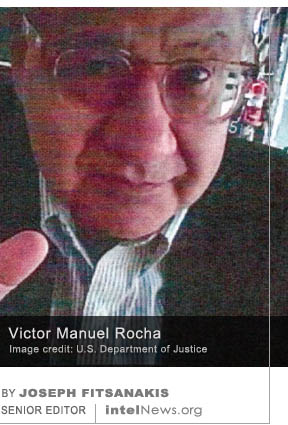 LAST WEEK THE UNITED States Department of Justice announced the arrest of Victor Manuel Rocha, 73, a former senior American diplomat, whose career included stints as ambassador and advisor to the National Security Council and the United States Southern Command. Cuban intelligence allegedly recruited Rocha when he was a student in the 1970s and inspired him to spend his entire professional life in search of opportunities to supply intelligence to Cuba —and possibly Russia and China. United States Attorney General Merrick Garland
  principal officer in the United States Interests Section in Cuba —effectively the second-in-command in Washington’s de facto embassy in Havana.
 ARGUABLY NO COUNTRY BENEFITED more from the American invasion of Iraq than the Islamic Republic of Iran. In a war that lasted over a decade, Washington spent over
  branch of the Iranian Armed Forces that protects and promotes the ideological inheritance of the 1979 Islamic Revolution.
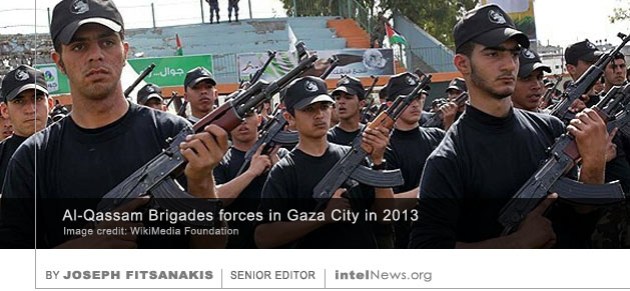
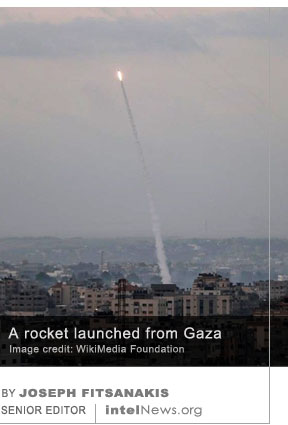 THE HAMAS-LED OPERATION al-Aqsa Flood, which began on October 7, marked the first large-scale conflict within the borders of Israel since the 1948 Arab-Israeli War. However, unlike the coalition of Arab armies it faced in 1948, Israel now confronts an alliance of sub-state groups. Led by Hamas’ military wing, the al-Qassam Brigades, this alliance includes the Syrian- and Iranian-backed Palestinian Islamic Jihad and a number of secular groups, such as the Fatah-aligned al-Aqsa Martyrs’ Brigades, the Popular Front for the Liberation of Palestine (PFLP) and the Democratic Front for the Liberation of Palestine (DFLP).
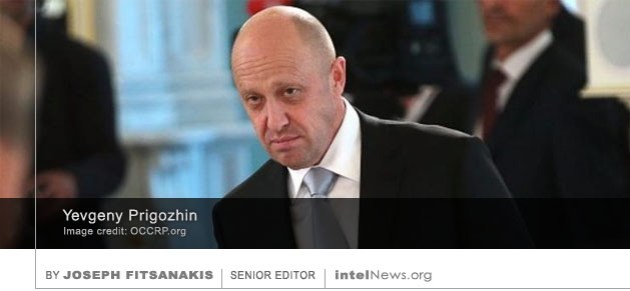 IN THE EARLY HOURS of June 23, PMC Wagner leader Yevgeny Prigozhin declared the launch of an armed campaign against the Ministry of Defense of the Russian Federation. Within hours, several thousand soldiers belonging to Wagner, one of the world’s largest private military companies, had abandoned their positions in eastern Ukraine and were en route to Moscow. Their mission, according to Prigozhin, was to arrest Minister of Defense Sergei Shoigu and Chief of the General Staff Valery Gerasimov, and try them for mismanagement and corruption.
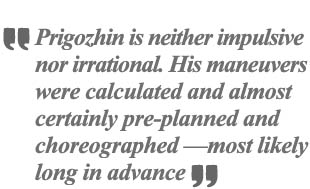 Wagner leader has repeatedly expressed his dismay at being viewed as an outsider by the Ministry of Defense, which it views as an elitist and incompetent bureaucracy. His experience in Ukraine, where Wagner’s forces faced stiff resistance from the local population and the Ukrainian military alike, added fuel to his rage against a host of Russian defense officials. Prigozhin has been voicing his denunciations of the way these officials have managed the war since March of 2022, just two weeks into the invasion of Ukraine.
 OFFICIALS IN UKRAINE HAVE
 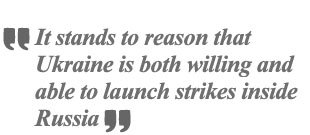 Russia’s border with Belarus, two trains were
  A BOOK BY A former Central Intelligence Agency (CIA) case officer, which alleges that a senior Agency official sabotaged American counterintelligence efforts on orders from Moscow, has prompted a series of fiery exchanges by retired CIA personnel. The primary figures in the dispute are the book’s author, Robert Baer, and Paul J. Redmond, who served as the CIA’s Associate Deputy Director of Operations for Counterintelligence.
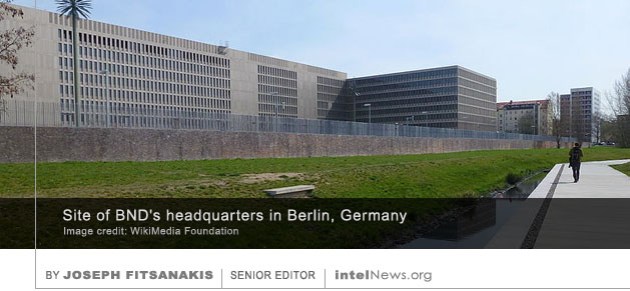 GERMANY’S EXTERNAL INTELLIGENCE AGENCY, the Federal Intelligence Service (BND), constitutes a liability for Europe’s security and is in desperate need of a drastic and immediate overhaul. That is the conclusion of a blunt
 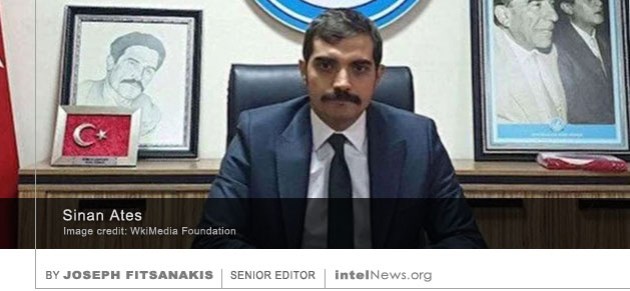 ON FRIDAY, DECEMBER 30, 2022, an assailant on a motorcycle
 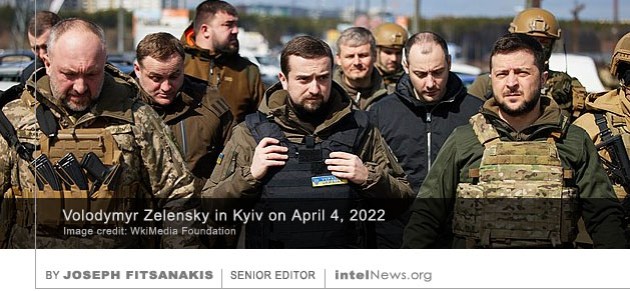 ON SUNDAY, JULY 17, the Ukrainian administration of President Volodymyr Zelenskiy announced the most extensive shake-up of the nation’s security leadership since the Russian military invasion. Two key members of Zelenskiy’s inner circle, Ukraine’s Prosecutor General Iryna Venediktova and domestic security chief Ivan Bakanov, were
  invariably, no. In fact, even the Ukrainians themselves are not in a position to trust their own intelligence services.






 intelNews.org
The Real War Is About To Begin: Iran Transitions to Full-Scale Insurgency
March 30, 2026 by Joseph Fitsanakis 11 Comments
And yet, as Carl von Clausewitz cautioned centuries ago, the outcome of war is not governed by formulaic calculus. No matter how astounding, operational sophistication and technological prowess do not guarantee success. Instead of an immediate collapse, the decapitation of the Iranian regime appears to have produced a series of unpredictable second-order effects. At the very least, it physically eliminated Iran’s few pragmatic leaders who have historically favored restraint. Their demise effectively handed over power to the hardliners of the Islamic Revolutionary Guard Corps. Moreover, the war appears to have paralyzed Iran’s domestic opposition, whose adherents may despise the regime but—unlike the U.S. and Israel—do not want to see their country break up into ethnic statelets.
Most importantly, the February 28 decapitation strike convinced Iran’s surviving leaders that this is an existential fight—not a limited confrontation like the Twelve-Day War. Today’s ruling Principalists in Iran differ sharply from the cosmopolitan, Western-educated elite of the 1960s and 1970s. They are largely provincial in origin, domestically rooted, and lack the international ties that once offered pathways of exit. They do not hold dual citizenships, do not maintain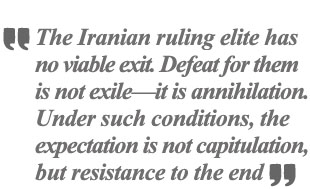 foreign residences, and few of them possess the linguistic or social capital to relocate abroad. Simply put, they have no viable exit. For them, defeat is not exile—it is annihilation. Under such conditions, the expectation is not capitulation, but resistance to the very end.
Activating the Iranian Asymmetric Doctrine
Starting in 2001, the campaigns in Afghanistan and Iraq offered Iranian war planners a prolonged and unusually comprehensive vantage point from which to study the American way of war in their immediate neighborhood. For over two decades, the Iranians analyzed these methods, learned from them, and internalized their logic into their own asymmetric warfare doctrine. And now, having survived the February 28 decapitation attack, the Iranian regime has put that doctrine into operation. Iran’s asymmetric doctrine channels the state’s military, civilian, economic, and informational assets into a multi-domain, protracted insurgency campaign designed to inflict maximum pain on its enemies. In doing so, it rests on what is perhaps the Islamic Republic’s greatest asset: its asymmetric patience—i.e., its capacity to endure more physical and emotional torment than its Western opponents and their allies.
The Iranians refined their asymmetric patience skills during what they refer to as the “War of Holy Defense” (1980-1988), one of the 20th century’s longest conflicts and the deadliest conventional war ever fought in the developing world. The then-newly formed Islamic Republic suffered over 500,000 casualties—many of those due to exposure to chemical warfare—but managed to bring Saddam Hussein’s Western-backed Iraq into a standstill and force it into a truce. To do so, they even resorted to so-called “human wave assaults”, large masses of mostly unarmed youth who swarmed enemy positions and overwhelmed them by the sheer power of their number. That was largely how the Basij, the Iranian regime’s paramilitary street gangs that continue to operate in modern-day Iran, were initially formed.
Iran’s “Economy of Resistance”
On March 28, the Telegram channel belonging to the Iranian Supreme Leader Mojtaba Khamenei issued an infographic titled “The Path to Defeating the Enemy in the Economic War”. The infographic reflects the Islamic Republic’s concept of “economy of resistance”, which was first developed in 2014 by Mojtaba Khamenei’s father, the late Supreme Leader Ali Khamenei. The central idea behind this concept is restructuring the Iranian economy, not simply to reduce its susceptibility to Western-imposed sanctions, but to allow it to stabilize and even develop. The goal of the economy of resistance is to prevent the destruction of the Islamic Republic and the Westernization of Iranian society. Through the economy of resistance doctrine, and with crucial help by China and Russia, Iran has largely managed to insulate its economy from the global economic system that is now reeling under Iran’s own asymmetric attacks. Read more of this post
Filed under Expert news and commentary on intelligence, espionage, spies and spying Tagged with 2026 Iran War, Analysis, Iran, Joseph Fitsanakis, Newstex