Comment: Drawing Careful Conclusions from the Iran Assassination

Mostafa Ahmadi-Roshan's carBy JOSEPH FITSANAKIS* | intelNews.org |
The body of Iranian academic Mostafa Ahmadi-Roshan was still warm when officials in Tehran began accusing Israel and the United States of having planned his assassination. Leveling such accusations without offering adequate proof is certainly unstatesmanlike; but even hasty conclusions can be logical, and even sworn enemies of the Iranian government would find it difficult to point at other possible culprits. Keeping in mind that, at this early stage, publicly available information about the assassination remains limited, are there conclusions that can be drawn with relative safety by intelligence observers? The answer is yes. Roshan, 32, was a supervisor at Iran’s top-secret Natanz fuel enrichment plant. His scientific specialty was in the technology of gas separation, the primary method used to enrich uranium in Iran’s nuclear energy program. His assassination, which took place in broad daylight amidst Tehran’s insufferable morning traffic, was a faithful reenactment of the attacks that killed two other Iranian nuclear scientists in November of 2010. A motorcycle, practically indistinguishable from the thousands of others that slide maniacally between cars in the busy streets of the Iranian capital, made its way to the car carrying Ahmadi-Roshan. As the driver kept his eyes on the road, the passenger skillfully affixed a magnetic explosive device to the outside surface of the targeted vehicle, next to where Ahmadi-Roshan was sitting. By the time the blast killed the scientist, as well as the car’s driver, and injured a third passenger, the motorcyclists were nowhere to be found. Two-and-a-half hours later, when the report of Ahmadi-Roshan’s assassination was making its way through the newsroom of Iran’s state-owned Fars news agency, the assassins were making their way to Dubai, Oman, Qatar, or various other destinations around the Middle East. Read more of this post

Did Outside Spy Agencies Know About Kim Jong Il’s Death?

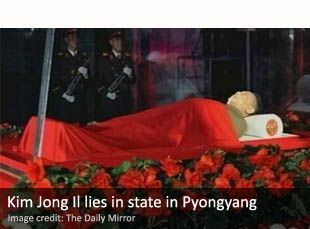
Kim Jong Il lies in state in PyongyangBy JOSEPH FITSANAKIS* | intelNews.org |
According to KCNA, North Korea’s state news agency, Premier Kim Jong Il died at 8:30 am on Saturday, December 17. However, government media did not announce the startling news until early Monday morning, that is, nearly 50 hours after the “Dear Leader’s” sudden passing. Assuming that North Korean reports of the time and location of Kim’s death are truthful, the inevitable question for intelligence observers is: did anyone outside North Korea receive news of Kim Jong Il’s death during the 50 hours that preceded its public announcement? In times like this, most Westerners tend to look at the Central Intelligence Agency, National Security Agency, MI6, DGSE, or any of the other recognizable acronyms that dominate American and European news reports. The reality is, however, that despite their often-mythical status, Western intelligence agencies tend to be limited in their global reach, which is usually heavily concentrated on selected adversaries, like Russia, or China. These agencies therefore tend to rely on their regional allies to get timely and accurate information on smaller nations that are often difficult to penetrate. In the case of North Korea, Western spy agencies depend heavily on actionable intelligence collected by South Korean and Japanese spies. Read more of this post
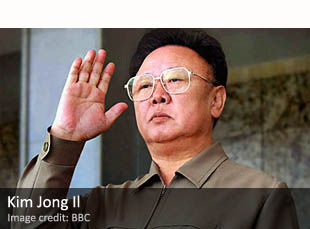
Spy agencies scramble for clues after North Korean leader’s death

Kim Jong IlBy JOSEPH FITSANAKIS* | intelNews.org |
Even though rumors had been rife for quite some time about North Korean leader Kim Jong Il’s worsening health, his death startled intelligence agencies the world over. In typical fashion, North Korean state media announced yesterday that “the dear leader” had died on Saturday onboard a train during one of his usual field trips, “due to immense mental and physical strain caused by his […] building of a thriving nation”. A period of national mourning has been declared in the country until December 29. In the hours following the startling announcement, which Time magazine dubbed “a nightmare before Christmas”, no unusual activity was observed in the North, while early Monday reports from North Korean capital Pyongyang stated that traffic was “moving as usual”. Moreover, despite longstanding rumors about Kim Jong Il’s ill health, few intelligence analysts in South Korea, Japan, or the United States have been observing overt signs of political instability, or a leadership crisis. However, despite the apparent calm in the North, intelligence agencies around the world have gone on high alert, led by those in South Korea, which has remained technically at war with the North since 1950.  South Korean President Lee Myung-bak reportedly placed the country’s military on emergency alert on Sunday, and has ordered government officials to remain in capital Seoul and “maintain emergency contact” with their office staff. French sources said that one of the first outcomes of an emergency National Security Council meeting that took place in Seoul on Sunday was to request that the American Pentagon, which maintains nearly 30,000 troops in South Korea, steps up aerial surveillance over the North. Japan has also stepped up its intelligence-gathering operations in North Korea, and its Prime Minister, Yoshihiko Noda, instructed his government to “closely share information” on North Korea with the United States, South Korea, and —notably— China. Read more of this post

Comment: Is China the New Spy Superpower?

US and China

US and China

By JOSEPH FITSANAKIS* | intelNews.org |

In fifteen years of monitoring intelligence-related developments, I have rarely seen so many news items about China appear simultaneously in the Western press, as I did during the past fortnight. On December 5, financial news network Bloomberg reported that the United States government invoked “Cold War-era national security powers” to compel telecommunications companies operating on American soil to disclose confidential data about their networks. The plan, spearheaded by the US Department of Commerce, but undoubtedly prompted and monitored by the National Security Agency, features a detailed survey distributed to dozens of telecommunications service providers, as well as hardware and software developers. The latter are reportedly required to supply “a detailed accounting” of every piece of “foreign-made hardware and software” installed on their networks, in a move that Bloomberg interprets as “a hunt for Chinese cyber-spying”. A few days later, intelligence researcher and author David Wise opined in The New York Times that the West had better recognize that China “has developed a world-class espionage service —one that rivals the CIA”. He qualified his statement by providing several examples of major espionage triumphs achieved by the Chinese intelligence services in the last decade, such as the acquisition of design blueprints for the US-built B-1 bomber and Northrop Grumman’s B-2 stealth bomber. Other examples given by Wise include China’s attainment of the design specifications for the US Navy’s Quiet Electric Drive system, aimed at enhancing the stealth abilities of submarines, as well as the remains of the modified Black Hawk helicopter that crashed in Abbottabad, Pakistan, during the CIA-led operation to assassinate al-Qaeda founder Osama bin Laden last May. Most of all, Wise laments the acquisition by the Chinese of the design specifications for the W-88 warhead, the symbol of America’s next-generation of mini-nuke weapons. Read more of this post

News you may have missed #648

Academi HQ

►►IntelNews editor interviewed on RT. IntelNews senior editor, Dr Joseph Fitsanakis, was interviewed yesterday on the main news program of the popular international news channel RT. The interview, concerning the rebranding of private security company Xe Services (formerly Blackwater) to Academi, can be watched here (watch video at the bottom of the page).
►►Contractors making a killing working in UK cyberdefense. Britain has spent more than £100 million ($160 million) in the past year on consultants to combat cyber espionage and the growing use of the internet by terrorists. Now, members of Parliament are investigating the soaring costs of employing private contractors, some paid the equivalent of £150,000 a year, three times the average wage at GCHQ, the UK’s signals intelligence agency.
►►Japan launches second spy satellite. Japan’s space agency, JAXA, has launched an intelligence-gathering satellite, its second this year. Japan launched its first pair of spy satellites in 2003, prompted by concerns over North Korea’s missile program. It currently has four optical information-gathering satellites in orbit. Officials refused to provide details of the capabilities of the most recently launched satellite.

CIA Helped Gaddafi Torture Libyan Dissidents, Documents Show

Abdel Hakim Belhaj

Abdel Belhaj

By JOSEPH FITSANAKIS | intelNews.org |
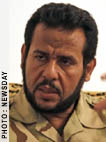
Back in February, when Libyan leader Muammar al-Gaddafi blamed the popular revolt against him on al-Qaeda, he was ridiculed in the international media. But documents discovered at an abandoned Libyan government office complex show that the Libyan rebels’ supreme military commander was abducted in 2004 by the CIA, which suspected him of links to al-Qaeda. Abdel Hakim Belhaj, also known as Abdullah al-Sadiq, was snatched by a CIA team in Malaysia, and secretly transported to Thailand, where he says he was “directly tortured by CIA agents”. The CIA then renditioned him to Libya, where he says he was tortured routinely until his release from prison, in 2010. In the 1980s, Belhaj was a member of the foreign Mujahedeen summoned by Osama bin Laden’s al-Qaeda to fight the Russians in Afghanistan. Upon returning to Libya in the early 1990s, he led the Libyan Islamic Fighting Group, an al-Qaeda-inspired armed organization that unsuccessfully sought to assassinate Colonel Gaddafi. Ironically, Belhaj is now the Tripoli-based military commander of the Libyan National Transitional Council, and says that he wants a full apology from the United States and Britain “for the way he was transported to prison in Libya in 2004”. But the former Mujahedeen is one of several terrorism suspects delivered to Libya by Western intelligence agencies in the years after 9/11, according to Libyan government documents discovered by Human Rights Watch (HRW) workers at the office of Libyan former intelligence chief and foreign minister Moussa Koussa. The documents show that Libya’s External Security Organization maintained extremely close relations with German, Canadian, British, and American intelligence services. Read more of this post

Why Are Armed Groups Storming Foreign Embassies in Tripoli?

The new Libyan flag

New Libyan flag

By JOSEPH FITSANAKIS | intelNews.org |
It is perhaps understandable that fighters of the National Transitional Council, Libya’s rebel umbrella group, have stormed locations in Tripoli that are associated with the regime of deposed Libyan leader Muammar al-Gaddafi. Strategic sites such as  Bab al-Aziziya, Gaddafi’s compound, government ministries, or even houses belonging to Gaddafi’s large and powerful family, may be deemed legitimate targets. But why are the rebels also selectively attacking foreign embassies in the Libyan capital? According to Yonhap, South Korea’s state-run news agency, the South Korean embassy in Tripoli was “attacked […] by an armed gang” of about 30 people late on Tuesday. The report, which could not be immediately confirmed by the Republic’s Ministry of Foreign Affairs, cited anonymous sources, who said that embassy staff were “threatened at gunpoint”. At roughly the same period, another group of “armed persons” stormed the building of the Bulgarian embassy, according to the Bulgarian Ministry of Foreign Affairs, which said that it had yet to clarify “the circumstances around the incident”. On Wednesday, Venezuelan President Hugo Chavez said that armed groups had “assaulted and totally looted” the Venezuelan embassy. A few hours later, the Venezuelan Ambassador to Libya, Afif Tajeldine, clarified that the attack took place at his official residence, which is located about 9 miles from the Venezuelan embassy. He told El Universal that armed groups broke into the ambassadorial residence and “searched the house asking for me”. They then “ransacked the house completely” and “left nothing in the house”. Read more of this post

IntelNews book review: Codename Aphrodite, by Charles S. Faddis

Codename Aphrodite

Codename Aphrodite

By JOSEPH FITSANAKIS | intelNews.org |
Most intelNews regulars know Charles S. Faddis as the former head of the US National Terrorism Center‘s WMD Unit. His 20-year career as a CIA operations officer, with posts in South Asia, Near East and Europe, arguably culminated in 2002, when he led a CIA team into Iraq to help prepare the ground for the US invasion. He documented this in his 2010 book (co-authored with Mike Tucker) Operation Hotel California: The Clandestine War Inside Iraq. Following his 2008 retirement, Faddis, who was CIA Chief of Station in his last overseas tour, frequently comments on intelligence matters. He took a stance against the CIA’s “enhanced interrogation” program (but objected to a government investigation), and has penned hard-hitting critiques of American intelligence culture and practices, most notably in his 2009 exposé Beyond Repair: The Decline and Fall of the CIA. His latest creation, Codename Aphrodite (Orion, 2011), is a gritty novel set in the backstreets of Athens, Greece, where a former CIA clandestine operations officer goes after November 17, one of the world’s most active Marxist terrorist groups. Bill Boyle and his wife, Sarah, are both clandestine officers in the CIA’s European Division. Sarah, who is pregnant with their child, is brutally killed by November 17, after a CIA operation in pursuit of the group goes horribly wrong. Haunted by his wife’s murder, which he witnessed, Boyle quits the Agency and soon ends up as a permanent fixture in a depressing Mexican beach bar. Things take an unexpected turn, however, when political winds change in Greece. Petros Salamis, an ascending Athenian politician and aspiring Prime Minister, contacts Boyle with an irresistible offer: a hefty monetary reward and the satisfaction of revenge for his wife’s death in exchange for returning to Greece and eradicating November 17. Read more of this book review

Comment: Five Surprising Truths About the Killing of Bin Laden

Osama bin Laden

Osama bin Laden

By JOSEPH FITSANAKIS* | intelNews.org |
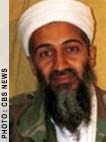
For intelligence and terrorism experts, the frustrating part of Osama bin Laden’s assassination is not the lack of details on the operation, nor the diplomatic ping-pong currently taking place between America and Pakistan. Rather it is the media spectacle that has unfolded around the story ever since it first made headlines. The cacophony of conjecture that has hijacked the global news agenda is maintained by an army of talking heads, who rely on rumor and speculation to satisfy sensationalist media editors. The outcome is a sterile media circus, devoid of substance, which leaves news consumers confused and uninformed. To counter this trend, intelNews lists here five truths of critical importance about Osama bin Laden’s assassination. In summary: One, America does not have to prove it killed bin Laden. Two, bin Laden’s assassination is not a victory against terrorism. Three, it likely will not reduce —and may even increase— terrorism. Four, it will not have the slightest effect on the Taliban or the war in Afghanistan. Five, even if the Pakistani government consciously shielded bin Laden, there is not much the US can do about it. More specifically:

Read more of this post

Analysis: Myths and Questions on bin Laden’s Assassination

Osama bin Laden

Osama bin Laden

By J. FITSANAKIS and I. ALLEN | intelNews.org |
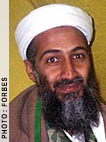
The assassination of al-Qaeda leader, Osama bin Laden, has helped dispel several myths about him and the organization he founded in 1988 in Soviet-occupied Afghanistan. Among them is the idea that the Saudi-born militant was leading a primitive existence in some remote hillside in Waziristan, sheltered by mountainous tribes that were supposedly loyal to him. Nothing could be further from the truth. Despite his reputation as a hardened mujahedeen, bin Laden had chosen to spend his days in the unmatched comfort of a sprawling luxury compound located only an hour’s drive from Pakistan’s capital, Islamabad. The compound is located in a relatively wealthy suburb of the city of Abbottabad, which is also home to the Kakul Military Academy, Pakistan’s elite army training school. More importantly, the descriptions of bin Laden’s luxurious hideout fly in the face of the predominant view of al-Qaeda as an organization that knows how to blend in with its surroundings. Not only did the compound stand out, but, according to one American official, it was “eight times larger than the other homes in the town”. It featured 3,000 feet of living space, to house bin Laden, his four wives, and several advisors and guards. It appears to have been custom-built to bin Laden’s specifications in 2005, which would explain the existence of numerous built-in security features, including at least two heavily fortified security gates, seven-foot-high perimeter walls, and even solid blast-proof enclosures on all balconies. Continue reading →

Comment: Some early remarks on bin Laden’s assassination

Osama bin Laden

Osama bin Laden

By JOSEPH FITSANAKIS* | intelNews.org |
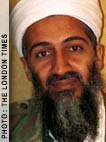
It is tempting to consider the impact of Osama bin Laden’s assassination on al-Qaeda-inspired groups and, more broadly, on America’s “global war on terrorism”. Yet any such endeavor at this point would be inevitably speculative. The truth is, nobody has the slightest idea of the possible strategic spillover of bin Laden’s killing, and this includes the White House, the CIA and NATO. There are, however, some general remarks, mostly of operational nature, that can safely be made on the basis of the limited factual information that has been made available. To begin with, it appears that the assassination of al-Qaeda’s senior figurehead was conducted by ground forces, and not remotely, as has been the case with the vast majority of US assassination operations carried out in Afghanistan and Pakistan during the past several years. This potentially strengthens the argument, made frequently by Western and Pakistani officials, that significant achievements in the field of counterterrorism can only be conducted by surgical-type ground operations, based on accurate and actionable intelligence.

Read more of this post

Analysis: Spy Agencies Failed to Predict Egypt Uprising

Egypt uprising

Egypt uprising

By JOSEPH FITSANAKIS| intelNews.org |
It is becoming increasingly clear that the ongoing popular uprising in Egypt represents the most important geopolitical development in the Middle East since the 1979 Islamic Revolution in Iran. In light of this, it is remarkable how unprepared foreign intelligence agencies have proven in forecasting the crisis. Even the Israelis were caught completely unaware: on January 25, the day when massive protests first erupted across Egypt, Major General Aviv Kochavi, newly appointed head of Israel’s Military Intelligence Directorate, told a Knesset committee that “there are no doubts about the stability of the regime in Egypt” and that “the Muslim Brotherhood is not organized enough to take over”. Instead, Kochavi focused on political volatility in Lebanon; ironically, the latter now seems like an oasis of tranquility compared to the explosive state of Egyptian politics. If the Israelis, whose very concept of national security is inextricably linked with developments in Cairo, were so unsuspecting of the popular wave of anger against the thirty-year dictatorship of President Hosni Mubarak, one can only imagine Washington’s surprise at the protests. Click here to read my article in Intelligent-Intelligence.com, a specialist publication edited by Kyle Cunliffe. Continue reading →

Analysis: Understanding WikiLeaks

WikiLeaks

WikiLeaks

By JOSEPH FITSANAKIS| intelNews.org |
The WikiLeaks cablegate revelations appear to be subsiding in the new year, and so is the public debate about their meaning and consequences. And yet, as calmer moods prevail, now is the appropriate time to probe the WikiLeaks phenomenon. To do so constructively, it is necessary to move beyond a mere political assessment of WikiLeaks. The question of whether the website, its founder, and its hundreds of volunteers, are criminals, heroes, terrorists, or dissidents, cannot even begin to be answered until WikiLeaks is understood, first and foremost. By ‘understood’, I don’t mean empathize. I mean comprehending WikiLeaks as an ideological paradigm, a technological vehicle reflective of the personal philosophies of its members, but also representative of a much wider sociotechnical trend. Click here to read my analysis brief published today by the Research Institute for European and American Studies.

2010: The year that was in espionage

ABC Australia

ABC Australia

By JOSEPH FITSANAKIS | intelNews.org |
I was interviewed yesterday by Australian National Radio’s Julian Morrow on the major espionage stories of 2010. Fortunately or unfortunately, there has been no shortage of spy-related news this past year, and one is forced to be selective in reviewing the subject. In the interview I spoke about Mahmoud al-Mabhouh, the senior Hamas official who was assassinated on January 19 in Dubai by agents of Israeli intelligence agency Mossad. I also spent some time recalling the intelligence aspects and diplomatic fallout of last May’s Israeli Navy attack on the Gaza Freedom Flotilla, which killed nine and injured over 100 international activists. Julian then asked me to speak briefly about last June’s Stuxnet virus, which attacked computers in Iran’s state-of-the-art uranium enrichment plant in Natanz and the nuclear reactor facility in Bushehr. We closed the interview by discussing the arrest last summer of eleven Russian illegals in the eastern United States. Read more of this post

Comment: Russian Espionage Steals 2010 Limelight

GRU emblem

GRU emblem

By JOSEPH FITSANAKIS | intelNews.org |
As the first decade of the 21st century is coming to an end, few would dispute that Israeli and American spy agencies have been among the most talked-about intelligence organizations of 2010. The reasons for this are equally undeniable: the United States tops the list because of its political prominence, which inevitably attracts media attention; Israel tops it because of the sheer ferocity of its espionage output throughout the Middle East. And yet there is nothing new about this, since neither the Central Intelligence Agency nor the Mossad are exactly novices when it comes to high-profile media exposures. The same cannot be said with respect to Russian intelligence agencies, which went through a period of prolonged hibernation following the end of the Cold War. Indeed, the year that is about to end demonstrates that the stagnant interlude in Russian espionage may well be in its closing stages.

Read more of this post