News you may have missed #798

Alexander LitvinenkoBy IAN ALLEN | intelNews.org |
►►Britain to hold inquest over death of ex-KGB officer. Britain and Russia appear to be on a collision course over the death of Alexander Litvinenko, a former Russian intelligence officer who died in 2006 after ingesting polonium-210, a rare radioactive isotope. Britain’s Crown Prosecution Service has accused Andrei Lugovoi and Dmitry Kovtun, both former KGB agents, for the death of Litvinenko. Russia has refused British requests to extradite the two, leading to a row with Moscow and the tit-for-tat expulsion of Russian and British diplomats. Until now, the British Foreign Office had attempted to limit the scope of an inquest into the death of Litvinenko, fearing further diplomatic fallout. But coroner Sir Robert Owen said last week that he endorsed a previous ruling by his predecessor in the case, Andrew Reid, that there should be an “open and fearless” investigation into the matter.
►►Ex-CIA operative who illegally sold arms to Libya dies. Edwin P. Wilson, a former CIA officer who was convicted in 1983 for illegally shipping 20 tons of C4 plastc explosives to Libya, has died aged 84. In his trial he claimed he had shipped the weapons to Libya at the request of the CIA, because, as he said, the agency was trying to establish good relations with the Libyan government. But the court did not buy his story, so he spent over 20 years in prison, mostly in solitary confinement, until his release in 2004. He maintained his innocence to the very end.
►►Analysis: Libya an opportunity for CIA if it sticks around. The attack in Benghazi, Libya, that killed four Americans, including a US ambassador and two former Navy SEALs, has led Americans to vacate Benghazi for their safety, even though various militant groups continue their operations. It is a disaster for US intelligence efforts in the region, especially since the attack has made brutally clear how real the jihadi threat in eastern Libya remains. But there may be the smallest of silver linings to this black cloud, if American operatives are able to capitalize on it. The aftermath of the attack shows widespread displeasure with Benghazi’s jihadist groups, with thousands marching in protest. That is an opportunity the CIA could use to rebuild its intelligence gathering.

News you may have missed #792 (US diplomatic attacks edition)

US consulate in Benghazi, LibyaBy IAN ALLEN | intelNews.org |
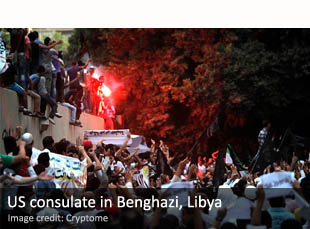
►►Attack on US diplomats ‘was intelligence failure’. James Corum, an American military historian and the author of several books on military history and counter-insurgency, argues that the mob attacks on US diplomatic facilities in Cairo, Benghazi and Sana’a marked “one of the worst intelligence failures in American history”. Either, he says, US intelligence agencies had no warnings of mass action against the embassies, or senior intelligence officers disregarded or downplayed the information received from field agents. Finally, he suggests that “the real explanation is probably the latter”.
►►Attack on consulate in Libya ‘may have been planned’. Senior US officials and Middle East analysts raised questions Wednesday about the motivation for the Benghazi attack, noting that it involved the use of a rocket-propelled grenade and followed an al-Qaeda call to avenge the death of a senior Libyan member of the terrorist network. Libyan officials and a witness said the attackers took advantage of a protest over the film to launch their assault. Libyan Deputy Interior Minister Wanis al-Sharif said the security force was outgunned by the attackers, who joined a demonstration of “hundreds” of people outside the consulate
►►What happened in Benghazi was a battle. “It was not a simple mob that attacked the US consulate in Benghazi on Tuesday, killing four Americans. Benghazi was the scene of a pitched battle, one in which unknown Libyan assailants besieged American diplomats with small-arms fire for over four hours, repelling several attempts by US personnel to regain control of it. Nor was what happened in Benghazi a simple story of Americans assaulted by the Libyans they helped to liberate from Muammar Gaddafi last year. Libyan security forces and a sympathetic local militia helped the Americans to suppress the attack and get the diplomats inside to safety”.
News you may have missed #790

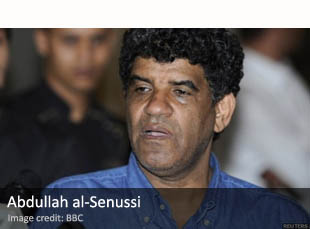
Abdullah al-SenussiBy IAN ALLEN | intelNews.org |
►►New report reopens CIA torture allegations. A report from Human Rights Watch, which was released last week, said that Libyan fighters opposed to Muammar Gaddafi’s regime were subjected to harsh interrogation techniques while in US custody overseas, during the administration of George W. Bush. The accusations, if substantiated, would suggest wider use of waterboarding than US officials have previously acknowledged. The report, which is based on documents and interviews in Libya after the fall of Gaddafi, includes a detailed description of what appears to be a previously unknown instance of waterboarding by the CIA in Afghanistan nine years ago.
►►Analysis: What does Gaddafi’s ex-spy chief know about Lockerbie? Abdullah al-Senussi became a hate-figure in his home country as head of an intelligence machinery responsible for the mistreatment of thousands of opponents of the regime of Muammar Gaddafi, his brother-in-law. He is nicknamed the “butcher” and known as Gaddafi’s “black box” because of the secrets he supposedly holds. The new Libyan regime had been negotiating for months with Mauritania where al-Senussi had fled following the fall of the Gaddafi regime last September. But now that al-Senussi has been flown back to Libya by private jet, he may at last be able to face questions by British police about Lockerbie.
►►Chinese hardware manufacturer denies spying allegations. The Chinese hardware-manufacturing firm Huawei has released a 24-page report, written by John Suffolk, a former British government chief information officer who has now turned Huawei’s global security officer, which states that protecting the network security of its worldwide customers is one of company’s “fundamental interests”. The report follows allegations in the United States, Australia, India, and elsewhere, that the company maintains close operational ties to China’s intelligence establishment.

News you may have missed #745

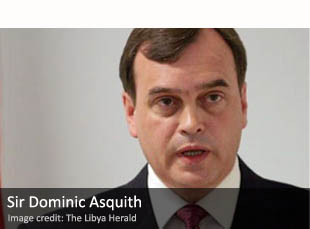
Sir Dominic AsquithBy IAN ALLEN | intelNews.org |
►►Algeria sentences man to 20 years for spying. Noureddine Benziane, an Algerian psychologist and expert on anti-terrorism, has been sentenced in absentia to 20 years in jail on conviction of spying after a stay in Iraq. According to the charge sheet, Benziane went to Iraq on humanitarian missions several times between 2005 and 2007, but he allegedly founded a training camp for potential suicide bombers of several nationalities. Benziane later acknowledged contacting several diplomatic missions in Algiers to give them details of the information he had recovered. However, he neglected to inform the Algerian security services of his findings, according to his prosecutors.
►►Egypt pulls TV ads warning foreigners may be spies. An unnamed Egyptian media official says authorities have pulled a television advertisement that warned against talking to foreigners who may be spies, after criticism that they fueled xenophobia. The official said Sunday that the ads were aired on state TV and private networks for a few days before Minister of Information Ahmed Anis ordered them off the air.
►►British diplomat attacked in Libya. Britain’s ambassador to Libya, Sir Dominic Asquith, was in a convoy of cars that came under attack in the eastern city of Benghazi on Monday, in what British media described as the most serious assault on foreign targets in Libya to date. The attack came amid mounting concern for the welfare of an Australian lawyer and three colleagues working for the International Criminal Court after they were detained in Libya. They were accused of spying when they visited Saif al-Islam Gaddafi.

News you may have missed #741

Glenn CarleBy IAN ALLEN | intelNews.org |
►►MI6 role in rendition could be concealed in new bill. Libyan government officials Sami al-Saadi and Abdel Hakim Belhaj, who allege that they were taken by rendition by Britain to Libya eight years ago, are expected to begin legal proceedings against the British government and Jack Straw, Britain’s former foreign secretary, next month. However, after pressure from the security services, MI5 and MI6, the British government is preparing to publish a Justice and Security Bill that could allow these cases to be held in their entirety behind closed doors.
►►Aussie spy agency defends new headquarters. The Australian Security Intelligence Organisation says its new headquarters in Canberra is not at risk of being spied upon, despite the use of a lot of glass. ASIO director general David Irvine told a senate committee on Thursday it would be impossible for someone with a high resolution camera on the other side of Lake Burley Griffin to spy on the nation’s spies. Australian Greens senator Scott Ludlam had asked whether the design of the “glass palace” could threaten the secrecy of its work.
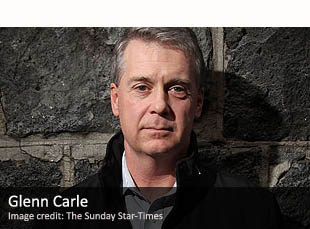
►►Good interview with ex-CIA officer Glenn Carle. In this interview, Carle, a retired CIA case officer who wrote The Interrogator: An Education, says his former employers have called his publisher asking them to pulp his book; they rang every major network to prevent him going on air. They are, he says several times, “vicious” and have perpetrated a stain on America’s national character.

News you may have missed #736

Abdel Baset al-MegrahiBy IAN ALLEN | intelNews.org |
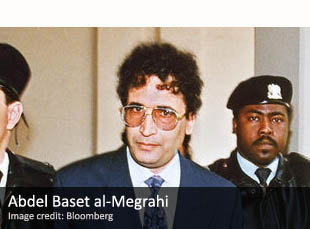
►►Convicted Lockerbie bomber dies. Abdelbaset al-Megrahi, a former Libyan intelligence officer who was the only person ever convicted in the 1988 Lockerbie bombing, died at home in Tripoli Sunday, nearly three years after he was released from a Scottish prison to the outrage of the relatives of the attack’s 270 victims. He was 60. Scotland released Mr. al-Megrahi on Aug. 20, 2009, on compassionate grounds to let him return home to die after he was diagnosed with prostate cancer. Anger over the release was further stoked by subsequent allegations that London had sought his release to preserve business interests in the oil-rich North African nation, strongly denied by the British and Scottish governments.
►►Federal appeals panel to hear CIA leak case. A federal appeals panel in the United States will hear the case of ex-CIA officer Jeffrey Sterling, who has been charged with leaking classified information about Iran’s nuclear program to New York Times reporter James Risen. Prosecutors say Sterling was a key source in Risen’s 2006 book, State of War. They are also challenging the court’s decision to strike two government witnesses and allow disclosure of the identities of covert CIA operatives to Sterling’s lawyers.
►►New study of British Empire’s spies published. British newspaper The Guardian has published a review of William Beaver’s newly published book, Under Every Leaf: How Britain Played The Greater Game From Afghanistan to Africa. Much of the book concerns the creation in the mid-1850s of the British War Office Intelligence Department. According to the review, the book does much to restore the “missing dimension” to Britain’s military-imperial history between 1855 and the creation of her modern intelligence agencies in the early 1900s.

News you may have missed #722

Jose RodriguezBy IAN ALLEN | intelNews.org |
►►Vienna police say Libyan defector’s death probably an accident. Former Libyan oil minister Shukri Ghanem, whose body was found floating Sunday in the Danube river, died from drowning, Austrian police said. Autopsy results on Ghanem’s corpse showed no signs of violence, a police spokesman said, adding that Ghanem, 69, had complained to his daughter late Saturday that he was not feeling well. No suicide note has been found and there is no evidence Ghanem was under threat, according to police. The results of toxicological tests are expected later this week.
►►Canadian spymaster’s card found in Gaddafi’s intel complex. It appears that William “Jack” Hooper, former Deputy Director for the Canadian Security Intelligence Service (CSIS), was among the Western intelligence officials who had cultivated ties with Libyan security services under the regime of Colonel Muammar Gaddafi. Hooper’s business card was recovered last year in a trove of intelligence documents in Libya, providing a physical link between Canadian security agencies and Libyan spy services. Following his retirement in 2007, Hooper told The Toronto Star that Canada’s spy service has no choice but to team up with some unsavory foreign counterparts to protect Canada from terrorism.
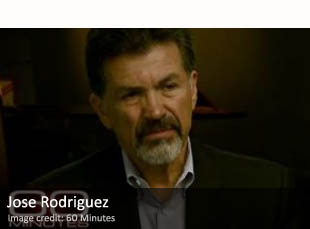
►►Ex-CIA official defends torture of terrorism detainees. In an interview Sunday, Jose Rodriguez, who headed the CIA’s Counterterrorist Center until his retirement in 2008, said waterboarding and other interrogation methods now banned by the Obama Administration were essential to fighting terrorism after September 11, 2001. He also said that he ordered the 92 videotapes showing his CIA colleagues torturing al Qaeda detainees in order “to protect them from possible retaliation by al-Qaeda”. He said he was afraid the material would be leaked: “you really doubt that those tapes would not be out in the open now, that they would not be on YouTube?”. After the tapes were destroyed in an “industrial-sized disintegrator”, he said, “I felt good”.

Former Libyan oil minister found dead in Vienna [updated]

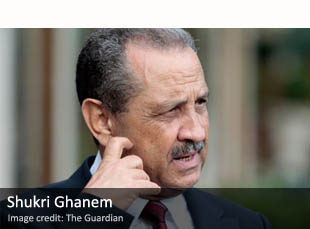
Shukri GhanemBy JOSEPH FITSANAKIS | intelNews.org |
The former Prime Minister of Libya, who defected from the government of Colonel Muammar al-Gaddafi last summer during the peak of the Libyan civil war, has been found dead in Vienna, Austria. Shukri Ghanem, a former member of the General People’s Committee of Libya, had for years been a close friend and trusted aide of Colonel Gaddafi. Having previously served as a Director of Libya’s state-owned National Oil Corporation, he was appointed Prime Minister of the country in 2003. In 2006, he assumed the post of undersecretary at the Ministry of Petroleum —arguably Libya’s most powerful government ministry— from which he resigned in 2009. In May of 2011, he made international headlines when he abruptly appeared in Tunisia, saying he had defected from Libya. Soon afterwards, on June 1, he reappeared in Rome, Italy, where he held a press conference and announced that he was joining the Libyan rebel Transitional National Council. His public defection delivered a heavy blow to the regime of Colonel Gaddafi, which was eventually brought down a few months later. Ghanem was one of Libya’s most internationally recognizable government officials. He held advanced degrees in international law and economics from American universities and had lived and worked in Vienna, Austria, for years, as Director of Research for the international secretariat of the Organization for Petroleum Exporting Countries. Following his defection, he ended up back in Vienna, where he owned an apartment from his days working for OPEC. He was employed as a consultant for energy companies. But on Sunday, the high-profile Libyan defector was found dead in the Austrian capital. Vienna police spokesman Roman Hahslinger told Austrian media that Ghanem’s body was found “floating in the river Danube” in the early morning hours of Sunday. Read more of this post

MI6 set up fake mosque in Europe to attract Muslim extremists

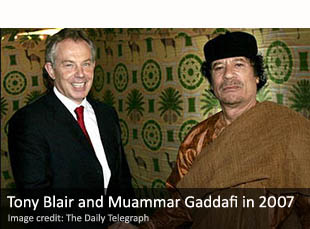
Tony Blair and Muammar Gaddafi in 2007By JOSEPH FITSANAKIS | intelNews.org |
British and Libyan intelligence collaborated during the reign of Libyan leader Muammar al-Gaddafi, in setting up a radical mosque in a European city aimed at luring Muslim extremists. The revelation was made last weekend by British newspaper The Sunday Telegraph, which said it was in possession of documents describing the complex ruse. The paper said that the documents, which were authored by MI6, were discovered in the abandoned headquarters of the ESO, Libya’s External Security Organization, following the collapse of the Gaddafi regime. They allegedly describe a series of operations resulting from the close collaboration between the ESO and MI6, Britain’s Secret Intelligence Service, which began in 2003. During that time, the two intelligence agencies re-established contact in the context of the diplomatic ‘thaw’ between London and Tripoli, which began with Libya’s decision to abandon its nuclear weapons program. With ESO’s assistance, MI6 recruited an agent who was “closely connected” to a senior al-Qaeda commander in Iraq. Codenamed JOSEPH, the agent was slowly groomed to infiltrate an al-Qaeda cell operating in a Western European city. The project’s ultimate goal was for JOSEPH to help establish a mosque aimed at luring Muslim extremists planning to launch terrorist attacks. The Telegraph states that the name of the city, which is in continental Europe, “cannot be named for security reasons”. In December 2003, JOSEPH was flown to the UK by MI6, along with a Libyan intelligence officer who had previously been stationed in London. The two men met with MI6 officers in a British hotel, where they discussed plans to set up the mosque. After taking some time to address JOSEPH’s strong reservations about his personal safety, MI6 officers met with him again in 2004 in “a city in the north of England”. Read more of this post

News you may have missed #712

Abdel Hakim BelhajBy IAN ALLEN | intelNews.org |
►►New US spy satellite could include ‘domestic surveillance. Last week, a new US spy satellite was launched into orbit as part of a secretive military program enabling the surveillance of Earth from space. An official at the Vandenberg base told The Los Angeles Times that the NROL-25 was part of a “national security payload”, which could mean it is to be used for any number of purposes, possibly including domestic surveillance.
►►US steps up intelligence and sabotage missions in Iran. American intelligence agencies are ramping up intelligence and sabotage missions focused on Iran’s nuclear program, according to The Washington Post. Officials from the National Security Agency have increased efforts to intercept email and electronic communications coming from Tehran, according to reports in The Post‘s Sunday edition. The CIA and other agencies have also ramped up sabotage missions in the country, geared toward disrupting Iran’s ongoing nuclear work, the paper reports.
►►MI6 ‘considers paying off’ Libyan official. Britain’s MI6 chiefs allegedly plan to offer more than £1 million ($1.6 million) hush money to a Libyan who claims British spies sent him to be tortured by the Gaddafi regime. The Secret Intelligence Service is scrambling to prevent Abdel Hakim Belhaj releasing details of his case following the revelation that a Labour Party minister sanctioned his extraordinary rendition —contravening UK policy on torture.

Libya’s spy chief was lured by French-Mauritanian intelligence trap

Abdullah al-SenussiBy JOSEPH FITSANAKIS| intelNews.org |
The arrest of Muammar al-Gaddafi’s spy chief in Mauritania last week was the culmination of a carefully planned French intelligence operation, which was secretly aided by the Mauritanian government, according to informed insiders. Abdullah al-Senussi, Colonel Gaddafi’s brother-in-law, who used to head the Mukhabarat el-Jamahiriya, Libya’s intelligence agency, was captured at the Nouakchott International Airport in the Mauritanian capital on March 17. He was detained as soon as he arrived there on a chartered flight from Mali. He had previously entered Mali from Niger, and was reportedly under the government’s protection. But the ongoing uprising of the pro-Gaddafi Tuareg in the north of the country, which has now resulted in a military coup in Bamako, caused the former Libyan spy chief to seek refuge elsewhere. According to a well-researched article by Reuters news agency, al-Senussi was gradually convinced to travel to Mauritania by the al-Me’edani clan, a pro-Gaddafi nomadic tribe that had previously worked for the Libyan security agencies and whose members had been given Libyan nationality by Colonel Gaddafi’s regime. The clan, says the Reuters article, was persuaded to turn its back on al-Senussi as part of a behind-the-scenes agreement between French and Mauritanian intelligence agencies. The deal was struck after a high-level agreement between the Nicolas Sarkozy government in Paris and the Mauritanian government of President Mohamed Ould Abdel Aziz. A career soldier and high-ranking officer, Abdel Aziz assumed power in the country in a 2008 military coup that was widely condemned by international bodies, including the United Nations. But the military regime in Nouakchott was pleased to see Paris engineer a thaw in relations between the two countries in 2009. Ever since then, the French government has publicly praised the regime of President Abdel Aziz as a “key partner” in combating terrorism. Mauritania’s decision to help France capture al-Senussi was a repayment to the country’s former colonial master for its support after the 2008 military coup, according to Reuters. Following his arrest, al-Senussi is believed to be held at the headquarters of the Mauritanian intelligence service in Nouakchott. Read more of this post

News you may have missed #699

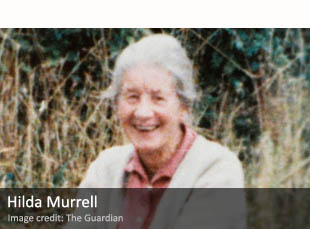
Hilda MurrellBy IAN ALLEN | intelNews.org |
►►Diplomatic war over the arrest of Gaddafi’s spy chief. The Libyan authorities have confirmed the arrest in Mauritania of former Libyan leader Muammar Gaddafi’s intelligence chief, Abdullah al-Senussi, who was reportedly detained at Nouakchott airport. Senussi, 63, was Gaddafi’s brother-in-law, and has been described as one of his most trusted aides. But his arrest has kicked off an international row about which of his alleged crimes —ranging from terrorism to war crimes and mass murder— should take precedence in the pursuit of justice. The Mauritanians are now saying that they are willing to extradite al-Senussi, but this remains to be seen in practice.
►►Azerbaijan arrests 22 in alleged Iran spy plot. Azerbaijan has arrested 22 of its own citizens, on suspicion of spying for Iran. Weapons and ammunition were seized, authorities say, accusing the group of links to Iran’s Islamic Revolutionary Guard Corps. Their alleged targets included the US and Israeli embassies as well as Western-linked companies. Surveillance by the Azeri security services is reported to have helped foil the alleged Iranian-sponsored plot.
►►Was there MI5 link to murder of UK nuclear activist? One of Britain’s leading human rights lawyers, Michael Mansfield QC, has demanded a fresh police inquiry to establish what the British intelligence services knew about the murder of a prominent anti-nuclear campaigner. The lawyer said new evidence meant that an independent police force should be appointed to examine enduring concerns and inconsistencies relating to the death of Hilda Murrell, in March 1984.

Libyan militia arrests British journalists on spying charges

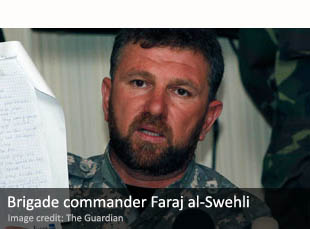
Faraj al-SwehliBy JOSEPH FITSANAKIS| intelNews.org |
The commander of one of the largest armed militia groups in post-revolutionary Libya has announced the arrest of two British journalists accused of spying for an unidentified foreign country. The two journalists, named as Gareth Montgomery-Johnson and Nicholas Davies, are officially accredited reporters working for the London office of Iran’s English-language Press TV news channel. They were reportedly arrested on February 22 in Libya’s third-largest city, Misrata, located about 140 miles east of the capital Tripoli. Speaking to reporters at a hastily arranged press conference late on Sunday, Faraj al-Swehli, commander of Misrata’s Swehli Brigade, said that the two British journalists were arrested after they were observed filming around a “sensitive region” of Misrata. Following their arrest by forces loyal to the Swehli Brigade, the two Britons were officially detained after they failed to show their captors evidence of lawful entry into Libya. Commander al-Swehli alleged on Sunday that Davies and Montgomery-Johnson appeared to have entered the country without obtaining the necessary visas or passport entry stamps. Moreover, the Swehli Brigade leadership became suspicious after they found evidence of recent trips by the journalists to China and Israel, as well as photographs of the two men brandishing weapons. Commander al-Swehli also told journalists on Sunday that the two arrestees were found in possession of “[camouflage] uniforms and equipment manufactured in Israel”, but he did not elaborate. Two Reuters news agency correspondents in Libya noted that, due to the chaotic state of government services in Libya, foreign journalists “routinely enter the country without going through normal border procedures”, and they often collect random documents found scattered on the battlefield. Read more of this post

News you may have missed #679

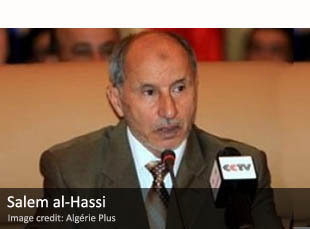
Salem al-HassiBy IAN ALLEN | intelNews.org |
►►New spy chief in Libya. Libya’s ruling National Transitional Council yesterday appointed a lifelong opponent of slain Libyan leader Muammar Gaddafi as the country’s new intelligence chief. Salem al-Hassi, who was involved in a bid to assassinate Gaddafi in 1984, was appointed as the intelligence chief at a meeting of the council.
►►Anonymous hackers release German classified information. Hackers from the group Anonymous said last week they had accessed classified German files and posted them online, revealing details of the country’s military operations in Afghanistan. The military documents were collected for an inquiry, now finished, into a September 2009 airstrike by US jets under German orders that killed more than 140 Taliban fighters and Afghan civilians. Anonymous said it obtained the data from a server at the Bundestag  (German parliament).
►►Did Chinese espionage lead to F-35 delays? Did Chinese cyber spying cause the United States’ F-35 Joint Strike Fighter’s cost spikes and production delays? This is the question being asked by US Pentagon budget officials, according to industry magazine Aviation Week. Chinese spies apparently hacked into secure conference calls and listened to meetings discussing the classified technologies aboard the jets. In particular, China may have stolen info about the F-35’s secure communications and antenna systems, leading to costly software rewrites and other redesigns to compromised parts of the plane.

Maltese government secretly helped British spy operations in Libya

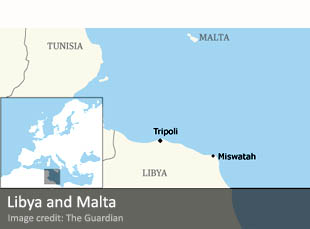
Libya and MaltaBy JOSEPH FITSANAKIS | intelNews.org |
In the 1980s, Malta was one of the world’s closest allies with the Libyan regime of Colonel Muammar al-Gaddafi. For this reason, during the recent Libyan civil war, it was generally presumed that the island nation’s strong cultural and strategic links with Tripoli would prevent it from joining other European nations in actively supporting the Libyan opposition. But internal British government documents, which have been acquired by the BBC, show that Malta was secretly supportive of Western efforts to undermine the regime of Colonel Gaddafi, and went so far as to help smuggle British intelligence operatives into Libya. According to a recent exposé aired by the BBC’s flagship factual program Newsnight, the Maltese government took advantage of its active role as a hub for distributing United Nations humanitarian and logistical assistance to Libyan civilians during the war. In one specific case, Malta offered to work with British external intelligence agency MI6, to fly a group of British intelligence officers to an unspecified location in Libya. The British operatives’ ultimate goal was to meet up with leading members of the opposition Libyan National Transitional Council (NTC), at a predetermined location near Libya’s second-largest city of Benghazi. According to the BBC, the Maltese government secretly authorized the transportation of the MI6 officers into Libya, using a Chinook helicopter, which took off in the middle of the night from Maltese territory. Unfortunately for the British, the mission was intercepted by NTC forces at the Benina International Airport, near Benghazi. Read more of this post