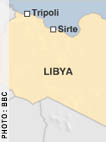
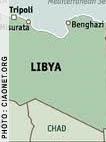
Hundreds of European mercenaries ‘fighting for Gaddafi’

Libya

Libya

By JOSEPH FITSANAKIS | intelNews.org |
Hundreds of European mercenaries, including large numbers of European Union citizens, have voluntarily enrolled in the armed forces of the Libyan government, and are fighting under the command of Colonel Muammar al-Gaddafi. According to criminologist Michel Koutouzis, the Greek CEO of a French-registered consulting firm with connections to Libya, up to 500 European soldiers-of-fortune have been hired by the Libyan government to provide “special services”, particularly in heavy weaponry and attack helicopters. Koutouzis says that most of the European mercenaries, who sell their services for thousands of dollars a day, come from Eastern Europe, especially Poland, Belarus, Ukraine and Serbia, but there are also French, British and Greek nationals currently in Libya. He also claims that Gaddafi is supported by serving military personnel from Russia, Syria and Algeria. It is believed that the Gaddafi camp is also employing thousands of non-specialist mercenaries from various African nations, including Somalia, Mali, Niger, Chad, and the Central African Republic. Unconfirmed reports have surfaced in the American press that the Gaddafi forces are employing female snipers from Colombia. Read more of this post

News you may have missed #497

  • Interview with Finnish ex-counterespionage officer. Finland’s Helsingin Sanomat has published a very interesting interview with Hannu Moilanen, who recently retired as a senior officer with SUPO, the Finnish Security Intelligence Service. Among other things, Moilanen says SUPO considered the CIA “the bad boys” of the Western bloc during the Cold War, because the Americans would not always disclose to SUPO the identities of CIA officers stationed in Finland, as they were supposed to.
  • European Union sent intelligence officers to Libya. But the EU’s Joint Situation Centre denies they were spies. “They were technical specialists who went to help with satellite phones and that type of thing”, said JSC Director Ilkka Salmi.
  • Talks aimed at mending rift between CIA and ISI. The CIA has agreed to reveal more about its operatives and their activities in Pakistan, and pledged expanded cooperation on drone strikes, US and Pakistani officials said. Meanwhile, however, the drone strikes on Pakistani soil appear to be continuing.
News you may have missed #493 (MI6 edition)

  • MI6 scientist’s death questioned by close friend. A close friend of MI6 worker Gareth Williams, whose body was found in a locked bag in a London apartment, has questioned suggestions that his death was linked to his private sex life.
  • Who killed MI6 agent Lionel Crabb? A relative of MI6 agent Lionel Crabb wants to know who killed him. Crabb is thought to have disappeared in a 1956 botched CIA/MI6 attempt to sabotage a Soviet warship docked at Portsmouth harbor. In 2007, Eduard Koltsov, a retired Russian military diver, said he killed a man he thinks was Crabb, as he was “trying to place a mine” on the Soviet ship.
  • Analysis: Libya gives spies a chance to shine. British officers of the Secret Intelligence Service, better known as MI6, are actively operating in Libya. Among their tasks is encouraging senior Libyan officials to defect to the West.

Suspicion mounts as US unlocks Moussa Koussa’s foreign assets

Moussa Koussa

Moussa Koussa

By JOSEPH FITSANAKIS | intelNews.org |
Eyebrows were raised in intelligence circles on Monday, after the United States lifted its freeze of foreign assets belonging to Libya’s former intelligence chief, who defected to London last week. Libya’s Minister of Foreign Affairs, Moussa Koussa, who headed the country’s intelligence agency from 1994 to 2009, managed to escape to the UK from Tunisia on a Swiss-registered private airplane. He is currently reported to be in an MI6 safe house in England, allegedly being interrogated about his inside knowledge of the regime of Muammar al-Gaddafi. But Koussa is also thought to be the mastermind behind the 1988 bombing of Pan Am flight 103 over Lockerbie, Scotland, which killed nearly 300 people. The 57-year-old defector is also believed to have facilitated Libya’s funding of the Provisional Irish Republican Army and to have authorized the assassination of several Libyan dissidents living in Britain. In light of that, the news that Washington lifted its sanctions on Koussa’s sizeable fortune abroad is worth noting. It is also interesting to note that Britain’s Foreign Secretary, William Hague, is reportedly pressuring European Union member-states to follow the US’ example in also unfreezing Koussa’s foreign assets. Read more of this post

News you may have missed #491

News you may have missed #490

  • How Moussa Koussa defected to Britain. This is the best account (so far) of the recent defection of the Libyan former intelligence chief, by The Independent of London, republished here by The New Zealand Herald.
  • Mossad does not play by the rules, says ex-MI6 director. “Israel plays by a different set of rules than the rules that we observe in the UK”, said former MI6 director Sir Richard Dearlove in a conference Wednesday, adding that British intelligence isn’t always forthcoming with sharing information with the Mossad.
  • Kuwait may expel Iranian diplomats over spying affair. Kuwait’s foreign minister said yesterday that three Iranian diplomats may be expelled over a spying row in the Gulf Arab state, and that his government had withdrawn its ambassador from Tehran.

CIA active on the ground in Libya ‘for several weeks’

Libyan rebels

Libyan rebels

By JOSEPH FITSANAKIS | intelNews.org |
Few intelligence observers have been surprised by revelations in The New York Times that several cells of Central Intelligence Agency officers have been active on the ground in Libya for the best part of March. The US newspaper published the disclosure after the Reuters news agency first broke the story early on Wednesday. According to Reuters, US President Barack Obama authorized a secret Presidential finding three weeks ago, in which he instructed the CIA to deploy teams of operatives in the North African country. In reality, as Reuters commented later on, US intelligence officers were active on the ground in Libya before President Obama’s authorization for covert action. But his authorization gave the green light for the intensification of CIA activities throughout Libya’s northern regions. The CIA operatives are not working alone; they are part of what The Times called “a shadow force of Westerners”, which include “dozens of British special forces” and officers of the Secret Intelligence Service, otherwise known as MI6 —the UK’s foremost external intelligence agency. Citing “American officials”, The Times speculates that Western intelligence agents are actively collecting tactical intelligence on the Libyan armed forces, thus helping guide aerial strikes by NATO jets. Read more of this post

News you may have missed #488

  • Russians claim NATO plans ground operation in Libya. The international coalition force is “developing a plan for a ground operation on Libyan territory”, according to Russian news agency RIA Novosti, which quotes “a high-ranking Russian intelligence service source”.
  • Dutch Libya evacuee ‘not a spy’. An individual who was to be evacuated from the Libyan city of Sirte during a botched Dutch Navy helicopter rescue mission on February 27, is not a spy but an engineer who had been working there for two years on a construction project. This according to Erik Oostwegel, CEO of Royal Haskoning, the company that employed the engineer.
  • Syria arrests US engineer for ‘spying for Israel’. Syria has arrested an Egyptian engineer carrying a United States passport, who had been working in Syria after a secret visit to Israel, according to Syrian state-run television. But a “senior Syrian diplomatic source” has told Egyptian media that the spying charges are to be dropped.

News you may have missed #486

  • Hundreds of US officials to leave Pakistan in Davis deal [unconfirmed]. Pakistani newspaper The Express Tribune claims that 331 US officials in Pakistan have been identified by Islamabad as spies and are “to leave the country”, under a secret deal between Pakistan and the United States. The alleged deal was reportedly struck between the two sides as part of the release of Raymond Davis, a CIA operative who shot dead two people in Lahore.
  • Australian government unveils new spy legislation. The Intelligence Services Legislation Amendment Bill, which has been unveiled by the Australian government, contains changes to the intelligence services and criminal code legislation designed to “improve the operational capabilities of key spy agencies“, according to the country’s Attorney-General.
  • Dutch military intelligence: closed on Sundays. A Dutch government-commissioned report has revealed that the country’s military intelligence service, the MIVD, played no role in the decision, earlier this month, to attempt an evacuation operation by helicopter near the Libyan city of Sirte. The reason is because the evacuation took place on a Sunday, and requests for intelligence went unnoticed at MIVD headquarters.

West directs spies, information-warfare at Libya

Libyan rebels

Libyan rebels

By JOSEPH FITSANAKIS | intelNews.org |
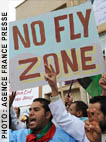
Along with airborne surveillance and the bombing of targets, Western nations in charge of imposing a no-fly-zone over Libya are directing their intelligence and information-warfare arsenals against the Libyan regime. British newspaper The Daily Mail reports that MI6, the UK’s primary external intelligence agency, is sharing with the British military its lists of telephone numbers belonging to senior Libyan military officials. The latter are now receiving calls from British civilian or military intelligence officers prompting them to defect. The paper cited “a senior source” who claimed MI6 is warning senior Libyan military officers that the Royal Air Force has “the GPS coordinates” of their command posts and that “it could be fatal to remain loyal to the Libyan leader” Muammar al-Gaddafi. Presumably, the calls are conducted in the Arabic language. They also do not appear to be pre-recorded, unlike those directed by the Israel Defense Forces at Palestinians during the 2008-2009 Israel-Gaza conflict. The “senior source” told The Mail that the same technique “worked in Iraq” in convincing senior military commanders to either defect or —in most cases— abandon their posts. Read more of this post

News you may have missed #483

  • Ex-CIA chief criticizes ‘too much cybersecurity secrecy’. In an article published in the new issue of the US Air Force’s Strategic Studies Quarterly, former CIA and NSA Director, General Michael “I-want-to-shut-down-the-Internet” Hayden, argues that the US government classifies too much information on cybersecurity vulnerabilities.
  • Renault arrests security chief over spy hoax. Dominique Gevrey, a ex-military intelligence agent, who is French car maker Renault’s chief of security, has been arrested in Paris, just before boarding a flight to Guinea in West Africa. He is accused of concocting the spying allegations which shook the French car giant –-and the entire motoring world-– last January. Meanwhile, Renault has apologized to the three senior executives who were fired after being accused of selling secrets about the company’s electric car strategy to “foreign interests”.
  • Analysis: Gadhafi’s spies keep watch in Libyan rebel capital. “Pro-Gaddafi spies are blamed for assassinations, grenade attacks, and sending rebels threatening text messages. Rebels believe that Gaddafi’s forces are all around them. They lurk outside the Benghazi courthouse that serves as the Capitol for the liberated east, sometimes armed with cameras. They sit in vans outside hotels that house journalists and aid workers, and silently watch who comes and goes”.

Libyan TV accuses detained Dutch helicopter crew of spying

Sirte, Libya

Sirte, Libya

By JOSEPH FITSANAKIS | intelNews.org |
Just days after the capture of a British paramilitary and intelligence team in Libya, the country’s state television has accused three Dutch marines, captured by pro-government loyalists, of spying. The three-member team was detained by armed militias in the outskirts of Libya’s pro-government stronghold of Sirte, while using a Lynx helicopter, allegedly to evacuate two foreign nationals. The Libyans allowed the two unnamed evacuees, a Dutch engineer and another European Union citizen, to transfer to the embassy of the Netherlands in Tripoli, but arrested the crew of the helicopter, which includes a female pilot named Yvonne Niersman. Soon after news of the arrest emerged, the Dutch government said that the mission of the helicopter crew was to evacuate Dutch nationals from Libya. But on March 6, Libyan state television aired footage of the detainees, which showed a collection of items allegedly confiscated from them by the Libyan authorities. They include several weapons, ammunition, as well as a significant amount of United States currency. Read more of this post

Arrest of British spy team in Libya reveals covert involvement

Benghazi, Libya

Benghazi, Libya

By JOSEPH FITSANAKIS | intelNews.org |
All eight members of the British military and intelligence team arrested in Libya on Friday have now been released and are en route to Malta. But what exactly is behind this news story, and what does it reveal about covert Western involvement in Libya? Those detained were part of group of around 20 Britons who landed by helicopter before sunrise on Friday, several miles from Benina International Airport, which is right outside Libya’s second-largest city Benghazi. Witnesses reported that the helicopter was met by another group on the ground. Soon after landing, the mysterious passengers split after being surrounded by heavily armed Libyan rebels; the latter managed to capture eight of them, which included six members of Britain’s Special Air Service (SAS, although some sources suggest they were from the Special Boat Service, or SBS), one British Army officer, and an operative of MI6, Britain’s foremost external intelligence agency. The Britons, all of whom were dressed in black coveralls, offered no resistance, telling their captors that they were unarmed. When searched, however, they were found to be carrying “arms, ammunition, explosives, maps and passports from at least four different nationalities”. Read more of this post

News you may have missed #480 (CIA edition)

  • Cuban-American exile leader funded ex-CIA agent on trial. Oscar De Rojas, the bookkeeper for New Jersey business mogul Arnoldo Monzon, who was once a director of the powerful Cuban American National Foundation, testified Thursday that he wired as much as $9,600 in 1997 to Ramon Medina, one of the aliases used by Luis Posada Carriles, an ex-CIA operative currently on trial for perjury and immigration fraud.
  • Ex-CIA station chief sentenced for sexual abuse. Former senior CIA officer Andrew Warren has been sentenced by a US court to more than five years in prison for sexually abusing a woman in Algeria, while he was the CIA station chief in that country.
  • Analysis: What should the CIA be doing in Libya? US President Barack Obama said on Thursday that he had “instructed […] all those who are involved in international affairs to examine a full range of options” on Libya, which presumably includes the CIA and other special operations assets. But what should the CIA be doing in Libya, if anything at all?

News you may have missed #480 (Libya edition)

  • Unconfirmed: Gaddafi fires spy chief. A Benghazi-based Libyan newspaper has said that Muammar Gaddafi has fired the director of Libya’s intelligence service, Abdullah Al-Senussi, who is considered a key player in a brutal crackdown against anti-regime protesters. The paper said that the Libyan leader named one of his bodyguards, Mansur Al-Qahsi, in Al-Senussi’s place.
  • Libya replaces ambassador to US who defected. The US said it received word Monday that Libya has got rid of its ambassador in Washington, Ali Aujali, after he defected to the opposition, and has now replaced him with a charge d’affaires at the embassy, who is a regime supporter. Changes in Libya’s diplomatic representation in the US are extremely important, since communication links between Washington and Libya may have a drastic impact on the situation in the North African country.
  • Libya’s poison gas stockpiles reportedly unaffected by turmoil. A senior US administration official has told The Washington Post that the White House has no reason to believe the current turmoil in Libya has made its chemical weapons stockpiles more vulnerable to theft. Experts believe that some 10 metric tons of mustard sulfate and sarin gas precursor are stockpiled in barrels at three locations in the Libyan desert south of Tripoli, where Muammar al-Gaddafi has holed up in a last-ditch fight to keep from being overthrown.