Israel asked for Jordan’s approval to bomb Syria, say sources

Regional map of SyriaBy JOSEPH FITSANAKIS | intelNews.org |
The government of Israel has sent Jordan at least two requests in the past two months to bomb targets in Syria, according to intelligence sources. The Atlantic magazine, which published the revelation on Monday, said Tel Aviv has been seeking Amman’s “permission” to move ahead with “a plan to take out many of Syria’s chemical weapons sites”. Citing unnamed “intelligence officials in two countries”, The Atlantic said that the Israeli requests were communicated to the Jordanian government by officials from the Mossad, Israel’s primary covert-action agency. In both instances, the Mossad delegation was allegedly dispatched to Amman on the orders of the Office of Benjamin Netanyahu, Israel’s Prime Minister. However, the Jordanians are so far resisting the Israeli proposals, says The Atlantic, telling their Jewish neighbors that “the time [is] not right” for direct military action. It is worth pointing out that Israel does not technically require Jordan’s permission to bomb Syria. Its air force can do so without assistance from Amman. This was demonstrated on September 6, 2007, when Israel bombed a target at Al-Kibar, deep in the Syro-Arabian Desert, thought to be the site of a nuclear reactor. Even though Tel Aviv has not officially admitted a role in the attack, Israeli officials have repeatedly hinted that Israel was behind it. According to German newsmagazine Der Spiegel, which published a detailed account of the bombing, the attack was codenamed Operation ORCHARD. The difference this time appears to be that many of Syria’s chemical weapons facilities, which Israel allegedly wants to destroy, are located along the Syrian-Jordanian border. Read more of this post

News you may have missed #811

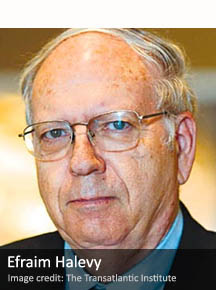
Efraim HalevyBy IAN ALLEN | intelNews.org |
►►Former Mossad chief pushes for dialogue with Iran. After Meir Dagan, another former chief of Israeli intelligence agency Mossad has publicly called for a dialogue between the West and Iran. Speaking to Al-Monitor, an American website covering Middle-East news, Halevy, who directed the Mossad from 1998 to 2002, said that “the Iranians, in their heart of hearts, would like to get out of their conundrum”. IntelNews readers may remember Halevy’s comments in August, when he warned that Israel’s threats of a military attack on Iran were “credible” and “serious”, adding that, if he were an Iranian, he would be “very fearful of the next 12 weeks”.
►►UK says attack on Iran ‘not right course at this time’. The British government has reiterated that it does not believe military action against Iran would be appropriate at the moment, following the disclosure that Britain has rebuffed US requests to use UK military bases to support the buildup of forces in the Gulf. US diplomats have lobbied for the use of British bases in Cyprus, and for permission to fly from US bases on Ascension Island in the Atlantic and Diego Garcia in the Indian Ocean, both of which are British territories.
►►German spy agencies disclose spy tools in rare move. Most law enforcement agencies refuse to reveal the surveillance technologies they use, claiming doing so could threaten national security. But authorities in Germany have shown it is possible to be transparent without the sky falling in —by disclosing how they have spent millions on spy tools to help monitor Skype, email, and mobile phones. Earlier this year, German politician Jan Korte submitted a series of written questions to the country’s federal ministry of home affairs regarding surveillance tools. The answers Korte received were published in German in July, but have only this month been translated (.pdf) into English.
Mossad ‘tried to kill’ Saddam Hussein using ‘exploding book’

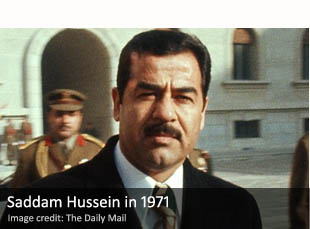
Saddam HusseinBy JOSEPH FITSANAKIS | intelNews.org |
Israeli intelligence tried unsuccessfully to kill Iraqi leader Saddam Hussein in the 1970s using a bomb disguised as a book. This revelation is included in a new documentary film, which was aired on Monday evening on Israel’s Channel 1 television. The documentary, entitled Sealed Lips, focuses on the life and intelligence exploits of Yitzhak Hofi. Known informally as “Khaka”, Hofi was the fifth Director of the Mossad, Israel’s foremost covert-action intelligence agency, which he led form 1974 to 1982.  Aside from Hofi, who is still living in Israel, aged 85, the film includes interviews with five other former Directors of the Mossad, as well as with some of the agency’s best-known covert-action operatives. One of them is Brigadier General (ret.) Tzuri Sagi, said to have been the mastermind behind the plan to kill Hussein, who had assumed power in Iraq following a coup in 1968. According to the documentary, as soon as the Mossad tasked Sagi with assassinating Hussein, he employed the best-known bomb-maker in the Israeli intelligence and security services, known by his operational name, “Natan”. “Natan” put together a carefully constructed explosive device, which was hidden inside an Arabic-language book. The device was wired to detonate once the front cover of the book was opened. The film suggests that the Mossad did manage to find a way for the book to reach the Iraqi leader. However, Hussein appeared suspicious about the book and had one of his close aides, an unnamed senior Iraqi government official, open it. Read more of this post

Mossad, IDF ‘resisted order’ to prepare for Iran war in 2010

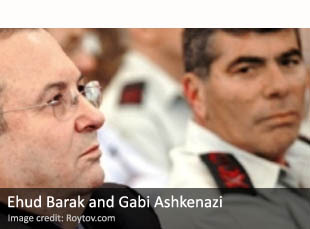
Ehud Barak and Gabi AshkenaziBy JOSEPH FITSANAKIS | intelNews.org |
The heads of Israel’s army and main spy agency resisted an order issued by the Israeli Prime Minister to prepare for an all-out military attack on Iranian nuclear installations in 2010, according to a report aired today. According to Monday’s edition of Uvda (Fact), a popular investigative program on Israel’s Channel 2 television, the command to prepare for an attack was given by Israeli Prime Minister Benjamin Netanyahu and Minister of Defense Ehud Barak. The two men delivered the order to a meeting of senior cabinet ministers, telling them that the Israeli military’s preparedness level would be elevated to ‘P plus’, effective immediately. According to Uvda, ‘P plus’ meant that the Israeli armed forces should prepare to take military action at a moment’s notice. However, the then-Director of Israeli spy agency Mossad, Meir Dagan, who was present at the meeting, asked to speak and, according to Israeli newspaper Ha’aretz, which said it has seen the Uvda program, “came out sharply” against both Netanyahu and Barak. He told those present that elevating the military preparedness to ‘P plus’ was something that technically could only be decided at a meeting of Israel’s Political-Security Cabinet. Also known as “the inner cabinet”, the group, which consists of over a dozen Ministers and is led by the Prime Minister, is tasked with outlining and implementing Israel’s foreign and defense policy. Dagan told the two men that “only the [inner] cabinet is authorized to decide this” and warned them that they were “likely to make an illegal decision to go to war”. Dagan’s objection was later reinforced when General Gabi Ashkenazi, then-leader of the Israel Defense Forces, told the Prime Minister that the Israeli army was not ready to elevate its preparedness level to a ‘P plus’. Read more of this post

Israel admits assassinating Palestinian commander in Tunisia

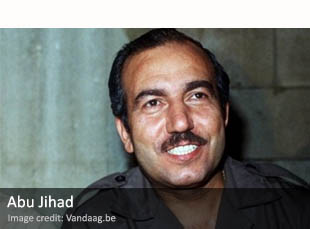
Abu JihadBy JOSEPH FITSANAKIS | intelNews.org |
Authorities in Israel have authorized the publication of an interview acknowledging Israel’s role in the assassination of a senior Palestinian military commander in Tunisia in 1988. The target of the assassination was Khalil al-Wazir, better known as Abu Jihad, one of the co-founders of Fatah, the secular wing of the Palestinian Liberation Organization chaired by Yasser Arafat. In the 1960s and 1970s, Abu Jihad rose within the ranks of Fatah and eventually became commander of its armed wing, known as al-Assifa. However, he was killed on April 16, 1988, when a group of unidentified gunmen stormed his villa in Tunisian capital Tunis, before managing to slip away. In the past 23 years, the Israeli intelligence services have been repeatedly singled out as prime suspects in Abu Jihad’s assassination. Nearly 15 years ago, Israeli newspaper Yedioth Ahronot announced that it had secured an interview with an Israeli commando who had a leading role in the operation and had been the one who fired the shots that killed the Fatah commander. But the interview was blocked from publication by the Israeli military censors, who, under Israeli law, have the power to prevent the airing of information that might harm national security. In 2000, however, the commando, Nahum Lev, died in a motorcycle accident, which prompted the Israeli newspaper to renew its application for the ban on the interview to be lifted. This week, Israeli authorities officially lifted the ban, which allowed Yedioth Ahronot to run the interview with Lev. The airing of the interview was coupled by a more substantial account of the operation, which appeared in the specialist Israel Defense magazine. According to the article, the operation was planned over several months by the Israeli covert action agency Mossad and the Sayaret Matkal, a special forces unit of the Israel Defense Forces. It involved 26 commandos who allegedly reached the Tunisian shore on rubber boats. Several of them walked the streets of Tunis disguised as women tourists. Read more of this post

Controversial ex-Mossad chief ‘fighting for his life’ following operation

Meir DaganBy JOSEPH FITSANAKIS | intelNews.org |
An Israeli former intelligence chief, who has been voicing strong public criticism of Israeli calls for an all-out war with Iran, is allegedly “fighting for his life” following a transplant operation in Belarus. An announcement aired late on Tuesday by Belarusian President Alexander Lukashenko said Meir Dagan, who led Israeli covert-action agency Mossad from 2002 to 2010, had undergone a kidney transplant at a hospital in Belarusian capital Minsk. Lukashenko claimed that the former Mossad strongman, who was born in Russia, had decided to undergo the operation in the former Soviet republic after consulting with him personally. The Belarusian president claimed that, prior to traveling to Minsk for the operation, Dagan had asked American, German and Swedish doctors to perform it, but that they refused, allegedly because “no one wanted to carry out a liver transplant operation on a former head of the Mossad”. According to the announcement, the former Mossad Director was operated on over a week ago and initially seemed to be doing well. However, complications soon set in and he is currently “recovering in isolation”, while it appears that his body is not receiving the transplant well. Reputable Israeli newspaper Ha’aretz said that Belarusian media had directed several queries to hospital staff in Minsk, who apparently confirmed that an organ transplant had been performed on a patient who was a citizen of Israel. But they refused to give the person’s name due to patient confidentiality rules. It is not clear why Dagan had to leave Israel in order to undergo the operation, or why he failed to notify the Israeli embassy in Belarus. Israeli diplomats in Minks told Israeli media that they had no idea about Dagan’s medical procedure or even presence in the eastern European country. Read more of this post

News you may have missed #794

GCHQ center in Cheltenham, EnglandBy IAN ALLEN | intelNews.org |

►►Racism charge against GCHQ settled out of court. The British government’s SIGINT agency, GCHQ has been spared having its inner workings broadcast in public after a potentially embarrassing racism case was settled out of court at the last minute. The racial harassment and constructive dismissal lawsuit had been filed by Alfred Bacchus, a 42-year-old former employee. There are unconfirmed reports that, as part of the settlement, the plaintiff has signed a non-disclosure agreement banning him from revealing any more details about his complaints.
►►US spy agencies renew call for electronic surveillance rights. US intelligence officials had made a public plea on Tuesday, the 11th anniversary of the September 11, 2001, attacks, for quick Congressional action to extend a sweeping but controversial US electronic surveillance law. If the law, which expires at the end of 2012, is not extended, US spy agencies say they would lose access to what they describe as a “very, very important source of valuable intelligence information”. But at least one congressional critic of the surveillance law, Democratic Senator Ron Wyden, says he is willing to use legislative tactics to stall the bill, which has been passed by the House, unless the administration and other legislators agree to include stronger provisions to protect Americans’ civil liberties.
►►Yemen claims arrest of ‘Mossad agent’. Al-Nas, a Yemeni weekly associated with the Islamist Yemeni Reform Party, reported last weekend that an Israeli citizen, identified only by his initials and year of birth, 1982, was arrested in the southwestern city of Taizz. He reportedly admitted to smuggling children out of Yemen to neighboring countries and from there to Israel “through Zionist organizations”. Bizarrely, the man reportedly told his Yemeni interrogators that he “spent three years in a Greek prison for researching the biographies of well-known computer hackers”.

CBS re-broadcasts Iran comments by former Mossad chief

Meir DaganBy JOSEPH FITSANAKIS | intelNews.org |
One of the few certainties in the spiraling crisis between Iran, Israel and the United States, is that Tel Aviv and Washington do not agree on how to respond to Tehran’s nuclear program. Nowhere is this lack of unity more noticeable than in the difference of opinion between the Office of the Israeli Prime Minister, Benjamin Netanyahu, and the White House. Netanyahu, a leading hawk in Israeli political circles, has made it clear that, unlike United States President Barack Obama, he believes that the time for diplomacy has run out, and that Israel has no option but to consider direct military strikes on Iran. Last weekend he even took the unprecedented step of advising American voters to elect a leader willing “to draw a red line” on the issue of Iran. It is worth noting, however, that senior figures in Israel’s intelligence community seem to be siding with the US on this dispute. Leading the wave of dissention within the ranks is Meir Dagan, former Director of the Mossad, Israel’s most revered intelligence agency. In November of 2010, Meir Dagan stepped down from his post as the head of the Mossad after having led the agency for over eight years —the longest tenure of any Mossad director in history. Soon afterwards, he admonished calls by Netanyahu’s people to bomb Iran as “the stupidest idea” he had ever heard. On Sunday, September 16, the CBS flagship investigative program 60 Minutes aired again an important interview with Dagan, which was first broadcast on March 11 of this year. The timing of the re-broadcast is critical, as observers in the Middle East appear increasingly certain that an Israeli military attack on Iran is imminent. Read more of this post

Mossad allegedly behind assassination of Egyptian militant in Sinai

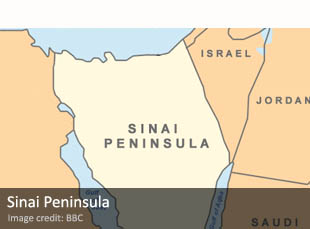
Sinai PeninsulaBy JOSEPH FITSANAKIS | intelNews.org |
Israeli intelligence operatives were allegedly behind the assassination late last month of an Egyptian militant who died when his motorcycle suddenly exploded in Egypt’s Sinai Peninsula. Citing unnamed Egyptian security sources, the Palestinian Ma’an News Agency said the target of the assassination was Ibrahim Ouda Bereikat, a member of the militant group Jamaat Ansar Bait Al-Maqdis fi Sinaa. The group had claimed responsibility for a series of cross-border attacks in August of 2011, which killed eight Israeli citizens. Five Egyptian police officers and ten militants were also reportedly killed in the attacks, which sparked a diplomatic episode between Cairo and Tel Aviv. The Ma’an report cited Egyptian sources who said that the Israeli raid was the first known incursion into Sinai ever since Israel and Egypt signed the 1979 Camp David Accords. The news agency said that Bereikat’s assassination was carried out by a team of four officers from the Mossad, Israel’s primary covert-action agency. The four allegedly bribed several Bedouin tribesmen who live in southern Sinai, and had them lead them to Bereikat’s whereabouts, approximately 10 miles (15 kilometers) into Egyptian territory. The report claims that the eight-member team —four Mossad operatives and four Bedouins— first tried to kill Bereikat on August 22, but failed because, ironically, their target had been picked up for questioning by Egyptian security forces. The Mossad officers thus returned late on Saturday, August 25, and planted explosives on Bereikat’s motorcycle. Read more of this post

News you may have missed #778 (analysis edition)

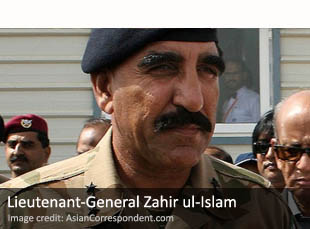
Lieutenant-General Zahir ul-IslamBy IAN ALLEN | intelNews.org |
►►Some rules restrain Mossad’s work in Iran. It is widely believed that at least four assassinations of Iranian nuclear scientists in Tehran were carried out in recent years by Mossad operatives. The perpetrators were part of an elite unit within Israeli intelligence, called Kidon, founded in 1972 to avenge the killing of 11 Israeli athletes at the Munich Olympics, by any means necessary. But veteran Israeli intelligence correspondents Dan Raviv and Yossi Melman argue that the Kidon is not technically a ‘lawless’ organization; it has to comply with a set of “unwritten regulations” adopted by Israel’s secret agencies fifty years ago.
►►Are US and Pakistani spy agencies starting to get along? The relationship between the CIA and Pakistan’s Inter-Services Intelligence (ISI) agency has been at the core of Washington and Islamabad’s alliance for over a decade now. But over the past two years, as suspicions have grown, the two sides had become near adversaries. After months of relations languishing at an all-time low, Pakistan and the US may now be opening up a fresh phase of engagement. Following US Secretary of State Hillary Clinton’s recent apology for the loss of 24 Pakistani soldiers at a border checkpoint last November, NATO supplies are rumbling through again. Washington has also released funds for Pakistani military operations it had previously withheld. And, perhaps most crucially, the two fractious allies’ top spies are said to be talking again. New ISI Director Zahir ul-Islam (pictured) visited Washington for talks earlier this month.
►►Why the US isn’t arming Syria’s opposition –yet. Up until this point, the only thing the US has owned up to is providing humanitarian assistance and communications equipment to Syrian opposition groups. A report earlier this month revealed that US President Barack Obama signed a secret “finding” in July, which allows the CIA to take action in Syria, but does not include lethal support. In other words, the US won’t be sending in Seal Team Six to take down Assad any time soon, but it is training certain groups to handle and gather intelligence. Why is that?

News you may have missed #773

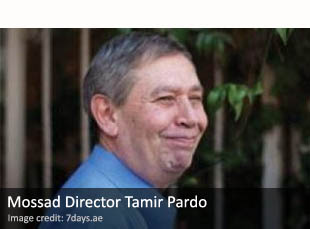
Tamir PardoBy IAN ALLEN | intelNews.org |
►►Conflicting reports on CIA-ISI meeting. Lieutenant General Zahir ul-Islam, who heads Pakistan’s premier intelligence agency, the ISI, held talks in Washington with his CIA counterpart General David Petraeus, between August 1 and 3. It was the first time in a year that the chief of the ISI made the trip to the US, signaling a possible thaw in relations. Depending on the source, the meeting was either “substantive, professional and productive”, or “made no big strides on the main issues”.
►►Senior Mossad official suspected of financial misconduct. A senior Mossad official is suspected of financial misconduct and has been forced to take a leave of absence until Israeli police complete an investigation into his alleged deeds, Israeli media reported on Sunday. The official, a department head in Israel’s spy organization, has reportedly denied any wrongdoing, but sources said he would likely not be reinstated in light of investigation findings and is effectively being forced to retire. The nature of the official’s alleged misconduct has not been reported, but it is said that the official in question has close ties to Mossad Director Tamir Pardo, who appointed him to his position last year.
►►Ex-NSA official disputes DefCon claims by NSA chief. William Binney, a former technical director at the NSA, has accused NSA director General Keith Alexander of deceiving the public during a speech he gave at the DefCon hacker conference last week. In his speech, Alexander asserted that the NSA does not collect files on Americans. But Binney accused Alexander of playing a “word game” and said the NSA was indeed collecting and indexing e-mails, Twitter writings, Internet searches and other data belonging to Americans. “The reason I left the NSA was because they started spying on everybody in the country. That’s the reason I left”, said Binney, who resigned from the agency in late 2001.

Israeli intelligence insiders warn of ‘imminent’ attack on Iran

Efraim HalevyBy JOSEPH FITSANAKIS | intelNews.org |
If Iranian government officials had a uranium centrifuge for each time a warning is issued of an impending military attack on Tehran, they would undoubtedly have a nuclear weapon by now. Warnings about such an attack are now ‘a-dime-a-dozen’. Yet it is admittedly difficult to ignore the increasing frequency with which such warnings are being issued by leading retired intelligence officials in Israel. Last week alone, two intelligence insiders, Major-General Danny Yatom and Efraim Halevy, both former Directors of the Mossad, Israel’s main external intelligence agency, said a military attack on Iran was imminent. Speaking on Wednesday, Halevy said that Israel’s threats of a military attack were “credible” and “serious”, adding that, if he were an Iranian, he would be “very fearful of the next 12 weeks”. His comments were echoed on Sunday by Major-General Yatom, who told Israel’s Army Radio that the debate among senior Israeli security officials was not over whether Israel should strike Iran, but about when it should do so. The two men spoke shortly after a similar warning was issued by Major-General Aharon Ze’evi Farkash, former chief of Israel’s Military Intelligence Directorate. Farkash, who is not a proponent of an all-out military operation against Iran, said that an Israeli attack would probably come “within weeks, or a couple of months”. It is worth pointing out that all three men issued their public warnings along with significant reservations about the way Israel is handing the situation with Iran. Halevy said that, in his view, “it would not be desirable for Israel to act alone” against Iran and warned of a potentially serious international backlash. Major-General Farkash reiterated his previously stated position that an open military attack on Iran at this point in time would be premature and would “ruin the legitimacy that is needed” in order to permanently stop Iran’s alleged nuclear ambitions. Read more of this post

News you may have missed #768

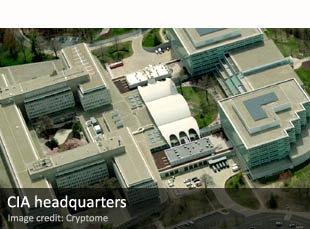
CIA headquartersBy IAN ALLEN | intelNews.org |
►►‘CIA could get bin Laden but can’t get a gym’. As CIA Director, General David Petraeus is credited by some as having helped turn the tide in the Iraq War, flush the Taliban from southern strongholds in Afghanistan, and infiltrated al-Qaeda in Yemen. But his campaign to improve the Agency’s fitness gyms has been a marathon effort –one that defeated other CIA directors over a course of some 16 years. Petraeus arrived at the CIA in 2011 to find two basement gyms at the Langley, Va., headquarters, one with original flooring dating to 1964. One gym is so small it can’t contain the punching bags and medicine balls that spill into the hall, where people stretch out and do mat exercises.
►►Israel convinced Hezbollah behind Bulgaria bombing. Israeli Prime Minister Benjamin Netanyahu said Sunday that his government has gathered “unquestionable intelligence” showing that the Lebanese militant group Hezbollah, backed by Iran, was behind a suicide bombing in Bulgaria last week that killed five Israeli nationals. The Israeli leader said the Mossad had drawn close parallels between the attack in Bulgaria and a foiled operation in Cyprus earlier this month, involving an alleged Hezbollah operative.
►►Hezbollah silent on reports of Israel spy arrests. Hezbollah would not comment on a local newspaper report on Wednesday, which said the Lebanese Shiite party had detained three men, including two of its own members, for spying for Israel. Lebanese daily newspaper An-Nahar said Hezbollah’s security apparatus had detained two Hezbollah members and a member of a Bekaa village municipal council on the suspicion that they have been collaborating with Israel.

Mossad gave us no terror warning before blast, says Bulgaria -updated

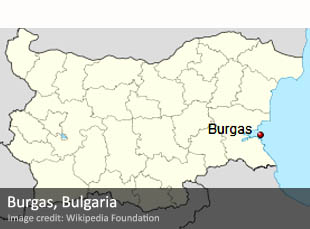
Burgas, BulgariaBy JOSEPH FITSANAKIS | intelNews.org |
Bulgarian authorities received no warning from Israeli intelligence prior to yesterday’s bombing in eastern Bulgaria, which killed at least seven and injured over 30 Israeli tourists. The bomb blast occurred outside the main airport building in the Black Sea resort town of Burgas. Less than an hour earlier, Air Bulgaria flight 392, which had departed from Ben-Gurion Airport in Tel Aviv, had landed at the Burgas International Airport, carrying nearly two hundred Israeli tourists. The latter were boarding three buses scheduled to transport them to various hotels in Burgas, when one of them was ripped apart by a blast —most likely caused by an explosive device placed in the vehicle’s storage compartment a suicide bomber. Reports from Bulgaria and Israel said last night that at least two of the injured were in critical condition and could die soon. Speaking to local media gathered at the site of the blast, Bulgarian President Rosen Plevneliev said that Israeli intelligence services had provided no warning of a planned attack inside the country. Plevneliev said that members of Bulgaria’s security apparatus met a month ago with officials from the Mossad, Israel’s primary external intelligence agency, but received “no warning of an expected attack”. Earlier this year, it was reported that the Bulgarian intelligence services had uncovered a plot by Lebanese militant group Hezobllah to strike Israel-linked targets in Bulgarian capital Sofia. Last January, Israel had asked Bulgaria to increase security provisions for Israeli tourists, after a suspicious package was found on a tour bus carrying Israeli holidaymakers from Turkey into Bulgaria. Ironically, Dan Shenar, head of security at the Israeli Transportation Ministry, said at the time that security measures were excellent in Bulgarian airports, but “the situation is not the same outside them”. Read more of this post

News you may have missed #762

Danni YatomBy IAN ALLEN | intelNews.org |
►►Italy postpones court decision on wanted CIA operatives. The Washington Post has published a useful update on Sabrina De Sousa, one of nearly two-dozen CIA operatives who were convicted in Italy in 2007 for the kidnapping four years earlier of Egyptian cleric Hassan Mustafa Osama Nasr. The Americans kidnapped Nasr, known as Abu Omar, from the streets of Milan without the consent of Italian authorities. The Italians, who were themselves carefully monitoring Nasr, responded by convicting all members of the CIA team in absentia, and notifying INTERPOL. But last Friday, the Supreme Court of Cassation in Rome postponed its verdict after a two-day hearing aimed at deciding whether to uphold or overturn the Americans’ convictions.
►►Ex-Mossad chief urges Israel to prepare for military action in Syria. In an interview with British news network Sky News, former Mossad Chief Danni Yatom said last week that Israel must be prepared for the possibility of military attacks on Syria, which may deteriorate into war.  He said his warning stems from the fear that Syria’s hundreds of tons of chemical weapons will fall into the hands of terrorists. “We would have to pre-empt in order to prevent it. We need to be prepared to launch even military attacks […] and military attacks mean maybe a deterioration to war”, said the former Mossad Director.
►►British spy agencies failed to predict Arab Spring. The Intelligence and Security Committee of the British Houses of Parliament has said in its annual report that British spy agencies had been surprised by the spread of unrest during the Arab Spring and failed to predict the dramatic uprisings that swept the region. The report also noted that the Arab Spring had exposed Britain’s decision to scale back intelligence assets in much of the Arab world, in favor of monitoring Iran and al-Qaeda. We at intelNews wrote about this in 2011.