News you may have missed #821 (civil liberties edition)

Bernard SquarciniBy IAN ALLEN | intelNews.org |
►►French domestic spy chief cleared of snooping charges. Back in October of 2011, intelNews reported that Bernard Squarcini, who then headed France’s domestic intelligence agency, the DCRI, had been charged with spying on a journalist with the daily Le Monde. The accusation was part of a wider case of domestic snooping, in which Squarcini was believed to have been trying to detect the source of government leaks to the press, allegedly on orders by then-President Nicolas Sarkozy. Earlier this month, however, an appeals court in Paris rejected two of three charges against the former DCRI chief. Squarcini could face up to five years in prison if convicted of the remaining charge.
►►FBI documents termed Occupy movement as ‘terrorism’. A number of heavily redacted US government documents, released following a Freedom of Information Act request, reveal that the FBI organized a nationwide law enforcement investigation and monitoring of the Occupy Wall Street movement beginning in August of 2011. In some documents, the FBI refers to the Occupy Wall Street protests as a “criminal activity” and “domestic terrorism”.
►►Wiretapping by Russian spy agencies doubled in five years. Wiretapping by Russia’s intelligence agencies has nearly doubled over the past five years, according to The Moscow Times. In Western countries, intelligence agencies were given wider powers after the 9/11 terrorist attacks. But in Russia, the exponential growth of wiretapping began after 2007, when terrorism by Islamic-inspired separatists was already on the decline. A federal law passed in 2010 expanded the legal grounds for wiretapping Russian citizens. Now, intelligence officers can wiretap someone’s phones or monitor their Internet activity simply because they allegedly received reports that an individual is preparing to commit a crime.

News you may have missed #820

H. Keith MeltonBy IAN ALLEN | intelNews.org |
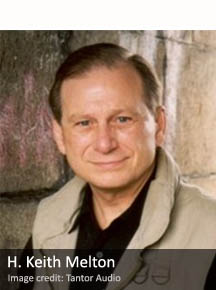
►►World’s best known spy collector displays his home. And now for something completely different. Most intelNews readers will be aware of H. Keith Melton, the author of more than 25 nonfiction works on espionage (including The Ultimate Spy Book) and the world’s largest private collector of spy memorabilia. The question is, where does he keep all this stuff? The 68-year-old author invited Forbes magazine to his Boca Raton house, which includes his two-story private spy museum. The article is here, a photo gallery here, and a video of the house (but not the museum) is here.
►►Acting CIA director criticizes ‘Zero Dark Thirty’. IntelNews has ignored the commentary that has flooded the Web about Zero Dark Thirty, the feature film fictional account of the assassination of al-Qaeda founder Osama bin Laden. But when the Director of CIA, the agency behind the real-life operation to kill bin Laden, publicly comments, it is time to pay attention. Michael J. Morell, who took over as CIA Director from General David Petraeus last month, has criticized the film, saying it exaggerates the role of coercive interrogations in producing clues to bin Laden’s whereabouts.
►►British police says MI6 expert ‘killed himself’. British police say MI6 cryptology expert Gareth Williams, who was found dead inside a sports bag in August 2010, probably locked himself into the sports bag, where his naked body was found, and was not the victim of a hit by the security services. Williams, 31, worked for Britain’s secret eavesdropping service GCHQ but was attached to MI6 when his remains were found inside the bag in a bathtub at his London apartment.
News you may have missed #819 (UKUSA edition)

Charles E. AllenBy IAN ALLEN | intelNews.org |
►►Aussie spies’ exemption from Freedom of Information laws to end? Currently, all Australian intelligence agencies are exempt from the operation of federal Freedom of Information (FOI) legislation that allows the public and journalists to seek access to government records. But now Australian Information Commissioner John McMillan has called for the intelligence agencies to no longer be exempted from FOI laws. Professor McMillan and FOI Commissioner James Popple have made the recommendation in a 97-page submission to the review of FOI laws by former Defence Department secretary and diplomat Allan Hawke.
►►US spy agencies move towards single super-cloud. The US intelligence community is developing a single cloud computing network to allow all its analysts to access and rapidly sift through massive volumes of data. Now in its eighth month, the goal of the effort is to connect the Central Intelligence Agency’s existing cloud to a new cloud run by the National Security Agency. This NSA-run network consists of five other intelligence agencies and the FBI. Both of these clouds can interoperate, but the CIA has its own unique needs because it must work with human intelligence, which necessitates keeping its cloud slightly separate, according to Charles Allen, formerly Undersecretary of Homeland Security for intelligence and analysis.
►►Canadian Army struggles with intelligence-gathering. The Canadian Army is trying to hold on to its intelligence-gathering capability and its ability to disrupt spying in the face of budget strain, according to documents from the Canadian Department of National Defence. The Canadian Press, which obtained the documents, says the Army is “anxious to protect HUMINT network and to better resource its counterintelligence abilities”, but is worried that its shrinking budget in the post-Afghanistan War era will cause “degradation” in those disciplines.

News you may have missed #818 (USA edition)

Osama bin LadenBy IAN ALLEN | intelNews.org |
►►The real-life female CIA officer who helped track bin Laden. The Washington Post has a good article on the real-life career of a female CIA officer who helped the Agency track al-Qaeda founder Osama bin Laden. It is disappointing, however that the article, authored by Greg Miller and Toby Warrick, is headlined “In Zero Dark Thirty she’s the hero; in real life, CIA agent’s career is more complicated”. The CIA employee in question is not an “agent”; she is an officer. In the CIA, agents are assets, people recruited and handled by CIA officers. Amazing that The Post, with its experienced journalists and editors would confuse such a basic operational distinction.
►►US spy agencies to detail cyber-attacks from abroad. The US intelligence community is nearing completion of its first detailed review of cyber-spying against American targets from abroad, including an attempt to calculate US financial losses from hacker attacks based in China. The National Intelligence Estimate, the first involving cyber-espionage, will also seek to determine how large a role the Chinese government plays in directing or coordinating digital attacks aimed at stealing US intellectual property, according to officials who spoke on the condition of anonymity to discuss a classified undertaking.
►►CIA begins LGBT recruiting. As part of the CIA’s efforts to diversify its workforce, the spy agency is reaching out to a group that once was unable to get security clearance: lesbians and gay men. CIA officials have held a networking event for the Miami gay community sponsored by the Miami-Dade Gay and Lesbian Chamber of Commerce and the CIA. “This is the first time we’ve done a networking event of this type with any of the gay and lesbian chamber of commerces in the United States,” says Michael Barber, a self-identified “straight ally” and the spy agency’s LGBT Community Outreach and Liaison program manager.

News you may have missed #817 (assassinations edition)

Patrick FinucaneBy IAN ALLEN | intelNews.org |
►►British PM apologizes in killing of IRA lawyer. The Prime Minister of the United Kingdom, David Cameron, has apologized after a government report found that British intelligence officials had colluded with loyalist paramilitaries in the 1989 killing of lawyer Patrick Finucane in Belfast, Northern Ireland. Finucane, who had represented members of the Irish Republic Army in court, was shot dead by two gunmen from a Protestant paramilitary group while having a Sunday dinner at his home with his wife and three children.
►►Behind the plot to kill Afghanistan’s spy chief. On December 11, we reported that the Afghan government accused Pakistani intelligence of having played a role in the assassination of Assadullah Khaled, who heads Afghanistan’s National Directorate for Security. But how was the attempt on Khaled’s life carried out, and how did the aspiring assassins get so close to the controversial intelligence chief? Time magazine reports that it was Khaled’s self-confidence “bordering on recklessness” that almost got him killed. Sources say that, even after taking over the NDS, Khalid frequently drove around without bodyguards.
►►How Mossad bid to kill Hamas leader ended in fiasco. Khaled Mashal’s recent presence in the Gaza Strip will have rudely reminded Benjamin Netanyahu, the Israeli Prime Minister, of one of the greatest fiascos in the history of special operations, writes The Daily Telegraph‘s David Blair. Fifteen years ago, Netanyahu authorized a risky attempt to assassinate Mashal in the Jordanian capital, Amman. Everything went wrong. The Jordanian security forces responded to this brazen daylight attack, arresting two of the Israeli operatives and forcing three to hide in their country’s embassy, which was promptly surrounded by troops.

News you may have missed #816

Kim Jong-namBy IAN ALLEN | intelNews.org |
►►Danish minister vows more control over spy agency. Following the uproar created by the revelations from former Danish secret service (PET) agent Morten Storm, Denmark’s Minister of Justice, Morten Bødskov, is now calling for parliament to have more control over the domestic intelligence agency. In an interview with Berlingske newspaper, Bødskov said that he is seeking increased powers for parliament’s Kontroludvalg, a committee established in 1964 to oversee PET. The move comes in response to the many questions that have arisen about PET’s actions following Storm’s decision to contribute to a series of articles in Jyllands-Posten newspaper that chronicled his time as a PET double-agent.
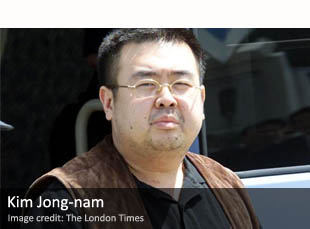
►►South Korea jails alleged North Korean assassin. A South Korean court has jailed an unidentified North Korean spy reportedly ordered to attack Kim Jong-nam, the eldest son of late North Korean leader Kim Jong-il. Kim Jong-nam, who is believed to have fallen out of favor with Kim Jong-il in 2001, was thought to have been living in Macau, but media reports indicate he may have moved to Singapore. South Korean media said the alleged assassin had spent a decade in China tracking down North Korean defectors before coming to the South, and that he had admitted trying to organize “a hit-and-run accident” targeting Kim Jong-nam.
►►US Pentagon to double the size of its worldwide spy network. The Defense Intelligence Agency (DIA), the US Pentagon’s military intelligence unit, is aiming to recruit 1,600 intelligence collectors —up from the several hundred overseas agents it has employed in recent years. The DIA’s new recruits would include military attachés and others who do not work undercover. But US officials say that the growth will be driven a new generation of spies who will take their orders from the Department of Defense. The project is reportedly aimed at transforming the DIA into a spy service more closely aligned with the CIA and elite military commando units.

News you may have missed #815 (analysis edition)

Polygraph testBy IAN ALLEN | intelNews.org |
►►Should polygraph tests be trusted?  US federal polygraph programs have flourished, targeting a growing number of private contractors with more intensely personal questions than ever before. More than 70,000 people are now screened yearly in the US. Yet thousands of people a year could be identified as lying in polygraph screenings when they are not, according to statistical models by the National Academies, which advises the federal government on scientific matters. Under the current system, many of them would have no way to legally challenge polygraphists’ conclusions, especially in the intelligence world.
►►Why the US does not need another law against intelligence leaks. Leonard Downie Jr., vice president at large of The Washington Post, warns that the 2013 Intelligence Authorization Act “would make it a crime for career intelligence officers to provide almost any type of information to the news media, whether the information is classified or not”. He argues that the proposed legislation would “end contacts that often benefit both the government and the public by allowing the exchange of accurate information about vital national security issues and intelligence activities, including abuses requiring attention”.
►►The preventable decline of British defense intelligence. Defense intelligence refers to something rather different from ‘military intelligence’. It takes place at the topmost levels of defense coordination and decision-making and draws together participation from all of the armed services with civilian subject-matter and technical experts and produce consolidated assessments for senior civil servants, ministers and the service chiefs of staff. Philip Davies, director of the Brunel Centre for Intelligence and Security Studies in the United Kingdom, argues that, in Britain, defense and military intelligence remains “something of a poor cousin in the intelligence community, the eternal Peter robbed to pay the Paul of other, seemingly more urgent, defense expenditure and policy priorities”.

News you may have missed #814

Ilir KumbaroBy IAN ALLEN | intelNews.org |
►►Israel accuses Palestinian of spying for Hezbollah. Israel’s Shin Bet internal security agency says a Palestinian man has been charged with relaying information to Hezbollah in Lebanon about sensitive government sites, including parliament. It identified the suspect as Azzam Mashahara, a resident of east Jerusalem, which Israel captured in 1967. Palestinian residents of east Jerusalem, unlike Palestinians from the West Bank or the Gaza Strip, have Israeli identity cards that allow them to travel freely within Israel. Mashahara was charged with maintaining contacts with a foreign agent and relaying information to the enemy.
►►UK agency tries to crack coded message from WWII-era carrier pigeon. The note, written on official stationary with the heading “Pigeon Service,” was discovered in a red canister attached to the skeletal leg of a pigeon in a chimney in Surrey, England. The message is made up of 27 seemingly random five-letter blocks and though it’s undated, government analysts believe the pigeon met his end while on a secret mission during the Second World War. The note is signed “Sjt W Stot” and was intended for the destination “XO2”. In a statement, Britain’s Government Communications Headquarters (GCHQ), said that during the war secret communications would often utilize specialized codebooks “in which each code group of four or five letters had a meaning relevant to a specific operation, allowing much information to be sent in a short message”. The GCHQ said that those messages may have been put through an additional layer of security by being re-coded with what’s known as a one-time pad.
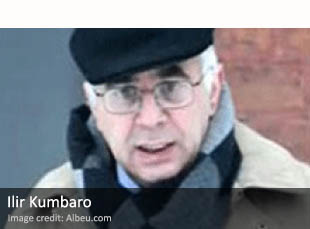
►►Albania court convicts fugitive ex-spy chief. An Albanian court has convicted Ilir Kumbaro, the country’s fugitive former intelligence chief, of murder for the 1995 death of a suspect who was illegally detained for an alleged plot to murder the President of the Republic of Macedonia. The victim, businessman Remzi Hoxha, an ethnic Albanian from Macedonia, was abducted by the secret police 17 years ago along with two other suspects for allegedly planning to kill then-Macedonian President Kiro Gligorov during a visit to Albania. The court said the three suspects were held illegally and tortured during questioning. Kumbaro traveled to Britain in 1996 under a false identity, claiming to be a refugee from Kosovo. He has been missing for a year, after skipping an extradition hearing in London. Hoxha was never found and is presumed to have died in custody.

News you may have missed #813 (CIA edition)

CIA headquartersBy IAN ALLEN | intelNews.org |
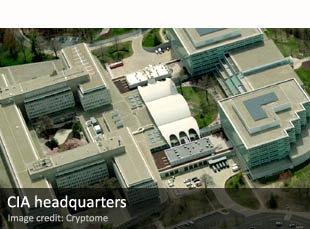
►►Who is leading the CIA for now? Acting CIA Director Michael J. Morell, who has worked for the CIA for 32 years, served a stint as acting director last year and his will be one of several names considered by US President Barack Obama for the permanent job. Starting as an analyst tracking international energy issues, Morell worked for 14 years as an analyst and manager on East Asia, rising to director of the Directorate of Intelligence’s Office of Asian Pacific and Latin American Analysis in 1999. In May 2010, Morell succeeded Stephen Kappes, who had resigned suddenly and without explanation, as deputy director of the CIA, serving under Directors Leon Panetta (February 2009-June 2011) and David Petraeus (September 2011-November 2012).
►►No perfect choice to fill Petraeus vacancy at CIA. President Barack Obama needs a quick, no-drama solution to a sensational personnel problem. But the vacancy left at the top of the Central Intelligence Agency by David Petraeus’s abrupt departure amid a headline-grabbing sex scandal calls for a particularly complex skill set. It requires a charismatic chief to oversee the large, notoriously tough-to-manage intelligence apparatus. It needs a leader who has a strong relationship with the president. And most of all, it calls for a politically savvy operator who understands how to interact with Congress —and can assuage some of the current anger on Capitol Hill that lawmakers were kept in the dark about the probe.
►►CIA climate-change unit is shut down. Republican lawmakers in the US began criticizing the Central Intelligence Agency’s Center on Climate Change and National Security before it was even established, calling it a “misguided defense funding priority”. Concerted resistance by conservative lawmakers did not allow the program to stand on solid ground, and it now looks like the Center has actually closed down, having lost its most important supporter, former CIA Director Leon Panetta.

News you may have missed #812

Yasser ArafatBy IAN ALLEN | intelNews.org |
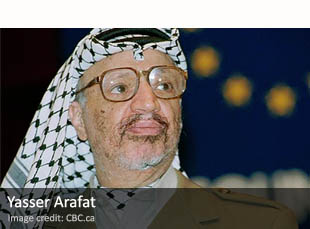
►►Russia to help probe Yasser Arafat’s death. Russia will join an international investigation to determine whether the first Palestinian president, Yasser Arafat, was murdered, the current Palestinian leader, Mahmoud Abbas, has said. French and Swiss experts are due to exhume Arafat’s body in Ramallah later this month in an attempt to discover how he died after an al-Jazeera documentary in July suggested he was killed by a rare radioactive poison. Abbas asked Russian foreign minister Sergei Lavrov for Moscow’s help during talks in Jordan, Palestinian sources said.
►►Revisiting the foiled 1984 Nigerian kidnap plot. In London in 1984, a team of Nigerians and Israelis attempted to kidnap and repatriate the exiled former Nigerian minister Umaru Dikko. Mr. Dikko, who had fled Nigeria after a military coup, was accused of stealing $1bn (£625m) of government money. The plot was foiled by a young British customs officer and, as a result, diplomatic relations between the UK and Nigeria broke down and were only fully restored two years later. The Nigerian and Israeli governments have always denied involvement in the kidnapping.
►►Putin congratulates KGB double spy on his birthday. Russian President Vladimir Putin has congratulated famous double agent George Blake on his 90th birthday, the Kremlin press office has said. Blake betrayed British intelligence starting in the 1950s; he was found out in 1961 and sentenced to 42 years in prison. But he escaped five years later using a ladder of rope and knitting needles, made his way to the Soviet Union and has been living out his last years serenely in a cottage outside Moscow. After his escape from the Wormwood Scrubs prison in London, he was smuggled to Berlin in a wooden box in the back of a van. In the interview published last week, he said he then presented himself to border guards in East Berlin, asked to speak to a Soviet officer, and when told to wait, immediately fell into a deep sleep.

News you may have missed #811

Efraim HalevyBy IAN ALLEN | intelNews.org |
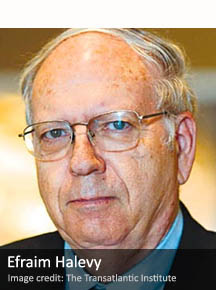
►►Former Mossad chief pushes for dialogue with Iran. After Meir Dagan, another former chief of Israeli intelligence agency Mossad has publicly called for a dialogue between the West and Iran. Speaking to Al-Monitor, an American website covering Middle-East news, Halevy, who directed the Mossad from 1998 to 2002, said that “the Iranians, in their heart of hearts, would like to get out of their conundrum”. IntelNews readers may remember Halevy’s comments in August, when he warned that Israel’s threats of a military attack on Iran were “credible” and “serious”, adding that, if he were an Iranian, he would be “very fearful of the next 12 weeks”.
►►UK says attack on Iran ‘not right course at this time’. The British government has reiterated that it does not believe military action against Iran would be appropriate at the moment, following the disclosure that Britain has rebuffed US requests to use UK military bases to support the buildup of forces in the Gulf. US diplomats have lobbied for the use of British bases in Cyprus, and for permission to fly from US bases on Ascension Island in the Atlantic and Diego Garcia in the Indian Ocean, both of which are British territories.
►►German spy agencies disclose spy tools in rare move. Most law enforcement agencies refuse to reveal the surveillance technologies they use, claiming doing so could threaten national security. But authorities in Germany have shown it is possible to be transparent without the sky falling in —by disclosing how they have spent millions on spy tools to help monitor Skype, email, and mobile phones. Earlier this year, German politician Jan Korte submitted a series of written questions to the country’s federal ministry of home affairs regarding surveillance tools. The answers Korte received were published in German in July, but have only this month been translated (.pdf) into English.

News you may have missed #810 (Petraeus resignation edition)

David PetraeusBy JOSEPH FITSANAKIS | intelNews.org |
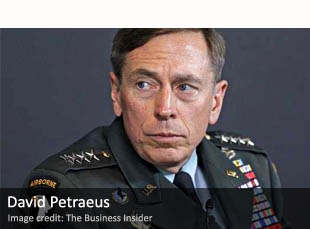
►►How did Petraeus’ affair come to light? CIA Director David Petraeus resigned after a probe into whether someone else was using his email. The probe eventually led to the discovery that he was having an extramarital affair, according to The Wall Street Journal, which cites “several people briefed on the matter”. An FBI inquiry into the use of Petraeus’s Gmail account led agents to believe the woman or someone close to her had sought access to his email. An extramarital affair has significant implications for an official in a highly sensitive post, such as that held by Petraeus, because it can open an official to blackmail.
►►Who did Petraeus have an affair with? The woman with whom General David Petraeus was having an affair is Paula Broadwell, a West Point graduate and the author of a recent hagiographic book about him, entitled All In: The Education of General David Petraeus, co-written with Vernon Loeb. Slate‘s Fred Kaplan reports that “it had long been rumored that something was going on between Petraeus and Broadwell. When she was embedded with him in Afghanistan, they went on frequent 5-mile runs together. But Petraeus went on 5-mile runs with many reporters, and few people who knew him took the rumors seriously”.
►►Who is leading the CIA now? With General David Petraeus stepping down as director of the CIA, following reports of an extra-marital affair, the agency’s current deputy director will take over as director on an interim basis. His name is Michael Morell, and he was a senior CIA aide in the White House to President George W. Bush. Morell had served as deputy director since May 2010, after holding a number of senior roles, including director for the agency’s analytical arm, which helps feed intelligence into the President’s Daily Brief. He also worked as an aide to former CIA Director George Tenet.

News you may have missed #809 (Obama-Iran edition)

Iran and its regionBy IAN ALLEN | intelNews.org |
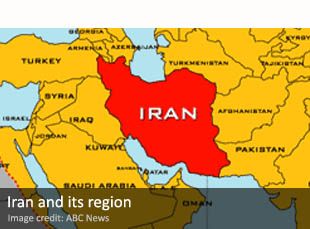
►►Will re-elected Obama take a new line on Iran? Barack Obama returns to office after an election campaign in which Iran’s nuclear program often dominated foreign-policy debates. Mitt Romney frequently accused him of taking too soft a line toward Tehran. Now, as Obama begins a second term, the question is how much he has been stung by such criticism. Will Obama retain confidence in his dual strategy of squeezing Iran with economic sanctions while also extending offers of rapprochement? Or will the fact that Iran keeps building centrifuges and enriching uranium despite Obama’s efforts persuade the White House it needs to try something new?
►►Obama’s victory vindicates his Iran policy. President Barack Obama’s re-election victory represents an important vindication of his approach to Iran and its potential nuclear ambitions —and, for the world, a new face of American policy in the Middle East that will relegate the aggressive policies of George W. Bush into the distant past. The election confirmed what polls have clearly shown, that while Americans are deeply concerned about the prospect of an Iranian nuclear weapon, they also view addressing the problem through vigorous diplomatic engagement and sanctions as the most appropriate exercise of American power and leadership.
►►Iranians see reduced risk of war in Obama’s reelection. In Iran, there is a sense of relief these days, as concerns of a military attack by US and Israeli forces over Iran’s nuclear energy program if Mitt Romney were elected, had become widespread. While there continues to be no official response from Iran’s leadership about US election results, Iranian media is still heavily focused on covering American polls. Commenting on one of Iran’s most popular political Web sites, Asriran, one reader wrote, “At least we know we won’t be going to war during the next four years”. And Iran’s state-run English language television channel, Press TV, carried a live and uninterrupted broadcast of President Barack Obama’s acceptance speech.

News you may have missed #808 (Obama-Netanyahu edition)

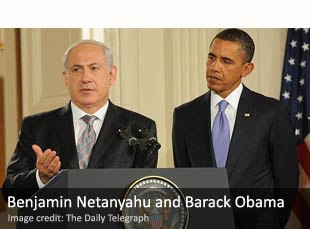
Benjamin Netanyahu and Barack ObamaBy IAN ALLEN | intelNews.org |
►►The other concession speech: Netanyahu congratulates Obama. At least there was no pretending. In the language of diplomacy, the greeting Israeli Prime Minister Benjamin Netanyahu extended to Barack Obama on the occasion of his re-election was “correct” and nothing more. “Prime Minister Netanyahu congratulates US President Barack Obama on his election victory,” read the public statement issued early Wednesday in Jerusalem. The next word out of Balfour Street, where Netanyahu mulled the returns, was a warning to members of his Likud party to shut up about how they figure the premier might really feel. By then, the deputy speaker of the Knesset had already called Obama “naïve” and vowed Israel would not “surrender” to him.
►►Netanyahu rushes to repair damage with US President. Over the past several years, Prime Minister Benjamin Netanyahu has on several occasions confronted or even undercut US President Barack Obama, taking his message directly to the Israel-friendly United States Congress, challenging Mr. Obama’s appeal to the Arab world, and seeming this fall to support his opponent, Mitt Romney. Mr. Netanyahu woke up Wednesday to find not only that his Republican friend had lost, but also that many Israelis were questioning whether he had risked their collective relationship with Washington.
►►Barack Obama victory spells trouble for Israel’s Netanyahu. Israeli Prime Minister Benjamin Netanyahu faces an even more awkward time with Washington and re-energized critics at home who accused him on Wednesday of backing the loser in the US presidential election. With Iran topping his conservative agenda, Netanyahu will have to contend with a strengthened second-term Democratic president after four years of frosty dealings with Barack Obama and a rift over how to curb Tehran’s nuclear program.

News you may have missed #807

Noor Inayat KhanBy IAN ALLEN | intelNews.org |
►►Britain to unveil statue of female SOE spy of Indian origin. Born in Moscow to an Indian father and an American mother, Noor Inayat Khan was in Paris when it fell to Nazi occupation. She immediately returned to London to volunteer for the war effort, joined the Women’s Auxiliary Air Force and was recruited by the Special Operations Executive (SOE). She was sent into France on a secret mission in June 1943, but was betrayed and captured a few months later. She was shot by the Nazis in Dachau in September 1944, aged 30, and was posthumously awarded the George Cross as well as the Croix de Guerre by France. She was one of only three women in the SOE to be awarded the George Cross.
►►US intelligence spending falls or second year in a row. The US government’s total spending on intelligence activities fell in 2012, the second year in a row of declining numbers after years of soaring security spending since the September 11 attacks in 2001. The Office of Director of National Intelligence, the top US intelligence authority, announced on Tuesday that total funding appropriated for the National Intelligence Program, covering activities of the CIA and high-tech spy agencies such as the National Reconnaissance Office, was $53.9 billion in Fiscal Year 2012, which ended on September 30. That was down from the $54.6 billion appropriated during Fiscal Year 2011, according to government officials and figures published by the private Federation of American Scientists.
►►Russia wants to park spy planes on French base. France has been asked by Moscow to allow two Russian spy planes to be deployed at a French base in Djibouti to help track down pirates. Russian Defense Minister Anatoly Serdyukov said last week that the Ilyushin Il-38 naval reconnaissance planes would improve Russia’s ability to spot pirates plaguing waters off the coast of Somalia. Djibouti is at the juncture of the Red Sea and the Gulf of Aden. The French base is home to several thousand French service members and a number of military aircraft.