Iran serious about nuclear deal, says senior Israeli intelligence official

Israel and IranBy IAN ALLEN | intelNews.org
A senior Israeli intelligence official said on Monday that Iran appears to be genuinely interested in entering an agreement with world powers that would lead to the termination of its nuclear program. In November of 2013, Iran signed a Joint Plan of Action with six world powers in Geneva, Switzerland. Known as the Geneva interim agreement, the pact eases economic sanctions on the Islamic Republic in exchange for a short-term suspension of core aspects of the Iranian nuclear program. The Israeli government’s negative response to the agreement was headed by Benjamin Netanyahu. The Israeli Prime Minister called the pact a “historic mistake”, which enabled “the most dangerous regime in the world” to get closer to “attaining the most dangerous weapon in the world”. Since that time, Tel Aviv has continued to criticize the governments of the United States, Russia, China, Germany, France, and the United Kingdom, known as P5+1, for signing the interim agreement with Tehran. On Monday, however, Israel’s senior intelligence analyst, Brigadier-General Itai Brun, told a conference near Tel Aviv that Iran has so far abided by the interim agreement and added that he was cautiously optimistic about the future of the negotiations between Iran and the P5+1. Brun was speaking at the Herzliya Conference, an annual gathering of senior Israeli political leaders, which typically serves as a public platform for articulation of Israel’s national policy on critical issues. Senior figures in Israel, including the President and Prime Minister, typically use their keynote addresses at the conference to set the tone for the future policies of their administration. Brig. Gen. Brun, 51, has led the research division of the Military Intelligence Directorate of the Israeli Defense Forces. His position is generally viewed as the second most senior within Israel’s military intelligence establishment. Brun’s address at the conference appeared to be deliberately designed to challenge Netanyahu’s skepticism of the Geneva interim agreement. He told conference participants that it was “very possible” that Iran and the P5+1 were “moving toward the signing of a permanent nuclear deal”. Read more of this post

UK military scrambling to rehire retired Russian-language analysts

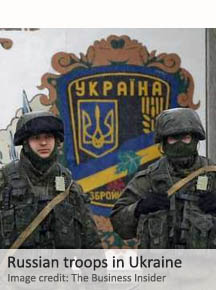
Russian troops in UkraineBy JOSEPH FITSANAKIS | intelNews.org
The crisis in Ukraine is causing the British military to reach out to hundreds of retired Russian-language analysts who left the service at the end of the Cold War, according to media reports. British newspaper The Daily Telegraph said on Saturday that Russia’s actions in the Ukraine had exposed significant shortages of Russian-language analysts in the British Armed Forces. The paper said it had seen internal government documents that detailed efforts by military officials to contact associations of retired intelligence personnel in search of qualified Russia experts. The article referenced one recent memorandum from an unnamed senior officer in a military intelligence brigade, which asks retired military personnel to help by contacting retired Russian-language analysts, most of whom are now in their 60s. Other documents suggest that, in addition to analysts, the British military is in need of experts that can help monitor and translate information collected from open-source Russian information channels. The Telegraph places the blame for the shortage on budget cuts implemented by successive British governments on the nation’s Armed Forces. It also faults the defense and security agencies’ “recent focus on the Middle East and Asia”, which is said to have occurred at the expense of Russian linguistic and analytical expertise. The article quotes an unnamed “intelligence source” as saying that Britain’s Ministry of Defense used to offer “extremely good” Russian-language courses, but that “after 9/11” a focus on Arabic displaced Russian and other languages associated with the Cold War. There are also complaints by Russian experts in the British Army that they were “openly derided as being nothing more than a ‘language club’” in the years following 9/11. Read more of this post

Former KGB officer says Snowden was ‘tricked into going to Russia’

Boris KarpichkovBy JOSEPH FITSANAKIS | intelNews.org
A former major in the Soviet KGB has told the British press that a team of Russian intelligence operatives posing as diplomats “tricked” American intelligence defector Edward Snowden into going to Moscow. Many believe that Snowden, a former computer expert for the United States Central Intelligence Agency and the National Security Agency, was recruited by Russian intelligence before defecting to Moscow in June 2013. But former Soviet and Russian intelligence operative Boris Karpichkov has said in an interview that Snowden never intended to defect to Russia, but was lured there by a team of Russians spies. Karpichkov was a major in the Soviet KGB and its domestic-security successor, the FSB, where he worked for 15 years. In the mid-1990s, however, he gradually fell out with his employer and was imprisoned for several months before managing to leave his homeland using one of several false passports that had been supplied to him by Russian intelligence. In 1998 he entered Britain, where he lives with his family today, having been granted political asylum. He told British tabloid newspaper Sunday People that Snowden had first attracted the attention of Russian intelligence in 2007, while he was posted by the CIA to Geneva, Switzerland. During his time there, Snowden posed as a diplomat while maintaining the security of the CIA’s computer facilities located on Swiss soil. According to Karpichkov, the SVR, the post-Soviet successor of the KGB’s foreign-intelligence department, first opened a file on Snowden at that time, and kept updating it for six years, having identified the American computer technician as a “potential defector”. The former KGB operative told the British newspaper that the SVR moved quickly after it emerged that Snowden had abandoned Hawaii, where he had been posted by the NSA, and was hiding in a Hong Kong hotel. He was eventually accosted by a group of SVR spies posing as Russian diplomats. The group managed to persuade him, says Karpichkov, that the Russian government would be able to offer him protection in Moscow while he made up his mind over which country to apply to for political asylum. Read more of this post

Location of UK’s ‘above top-secret’ Middle East spy base revealed

GCHQ's Seeb spy base in OmanBy JOSEPH FITSANAKIS | intelNews.org
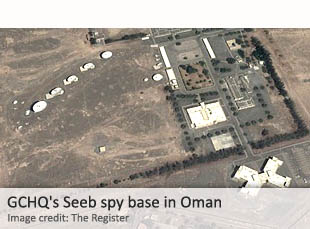
The location of a British listening base in the Middle East, which is classified by the British government as “three levels above top-secret”, has been revealed by a technology website. The information had been previously leaked by American defector Edward Snowden to several British newspapers, but the latter refrained from airing it following pressure by the British government. However, the highly classified material was published on Tuesday in online technology review The Register. The author of the revelatory article is Duncan Campbell, a longtime investigative journalist and researcher who has been reporting on intelligence matters for over three decades. In his article, Campbell alleges that the secret British spy base is located in Seeb, in northeast Oman, and is operated by the General Communications Headquarters (GCHQ), Britain’s signals intelligence agency. The base’s primary operational goal is to monitor undersea telecommunications cables serving the Arabian Sea and the Persian Gulf, which pass through the Strait of Hormuz. According to Campbell, the listening facility was initially constructed with British funding as a joint intelligence center with the Omani authorities, with the purpose of intercepting the signals of civilian communications satellites orbiting in the wider region. But it has since developed into one of three high-value GCHQ locations in Oman (referred to as Overseas Processing Centres —OPCs). The three locations, codenamed TIMPANI, GUITAR and CLARINET, form part of a region-wide communications interception program codenamed CIRCUIT. Through CIRCUIT, London has allegedly managed to gain access to nearly a dozen underwater cables passing through the Strait of Hormuz, which link a host of Arab countries, including Iraq, Iran, Saudi Arabia, the United Arab Emirates and Kuwait. Interestingly, GCHQ relies on the close cooperation of several telecommunications service providers to meet its interception targets, says Campbell. These include British Telecom, codenamed REMEDY in internal GCHQ documents, and Vodafone, the world’s second-largest mobile telecommunications company, which GCHQ has codenamed GERONTIC. Read more of this post

US journalist facing jail term for refusing to testify in CIA officer’s trial

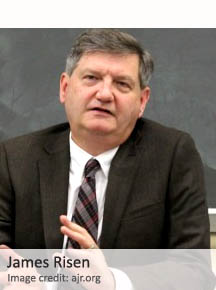
James RisenBy IAN ALLEN | intelNews.org
A leading American journalist is facing a possible jail term after the United States Supreme Court refused to consider his appeal against testifying at the trial of a former Central Intelligence Agency officer. Jeffrey Alexander Sterling, who worked for the CIA from 1993 until 2002, was arrested in early 2011 in St. Louis, Missouri. He was charged with leaking classified information about Operation MERLIN, a botched CIA covert operation targeting Iran’s nuclear weapons program. The operation was publicly revealed for the first time in New York Times reporter James Risen’s 2006 book State of War: The Secret History of the CIA and the Bush Administration. In chapter 9 of the book, Risen details a bungled operation by the CIA’s Iran Task Force to pass to the Iranians a series of faulty nuclear bomb design documents. Risen alleges that the CIA operation backlashed and may actually have helped the Iranian nuclear weapons program, as Iranian nuclear engineers would have been able to “extract valuable information from the blueprints while ignoring the flaws”. Risen was summoned to testify in Sterling’s trial, but refused, arguing that having to identify the source of his allegation about Operation MERLIN would infringe on press freedom. On the other side of the argument, the United States government claimed that the freedom of the press does not permit journalists “to refuse to provide direct evidence of criminal wrongdoing by confidential sources”. Risen filed a case in a Virginia court, arguing that he should not be forced to comply with the subpoena issued to him to testify at Sterling’s trial. After the court upheld the subpoena, Risen’s legal team filed an appeal with the Supreme Court. But the Court has now refused to hear the case, which means that Risen will have to testify in Sterling’s trial or face a possible jail sentence. Read more of this post

FBI kept tabs on Mandela’s first-ever visit to the US, files show

Nelson MandelaBy IAN ALLEN | intelNews.org
The United States Federal Bureau of Investigation has released for the first time some of its internal files on the late South African leader Nelson Mandela. Among other things, the documents reveal that the Bureau closely monitored Mandela’s first ever visit to the United States in 1990. The legendary black campaigner arrived in the United States in June of that year, just four months following his release from prison after 27 years of captivity. The FBI documents include a redacted memorandum from the Bureau’s field office in Atlanta, Georgia, addressed to William Sessions, who was the FBI’s Director at the time. The memorandum notes that the Bureau had been able to recruit an informant inside, or closely affiliated with, Mandela’s inner circle. The source had provided his FBI handlers with a detailed itinerary of Mandela’s 11-day US tour. The memorandum stresses that the “confidential source” was “newly opened” and thus his or her “reliability [was] not yet established”. But Mandela’s travel itinerary, which had apparently been planned by a member of staff in the office of Coretta Scott King, Dr. Martin Luther King Jr.’s widow, was carefully dissected by the FBI. The documents show that the Bureau’s principal concern was safeguarding the life of the South African political leader, who had received countless death threats in the days prior to his arrival. According to the declassified files, the threats originated from various racist skinhead and neo-Nazi groups, the Ku Klux Klan, as well as a host of white supremacist organizations. But alongside its concern about “terrorist activity being directed” at the civil rights campaigner, the Bureau was obligated to monitor his activities on US soil because at that time Washington still designated the African National Congress, which Mandela led, as a “foreign terrorist organization”. The designation was finally lifted in 2008. Read more of this post

News you may have missed #877

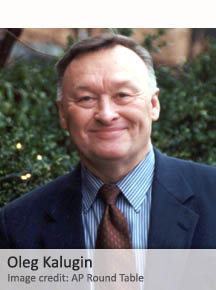
Oleg KaluginBy IAN ALLEN | intelNews.org
►►China to ditch US consulting firms over suspected espionage. State-owned Chinese companies will cease to work with US consulting companies like McKinsey and Boston Consulting Group over fears they are spying on behalf of the US government. Last Thursday, China announced that all foreign companies would have to undergo a new security test. Any company, product or service that fails will be banned from China. The inspection will be conducted across all sectors —communications, finance, and energy.
►►Ex-KGB general says Snowden is cooperating with Russian intelligence. Former National Security Agency contractor Edward Snowden probably never envisioned that he would someday be working for the Russian Federal Security Service, or FSB. But according to former KGB Major General Oleg Kalugin, he is now, albeit as a consultant or technical advisor. “The FSB are now his hosts, and they are taking care of him”, Kalugin claimed in an interview. “Whatever he had access to in his former days at NSA, I believe he shared all of it with the Russians, and they are very grateful”, added the former Soviet spy.
►►Snowden claims he was ‘trained as a spy’. American intelligence defector Edward Snowden says he knows how US spies operate because he was trained as one of them. In an interview with NBC News, Snowden dismissed allegations that he was just a low-level analyst with the US government before revealing highly classified details of US spying activities in 2013. “I was trained as a spy in sort of the traditional sense of the word in that I lived and worked undercover overseas, pretending to work in a job that I’m not, and even being assigned a name that was not mine”, he said in a portion of the interview that aired on Tuesday.

White House ‘investigating’ inadvertent naming of CIA station chief

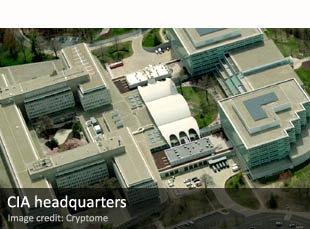
CIA headquartersBy IAN ALLEN | intelNews.org
United States government officials are said to be investigating the apparently inadvertent disclosure of the name of America’s senior spy in Afghanistan last weekend. The Washington Post reported on Sunday that the name of the person in charge of all Central Intelligence Agency operations in Afghanistan had been mistakenly included in a press release issued to a host of news organizations by the White House. The release included the names of all individuals that had been scheduled to meet with US President Barack Obama, during the latter’s unannounced trip to Afghanistan. The US President visited American soldiers stationed in the Asian country during part of the Memorial Day weekend, a federally sanctioned commemoration in the United States, which is designated to honor those who have died while serving in the country’s armed forces. The press release, which was directly issued to over 6,000 journalists, included the name of the CIA official, followed by the designation “Chief of Station, Kabul”. A CIA Chief of Station is the highest-ranking Agency official in a particular country or region, tasked with overseeing CIA operations within his or her geographical area and maintaining a functional institutional relationship with the host nation’s intelligence agencies. Speaking on CNN on Tuesday, President Obama’s Deputy National Security Adviser, Tony Blinken, said the White House was “trying to figure out what happened [and] why it happened”, adding that US officials wanted to “make sure it won’t happen again”. He added that the White House Counsel, Neil Eggleston, had been tasked by White House Chief of Staff, Denis McDonough, to “look into the matter”. CNN reporters asked Blinken whether the inadvertent identification of the CIA’s Station Chief in the Afghan capital had endangered the life of the officer and his family. Read more of this post

Brussels Jewish museum shooting spree ‘could be tied to intelligence’

Shooting aftermathBy JOSEPH FITSANAKIS | intelNews.org
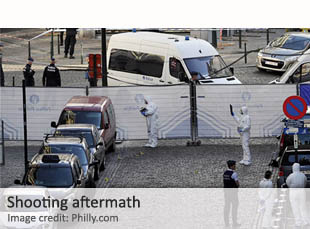
Belgian police investigating last weekend’s shooting spree at a Jewish heritage center in Brussels do not rule out the possibility that the attack may have been part of an intelligence operation directed against Israeli agents. The incident occurred on Saturday at the Musee Juif de Belgique, located in the heart of the Belgian capital. A man wearing a dark-colored jacket, baseball cap and sunglasses walked in the museum in broad daylight, pulled a Kalashnikov rifle out of a bag, and opened fire, killing three people. A fourth person remains in critical condition. Observers initially classified the shooting as an anti-Semitic attack. There is speculation, however, that the bloody assault may have been a targeted assassination that was part of a wider intelligence war between Israel, Iran, and Lebanese-based Shiite militant group Hezbollah. Several counterterrorism experts, including Claude Moniquet, Co-Director of the European Strategic Intelligence and Security Center, have expressed the view that the shooter appeared to be a trained professional. Referring to publicly available surveillance footage of the shooting, Moniquet said that the perpetrator of the attack, who remains at large, behaved as “an unemotional murderer, someone who had already witnessed death and perhaps killed before”. Moniquet’s comments came shortly after an article by Amir Oren, military affairs correspondent for Israeli daily Ha’aretz, in which he suggested that the attack may have been an act of retaliation by Iranian or Hezbollah operatives, who have been engaged in a lengthy tit-for-tat war with Israeli intelligence since at least 2009. Oren noted that two of the victims of the attack, Emmanuel and Mira Riva , were civil service accountants who had spent years in government service. Read more of this post

Alleged CIA spy seeks retrial after Iranian court slashes his sentence

Amir Mirzaei HekmatiBy IAN ALLEN | intelNews.org
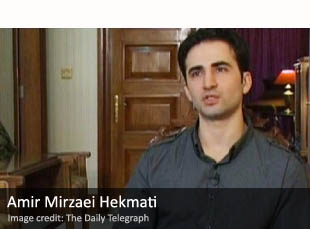
A United States citizen held in Iran since 2011 on spy charges has appealed for a retrial after an Iranian court quashed his earlier death sentence for espionage. Amir Mirzaei Hekmati, a former Marine born in the US state of Arizona, was arrested in August of 2011 in Iran and charged with carrying out a covert mission for the Central Intelligence Agency. In December of 2011, Hekmati appeared on Iranian state television and acknowledged that he was an operative of the CIA. He said in an interview that he had been trained “in languages and espionage” while in the US Army and that, in 2009, after nearly a decade of intelligence training, he was recruited by the CIA and specifically prepared to carry out what intelligence operatives sometimes refer to as a ‘dangling operation’ in Iran. The aim of the mission, said Hekmati, was to travel to Tehran, contact Iran’s Ministry of Intelligence and National Security, and pose as a genuine American defector wishing to supply the Iranians with inside information about American intelligence. His immediate task was to gain the trust of Iranian authorities by giving them some correct information in order to set the stage for a longer campaign of disinformation aimed at undermining a host of Iranian intelligence operations. In 2012, Hekmati was sentenced to death for spying. Members of his family, however, who live in Michigan, have continuously denied that he is an intelligence operative and maintain that he traveled to Iran to visit his grandparents. Their denials have been echoed by the government in Washington, which has denied employing Hekmati in any intelligence capacity. In March of 2012, the Supreme Court of Iran quashed Hekmati’s death sentence and ordered a retrial, calling his previous prosecution “incomplete”. At the retrial, Iran’s Revolutionary Court overturned Hekmati’s initial espionage conviction, charging him instead with “collaborating with a hostile government”. His original sentence was reduced to 10 years in prison. But Hekmati’s lawyer, Mahmoud Alizadeh Tabatabaei, told journalists on Sunday that his client would appeal even that sentence, thus seeking an immediate release from prison. Read more of this post

Spain shelves charges against French alleged ‘assassin’ spies

Philippe RondotBy JOSEPH FITSANAKIS | intelNews.org
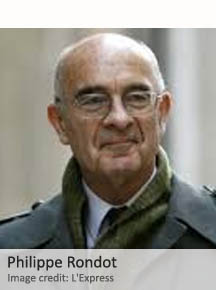
A court in Spain has quietly shelved charges against two French spies who were caught in Barcelona with a custom-designed sniper rifle. The two men were detained in the Catalonian town of Manresa in April of 2002. The Audi car in which they were riding was stopped at a checkpoint manned by members of the Mossos d’Esquadra, the Catalan regional police, who promptly searched it. In the back of the car, police officers found a large PVC tube that contained a sniper rifle complete with a laser telescopic light and a silencer. The two men carried French travel documents identifying them as “Christian Piazzole” and “Rachid Chaouati”. Piazzole’s documents were found to be false, and there were suspicions that Chaouati’s may also have been forged. Spanish authorities concluded that the two men, who admitted they were officers of France’s General Directorate for External Security (DGSE), were in Spain to conduct an assassination. In a words of a state prosecutor in Barcelona, the DGSE spies had come to Spain “to kill”. Their arrest prompted an emergency visit to Madrid of a high-level French government delegation headed by General Philippe Rondot, a former senior intelligence officer at the DGSE. Rondot told Spanish officials that the two men were “on a training exercise”. In October of 2002, the Spanish Ministry of Interior commanded the Office of the State Attorney General to grant the two French spies “provisional release”, based on the rationale that there had been no victims involved in the case. Piazzole and Chaouati were promptly released after Rondot provided personal assurances that they would return to Spain to attend their trial for illegal weapons possession in early 2004. The charges carried a maximum sentence of seven years. It was said at the time that, in exchange for the two spies’ release, Paris pledged to continue to assist Spanish intelligence in their efforts against the Basque separatist militants of ETA, and agreed to extradite a number of ETA members serving time in French prisons. However, soon after their release, Piazzole and Chaouati vanished. They were found to be in contempt of court after they failed to return to Spain for their 2004 trial, as agreed. Since that time, Spanish media have sought to solve the mystery of the two French spies, but have been met with a wall of silence from Spanish and French authorities. Read more of this post

Western companies to suffer backlash in China-US espionage spat

China and the United StatesBy IAN ALLEN | intelNews.org
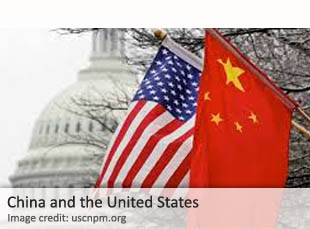
China’s response to America’s allegations of cyberespionage will probably not be directed against the United States government, but at Western technology companies, according to business insiders. On Monday, the United States Department of Justice identified five members of the Chinese People’s Liberation Army as directly responsible for a series of cyberespionage operations targeting American firms. Since then, sources in the business community have said that American companies operating in China were “caught off guard” by the Justice Department’s charges, and that they were “given no advanced notice” by US government officials. On the one hand, business insiders claim that Chinese cyberespionage against Western firms is so aggressive that many in the corporate community were broadly supportive of Washington’s move. But, on the other hand, some industry analysts have told the Reuters news agency that, although Beijing’s response to Washington’s allegations will not be “immediate or obvious”, Western technology firms should prepare to face a lot more difficulties in doing business in China. Specifically, some business observers expect the Chinese government to respond to America’s cyberespionage allegations by “precluding foreign companies from certain sectors” of its economy. Beijing might even use the controversy to justify a “turn to internal suppliers” of technological products and services, say experts. The news agency reports that American hardware and software suppliers have already seen their sales in China drop as a result of the revelations by American intelligence defector Edward Snowden. The current clash over cyberespionage between America and China is likely to have a further negative effect on American business activities all over Southeast Asia. The ongoing dispute between the two countries is likely to have an effect in Europe as well, say The Financial Times. The London-based paper reports that Washington’s recent indictment has “struck a chord in German industry”, which is also concerned about the perceived theft of intellectual property by Chinese hackers. Read more of this post

Court allows CIA to keep Cuba invasion document secret

Court documentsBy IAN ALLEN | intelNews.org
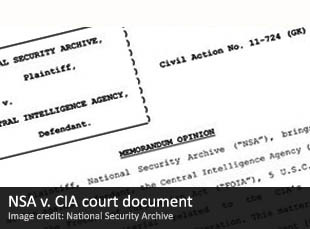
The United States Central Intelligence Agency has successfully defended itself against a lawsuit that sought the release of a secret document detailing the failed Bay of Pigs Invasion. On April 17, 1961, a brigade of 1,300 CIA-funded and -trained anticommunist Cubans mounted a surprise assault on the Caribbean island. The failure of the operation prompted the CIA to produce a multi-volume report, whose fifth and final part was authored in the early 1980s by CIA resident-historian Jack Pfeiffer. The first four volumes of the history of the Invasion have been released to the public, one voluntarily by the CIA and three through Freedom of Information Act requests. George Washington University’s National Security Archive sued the CIA in 2011, eventually forcing the Agency to declassify Volumes I, II and IV of the report. This left Volume V, which is the subject of an ongoing dispute between historians and the CIA, going back to 2005. On Tuesday, the US Court of Appeals for the Circuit of the District of Columbia ruled in a split 2-1 decision that the CIA had the right to maintain the secrecy of the entire fifth volume of the report. The two judges that ruled in favor of the CIA’s position, Brett Kavanaugh and Stephen Williams, argued that the volume in question had been “rejected for inclusion in the final publication” of the CIA report. As such, it was not a finished product, but rather a draft manuscript and was therefore not subject to US declassification rules under the Freedom of Information Act. The judges added that, since the document was “predecisional and deliberative” in character, it should be granted the so-called “deliberative process privilege”. This clause stipulates that the authors of deliberative documents are entitled to concrete and long-lasting assurances that the draft documents they are producing will remain secret. This, said the two judges, would allow the authors to advise those who commission their work freely and candidly. Read more of this post

The mysterious Chinese unit behind the cyberespionage charges

Shanghai, ChinaBy JOSEPH FITSANAKIS | intelNews.org
On Monday, the United States government leveled for the first time charges against a group of identified Chinese military officers, allegedly for stealing American trade secrets through cyberespionage. The individuals named in the indictment are all members of a mysterious unit within the Chinese People’s Liberation Army (PLA) command structure, known as Unit 61398. It is estimated that the unit has targeted at least 1,000 private or public companies and organizations in the past 12 years. Western cybersecurity experts often refer to the group as “APT1”, which stands for “Advanced Persistent Threat 1”, or “Byzantine Candor”. It is believed to operate under the Second Bureau of the PLA’s General Staff Department, which is responsible for collecting foreign military intelligence. Many China military observers argue that Unit 61398 is staffed by several thousand operatives, who can be broadly categorized into two groups: one consisting of computer programmers and network operations experts, and the other consisting of English-language specialists, with the most talented members of the Unit combining both skills. Computer forensics experts have traced the Unit’s online activities to several large computer networks operating out of Shanghai’s Pudong New Area district, a heavily built neighborhood in China’s largest city, which serves as a symbol of the country’s rapid industrialization and urbanization. Among other things, Unit 61398 is generally accused of being behind Operation SHADY RAT, one of history’s most extensive known cyberespionage campaigns, which targeted nearly 100 companies, governments and international organizations, between 2006 and 2011. The operation is believed to be just one of numerous schemes devised by Unit 61398 in its effort to acquire trade secrets from nearly every country in the world during the past decade, say its detractors. American sources claim that the PLA Unit spends most of its time attacking private, rather than government-run, networks and servers. As the US Attorney General, Eric Holder, told reporters on Monday, Unit 61398 conducts hacking “for no reason other than to advantage state-owned companies and other interests in China, at the expense of businesses here in the United States”. But The Washington Post points out that the recent revelations by US intelligence defector Edward Snowden arguably make it “easier for China to dismiss” Washington’s charges, since they point to Read more of this post

New details about FBI probe that led to Chinese spy’s conviction

Dongfan "Greg" ChungBy JOSEPH FITSANAKIS | intelNews.org
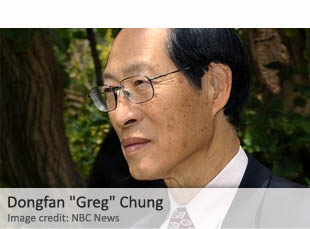
Some of our longtime readers will recall the case of Dongfan “Greg” Chung, a Chinese-born American engineer for Boeing, who was convicted in 2009 of passing US space program secrets to China. The case is arguably far more important than it might have seemed at the time, as Chung was technically the first American to be jailed for economic espionage. Many at the Federal Bureau of Investigation view the Chung conviction as a landmark case for providing clear legal proof of Chinese espionage in the US. Little is known, however, about how the FBI managed to uncover Chung’s espionage activities, which are believed to have gone on for nearly three decades. In the latest issue of The New Yorker, Yudhijit Bhattachargjee reveals for the first time the fascinating background of how the Bureau got to Chung. It did so through another American engineer of Chinese origin, named Chi Mak. Unlike Chung, who was ideologically committed to Maoism and was recruited by Chinese intelligence after immigrating to the US, Mak was an accredited intelligence operative who was allegedly specifically planted in the US by the Chinese. He came to America from Hong Kong in 1979 and worked for California-based defense contractor Power Paragon. He almost immediately began stealing secrets relating to US Navy systems. The FBI first started monitoring Mak and his wife, Rebecca, in 2004, following a tip. The effort evolved in one of the Bureau’s biggest counterintelligence cases, involving elaborate physical and electronic surveillance that lasted for nearly 18 months. During that time, FBI and Naval Criminal Investigation Service agents installed surveillance cameras outside the Maks’ residence, followed the suspects around, and monitored their telephone calls. Eventually, the surveillance team managed to acquire a warrant allowing them to clandestinely enter the Maks’ home and conduct a secret search. The nondestructive entry team discovered numerous stacks of secret documents “some two or three feet high” all around the suspects’ house. Among the findings was an address book containing the names of other engineers of Chinese origin living in the state of California. That, says Bhattachargjee, was the first time the FBI came across Chung’s name. Read more of this post