News you may have missed #576 (Libya edition)
August 26, 2011 Leave a comment
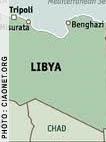
Libya
►►Rebels seize Libyan intelligence service HQ. Rebel forces of the National Transitional Council have occupied the Tripoli headquarters of Libya’s intelligence service. Al Jazeera, which was given access to the building by the rebels, says that it is “full of confidential documents that could provide a valuable insight into what was one of the world’s most secretive regimes. But”, adds the report, “it will take weeks to sift through”.
►►Gadhafi’s loose weapons could number a ‘thousand times’ Saddam’s. This is the alarming assessment of Peter Bouckaert, emergencies director at Human Rights Watch, who spent time on the ground in Libya during the uprising. He told Wired magazine’s Danger Room blog that “weapon proliferation out of Libya is potentially one of the largest we have ever documented —2003 Iraq pales in comparison— and so the risks are equally much more significant”.
►►The bewildering dance between Gaddafi and MI6. A well-researched article in The Independent newspaper, written by one of Britain’s most esteemed diplomatic correspondents, Gordon Corera. He argues that Britain and the Gaddafi regime “were not always the enemies they are now”.












Documents reveal MI5 role in Guyana coup
August 26, 2011 by Joseph Fitsanakis Leave a comment
The Jagans
By JOSEPH FITSANAKIS | intelNews.org |
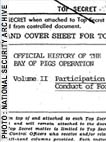
Secret intelligence documents declassified last week reveal that Britain’s Security Service, known as MI5, played a significant role in the lead-up to the 1953 coup that toppled the democratically elected government of British Guiana. The Latin American territory, which borders Suriname, Venezuela and Brazil, was once one of the British Empire’s most lucrative sugar-producing colonies. In 1963, after gaining its independence from Britain, it was officially renamed the Co-Operative Republic of Guyana. Instrumental in the fight for independence was Cheddi Jagan —an ethnic Indian former dentist who is today considered the father of the nation— and his American-born wife Janet (née Rosenberg). In 1950, the couple founded the People’s Progressive Party (PPP), which became the primary pro-independence political vehicle in the British colony. But dozens of folders of classified documents that were released last Friday by Britain’s National Archives show that MI5 was suspicious of the Jagans, and believed that Janet had been a member of the Communist Party of the United States in the 1940s. Several MI5 reports from the 1950s express concern that the PPP intended to establish close proximity between a newly independent Guyana and the Soviet Union. The declassified MI5 archives contain countless transcribed telephone conversations between the Jagans and their political allies, as well as copies of intercepted correspondence and reports of physical surveillance by MI5 informants. They reveal that British intelligence closely monitored the Jagans for at least a decade. Even though MI5 concluded that the PPP had no close contacts with Soviet agents or agencies, and that the party was “not receiving any financial support from any Communist organization outside the country”, it continued to describe Janet Jagan as “a committed communist” and remained apprehensive of the couple’s “disruptive antics”. The British government of Winston Churchill decided to take aggressive action in 1953, after a landslide election victory for the PPP in British Guiana elections. Read more of this post
Filed under Expert news and commentary on intelligence, espionage, spies and spying Tagged with British Guiana, Chadri Jagan, Christopher Andrew, Cold War, coup plots, declassification, Guyana, history, Janet Jagan, Latin America, MI5, News, Operation WINSDOR, UK, Winston Churchill