Trump thought Erdoğan was “bluffing” about invading Syria, sources claim
October 15, 2019 2 Comments
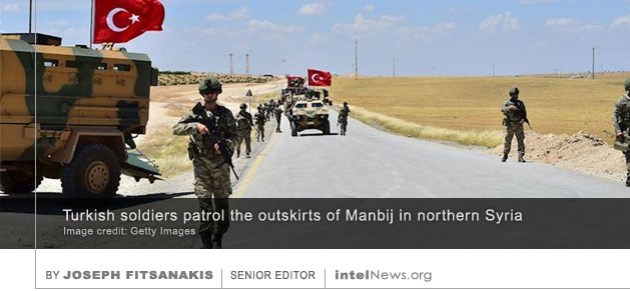 Senior White House officials close to United States President Donald Trump believed that Turkish President Recep Tayyip Erdoğan was bluffing when he threatened to invade northern Syria, according to sources. For over two years, most of northern Syria has been controlled by American-supported Kurdish militias, who were instrumental in helping Washington defeat the Islamic State. But the growing strength of the Kurdish forces alarmed Turkey, which views Kurdish nationalism as a bigger threat than the Islamic State.
Since 2016, Ankara repeatedly threatened to invade northern Syria and disarm the Kurdish groups, which it sees as terrorist. It had refrained from doing so due to the presence of American troops in the area. However, according to news website Axios, key officials in the Trump White House were convinced that Turkish President Erdoğan would not have his troops invade northern Syria even if the American forces pulled out. In making this claim, the website cites six unnamed sources “with direct knowledge of the situation”, some of whom were allegedly “in the room with the two leaders and had access to their phone calls going back several years.
In one of these phone calls, which took place in 2017, President Erdoğan allegedly informed the US leader of his government’s intention to “move in to take care of the Kurdish threat” in northern Syria. But President Trump cautioned him about making such a daring move. He reminded the Turkish leader that, by invading northern Syria, Turkey would become responsible for the tens of thousands of Islamic State supporters and their families who are kept in detention camps. Ankara would also face mass international condemnation and possible sanctions from the United States and Europe. Moreover, the US-trained and -supplied Kurdish forces would arguably create a military quagmire for Turkish troops in the region. At that point Turkey “would own” the problem and would not be able to “come to [the US] for help”, according to Trump.
The Axios report claims that, until last week, the White House thought that “Erdoğan would never actually go through with his long-threatened Syria invasion”, because doing so would be detrimental to Turkish interests in the region. Based on that conviction, President Trump finally decided to call Erdoğan’s bluff by pulling American Special Forces troops out of northern Syria, in the belief that Tukey’s response would amount to nothing further than a few airstrikes and small-scale cross-border incursions. That belief was behind the White House’s surprise decision to suddenly pull its troops from northern Syria, according to Axios’ sources.
The report did not mention whether the US Intelligence Community’s reports to the White House concurred with the US President’s conviction that Turkey would not invade northern Syria even in the absence of US troops. The question is, in other words, did Trump made up his mind about Erdoğan’s intentions to invade northern Syria because, or despite the conclusions of his own Intelligence Community?
► Author: Joseph Fitsanakis | Date: 15 October 2019 | Permalink
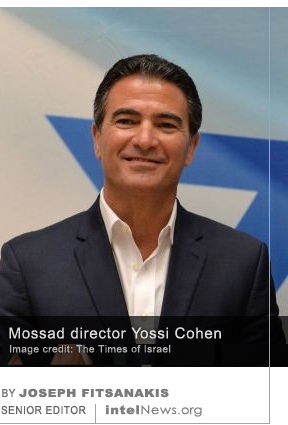 Yossi Cohen, the chief of the Mossad —Israel’s main external intelligence agency— said he has authorized “more than a few” assassinations during his tenure and warned that more may be on the way. Cohen, 57, who took command of the Mossad in 2016, spoke last week to Mishpacha, a magazine aimed at ultra-orthodox Jews. His comments were
 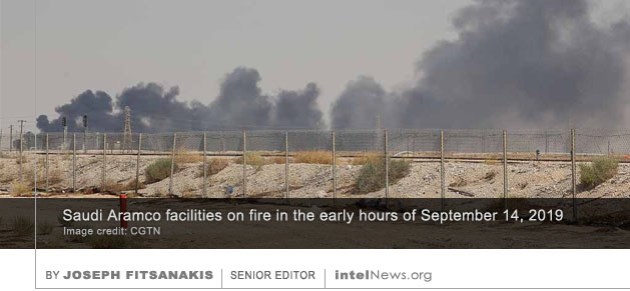 Saudi Arabia and the United States suffered “a total and embarrassing [intelligence] failure” in the lead-up to the drone strikes that shut down half of the kingdom’s oil production last month, according to Israeli sources. In the early hours of September 14, missiles
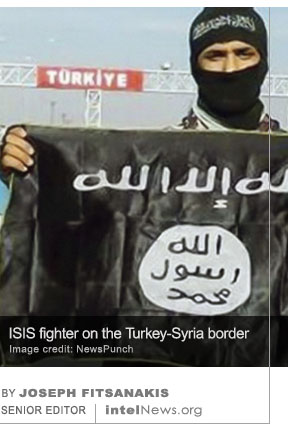 Officials in the United States, Europe and the Middle East have warned that thousands of jailed members of the Islamic State could escape from Kurdish-controlled prisons in northern Syria if Turkey invades the region. For more than two years, the area has been controlled by American-supported Kurdish militias, who were instrumental in helping Washington defeat the Islamic State —also known as Islamic State of Iraq and Syria, or ISIS. But the growing strength of the Kurdish forces has alarmed Turkey, which views Kurdish nationalism in the region as a bigger threat than Salafi jihadism. Ankara has repeatedly threatened to invade northern Syria and disarm the Kurdish groups, which it sees as terrorist.
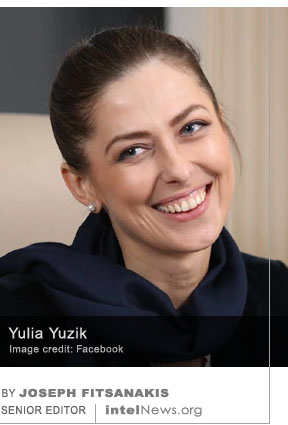 In a surprising move last week, Iranian authorities arrested a Russian journalist and expert on the Caucasus region, whom they accused of spying for Israel. They later agreed to release her following significant diplomatic pressure from Russia. But the move surprised observers, because Iran rarely acts in ways that have the potential to damage its close relations with Moscow.
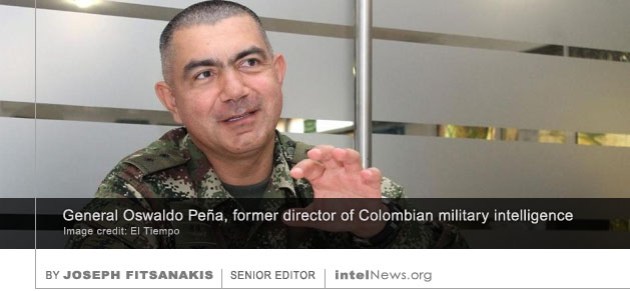 Colombia’s military spy chief has resigned, after the Colombian president was found to have misused intelligence at a United Nations speech to blame Venezuela for allegedly aiding paramilitary groups. For many years, authorities in Bogotá have accused Venezuela of aiding armed groups such as the National Liberation Army (ELN) and the Revolutionary Armed Forces of Colombia (FARC). These groups have been engaged in a decades-long guerrilla war against the Colombian state. In 2017, the largest of these groups, the FARC, laid down its weapons and signed a peace treaty with the Colombian government. But the ELN has refused to follow suit, while a number of hardline FARC leaders recently announced that they would be resuming their armed struggle against the Colombian authorities.
 Two senior executives of Credit Suisse, one of the world’s most powerful banking firms, have resigned amidst a high-stakes espionage scandal that may have prompted a suicide and has shocked Switzerland. The alleged target of the espionage is Iqbal Khan, the former Chief Executive Officer (CEO) of Credit Suisse’s wealth-management division. The 43-year-old Khan moved to Switzerland from his native Pakistan at the age of 12. In 2013, after working for more than a decade as an auditor at Ernst & Young, he joined Credit Suisse. He quickly rose to head the institution’s wealth-management division and was credited with having nearly doubled its profits between 2016 and 2018.
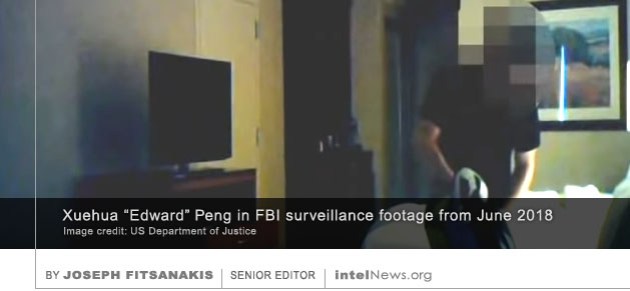 The United States has pressed espionage charges against a naturalized American citizen who operated as a courier for Chinese intelligence while working as a tour operator in California. On Monday federal prosecutors in San Francisco filed espionage charges against Xuehua “Edward” Peng, a 56-year-old Chinese-born American citizen. Peng, a trained mechanical engineer, reportedly entered the United States in June 2001 on a temporary visa. In 2012 he became a naturalized American citizen. By that time he was working for US Tour and Travel, an independent tour operator in California.
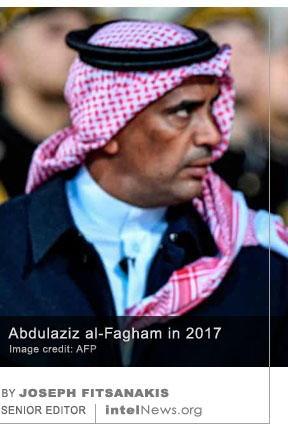 The head of the security detail of Saudi Arabia’s king Salman bin Abdulaziz al-Saud has been shot dead in mysterious circumstances. Abdulaziz al-Fagham was a Major General in Saudi Arabia’s Royal Guard Corps, whose mission is to protect the senior members of the oil kingdom’s royal family. Al-Fagham served two kings, king Salman and his predecessor, king Abdullah bin Abdulaziz Al Saud, and was constantly seen alongside the in official functions. Since much current-affairs coverage in Saudi Arabia’s state-owned media revolves around the activities of the royal family, al-Fagham’s figure was familiar to most Saudis. They were
 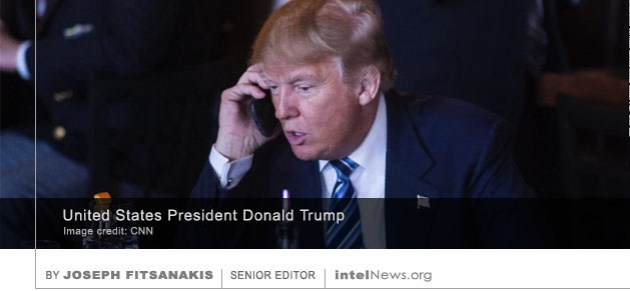 The individual who filed a report claiming that United States President Donald Trump sought help from a foreign country to win the 2020 election is believed to be a male employee of the Central Intelligence Agency. The man, who is legally classified as a whistleblower, filed the report on August 12. It was released for publication on Thursday and is now
 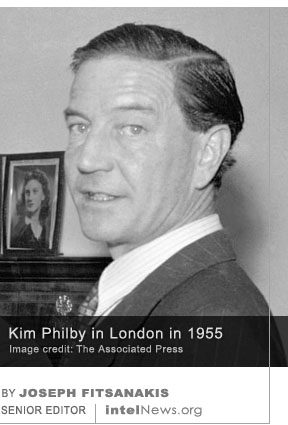 Extensive extracts from the confession of Kim Philby, one of the Cold War’s most prolific double spies, are scheduled to be released today for the first time by Britain’s
 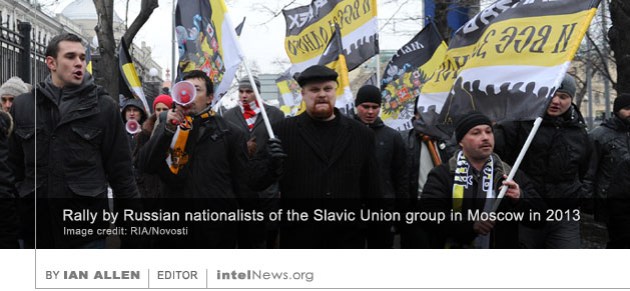 Threats posed by white supremacist and other far-right groups are now global in nature and are increasingly backed by state actors, according to a Congressional testimony by an American former counterterrorism official. The testimony was delivered by Joshua Geltzer, former senior director for counterterrorism at the United States National Security Council. Geltzer, who now directs the Institute for Constitutional Advocacy and Protection at Georgetown University in Washington, DC, testified on Friday before two subcommittees of the US House of Representatives. The Subcommittee on National Security and the Subcommittee on Civil Rights and Civil Liberties held a joint hearing entitled “Confronting Violent White Supremacy”.






 intelNews.org
US Special Forces secrets could fall into hands of Russians as Kurds side with Syria
October 16, 2019 by Joseph Fitsanakis 4 Comments
Throughout that time, US Special Operations Forces have trained members of the Syrian Democratic Forces (SDF), a political and military umbrella of anti-government Syrian groups, which is led by the Kurdish-dominated People’s Protection Unit (YPG) militias. Until recently, the SDF and the YPG were almost exclusively funded, trained and armed by the US through its Special Operations Forces units on the ground in northern Syria. US Special Operations Forces were also behind the creation in 2014 of the SDF’s most feared force, the Anti-Terror Units. Known in Kurdish as Yekîneyên Antî Teror, these units have been trained by the US in paramilitary operations and are tasked with targeting Islamic State sleeper cells.
As of this week, however, the SDF and all of its US-trained militias have switched their allegiance to the Russia-backed government of Syrian President Bashar al-Assad. The dramatic move followed the decision of the White House earlier this month to pull its Special Operations Forces troops from norther Syria, effectively allowing the Turkish military to invade the region. According to the American defense news website Military Times, US Pentagon officials are now worried that the SDF may surrender to the Russians a long list of secrets relating to US Special Operations Forces’ “tactics, techniques, procedures, equipment, intelligence gathering and even potentially names of operators”.
One former US defense official told The Military Times that SDF “may be in survival mode and will need to cut deals with bad actors” by surrendering US secrets. Another source described this scenario as “super problematic” and a symptom of the absence of a genuine American strategy in the wider Middle East region. The website also cited US Marines Major Fred Galvin (ret.), who said that Special Operations Forces tend to reveal little about themselves and their capabilities when working with non-US actors. However, this is uncharted territory for them, said Galvin, since “we’ve never had a force completely defect to an opposition like this before”.
► Author: Joseph Fitsanakis | Date: 16 October 2019 | Permalink
Filed under Expert news and commentary on intelligence, espionage, spies and spying Tagged with News, Russia, Syria, Syrian Democratic Forces, United States, US Special Forces, YPG (Syria)