Israeli military says Hamas lured its soldiers using online profiles of women

Cellular telephoneThe Israel Defense Forces told a press conference on Wednesday that hackers belonging to the Palestinian militant group Hamas lured Israeli soldiers by posing as young women online. Wednesday’s press conference was led by an IDF spokesman who requested to remain anonymous, as is often the case with the Israeli military. He told reporters that the hackers used carefully crafted online profiles of real Israeli women, whose personal details and photographs were expropriated from their publicly available social media profiles. The hackers then made contact with members of the IDF and struck conversations with them that in many cases became intimate over time. At various times in the process, the hackers would send the Israeli soldiers photographs of the women, which were copied from the women’s online public profiles.

The anonymous IDF spokesman said that, if the soldiers continued to show interest, they were eventually asked by the hackers posing as women to download an application on their mobile telephones that would allow them to converse using video. Once the soldiers downloaded the application, the ‘women’ would find excuses to delay using the application, or the relationships would abruptly end. But the soldiers would leave the application on their telephones. It would then be used by the Hamas hackers to take control of the camera and microphones on the soldiers’ mobile devices. According to the IDF spokesman, dozens of Israeli soldiers were lured by the Hamas scam. No precise number was given.

Media reports suggest that the Hamas hackers were primarily interested in finding out information about IDF maneuvers around the Gaza Strip, the narrow plot of densely inhabited territory that is controlled by the Palestinian militant group. They were also interested in collecting information about the size and weaponry of the Israeli forces around Gaza. Media representatives were told on Wednesday that the operation “had potential for great damage”. But the IDF claims that the harm to its operations was “minimal”, because it primarily targeted low-ranking soldiers. Consequently, according to the Israeli military, the hackers were not able to acquire highly sensitive information.

In 2009, dozens of members of Sweden’s armed forces serving with NATO’s International Security Assistance Force in Afghanistan were found to have been approached via Facebook, and asked to provide details on NATO’s military presence in the country. The Afghan Taliban are believed to have carried out the operation.

Hamas has not commented on the allegations by the IDF.

Author: Joseph Fitsanakis | Date: 12 January 2017 | Permalink

Pakistani man sought out assassination targets for Iran, says Germany

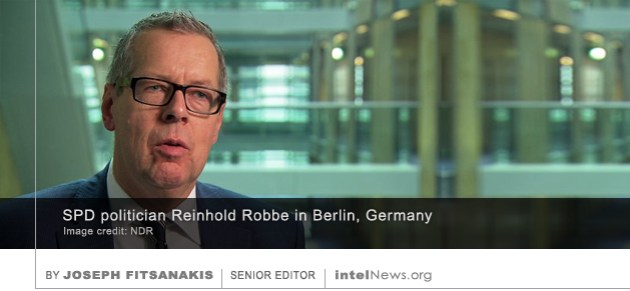
Reinhold RobbeAuthorities in Germany have pressed espionage charges against a Pakistani man who allegedly spied for Iran and even compiled lists of potential targets for assassination. The man, who has been identified in media reports only as “Syed Mustafa H.”, is a 31-year-old worker at the German Aerospace Center in the northern German city of Bremen. He is also reportedly a graduate of the Materials Science and Production Engineering department of the Universität Bremen. According to court documents, he is believed to have been spying for Iranian intelligence since the summer of 2015. It appears that the Federal Office for the Protection of the Constitution (BfV), Germany’s domestic intelligence agency, had been aware of the man’s espionage activities for at least a year prior to his arrest.

German media, including the newspapers Süddeutsche Zeitung and Die Zeit, as well as public broadcasters Taggesschau, WDR and NDR, report that Syed Mustafa H.’s main task was to compile lists of potential assassination targets. These included prominent Jews or German-Israelis living in northern Germany. Among them was Reinhold Robbe, a politician with the center-left Social Democratic Party (SPD), who served for a number of years as president of the German-Israeli Congress (DIG). According to reports, the Pakistani spy had compiled detailed maps of Robbe’s daily movements, which outlined his travel routines and the routes he took from his home to the DIG headquarters in Berlin. German officials believe that the type of surveillance that Syed Mustafa H. carried out against Robbe indisputably leads to the conclusion that the politician’s assassination was being planned.

Reports in the German media suggest that Syed Mustafa H.’s work was a small part of a much broader operation by Iranian intelligence. The operation aims to identify prominent individuals throughout Europe, who have Israeli connections. These individuals can be targeted during a future conflagration between Israel and Iran, or in retaliation to an Israeli intelligence operation against Tehran. If Syed Mustafa H. is found guilty of targeting Robbe, it will mark the first proven case of a German political figure who has been targeted for possible assassination by an Iranian intelligence agency.

Author: Joseph Fitsanakis | Date: 10 January 2017 | Permalink
British intelligence ‘among the first’ to notify US about Russian hacking

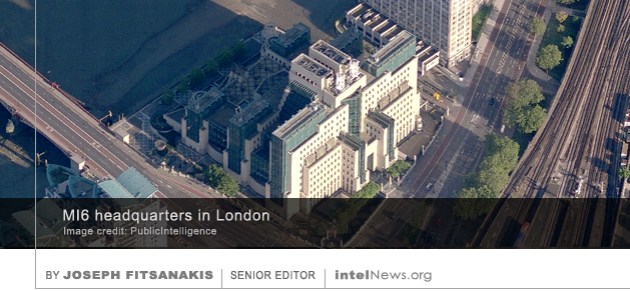
MI6British intelligence agencies gave their United States counterparts an early warning about Russian attempts to influence the outcome of the American presidential election, according to The New York Times. The American newspaper cited “two people familiar with the conclusions” of a US intelligence report, who said that British spies helped “raise the alarm” in Washington about Russian hacking. The Times were referring to a classified US intelligence report that purports to prove that Moscow tried to skew the US election results in favor of Republican Party nominee Donald Trump. The report, parts of which have been released to the public, was shared with Trump in a secret meeting with US intelligence officials last week.
Interestingly, media reports suggest that US intelligence agencies were not aware of the severity of Russian hacking operations until they were notified by allied intelligence agencies. British spy agencies were “among the first” to tell their transatlantic partners that Moscow was engaged in an allegedly large-scale operation against American political parties and institutions. According to The Times, British intelligence reports mentioned Russian hacking operations against the Democratic National Committee in Washington, DC, as well as against senior officials in the Democratic Party. There is no mention in the report about how the British acquired the information. The London-based newspaper The Guardian speculates that British intelligence agencies picked up clues by monitoring Russian government communications (voice intercepts and computer traffic). However, the possibility that the information was acquired through an agent should not be ruled out.

According to the British newspaper, government officials in London were “alarmed” by the close contacts between Moscow and the inner circle of Donald Trump’s campaign. They even contacted the Federal Bureau of Investigation and passed information about what The Guardian describes as “the depth and nature of contacts” between the Russian government and the Trump campaign. There is no information, however, about whether the FBI did anything with that information. Meanwhile, the British government is eager to cultivate good relations with the US president-elect, despite concerns in Whitehall about the close Russian connections of the incoming American administration. London needs Washington’s support as it is disengaging from the European Union, says The Guardian.

Author: Joseph Fitsanakis | Date: 9 January 2017 | Permalink

Indonesia halts joint military training with Australia ‘over espionage fears’

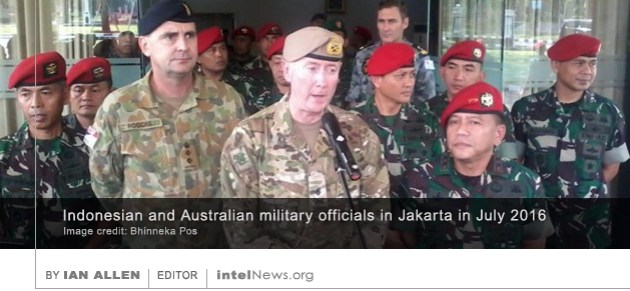
Indonesia AustraliaThe Indonesian military has halted all forms of cooperation with the armed forces of Australia, with some media reports suggesting that the decision was prompted by fears of espionage. Indonesia and Australia have held joined military training sessions for many decades. In recent weeks, members of the Kopassus, the elite special forces of the Indonesian military, were training on a base in Perth, Australia, with their counterparts in the Australian Special Air Service. On Wednesday, however, the Indonesian government said that it was suspending all military cooperation with Canberra, effective immediately.
The unexpected announcement was made by a spokesman of the Indonesian National Armed Forces, who said that “all forms of cooperation with the Australian military, including joint training” would be “temporarily withheld”. When asked about the reasons behind the sudden move, the spokesman said it was “due to multiple reasons”, but refused to give specifics. Later on Wednesday, Indonesian officials said some print material had been found at the training center in Perth, which offended the Indonesian people. But Australian media suggested that the Indonesian government had decided to terminate the joint military training program because it feared that its special forces troops would be recruited as spies by the Australians. Some reports brought up some relevant comments made in November of last year by a senior Indonesian military official, General Gatot Nurmantyo. The general said he had ended military cooperation between troops under his command and their Australian colleagues due to fears that his troops may be compromised by the Australians during training.

But Australia’s Minister of Defense, Marise Payne, rejected that Australian espionage activities were behind Jakarta’s surprise decision. Speaking on ABC Radio on Wednesday, Payne said it was “not the case” that Australian intelligence officers had tried to recruit Indonesian soldiers. That “is something which we would not countenance”, she said. In 2013, Indonesia withdrew its ambassador from Canberra and terminated all military and intelligence cooperation with Australia, after it emerged that Australian spies had targeted the communications of the Indonesian President and other senior officials. But tensions subsided in August of 2014, when the two countries signed a joint agreement aimed at curbing their intelligence activities against each other. The last time Australia and Indonesia halted military cooperation was in 1999, when it was revealed that Kopassus troops had taken part in human rights abuses in East Timor. But the joint training was resumed in 2002, after the Bali bombings, which killed 202 people, many of them Australian tourists.

Author: Ian Allen | Date: 06 January | Permalink

Lebanese president says Israel is behind businessman’s murder in Angola

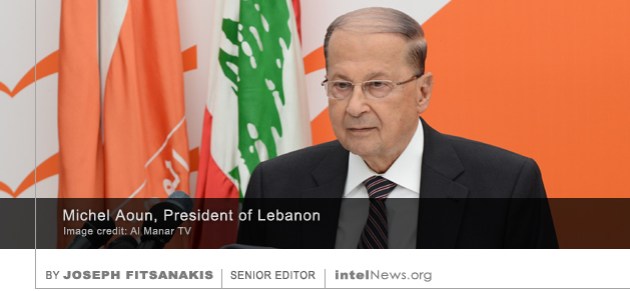
Michel AounThe president of Lebanon said on Wednesday that Israeli intelligence was behind the killing of a Lebanese businessman who was shot dead by a team of assailants last weekend in southwestern Africa. Amine Bakri, 54, who was from southern Lebanon, had lived and worked in Angola since his mid-20s. He was a well-known businessman in the Angola capital Luanda, where he owned a number of factories that make furniture and various medical equipment. On Sunday, Bakri was driving on an unpaved road in the Angolan capital, when his vehicle was ambushed by a group of three armed assailants. According to media reports, one of the men shot the windshield of Bakri’s car and then proceeded to shoot him in the head at close range. The men fled the scene and Bakri was transported to a local hospital, where he soon died from his wounds.

Initial reports stated that Bakri’s killing resulted from a botched robbery by a local gang of youths. But the murdered man’s nephew and business partner, Mohammad Maatuk, told Lebanese media that the men who ambushed his uncle were not interested in money. Maatuk told the Lebanese news website an-Nahar that the men did not give Bakri an opportunity to offer them money or other valuables. Instead they opened fire almost immediately and fled the scene in a calm, pre-arranged, professional manner, said Maatuk.

On Wednesday, the newly elected President of Lebanon, Michel Aoun, opened the weekly meeting of the Lebanese government by announcing that there was “information that the [Israeli intelligence agency] Mossad was behind this operation” to kill Bakri in Lebanon. He added that the Lebanese Ministry of Foreign Affairs and Immigration was “collecting information” in light of new evidence about Israel’s alleged involvement. According to media reports, Aoun did not provide details about the evidence that the Mossad was behind Bakri’s murder. Nor is there any information about the reasons why Israel might want Bakri dead.

Angola is home to a sizeable Lebanese community, whose members concentrate mostly in Luanda. As of this morning there has been no information about whether Amine Bakri was in any way related to Imad Bakri. Bakri, a Shiite Lebanese merchant in Luanda, has been identified in several intelligence reports as a link between the Shiite Lebanese militant group Hezbollah and UNITA, the Western-supported right-wing rebel group that lost in the Angolan Civil War and today is the country’s second-largest political party. Bakri’s body is expected to arrive in Lebanon today. It will be transported to the Iraqi Shiite city of Najaf, where he will be buried.

Author: Joseph Fitsanakis | Date: 05 January 2017 | Permalink

Accused Chinese nuclear spy ‘to plead guilty’ in US court this week

China General Nuclear PowerA man at the center of the first case of Chinese nuclear espionage in United States history will be pleading guilty on Friday, according to court documents. This could mean that the alleged spy has decided to give the Federal Bureau of Investigation (FBI) details of Chinese nuclear espionage in the US. The accused man is Szuhsiung ‘Allen’ Ho, a Taiwanese-born engineer and naturalized American citizen. Ho was arrested by the FBI in April on charges of sharing American nuclear secrets with the government of China.

The investigation began when the Tennessee Valley Authority (TVA) contacted the FBI with concerns about Ching Huey, a TVA senior manager. When the FBI questioned the TVA executive, he admitted that Allen Ho had paid him in exchange for information about nuclear power production. He also said that he had traveled to China for that purpose, and that the Chinese government had covered his travel expenses. A few months later, the FBI arrested Ho in Atlanta, Georgia, and charged him with espionage. The FBI also claims that Ho’s US business firm, Energy Technology International, gave secrets to China General Nuclear Power, a Chinese company that supplies nuclear energy technology to the Chinese government. According to Ho’s indictment, he used his technical expertise and business acumen to give Beijing US government information that could help China’s civilian and military nuclear program.

Government prosecutors argued successfully that Ho, who has close family in China, including a son from a former marriage, could flee there if freed. Prosecutors also claim that Ho has access to several million US dollars abroad. For the past months, Ho’s defense denied the espionage accusations against him. But on Tuesday, a newspaper in Knoxville, Tennessee, where Ho has been charged, said that the jailed engineer is preparing to plead guilty in court on Friday. Observers believe that this move by Ho’s legal team means that he has decided to cooperate with the FBI. He could therefore provide US authorities with information about Chinese nuclear espionage in the US, and secrets on “the inner workings of China’s nuclear program”, said the newspaper.

Author: Ian Allen | Date: 4 January 2017 | Permalink

US government to set up ‘anti-propaganda center’ after Obama signs new law

Barack ObamaUnited States President Barack Obama has signed a new law that designates $160 million to set up a government center for “countering foreign propaganda and disinformation”. The law authorizes the US departments of State and Defense to work with other federal agencies in establishing the new body. Its precise tasks are not yet known, nor is the role in it —if any— of intelligence agencies, though the Director of National Intelligence is mentioned in the body of the legislation.
The legislation is entitled “Countering Foreign Propaganda and Disinformation Act”, and it was introduced in both chambers of the US Congress last spring by Republican and Democrat legislators. It was initially entitled “Countering Information Warfare Act”, but was subsequently revised and included in the National Defense Authorization Act for fiscal year 2017. It was approved by the House of Representatives on December 2, and by the Senate on December 8. President Obama signed it into law on December 23. Under the new law, the Department of Justice has to take initiative within 180 days, and collaborate with the Department of Defense, before reaching out to “other relevant departments and agencies”. Resulting from this process will be the establishment of a “Center for Information Analysis and Response”. The goal of the Center will be to collect and analyze “foreign government information warfare efforts”, and to “expose and counter foreign information operations” directed against “US national security interests”. The plan will be funded in the amount of $160 million over two years.

Rob Portman, a Republican US Senator from Ohio, who co-sponsored the bill, hailed it as “a critical step towards confronting the extensive, and destabilizing, foreign propaganda and disinformation operations being waged against us by our enemies overseas”. But the Russian government-owned broadcaster RT called the new law “ominous” and “controversial”, and said the US government was “itself pushing propaganda on its own domestic population”. In an article published on Tuesday, the Hong Kong-based newspaper South China Morning Post said the new legislation was aimed at China, as well as at Russia. The newspaper cited Chinese experts who warned that Washington and Beijing “could head down the slippery slope toward ideological confrontation” as a result of the new law.

Author: Joseph Fitsanakis | Date: 28 December 2016 | Permalink

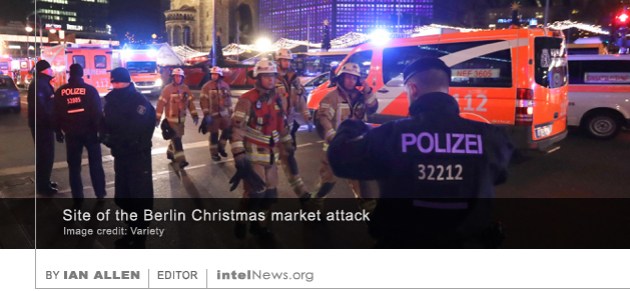
German security agencies had watched Berlin market attacker for a year

Berlin Christmas market attackThe central suspect in the Berlin Christmas market attack had been on the radar of German security agencies since January of this year, because he had links with radical Islamists and sought to buy guns for a terrorist attack. Anis Amiri, 23, left his native Tunisia in 2011, soon after the outbreak of the so-called Arab Spring there. He lived in Italy for three years before arriving in Germany in July 2015. In April of this year, he applied for an asylum in Germany. According to German authorities, Amiri was arrested multiple times in Tunisia for drug-related offenses. He is also believed to have used at least six different aliases since moving to Europe, and to have claimed to be a citizen of Lebanon and Egypt at different times.
On Wednesday, German newspaper Süddeutsche Zeitung revealed that Amiri’s cell phone and email accounts had been monitored by German security agencies at least since January of this year. The decision to monitor his telecommunications was reportedly taken by officials at Germany’s Center for Terrorism Defense (GTAZ). The agency functions as a fusion center for intelligence cooperation between German police and spy services. The newspaper said that Amiri was deemed suspicious because of his connections with several radical Islamists, who were arrested in Germany in recent months. They include Abu Walaa, a vocal supporter of the Islamic State who was captured in Northern Germany in November. According to anonymous German officials, Amiri had also told friends that he was seeking people to help him purchase weapons and use them to carry out attacks on civilians in Europe.

Last summer, Amiri was involved in a scuffle between rival drug gangs in Berlin, in which at least one knife was used. But he disappeared for several weeks when police tried to question him about it. He was eventually arrested and questioned by police in Berlin. It was discovered that, according to one German official, Amiri “was highly mobile”, moving between Berlin and northern Germany every few weeks. But, according to the Süddeutsche Zeitung, German authorities did not have enough evidence against him to keep him in detention. Shortly after Amiri’s arrest and subsequent release, German authorities decided to turn down his application for asylum due to security concerns. He was due to be deported from Germany before December 31. The German police is now offering up to €100,000 for Amiri’s capture.

Author: Ian Allen | Date: 22 December 2016 | Permalink

Mossad identified Hamas drone expert as principal target ‘years ago’: expert

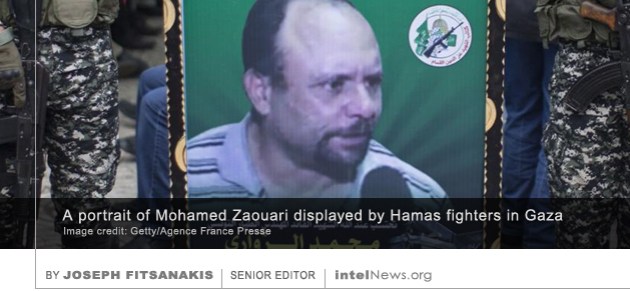
Mohamed ZaouariDespite persistent silence from Tel Aviv, commentators there seem increasingly convinced that Israeli spies were behind last week’s killing of an aviation engineer who worked for the Palestinian militant group Hamas. The man, Mohamed Zaouari, 49, was a Tunisian national who had spent over a decade creating an innovative aerial drone program for the Palestinian group that controls the Gaza Strip. He was reportedly shot dead outside his home in east-central Tunisia by an unidentified group of assailants carrying guns equipped with silencers. A statement issued on Saturday by the Qassam Brigades, the armed wing of Hamas, blamed Zaouari’s killing on the Mossad, Israel’s external intelligence agency.

Writing for the Israeli newspaper Yedioth Ahronoth, the veteran security correspondent Ronen Bergman said on Monday that Israeli spies had identified Zaouari “years ago” as a potential target. Bergman claims that Israeli intelligence agencies monitored Zaouari “as soon as he left Tunisia for [the Syrian capital] Damascus” over a decade ago. Eventually, the Israelis began to see Zaouari as a major contributor to efforts by Hamas and the Lebanese Shiite group Hezbollah to develop unmanned aerial vehicle programs. Through constant surveillance, Israeli intelligence was able to confirm that Zaouari was in regular contact with other Palestinian and Lebanese technical experts. The latter allegedly included Hassan Lakkis, a leading Hezbollah commander, who was one of the Shiite militant group’s primary weapons procurer and developer. Lakkis was killed on the evening of December 3, 2013, outside his home in Beirut, in circumstances that appear to be similar to last week’s killing of Zaouari in Tunisia.

Bergman argues that, if Israeli intelligence was indeed behind Zaouari’s killing, he was targeted because he was seen “as an increasingly dangerous element” and the Israelis believed that his death would cause Hamas “considerable damage”. The decision to target him in a distant location like Tunisia bore considerable risk, says Bergman, given that Zaouari was almost certainly aware that he was under threat from rival intelligence agencies and was taking precautions. Additionally, as the Mossad found out in the aftermath of the killing of Mahmoud al-Mabhouh in Dubai in 2010, the world is now “filled with cameras and biometric systems” that make covert operations dangerous. Consequently, these types of high-risk operations are reserved for principal targets whose removal will subtract strategic abilities from Israel’s adversaries. Bergman notes that, if Zaouari was killed by Israeli operatives, his death will mark one of the first major operations by the Mossad under the new leadership of Yossi Cohen, who was appointed as head of the secretive agency a year ago.

Author: Joseph Fitsanakis | Date: 20 December 2016 | Permalink

Hamas drone expert shot dead in Tunisia by assailants using gun silencers

Mohamed ZouariA senior aviation engineer who headed the unmanned aerial vehicle program of the Palestinian militant group Hamas, has been shot dead outside his home in Tunisia by a group of assailants using gun silencers. Mohamed Zaouari, 49, was a Tunisian national who had spent over a decade creating an innovative aerial drone program for Hamas, the Palestinian group that today controls the Gaza Strip. He had lived outside of Tunisia for much of his life, most recently in Syria, where he is believed to have worked as an engineer in a private firm, while also consulting with the Palestinian group. He had returned to Tunisia in 2011, following the upheaval in the country that sparked the so-called Arab Spring.
Zaouari was reportedly shot on Thursday in his hometown of Sfax, Tunisia’s second-largest city, located 170 miles southeast of the capital Tunis. Local media said he was shot dead at the wheel of his car, which was parked outside his home. His body was riddled with over 20 bullets, according to a police statement. On Friday, Tunisia’s Deputy Prosecutor General, Mourad Turki, said during a radio interview that several people are believed to have participated in Zaouari’s killing. Eight people had been arrested in connection with the crime, while at least two others were still at large, said Turki. All ten are believed to be Tunisian citizens. Among them is a woman, claiming to be a journalist, who has reportedly interviewed Zaouari in the past. She was allegedly arrested as she was boarding a flight from the Tunis-Carthage International Airport to the Hungarian capital Budapest. Additionally, officials from Tunisia’s Interior Ministry said that four rental vehicles had been seized in connection with Zaouari’s killing, and that two weapons equipped with silencers had been found in one of the vehicles.

A statement issued on Saturday by the Qassam Brigades, the armed wing of Hamas, said Zaouari had been a part of Hamas for a decade, and blamed his killing on the Mossad, Israel’s external intelligence agency. Hamas leaders said that Zaouari’s contribution to the organization would be celebrated during a specially designated “day of mourning”, and that his killing would be avenged. “The enemy must know the blood of the leader Zaouari will not go in vain”, said a statement issued by Hamas on Saturday. Israel has not responded to Hamas’ accusations. Tzachi Hanegbi, the Minister in the Prime Minister’s Office in charge of National Security and Foreign Affairs, said late on Saturday that Israel was “not connected” with Zaouari’s killing and added that “none of those people arrested are our allies”.

Author: Joseph Fitsanakis | Date: 19 December 2016 | Permalink

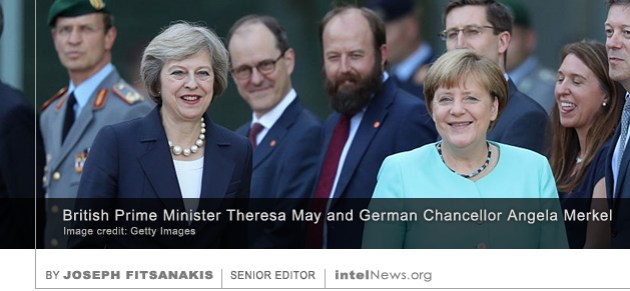
German and British spy services in ‘biggest rift’ since World War II, claim sources

Theresa May Angela MerkelA reported discord between British and German intelligence services, which began in 2014, allegedly persists and now constitutes the “biggest rift between [the] secret services” of the two countries “since World War II”. According to British newspaper The Daily Mail, the Germans accuse Britain of working with the United States to spy on Berlin, while the British government says German intelligence agencies cannot be trusted to safeguard classified information. In an article published on Thursday, The Daily Mail said British and American intelligence agencies have stopped sharing non-critical intelligence with their German counterparts. The lack of cooperation “has now reached the point where there is virtual radio silence” between German and Anglo-American intelligence agencies, said the newspaper, citing “a source familiar” with the ongoing negotiations between the two sides.
In 2014, Germany expelled the most senior American intelligence officer stationed in the country after it confirmed that the United States National Security Agency had spied on German citizens, and had even targeted the personal communications of German Chancellor Angela Merkel. Berlin also caught a German intelligence officer who was spying for the Central Intelligence Agency. It was later alleged that Washington threatened to end all intelligence cooperation with Berlin if the German government offered protection to American defector Edward Snowden. Some German lawmakers had suggested that Berlin should reach out to Snowden, in return for information about US intelligence operations against Germany. In March of last year, the German broadsheet Süddeutsche Zeitung said that officials in Berlin had accused Britain of participating in American spy operations against Germany. The resulting dispute betweem Britain and Germany, said the paper, had turned into a “burgeoning crisis” that threatened intelligence-sharing between London and Berlin.

According to The Daily Mail, British intelligence agencies are now accusing their German counterparts of not properly safeguarding classified information that is shared with them by British security services. Consequently, claim the British, some of that information has found its way to WikiLeaks, the international whistleblower website founded by Australian former computer hacker Julian Assange. The London-based newspaper claims that British and German intelligence officials have met twice since 2014 to discuss ways of resolving the differences between their respective intelligence agencies. But the meetings have failed to mend the division between the parties and the crisis persists, claims The Daily Mail.

Author: Joseph Fitsanakis | Date: 16 December 2016 | Permalink

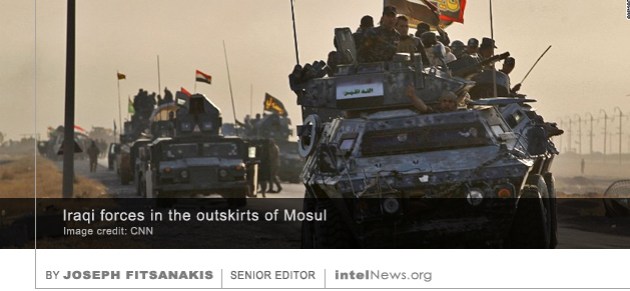
Spy agencies deploy extra staff to analyze ‘treasure trove’ of ISIS computer data

Iraqi forces in MosulWestern military and intelligence agencies are deploying extra analysts to comb through unprecedented amounts of digital data collected from Iraqi regions that have recently been recaptured from the Islamic State. The information is contained in thousands of laptops, hard drives, flash drives and cell phones left behind by retreating Islamic State forces in and around the northern Iraqi city of Mosul.
In an article published this week, the United Kingdom’s Secretary of State for Defense, Sir Michael Fallon, said he had authorized a significant increase in numbers of military intelligence analysts deployed to the Middle East, in response to “a trove of data” captured from the Islamic State. He added that the amount of digital data was expected to increase even further “when Mosul falls”. The British intelligence analysts will join hundreds of American specialists —including analysts, linguists and computer technicians— who are stationed in neighboring Jordan and have for over a year been analyzing digital and printed data captured from the Islamic State. Much of that information is eventually disseminated to allied intelligence agencies.

The largest collection of digital data and documents captured from the Islamic State dates from last summer, when Kurdish Peshmerga forces seized nearly 1,000 electronic devices belonging to the militant group. The material was found in and around the city of Manbij, near Aleppo in northwestern Syria. By late August, the Kurds had collected 20 terabytes of computer data and more than 120,000 documents stored on 1,200 devices that once belonged to ISIS officials or operatives. According to Western officials, the data led to intelligence operations against the Islamic State in 15 countries in North and South America, Europe, the Middle East, Africa and Southeast Asia. In November of this year, Iraqi forces operating south of Mosul captured the digital archives of the Islamic State’s Agricultural and Animal Resources Authority. In addition to an extensive notary archive, the collection included information on the Islamic State’s commercial transactions with entities in neighboring countries, and was described by Iraqi government sources as “a real treasure”.

According to the British government, digital data and printed documents currently being gathered from Islamic State strongholds in and around Mosul are expected to provide critical intelligence on the group’s structure and chain of command. They are also likely to give insights on the existence of Islamic State cells abroad, and will most likely help international prosecutors build legal cases against Islamic State commanders in the near future.

Author: Joseph Fitsanakis | Date: 15 December 2016 | Permalink

New director appointed to head Pakistan’s all-powerful intelligence agency

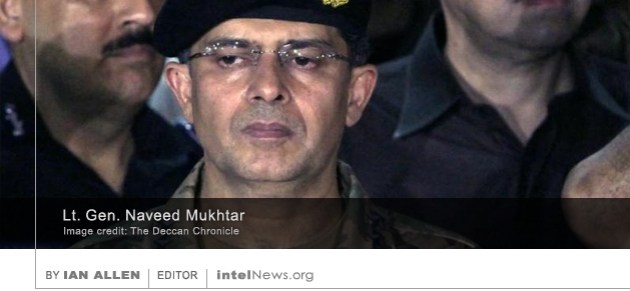
 Lt. Gen. Naveed MukhtarA new director, with considerable experience in counterterrorism, has been appointed to lead Pakistan’s Inter-Services Intelligence (ISI), believed by some to be one of the most powerful spy agencies in the world. Pakistan’s Ministry of Defense announced on Sunday that Lt. Gen. Naveed Mukhtar will be replacing Lt. Gen. Rizwan Akhtar, who has led the ISI since November of 2014. The appointment of Gen. Mukhtar comes less than a month after a major change of leadership in the Pakistani military, which saw the appointment of General Javed Qamar Bajwa as the new Chief of Army Staff. It is believed that the appointment of the new ISI director represents a personal choice of the newly appointed Gen. Bajwa.
Both the outgoing and incoming directors of the ISI are from the same generation of military officers, having been commissioned in 1982 and 1983 respectively. Both attended Pakistan’s prestigious National Defense University and earned graduate degrees at the United States Army War College in Pennsylvania. But while Gen. Akhtar specializes in counterinsurgency, and spent much of his career in Pakistan’s Federally Administered Tribal Areas, his successor, Gen. Mukhtar, has a background in intelligence with a focus on counterterrorism. Although he most recently served in Karachi, Pakistan’s largest and most populous metropolitan center, Gen. Mukhtar made his mark in the military by leading the ISI’s counterterrorism branch in the capital Islamabad. It is said, therefore, that his appointment to the directorship of the ISI may signal a turn away from running Taliban agents in Afghanistan, for which the ISI is notorious, and concentrating instead of combatting militant groups at home.

The change in the ISI’s leadership comes at a particularly complicated period in Pakistani security. The country’s relations with its neighbor and arch-nemesis India are experiencing a major crisis following the so-called ‘summer of unrest’ in Kashmir. The term refers to a period of tension between the two countries, sparked by popular unrest and violent protests by the predominantly Muslim inhabitants of the Indian-administered region of Jammu and Kashmir. The region remained under a military curfew for nearly two months, during which nearly 100 people died and over 15,000 were injured. There are some in Islamabad who believe that Gen. Akhtar was removed from the ISI because he failed to contain the unrest in Kashmir. He has now been appointed president of Pakistan’s National Defense University in Islamabad.

Author: Ian Allen | Date: 13 December 2016 | Permalink

US, British intelligence agencies spied on Israelis and Palestinians, files show

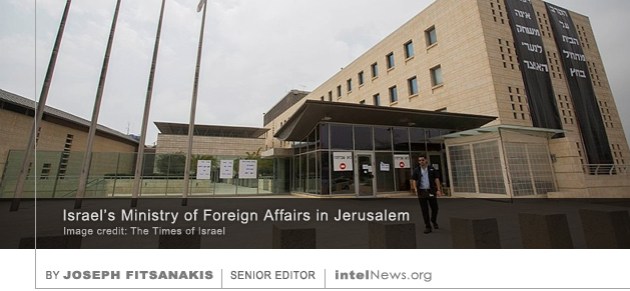
Israel’s Ministry of Foreign AffairsDocuments accessed by a French newspaper show that American and British intelligence agencies worked together to spy on diplomats, academic researchers and defense contractors in Israel and the Palestinian territories. Last year, the German newsmagazine Der Spiegel and the American newspaper The Wall Street Journal reported that the United States National Security Agency spied on senior Israeli politicians throughout the last decade, including Prime Minister Ehud Olmert and his successor, Benjamin Netanyahu. Now French daily Le Monde has alleged that the NSA teamed up with its British equivalent, the Government Communications Headquarters to spy on Israeli foreign service officials and diplomats, academic researchers and defense contractors. The newspaper also alleged that British and American spies targeted Palestinian government officials.
According to Le Monde, the information came from documents leaked by Edward Snowden, a former employee of the NSA and the Central Intelligence Agency, who is currently living in Russia. Snowden defected there in June 2013, after initially fleeing to Hong Kong with millions of stolen US government documents in his possession. In a leading article on Wednesday, the newspaper claimed that British and American spy agencies have systematically targeted senior officials in Israel’s Ministry of Foreign Affairs in Jerusalem. Several Israeli foreign service officials stationed abroad have also been targeted, said Le Monde, including Israel’s ambassadors to Nigeria and Kenya. But the Anglo-American intelligence alliance has also targeted Palestinian government institutions, including the Office of the Secretary General of the Palestinian Liberation Organization. Senior Palestinian officials that have been spied on include Ahmed Qurei, a former prime minister of the Palestinian National Authority, and Ahmad Tibi, a member of the Israeli Knesset who served as an advisor to Palestinian leader Yasser Arafat in the 1990s.

Palestinian diplomats stationed around the world have also been targeted by the NSA and the GCHQ, said Le Monde, in cities such as Paris, Brussels, Lisbon, Islamabad, Pretoria, and Kuala Lumpur. The documents also show that the two intelligence agencies have spied on Israeli defense contractors, including a company named Ophir Optronics, which works in the areas of laser and fiber optic technologies. Finally, the French newspaper said that research centers throughout Israel had been targeted, including scientific laboratories located at the Jerusalem-based Hebrew University.

Author: Joseph Fitsanakis | Date: 08 December 2016 | Permalink

Russia says it foiled major foreign cyber attack on its financial system

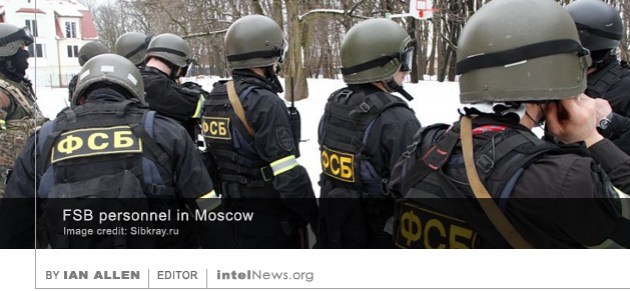
FSB - IARussian authorities say they prevented a large-scale cyber attack by “a foreign intelligence service”, which had been designed to destabilize the country’s financial system and subvert its economy. In an official statement published on its website last week, Russia’s Federal Security Service (FSB) said the perpetrators of the foiled attack had planned to carry it out on December 5. The spy agency, which stems from the Soviet-era KGB, said that the cyber attack had been designed to bring down computer systems belonging to some of Russia’s largest banking institutions.

Text to the statement by the FSB, the planned attack consisted of several components. One component included the use of social media and text messages to be spread through the mobile phone system. The goal was to spread rumors claiming that Russia’s financial system was facing imminent collapse and create panic in the Russian stock exchange. The FSB alleged that several large cities throughout Russia were to be targeted under the foiled plan. The spy agency claimed that the attack originated from a “foreign intelligence service”, but did not identify any countries as culprits of the operation. However, it said that a Ukrainian web hosting company had been used as a base from which to launch the attack through servers located in the Netherlands. On Friday, the Ukrainian web host, BlazingFast, denied that its systems had been used to prepare an attack on the Russian financial sector. In a statement published on Facebook, the company said it had not been contacted by Russian authorities, and assumed that the FSB had “been able to handle the situation without the need of BlazingFast’s cooperation”. It added that it was willing “to cooperate with any legal entity” to investigate Russia’s accusations.

In August of this year, the FSB disclosed that “a meticulously coded and sophisticated virus” had been found on the computer networks of at least 20 major Russian agencies and organizations. As intelNews reported at the time, the targets appeared to have been carefully selected by the malware’s authors. They included government bodies, weapons laboratories and defense contractors located throughout Russia.

Author: Ian Allen | Date: 06 December | Permalink