March 9, 2020
by Joseph Fitsanakis
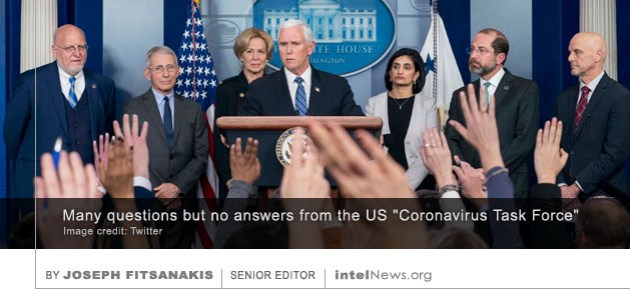 The coronavirus (COVID-19) is quickly becoming the greatest security challenge of our time. The ease of transmission and high death rate of this disease, coupled with the asymmetric challenges it poses to our planet’s social, economic and political structures, threaten the very cohesion of our global system. This is especially true of Western societies, whose highly sophisticated organizational features make them especially susceptible to all forms of large-scale disruption. Few of those of us who are alive today in the West have ever faced a threat with the all-encompassing characteristics, disruptive capacity and persistent nature of COVID-19.
But no American would get this impression by watching the daily briefings of the so-called White House “Coronavirus Task Force”. The uncomfortable smiles and awkward acquiescence of its members, part of an unconvincing effort to assure Americans that “all is well”, coupled with their seemingly unending competition to offer lavish praises to each other, make for a truly uncomfortable viewing experience. Such astounding manifestations of mediocrity would be somewhat tolerable if they came alongside actionable information that Americans could use to protect themselves and the future of their country —preferably something beyond “washing your hands for at least 20 seconds”.
On February 26, Americans were told by their president that “within a couple of days [COVID-19 cases in the US would] be down close to zero, that’s a pretty good job we’ve done”. By that time, China was feverishly implementing the largest quarantine in human history. Ten days later, Italy began to quarantine 16 million people —a quarter of its population— in its northern regions. Meanwhile, Britain has begun re-hiring retired nurses to prepare for the coming unprecedented wave of medical emergencies, while France has banned all large meetings in its territory. But in America it’s business as usual: the National Collegiate Athletic Association (NCAA) announced on Sunday that all its tournament games nationwide will be held with fans despite growing concerns about the coronavirus. Not a single senior government official has stepped forward to address Americans’ growing anxiety about the potentially unprecedented degree of disruption that the US economy, including the nation’s supply chain, healthcare, transportation, education, entertainment, and services sectors are going to be experiencing in the coming months.
Additionally, Americans expect the so-called “Task Force” to provide non-politicized explanations of the ongoing failures of the US government’s treatment to the COVID-19 crisis, which continue to allow the virus to spread in our communities unabated. For instance, why did the US decline to use the World Health Organization’s diagnostic test for the disease, which had been made available to dozens of nations by the end of January? Or why does access to testing kits remain at alarmingly low levels, so much so that a frustrated New York Governor Andrew Cuomo recently described the US Centers for Disease Control and Prevention’s response to COVID-19 as “flat-footed”? So grave is this situation, that on March 8 The Washington Examiner —arguably America’s leading conservative publication— opined that COVID-19 “is exposing how deeply unsuited [Donald Trump] is to deal with a genuine crisis that he can’t bluff his way through”.
The American government’s tragically incompetent response to COVID-19 (at this point just slightly better than the Islamic Republic of Iran’s) hurts even more when one compares it with that of Taiwan —an island nation of 23 million, which the US often views as a client state. In January, when COVID-19 began making news headlines, experts predicted that Taiwan would end up with the world’s second-highest number of COVID-19 cases. This was primarily due to the country’s geographical proximity to mainland China —just 81 miles from the Chinese shore— as well as the  extensive transportation network that links the two nations. Over 1.2 million Taiwanese either live permanently or work in China, while nearly 3 million Chinese citizens visit Taiwan every year. Even more ominously, the COVID-19 outbreak occurred right before the Lunar New Year, which is the busiest travel season for both Chinese and Taiwanese holidaymakers.
But Taiwan has managed to spectacularly defy all early predictions about a potential COVID-19 epidemic. As a group of researchers from the University of California Los Angeles, Stanford University, RAND Corporation and the Koo Foundation in Taiwan, explain in The Journal of the American Medical Association, the reason dates back to 2003. That year’s severe acute respiratory syndrome (SARS) outbreak prompted the Taiwanese government to establish the National Health Command Center (NHCC). Since then, the NHCC has operated as a central command system that coordinates the activities of Taiwan’s Central Epidemic Command Center, the Biological Pathogen Disaster Command Center, the Counter-Bioterrorism Command Center, and the Central Medical Emergency Operations Center. Intelligence collected and analyzed by these centers is quickly distributed to central, regional and local authorities in all parts of the country.
The authors explain that, on December 31, the day when the World Health Organization notified national authorities of the first accounts of a severe pneumonia with unknown causes in the Chinese city of Wuhan, NHCC personnel began to board planes arriving from Wuhan. They began testing all passengers and crew on those planes for flu-like symptoms before allowing them to deplane. By January 5, NHCC personnel were reaching out to anyone who had traveled to Wuhan in the past fortnight and testing them for flu-like symptoms. By that time, the NHCC had already set up a nationwide toll-free hotline, which has since become decentralized to serve individual regions.
On January 27, the NHCC worked in collaboration with Taiwan’s National Health Insurance Administration (NHIA) to integrate the database containing the recent travel history of passengers with their NHIA identification card data. They also integrated the same database with national tourism and immigration data. Within 24 hours, the NHCC was reaching out to all citizens of Taiwan, as  well as tourists and immigrants, who had traveled to the Wuhan region during the previous month. Using this big-data analytics approach, Taiwanese authorities were able to generate real-time alerts that were sent to individual doctors for use during clinical visits, so that clinical symptoms could be matched with patients’ travel histories.
Those who had traveled to regions of China that were considered high-risk, were immediately quarantined at home for 14 days. Their movements were tracked through their mobile phones to ensure compliance with quarantine instructions. Meanwhile, all those who exhibited flu-like symptoms but had tested negative for influenza in weeks prior, were re-tested for COVID-19.
Considering the above, it is hardly surprising that, by March 9, Taiwan —located just 81 miles off the coast of China— had just 45 confirmed COVID-19 cases, with a single death. Importantly, this is not because the Taiwanese are not testing their citizens —unlike the US or, even more outrageously, Turkey, which continues to report zero cases of COVID-19. Taiwan has tested more people than all of the nations of the Americas combined. The low number of COVID-19 cases in Taiwan is due to one thing, and one thing alone: a preemptive approach to the security of the nation by an enlightened leadership and a forward-thinking government system. Which is precisely what the US lacks at this grave time for the nation’s future.
* Dr. Joseph Fitsanakis is associate professor in the Intelligence and National Security Studies program at Coastal Carolina University in the United States.
► Author: Joseph Fitsanakis | Date: 09 March 2020 | Permalink
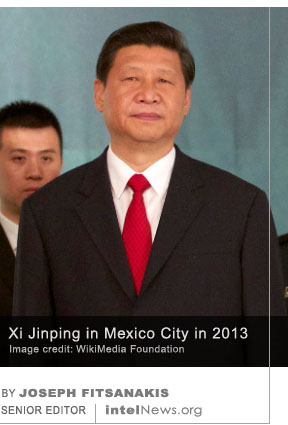 INTELLIGENCE OBSERVERS OFTEN REFER to the Communist Party of China (CPC) as “the world’s largest secret society”. Barring brief periods of relative openness in the late 1990s and early 2000s, the closed decision-making system of the CPC has presented Western intelligence analysts with cascading intractable enigmas for over half a century. This problem has become even more pressing under the decade-long leadership of Xi Jinping, during which the imposition of rigorous counterintelligence measures have turned China into a text-book hard intelligence target.
 social media, to social-science-based quantitative studies. Sverdrup-Thygeson and Stenslie explain that the two extremes of Beijingology are invariably disconnected from what is actually happening on the ground in China, and are thus of limited value.
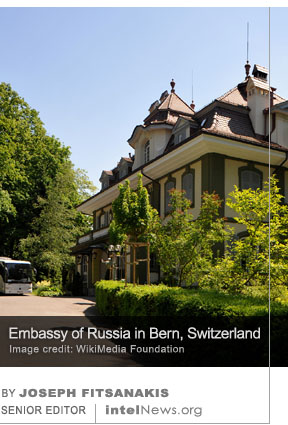 SINCE LATE FEBRUARY, WHEN Russian troops invaded Ukraine, over 500 Russian diplomats have been expelled from Western countries. Even former Russian allies have contributed to the growing list of expulsions —most recently Bulgaria, which
  IN THE OPENING STAGES of the Russian invasion of Ukraine, there was a widespread
  related legislation” with Western standards, as well as aligning them with NATO standards, so that Ukrainian cyber-warfare units can make use of advanced technologies and systems. Could it be, therefore, that Ukraine has improved its cyber-security posture enough to be able to defend itself against relentless Russian cyber-attacks?
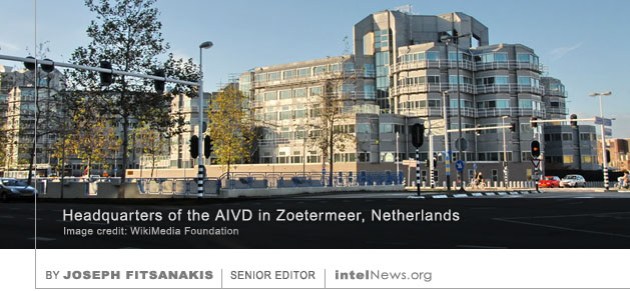 AT A TIME WHEN dozens of countries are routinely expelling
  Naturalization Service, which detained Cherkasov upon his arrival at Amsterdam’s Schiphol International Airport. The Dutch government declared the alleged GRU officer persona non grata and promptly expelled him back to Brazil “on the first flight out”.
 “THERE ARE DECADES WHERE nothing happens; and there are weeks where decades happen”. These words by the Russian revolutionary Vladimir Lenin offer a fitting description of the cataclysmic events witnessed since February 24. In the early hours of that day, the largest country in the world launched a strategic ground offensive against the largest country in Europe. What began as a “special military operation” has now escalated into the most extensive military conflict in Europe since World War II. It is clear that Russia’s original plan for this war collapsed within hours of the initial attack. But the correlation of forces continues to overwhelmingly favor the Russian side. Moreover, the bulk of the Russian forces are heading for Kyiv. This could result in the largest and most deadly urban battle since World War II.
 flee to Lviv. At the same time, elite formations from the Main Directorate of the Armed Forces’ General Staff (GRU) and Spetsnaz (special operations forces) were sent to the Ukrainian capital to assassinate leading government figures.
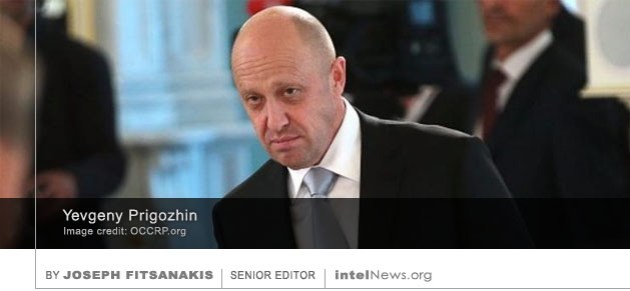 WITHOUT MUCH FANFARE LAST week, the Federal Bureau of Investigation placed on its most wanted list
 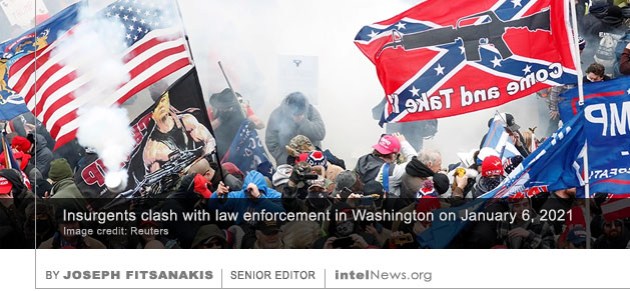 WITH DOWNTOWN WASHINGTON RESEMBLING a large military encampment, a repeat of last week’s shocking assault on the Capitol Complex is highly improbable. But America could witness escalating levels of violence across many states, as supporters of the January 6 insurrection continue to organize themselves into a coherent armed movement. Their ability to threaten American national security will depend on whether they can overcome major internal divisions. It will also be determined by the speed with which United States authorities will respond to the rise of what is quickly becoming a dangerous militant movement.
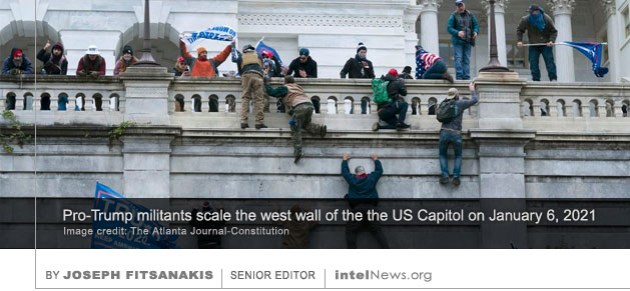 IF WEDNESDAY’S ATTACK ON the United States Capitol Complex was part of a coup d’état, then the American political system should be considered safe for the time being. The mob that ransacked the Capitol was disordered, leaderless, and appeared to have no coordination, or even direction. However, the broader militant movement that it represents is evolving very rapidly. If left unchecked, it will be able to turn its weaknesses into strengths and spell major trouble ahead for the already stormy waters of American politics. The nation’s law enforcement and security agencies must therefore prepare for a period of widespread insurrection, some of which will be armed and lethal in nature. Insurrectionist acts are likely to occur across the nation, and may last for months, if not longer.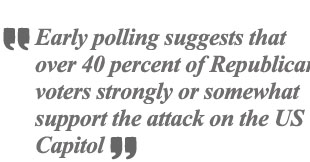
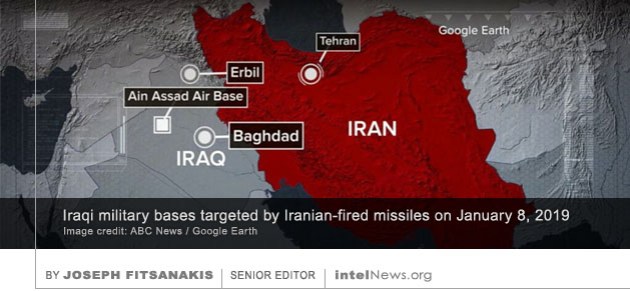 The missiles that targeted American troops in Iraq a few hours ago offer significant clues about the evolving confrontation between Iran and the United States. The attack appears to have been largely symbolic —a somewhat rushed attempt to restore some of Iran’s wounded prestige following the assassination of its military commander, Qasem Suleimani. At the same time, however, it is also the prelude to a broader regional conflict that appears increasingly unavoidable.
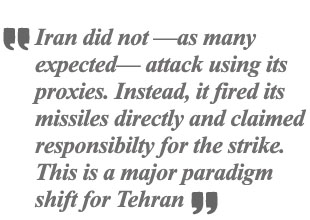 Soleimani’s killing is viewed by Tehran as too insulting to be responded to indirectly. This does not mean that Tehran will not revert to its standard method of employing proxies in the future. But the fact that it consciously chose to deviate from that time-tested method is in itself extremely important.
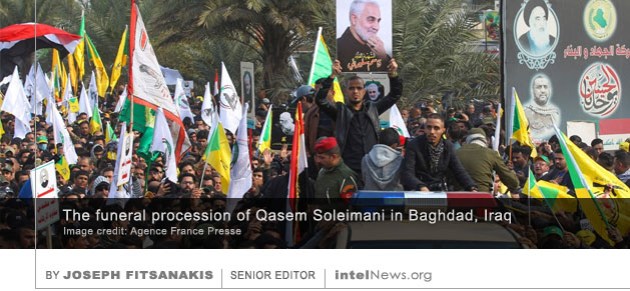 By assassinating Qasem Soleimani, a Shia celebrity and the Middle East’s most influential military leader, US President Donald Trump has made the most fateful decision of his presidency to date. Tehran has no option but to respond. When it does, the way that Mr. Trump and his administration handle the situation will largely determine the future of the Middle East and the fate of his presidency. In the meantime,
 it is becoming increasingly clear that victory, if and when it comes, will not be unblemished for whomever claims it.
 assassination. And yet, while publicly thanking Iran, Trump was likely formulating plans to kill its leading general.
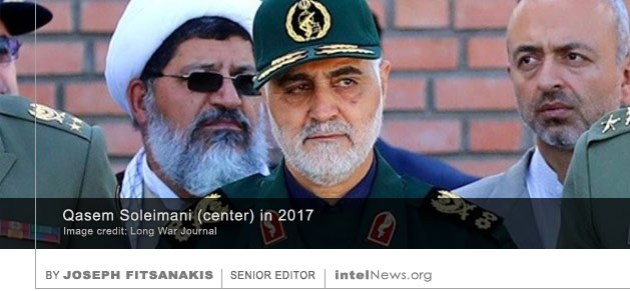 In an act whose implications are impossible to overstate, the United States has assassinated General Qasem Soleimani, arguably Iran’s second most powerful official. In the early hours of this morning, the entire Middle East stood on the verge of a regional war as the US Department of Defense
  why US President Donald Trump made the decision to kill Soleimani, and why he did so now.
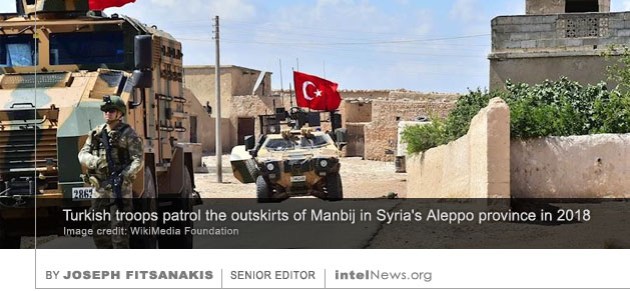 In 2011, the discovery of Osama bin Laden’s hideout in Abbottabad raised questions about Pakistan’s knowledge of his whereabouts. Today it is hardly controversial to suggest that at least some elements in the Pakistani government must have been aware of bin Laden’s location. Last week’s discovery of Abu Bakr al-Baghdadi in a region of Syria controlled by Turkey inevitably raises similar questions about Ankara’s role in the Syrian conflict and its relationship with the Islamic State.








Analysis: The West should not trust Ukrainian spy agencies. Neither should Ukrainians
July 28, 2022 by Joseph Fitsanakis 2 Comments
In a subsequent video statement, Zelenskiy said he fired the two officials after he was informed that at least 60 employees of the SBU and the Prosecutor General’s office had defected to the Russians in eastern Ukraine. Last week, in an article for SpyTalk, Kremlin watcher Olga Lautman said Bakanov’s dismissal had been expected for a few days. Regardless, the move has shaken Western observers, and has given rise to legitimate questions about the susceptibility of Ukraine’s security and intelligence services to Russian meddling. Should the Western alliance, and Western intelligence agencies in particular, trust their Ukrainian counterparts? The answer is, invariably, no. In fact, even the Ukrainians themselves are not in a position to trust their own intelligence services.
From the KGB to the SBU
On September 20, 1991, just one week after Ukraine secured its independence from the Soviet Union, the SBU was founded in place of the Soviet KGB. Initially, the new agency handled both internal security and external intelligence functions. But in 2005, the SBU’s Department of Intelligence became a stand-alone agency under the title Foreign Intelligence Service (SZR). Since then, the SZR has functioned as the institutional equivalent of the United States’ Central Intelligence Agency (CIA), while the SBU has performed domestic security functions that resemble those of the Federal Bureau of Investigation (FBI).
As is the case with the entirety of Ukraine’s state sector, the two agencies are endemically bloated. Intelligence observers report that the SBU’s 30,000 employees make it far larger in size than its British counterpart, the Security Service (MI5). Meanwhile, according to the latest information, the SZR has “double the number of personnel than the Canadian Security Intelligence Service (CSIS) and is larger than Britain’s [Secret Intelligence Service, or] MI6”. By all accounts, even today, more than 30 years after the dissolution of the USSR, the two agencies continue to resemble Soviet-style bureaucracies in terms of size, sluggishness, and corruption. Read more of this post
Filed under Expert news and commentary on intelligence, espionage, spies and spying Tagged with 2022 Russian invasion of Ukraine, Analysis, counterintelligence, Foreign Intelligence Service (Ukraine), Joseph Fitsanakis, Newstex, Russia, Ukraine, Ukrainian Security Service