French security services investigate Russian role in yellow vests movement
December 17, 2018 Leave a comment
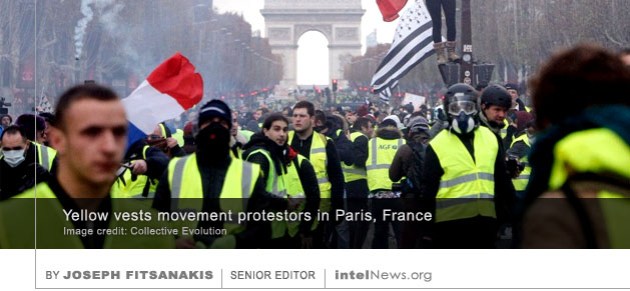 Intelligence and security services in France are investigating whether Russian involvement on social media and other platforms is playing a role in amplifying the so-called ‘yellow vests’ movement. Known in French as le mouvement des gilets jaunes, the campaign began online in May of this year as a popular protest against rising fuel prices and the high cost of living in France. In mid-November, the movement made its first public appearance with large demonstrations that have continued every weekend since then. Yellow vest protestors claim that tax increases are disproportionally affecting working- and middle-class people and that everyday life is becoming economically unsustainable in France. Some of the demonstrations have turned violent, and so far at least eight people have died as a result. The ensuing crisis has become the most significant threat to the government of Emmanuel Macron, as the protests are increasingly evolving into an anti-Macron rallies.
So far, the yellow vests campaign has been largely bipartisan, bringing together protestors from the entirety of the French political spectrum. Additionally, there are no identified leaders or coordinators of the movement. However, some suspect that Russian government operatives may be further-inflaming an already incensed protest movement. On Friday, The Wall Street Journal said that French security agencies were investigating potential involvement by the Kremlin in the yellow vests campaign. The paper quoted an unnamed French government cybersecurity official as saying that “there has been some suspect activity [and] we are in the process of looking at its impact”. The official was referring to the online activity of some leading social-media accounts involved with the yellow vests, which appear to also be “promoting Russian-backed coverage” of French politics. The Journal also cites Ryan Fox, a cybersecurity expert for the Texas-based firm New Knowledge, who claims that “several hundred accounts on Twitter and Facebook” that are involved in the yellow vests movement “are very likely controlled by Moscow”.
However, there is disagreement among cybersecurity experts about the extent of the Kremlin’s involvement in the yellow vests. Paris has previously accused Moscow of trying to influence the direction of French politics. In February of 2017, France’s Directorate-General for External Security warned that Russia had launched a secret operation to try to influence the outcome of that year’s French presidential election in favor of the far right. However, if such an effort existed, it failed to stop the rise to power of Emmanuel Macron. Since assuming the country’s presidency, Macron has been a leading international critic of Russia’s domestic and foreign policies. The Kremlin, therefore, has strong reasons to want to see a premature end to Macron’s presidency.
This does not necessarily mean that Moscow has been able to anticipate —let alone influence— the yellow vests movement, whose energy has surprised even the most experienced French political observers. The Journal notes that many leading Western cybersecurity bodies, including the Atlantic Council’s Digital Forensic Research Lab, have “not seen significant evidence of state-sponsored interference” in the yellow vests movement, whether by Russia or any other government. Facebook also said that its monitors have not uncovered any evidence of an organized campaign by Moscow to coax the yellow vests protests. The paper also cited Dimitri Peskov, a spokesman for the Kremlin, who categorically denied allegations that Russia was in any way involved in directing yellow vests activists.
► Author: Joseph Fitsanakis | Date: 17 December 2018 | Permalink
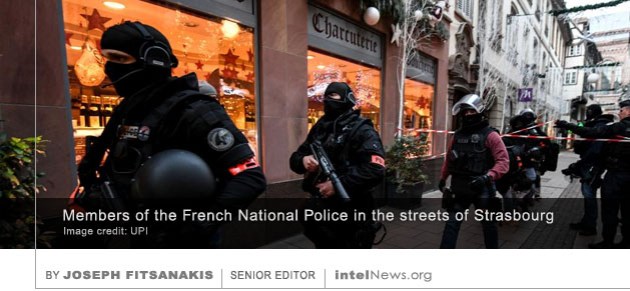 The terrorist attack in the French city of Strasbourg on December 11 raises important security concerns for Europe’s ability to defend itself against a
 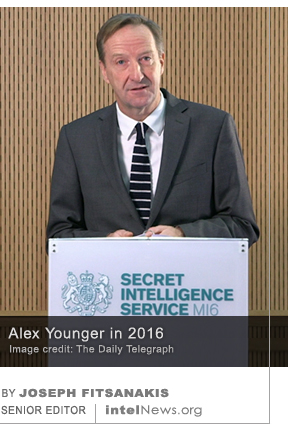 The director of Britain’s Secret Intelligence Service —known as MI6— has outlined the parameters of a new, “fourth generation of espionage”, which he said is needed to combat the “threats of the hybrid age”. Alex Younger, 55, is a career intelligence officer who joined MI6 in 1991, after serving in the British Army. He served as chief of global operations —considered the number two position at MI6— before being
  A senior North Korea expert in the United States Central Intelligence Agency, who has been instrumental in the ongoing negotiations between Washington and Pyongyang, has tendered his resignation, according to sources. The official was
  A new book reveals for the first time the name of a former intelligence officer of the Soviet KGB who helped American authorities arrest Robert Hanssen, an American spy for the Soviet Union and Russia. The son of a Chicago police officer, Hanssen joined the Federal Bureau of Investigation in 1976 and was eventually transferred to the Bureau’s Soviet analytical unit, where he held senior counterintelligence posts. It wasn’t until 2000, however, that the FBI realized Hanssen had spied for Moscow since 1979. Following Hanssen’s arrest in 2001, it emerged that he had betrayed the names of 50 FBI and CIA assets or informants, many of whom perished in the hands of the Russian intelligence services.
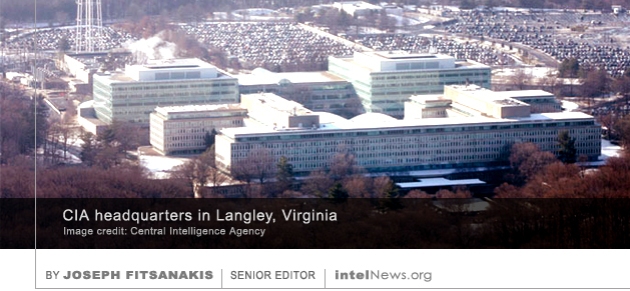 The United States Central Intelligence Agency suffered a “catastrophic” compromise of the system it uses to communicate with spies, which caused the death of “dozens of people around the world” according to sources. This is alleged in a
 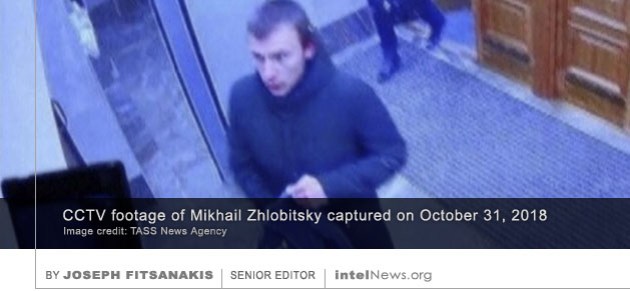 A teenager who killed himself with an improvised explosive device in the lobby of a regional office of Russia’s domestic intelligence agency appears to have identified himself as an “anarchist-communist” on social media. At 8:52 am local time on Wednesday, the 17-year-old entered the regional office of Russia’s Federal Security Service (FSB) in the city of Archangelsk, located 800 miles north of Moscow. On CCTV footage released by the Russian security services, he is seen reaching into his backpack and taking out an object, which soon
 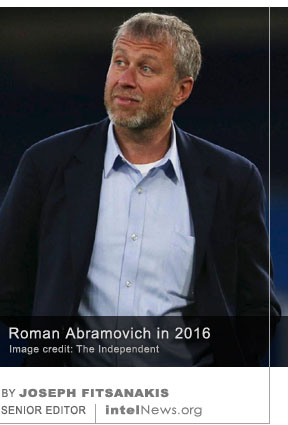 Police in Switzerland cautioned that allowing the Russian billionaire Roman Abramovich to live there would threaten public security and damage the country’s reputation, according to files released this week. The Soviet-born Abramovich took advantage of Russia’s privatization laws in the early 1990s to gain considerable financial and political influence there. His friendship with Russia’s first post-Soviet President, Boris Yeltsin, was instrumental in his business career, and eventually placed him in close proximity to Russia’s current President, Vladimir Putin. Unlike many other oligarchs, Abramovich is believed to have remained close to Putin, despite living mostly in the United Kingdom in the past decade. The Russian oligarch has been staying in a mansion valued at close to $120 million in London’s exclusive suburb of Kensington. His lawyers have been renewing his British residence visa every six months.
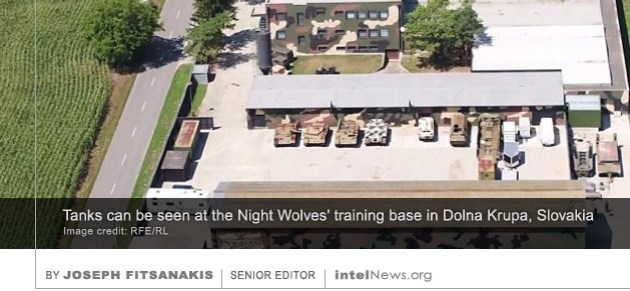 Security agencies in Eastern Europe have voiced concern about the rise of far-right paramilitary groups whose members have access to heavy weaponry, including in some cases armored vehicles and tanks. The most recent warning came on Sunday, when the Czech daily newspaper Mlada Fronta Dnes published excerpts of a leaked security report on the subject. The report was authored by analysts in the Security Information Service (BIS), the country’s primary domestic intelligence agency. It detailed the recent activities of a group calling itself the National Home Guard, a far-right, anti-immigrant militia that
  Germany has dropped a criminal case against the second-in-command of Switzerland’s intelligence agency, who was accused by Berlin of authorizing an espionage operation against the German tax collection service. A year ago, Germany launched an
 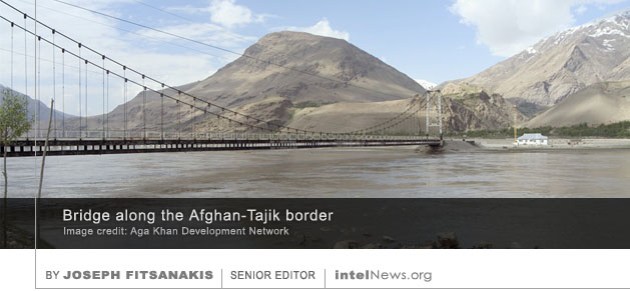 Russia, the United States and Tajikistan have all denied that they were behind a series of mystery airstrikes that took place along the Tajik-Afghan border on Sunday, while the identity of the targets also remains unknown. The 800-mile border between Afghanistan and Tajikistan consists of mountainous terrain. Unlike the Afghan-Pakistani border, which is rife with skirmishes and firefights, the Afghan-Tajik border is usually peaceful and sparsely guarded. But on Sunday, August 26, local officials from both sides of the Afghan-Tajik border
 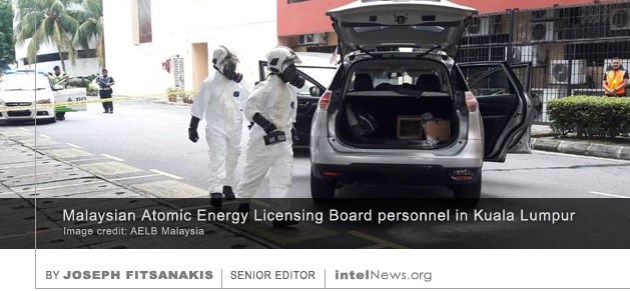 A highly radioactive device used by an energy company has gone missing in Malaysia, sparking a nationwide emergency for fear that it might have been stolen by a militant group. According to Malaysia’s Straits Times newspaper, a radioactive dispersal device (RDD), which is used for the industrial radiography of oil and gas supplies, disappeared during transit on August 10. The device, which weighs approximately 50 pounds, or 23 kilograms, disappeared from the back of a company truck in the early hours of the morning while it was being transported by two technicians. They were
 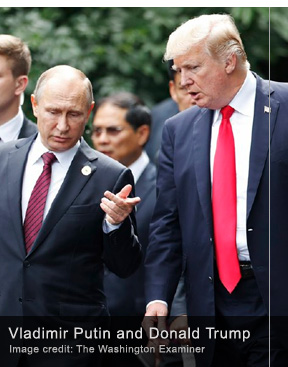 Several American former intelligence officials have called on their active colleagues to resign despite President Donald Trump’s retraction of his remarks about Russia’s alleged meddling in the 2016 presidential elections. On Tuesday, the US president issued an unusual retraction and correction of his public statement on Monday in Helsinki, Finland, in which he appeared to side with the Kremlin over his own Intelligence Community’s views. The Office of the Director of National Intelligence (ODNI), which is the coordinating body of the US Intelligence Community, has said that Russia tried to systematically interfere in the 2016 US presidential elections. According to the ODNI, the Kremlin’s goal was to augment the already heightened discord in American political life and deepen the mistrust between the electorate and state institutions, including Congress and the White House.
 An Iranian diplomat and members of what authorities described as an “Iranian sleeper cell” were arrested this week in Belgium, Germany and France, as they were allegedly planning to a bomb a high-level meeting in Paris. The arrests came after a complex investigation by several European intelligence agencies and were announced by Belgium’s Minister of the Interior, Jan Jambon.






 intelNews.org
Islamic State issues drone bomb warning following London airport chaos
December 24, 2018 by Joseph Fitsanakis 1 Comment
In recent years, it has been reported that several militant groups, such as Hezbollah in Lebanon and al-Qaeda-affiliated groups in Pakistan, have made use of drone technology for surveillance and combat purposes. But observers believe that the Islamic State may have the most advanced drone arsenal of any non-state group in the world. The militant Sunni-Muslim organization launched an experimental armed drone campaign in Iraq in 2016. A year earlier, Islamic State fighters had been seen making use of commercially purchased drones for surveillance purposes in the battlefields of Iraq and Syria. In 2016, the Islamic State built several workshops to modify commercially purchased drones, and eventually to build its own models. In January 2017, the group announced the establishment of a new unit called “Unmanned Aircraft of the Mujahideen”, which operated a sizeable fleet of modified combat drones. The following month, the Islamic State claimed to have killed with the use of drones nearly 40 Iraqi soldiers in a single week. The militant group said it did so by using drones to drop three-pound mortar shells on Iraqi troop positions.
Counterterrorism specialists are concerned about what they see as the Islamic State’s “growing ambition” to use drones in the battlefield. But they doubt that the use of drones can by itself affect the outcome of battles. A much larger concern is the possibility that the Islamic State could transfer its drone knowledge outside the battlefield. It has long been confirmed that Islamic State militants have systematically discussed the possibility of deploying drones in civilian areas to drop explosives or even weaponized chemical substances. In October of this year, Federal Bureau of Investigation director Christopher Wray told the United States Congress that the threat of the use of drones by a group like the Islamic State against American tarets was “steadily escalating”. Wray said that the FBI assessed drones “will be used to facilitate an attack in the United States against a vulnerable target, such as a mass gathering”. He added that his assessment was based on several factors, such as the retail availability of the devices, the “lack of verified identification requirement to procure” drones, their ease of use, as well as the experience in the use of drones that militant groups have been amassing abroad.
► Author: Joseph Fitsanakis | Date: 24 December 2018 | Permalink
Filed under Expert news and commentary on intelligence, espionage, spies and spying Tagged with Analysis, commercial drones, Gatwick Airport, Islamic State, News, Newstex, terrorism