Canadian diplomats spied for the CIA in Cuba, claims new book
October 16, 2012 2 Comments
 By JOSEPH FITSANAKIS | intelNews.org |
Several accredited Canadian diplomats were recruited by the United States Central Intelligence Agency to spy on Cuba in the aftermath of the 1962 missile crisis, according to a new book. Authored by Canadian retired diplomat John Graham, the book, entitled Whose Man in Havana? Adventures from the Far Side of Diplomacy, is to be published this week by Penumbra Press. In it, Graham claims that he was among a number of Canadian diplomats stationed in Cuba, who were secretly recruited by the CIA. The US agency had been essentially forced out of the island after Washington and Havana terminated diplomatic relations in 1961, soon after the government of Fidel Castro declared itself a proponent of Marxism. The closure of the US embassy meant that the CIA had no base from which to operate in the Caribbean island. Two years later, in May 1963, US President John F. Kennedy personally asked Canadian Prime Minister Lester Pearson for assistance in intelligence-gathering efforts in Cuba. The Canadian leader consented and, according to Graham, Canadian diplomatic officials actively assisted the CIA until at least 1970. The author states in his book that he himself operated in Cuba for two years, from 1962 until 1964, under the official cover of Political Officer at the Canadian embassy in Havana. Prior to that, he says, he was provided with rudimentary training by the CIA, which consisted of spending “just a few days” at the Agency’s headquarters in Langley, VA. He was then tasked with conducting physical surveillance of Soviet military bases on Cuba and, if possible, identifying weapons and electronic security measures, and noting troop movements. Read more of this post
 By IAN ALLEN | intelNews.org |







 intelNews.org
News you may have missed #804
October 25, 2012 by Ian Allen 1 Comment
►►CIA officer reportedly among dead in Afghanistan bombing. The attack, which was carried out in a remote area of Kandahar Province, occurred when a guard working for the Afghan intelligence service detonated a suicide vest as a delegation of American coalition members and Afghan intelligence officials arrived at the intelligence office in the Maruf District. The blast killed Ghulam Rasool, the deputy intelligence director for Kandahar Province, two of his bodyguards, another Afghan intelligence official, and some Americans, including the CIA officer. A spokeswoman for the CIA declined to comment.
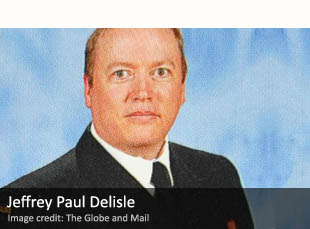
►►Canadian intel officer was ‘on Russian payroll for years’. Former navy intelligence officer Jeffrey Paul Delisle, who pleaded guilty this month to spying, was leaking secrets to Russia, sending classified data about Canada as well as the United States, according to David Jacobson, the US ambassador in Ottawa. So far, the Canadian government has refrained from revealing the identity of “the foreign entity” to whom Delisle passed the classified information. Ambassador Jacobson refused to specify the nature of the information, saying only that “there was a lot of highly classified material”.
►►Panama wants to adopt euro as legal tender. Panama, one of the fastest growing economies in Latin America, wants to adopt the euro as legal tender to run alongside the country’s US dollar economy. Panama’s President Ricardo Martinelli made the request to German Chancellor Angela Merkel during a visit to Europe. The president indicated he had every faith that the crisis in the eurozone would soon be at an end, adding that Panama “would be possibly the only country in the world to have two currencies, the euro and the dollar”.
Filed under Expert news and commentary on intelligence, espionage, spies and spying Tagged with 0 Canadian intel officer was 'on Russian payroll for years', 0 CIA officer reportedly among dead in Afghanistan bombing, 0 Panama wants to adopt euro as legal tender, Afghanistan, Afghanistan War, Angela Merkel, Canada, CIA, espionage, euro, Eurozone, Germany, Jeffrey Paul Delisle, News, news you may have missed, Panama, Ricardo Martinelli, Russia, suicide bombings, United States