News you may have missed #770

Horn of Africa mapBy TIMOTHY W. COLEMAN | intelNews.org |
►►Kaspersky Lab is ‘thwarting US cyber spies’. According to an article in Wired magazine, Eugene Kaspersky, the CEO of Russia-based Kaspersky Labs has been working to support Russian allies in the Kremlin and the FSB. Kasperksy’s firm first discovered the cyber attack weapon known as Stuxnet. As the profile piece notes, “Kaspersky’s rise is particularly notable —and to some, downright troubling— given his KGB-sponsored training, his tenure as a Soviet intelligence officer, his alliance with Vladimir Putin’s regime, and his deep and ongoing relationship with Russia’s Federal Security Service, or FSB”.
►►Al-Shabaab executes alleged CIA and MI6 assets. Somalia’s largest and most deadly armed Islamist group, al-Shabaab, announced that it had captured and executed at least three informants who were allegedly passing intelligence to the CIA and to MI6. The Associated Press stated that Al-Shabaab’s official Twitter feed stated that the individuals, who were summarily interrogated and then executed by firing squad, “were part of a wide network of spies deployed by the British and American intelligence agencies”.
►►Australian intelligence briefed on Canadian spy. The espionage case against accused Canadian spy, former Sub-Lieutenant Jeffrey Paul Delisle, continues to garner intrigue. As was previously reported on this blog, Delisle, a former navy intelligence officer is accused of spying for Russia. But a report in The National Post states that representatives of Canada’s intelligence service briefed members of Australia’s intelligence services on the Delisle’s case and that information exchanges appear ongoing. The particulars of Australia’s involvement in the case are explained here.


Canadian spy compromised Australian, British intelligence

Jeffrey Paul DelisleBy JOSEPH FITSANAKIS | intelNews.org |
Most regular readers of this blog are undoubtedly familiar with the case of Jeffrey Paul Delisle, a Sub-Lieutenant in the Royal Canadian Navy, who until recently was employed at Canada’s ultra-secure TRINITY communications center in Halifax. Delisle was arrested in January on suspicion of passing information gathered from radio and radar signal interceptions to a foreign power, most likely Russia. Back in May, when it was disclosed that the United States helped Canadian counterintelligence investigators build their case against Delisle, we warned that “a far more important subject concerns the degree in which [Delisle’s] penetration has affected Canada’s intelligence-sharing relationship with its […] partners”. Now a new report in The Sydney Morning Herald reveals that Delisle’s espionage activities compromised Australian secrets that had been shared with Canada under longstanding intelligence cooperation arrangements. Citing “Australian security sources”, the paper said that the Delisle case “has sent shock waves through Western security agencies” due to the volume of compromised information. The Herald claims that the stolen intelligence is “on a scale comparable to the alleged handover to WikiLeaks of US military and diplomatic reports by US Army private Bradley Manning”. An unnamed “Australian security source” told the paper that Delisle’s access to classified information was “apparently very wide” and that Australian intercepts were “inevitably compromised”. Read more of this post

News you may have missed #763

RedHack posterBy IAN ALLEN | intelNews.org |
►►Taiwan ex-colonel nabbed for spying for China. Cheng Lin-feng, a retired Lieutenant Colonel in the Taiwanese army, and civilian Tsai Teng-han, were taken in by Taiwanese police last week on suspicion of spying for China. Cheng was allegedly recruited by Chinese intelligence when he travelled to the mainland to do business, Taiwan’s Ministry of National Defense said in a statement, adding that he had been investigated ever since a tip-off in 2009. A court spokesman said that details of case will be held until the investigation is completed.
Russian law brands foreign-funded NGOs ‘foreign agents’. Russia’s Lower House of Parliament has approved a bill that brands non-governmental organizations receiving funding from abroad as “foreign agents”, a law that activists fear the Kremlin will use to target critics. The bill is almost certain to be approved by the Upper House before being signed into law by President Vladimir Putin, who last year accused the US State Department of funding protests against him. The bill is seen by many analysts as setting up a legal infrastructure for a crackdown on the opposition. Meanwhile, official statistics show that wiretapping in the Russian Federation has nearly doubled over the past five years. The main driver of the rise, analysts say, involves the myriad of Russia’s rival security services spying on each other.
►►Turkish hackers release names of police informants. Members of Turkey’s Marxist cyberactivist group RedHack have dumped online a 75-megabyte text file with thousands of emails from Turkish police informants. The group said it released the information in retaliation against ultra-nationalist hackers who have been threatening opposition academics and journalists. RedHack, which has been using ‘defacement hacking’ to promote a Marxist political agenda since its founding, in 1997, is included on the Turkish government’s list of terrorist organizations. In March of this year, RedHack stole data from the Turkish police’s network, forcing the police to shut down all its servers.

News you may have missed #760

Aleksei DressenBy TIMOTHY W. COLEMAN | intelNews.org |
►►Turkey breaks up major military espionage ring. Turkish newspaper Hurriyet Daily News reported on July 9 that 51 active-duty soldiers from over twelve cities have been implicated in a major espionage ring involving Turkey’s military. Following a series of raids on July 7, at least 40 people were detained and four others were taken into custody. The raids were in response to an investigation launched in 2009, regarding warcraft radar locations in Turkey, illegal surveillance, as well as wiretapping of military officers.
►►Taiwan navy misplaces classified naval charts. During the decommissioning last June of Taiwan’s Hai Ou missile boats, classified naval charts were discovered to have gone missing during a final inventory check. The Taipei Times reports that the individual officer tasked with the responsibility of safeguarding the charts in question claimed to have burned one by accident, but was unable to account for the second chart. The classified charts contained information on Taiwanese naval activity including deployments in the Taiwan Strait.
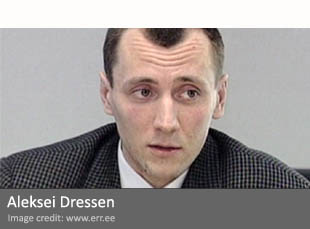
►►Estonia security official and wife jailed for treason. Aleksei Dressen, a former security official at Estonia’s Interior Ministry, and his wife, Viktoria, were both convicted of treason, receiving 16 years and 6 years respectively. During a closed trial the proceedings did not provide direct evidence as to whom Dressen and his wife were working for. However, reports indicate that Dressen’s handlers were most likely representatives of Russia’s FSB.  The prosecution alleged that Dressen brought classified state secrets from the Estonian Interior Ministry to the airport in an envelope and then passed them along to his wife, who acted as a courier to Russian handlers. Heili Sepp, the Estonian prosecutor, indicated that the sentencing of the Dressens was part of a plea bargain effort, noting: “To our knowledge, this is the harshest punishment meted out in plea bargain proceedings in Estonia”.

News you may have missed #755

Jeffrey Paul DelisleBy TIMOTHY W. COLEMAN | intelNews.org |
►►MI5 chief says al-Qaeda threatens UK from Arab Spring nations. Brittan’s domestic intelligence agency chief, Jonathan Evans, has stated that al-Qaeda is continuing to gather a foothold in nations that experienced the Arab Spring. In his speech, Evans, who directs the UK’s MI5, warned that al-Qaeda is attempting to reestablish itself in countries that had revolted, and that “a small number of British would-be jihadis [sic] are also making their way to Arab countries to seek training and opportunities for militant activity, as they do in Somalia and Yemen. Some will return to the UK and pose a threat here”. With a suspected 100-200 British born Islamist militants operating in the Middle East and Africa, the MI5 Director General warned that the coming summer Olympics in London made for an attractive target.
►►Russia to conduct airborne surveillance of Canada’s infrastructure. Canada’s National Post newspaper reports that Russian surveillance aircraft will conduct a flyover of Canada’s military and industrial infrastructure in what appears to be an annual Russian air reconnaissance mission. For the past ten years and under the Open Skies treaty, Russia is allowed to conduct flyovers of key Canadian sites. This will be the first flyover since the arrest last January of Jeffrey Paul Delisle (pictured), a Royal Canadian Navy officer, for allegedly spying on Canada on behalf of the Russians.
►►Japanese official who leaked DRPK missile info found dead. A Japanese Foreign Ministry official, who was largely thought to the source of leaked information regarding a Chinese missile technology transfer to North Korea in April, has been found dead. The official, previously under investigation for publicly disclosing national security information, was found hanged in his Chiba prefecture home on June 20. Additional details, including the individual’s name, were not made available, but Japanese government officials did indicate that the death did not appear to be suspicious.

News you may have missed #753

James ClapperBy IAN ALLEN | intelNews.org |
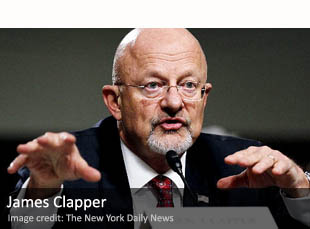
►►US spy agencies consider new polygraph questions. The US Director of National Intelligence, James Clapper, is considering a proposal to force intelligence agency employees to answer a direct question in their polygraph examinations about whether they have disclosed information to reporters. The Los Angeles Times quotes “officials familiar with the matter”, who say that Clapper is preparing “changes to the counterintelligence polygraph policy”, though “no final decisions have been made”.
►►Ex-“New Republic” editor speaks out against Pollard release. Few American journals can claim to have stood more staunchly by Israel than The New Republic. So we should be paying attention when Martin Peretz, who edited the magazine from 1974 until 2011, comes out against the proposed release of Jonathan Jay Pollard. Pollard is a former US Navy analyst, who is serving a life sentence for spying on the US for Israel. Peretz calls Pollard “a scoundrel spy” and reminds his readers that “before he decided to deliver reams of sensitive [US] intelligence and defense documents to Israel’s security apparatus, [Pollard] was negotiating with Pakistan […] to do similar chores for it”.
►►UK leader considered using special forces to seize Russian ship. British Prime Minister David Cameron considered ordering British special forces to board and impound a Russian ship suspected of carrying arms to Russian ally Syria, it has emerged. The ship, MV Alaed, was sailing in British waters when the US placed pressure on Britain to halt it. But the Russian ship suddenly changed course about 50 miles off the north coast of Scotland and it is showing that its next port of call is Murmansk, in Russia.

News you may have missed #751

Leonid ShebarshinBy IAN ALLEN | intelNews.org |
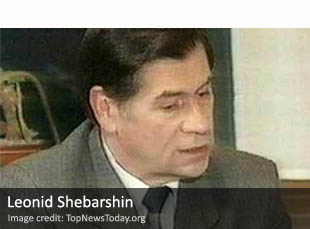
►►Ex-CIA officer remembers his KGB rival. In April, Leonid Shebarshin, a retired General of the KGB, who was often referred to as “the last Soviet spy”, was found dead in his downtown Moscow apartment. Apparently, he had committed suicide. Now Milt Bearden, who was the CIA’s Chief of the Soviet/East European Division during the final years of the USSR, has written a piece in which he remembers Shebarshin. He says that, even though Shebarshin was “the closest thing [he] had to a main adversary” in the USSR, the two became friends in the late 1990s, despite the fact that Shebarshin remained a true believer in the USSR until the very end of his life.
►►NSA won’t reveal how many Americans it spied on. Last month, US Senators Ron Wyden and Mark Udall –both members of the US Senate’s Select Committee on Intelligence– asked the NSA how many persons inside the US it had spied upon since 2008. But Charles McCullough, the Inspector General of the Office of the Director of National Intelligence, has told the two Senators that giving such a figure of how many Americans were spied on was “beyond the capacity” of NSA’s oversight mechanisms, and that –ironically– looking into this matter would violate the privacy of American citizens.
►►Russian scientist who ‘spied for China’ freed. Igor Reshetin, the former director of Russian rocket technology firm TsNIIMASH-Export, who was jailed in 2007 for selling state secrets to China, has been released on parole. Reshetin had been initially sentenced to nearly 12 years, for illegally selling state-controlled technology secrets to a Chinese firm, and with stealing 30 million rubles (US$925,000) through a scheme involving bogus companies. His initial sentence was later reduced on appeal.

Russian professors jailed for passing military secrets to China

The R-30 BulavaBy IAN ALLEN | intelNews.org |
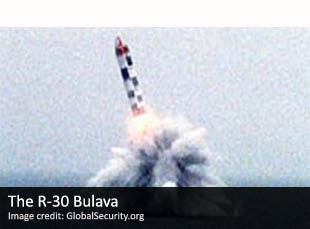
Two Russian professors were convicted yesterday of handing over to Chinese government agents highly classified technical details about one of Russia’s most secretive military projects. Svyatoslav Bobyshev and Yevgeny Afanasyev, both employees of the military-affiliated Baltic State Technological University in St. Petersburg, had been arrested in March 2010 on suspicion of spying for a foreign government. The two have now been sentenced by the St. Petersburg City Court to 12 and 12 ½ years in prison respectively, after having been found guilty of treason. According to the court documents, Bobyshev and Afanasyev traveled to China in 2009, where they passed on to Chinese military intelligence officers highly secret technical details about Russia’s R-30 Bulava ballistic missile. Specifically, the two professors are accused of sharing information relating to Bulava’s underwater launch specifications. Additionally, the Russian government prosecutor said that the two were preparing to provide the Chinese with information about two of Russia’s land-based missile systems, the Topol-M and Iskander. The R-30 Bulava (the Russian word for “mace”) is the name for Moscow’s latest-generation submarine-based ballistic missile technology. It is widely considered to be one of the future cornerstones of Russia’s nuclear weapons capability, and is thought to be the most expensive weapons project currently being developed in the country. The missile was approved for production last year, and is expected to come to service this coming October, when it will begin to replace Russia’s Soviet-era stock of submarine-launched nuclear missiles. Read more of this post

News you may have missed #744

Navi PillayBy IAN ALLEN | intelNews.org |
►►Source says Mikhailov ‘will not be exchanged’ with US. There are rumors going around that the US might consider exchanging Russian arms merchant Viktor Bout, who is serving a 25-year sentence in a New York prison, for one or more CIA spies currently being held in Russian prisons. Russian news agency RIA Novosti has cited a “high ranking official in the Russian security services”, who suggests that Bout “might be exchanged”, but not with Valery Mikhailov, a Russian former counterintelligence officer, who was sentenced this week to 18 years in prison for allegedly spying for the CIA.
►►CIA preparing to pull back from Iraq. The US Central Intelligence Agency is preparing to cut its presence in Iraq to less than half of wartime levels, according to The Wall Street Journal, which cites “US officials familiar with the planning”. Under the plans being considered, says the paper, the CIA’s presence in Iraq would be reduced to 40% of wartime levels, when Baghdad was the largest CIA station in the world with more than 700 agency personnel. Interestingly, the plan would also reduce the US intelligence presence in the region as neighboring Syria appears to be verging on civil war.
►►Senior UN official blasts US drone strikes. The United Nations High Commissioner for Human Rights, Navi Pillay, has said US drone attacks in Pakistan “raise serious questions about compliance with international law, in particular the principle of distinction and proportionality”. She also voiced concerns that the strikes were being conducted “beyond effective and transparent mechanisms of civilian or military control”. IntelNews provided this opinion on the matter, in 2009.

Russian colonel was ‘most successful CIA spy’ in recent years

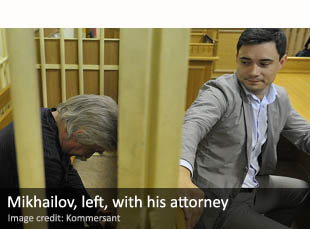
Valery Mikhailov, left, with his attorneyBy JOSEPH FITSANAKIS | intelNews.org |
Before the dust could settle from last month’s closed-door trial of Vladimir Lazar, and the arrest of an unnamed missile engineer on charges of espionage, Russia claims to have exposed yet another spy. Valery Mikhailov, a retired Russian counterintelligence officer, has been given an 18-year prison sentence for allegedly spying on behalf of the United States Central Intelligence Agency. In disclosing Mikhailov’s sentence yesterday, Moscow District Military Court officials were deliberately vague about Mikhailov’s alleged espionage activities, and provided limited information on the precise charges against him. But reporters, who were not allowed to attend Mikhailov’s trial, were told that he voluntarily approached CIA officers in Russia in 2001 and offered to spy on his country on behalf of the US, in exchange for regular payments in cash. Russian government prosecutors said that, from 2001 until 2007, when his activities were detected by Russia’s Federal Security Service (FSB), Mikhailov gave his American handlers access to over a thousand copies of secret or top-secret documents. Most of these, according to reports in the Russian media, had been prepared by FSB analysts for top-level Russian government officials, including the President, Prime Minister, and members of the Security Council of the Russian Federation. Russian government prosecutors say that Mikhailov was arrested following an extensive period of surveillance by the FSB, which allegedly resulted in the capture of an American CIA courier. The latter was apprehended while surreptitiously collecting classified documents copied by Mikhailov. Following his arrest, Mikhailov is said to have admitted that he earned over $2 million from his espionage activities. Read more of this post

News you may have missed #743 (espionage edition)

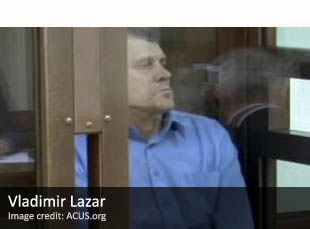
Vladimir LazarBy IAN ALLEN | intelNews.org |
►►Denmark professor jailed for spying. Timo Kivimäki a Finnish professor of international politics in Copenhagen, Denmark, has been sentenced to five months in prison for spying, following a trial held behind closed doors, from which even the verdict was not released. Several Russian diplomats left Denmark after the start of the spy case and, according to Danish media, Kivimäki’s lawyer, Anders Nemeth, had attempted to have them return to act as witnesses.
►►Retired Russian colonel convicted of spying for US. A Russian court has ruled that retired Colonel Vladimir Lazar spied for the US, and sentenced him to 12 years in prison. Lazar will be sent to a high-security prison and stripped of his military rank, the Federal Security Service said in a statement. Prosecutors said Lazar purchased several computer disks with more than 7,000 images of classified maps of Russia from a collector in 2008 and smuggled them to neighboring Belarus, where he gave them to an alleged American intelligence agent.
►►India arrests military intel staffer for spying. The soldier, identified only as Shivdasan, worked for the Indian Army’s Technical Support Division, which is a newly founded unit within Indian Military Intelligence. He was reportedly trapped by the Indian Directorate of Revenue Intelligence in an elaborate operation that involved a “double agent” and a relative of the soldier in Dubai.

News you may have missed #740

Timo KivimäkiBy IAN ALLEN | intelNews.org |
►►Denmark professor accused of spying challenges court secrecy. Timo Kivimäki, a Finnish humanities professor at the University of Copenhagen, is accused of spying for the Russians and is being tried at the city court in the Danish city of Glostrup behind closed doors, meaning no information about the trial, including the precise charges, can be disseminated. But following demands from both Kivimäki’s lawyer and the Danish media, he has been granted permission to appeal against the decision to hold the trial in secret.
►►Analysis: CIA’s links with Hollywood are longstanding. Some US officials are suggesting that the producers of a new motion picture, which deals with the raid that killed al-Qaeda founder Osama bin Laden, received “extremely close, unprecedented and potentially dangerous collaboration” from the Obama administration, and particularly the US Intelligence Community. In light of this, a well-researched article in The Los Angeles Times reminds readers that the close connection between the movie industry and the US military and intelligence community goes back decades. The US military has been using movies to drive up recruitment since the 1920s; and the CIA these days even posts potential movie story lines on its website.
►►CIA funds helped launch literary journal. The Paris Review has been hailed by Time magazine as the “biggest ‘little magazine’ in history”. At the celebration of its 200th issue this spring, current editors and board members ran down the roster of literary heavyweights it helped launch since its first issue in 1953. Philip Roth, V. S. Naipaul, T.C. Boyle, Edward P. Jones and Rick Moody published their first stories in The Review; Jack Kerouac, Jim Carroll, Jonathan Franzen and Jeffrey Eugenides all had important early stories in its pages. But as American novelist Peter Matthiessen has told interviewers –most recently at Penn State– the journal also began as part of his CIA cover.

Comment: US helped Canada nab accused spy Jeff Delisle

Jeffrey Paul DelisleBy JOSEPH FITSANAKIS | intelNews.org |
Back in January of this year, when the Jeffrey Delisle spy affair made headlines around the world, I spoke with several journalists from The Globe & Mail, The Canadian Press, and other Canadian news outlets. Most of them were –rightly– curious about the role of the United States in the affair, in which Sub-Lieutenant Delisle, who had been employed at Canada’s ultra-secure TRINITY communications center in Halifax, was accused of spying for a foreign power. I told them that, given that Trinity handled –aside from Canadian– NATO communications, Canada was in fact obligated to notify all of its NATO partners about the suspected penetration. That aside, I said that it could be “safely assumed” that US counterintelligence agencies were “fully involved in the Delisle case, and probably ha[d] been for several months”. By the latter phrase, I implied that US counterintelligence agencies had been closely involved in helping their Canadian counterparts build their case against Delisle. Now a new report in The Globe & Mail suggests that US counterintelligence officials “supplied vital information” to their Canadian colleagues during “the early days of the investigation” into the Delisle affair. The article says that the full extent of what the Americans told Canadian authorities remains unclear; but it quotes “a source familiar with the matter”, who claims that the US “helped Canada build its investigation”, not necessarily by providing a single tipoff clue, but through “an accumulation of information”. The paper adds that Washington’s involvement in the investigation from an early stage “adds a key new detail to [the] story”. Not necessarily, I would argue. Read more of this post

Is US considering transferring convicted arms smuggler to Russia?

Viktor BoutBy JOSEPH FITSANAKIS | intelNews.org |
Former Soviet military intelligence officer Viktor Bout is one of the world’s most notorious weapons dealers. In 2008, Bout, known informally as ‘the merchant of death’, was finally arrested in Bangkok by the United States Drug Enforcement Administration, with the cooperation of the Royal Thai Police. He was eventually extradited to the US and convicted to a 25-year prison term, which he is serving at the Brooklyn Metropolitan Detention Center in New York. Last week, it emerged that the US Bureau of Prisons was about to transfer Bout to the Florence Federal Correctional Facility in Colorado. Widely referred to as ‘Supermax’, the Florence facility houses some of America’s most notorious prison inmates. It seems a proper fit for someone like Bout, who for decades supplied weapons to African warlords, who is accused by the United States of having supplied weapons to the Taliban, and who was arrested while trying to sell arms to the Revolutionary Armed Forces of Colombia (FARC). On Tuesday, however, it was suddenly reported that the Bureau had decided to delay Bout’s transfer to Supermax. Bout’s attorney, Albert Y. Dayan, said he had been notified in a letter that the Bureau was “re-evaluating where to send Bout” and that it was “reconsidering its plan” to send the notorious weapons merchant to the Colorado maximum security facility. As might be expected, Dayan called the news “a credit [to] the Bureau of Prisons and the US Attorney’s office”; but the question, of course, is why did the Bureau decide on the delay, and what does the US Department of Justice know about it? The answer could perhaps be found in an interview given on Wednesday by no other than the US Attorney General, Eric Holder. Read more of this post

Russia charges engineer with spying for foreign agency

The R-30 BulavaBy JOSEPH FITSANAKIS | intelNews.org |
Russian authorities have charged an engineer working at a top-secret military facility in the Urals with espionage, accusing him of passing classified information about Russian ballistic missiles to agents of a foreign government. According to the InterFax news agency, which has strong links with the Russian government, the engineer had disclosed “secret data [and] state secrets concerning the area of strategic defense systems “. The Moscow-based news agency quoted an unnamed “Russian law enforcement official” who said that the accused spy worked at a critical research and development position inside a “restricted government facility that develops missile technology”. The source told InterFax that the alleged spy was working on the Russian R-30 Bulava ballistic missile, which is said to be in its final development stage. The R-30 Bulava (the Russian word for “mace”) is the name for Moscow’s latest-generation submarine-based ballistic missile technology. It is widely considered to be one of the future cornerstones of Russia’s nuclear weapons capability, and is thought to be the most expensive weapons project currently being developed in the country. The missile was approved for production last year, and is expected to come to service this coming October, when it will begin to replace Russia’s Soviet-era stock of submarine-launched nuclear missiles. The program is strongly linked to the country’s Borei-class ballistic-missile-capable nuclear submarines, which are expected to be able to launch the R-30 Bulava while underwater and in motion. Read more of this post