Germany launches probe into poisoning of ex-KGB colonel

KGB seal

KGB seal

By JOSEPH FITSANAKIS | intelNews.org |
An official government probe into the alleged poisoning of a Russian former KGB colonel and his wife has been launched in Berlin, German officials have announced. Regular intelNews visitors will recall the recent case of Viktor Kalashnikov, a former colonel and authority on military matters for the Soviet KGB, who was taken in critical condition to a Berlin hospital along with his wife, Marina. The two were found to have over ten times the highest permissible level of mercury in their blood, which, according to medical experts, points to a deliberate poisoning attempt. The case intrigued German officials, since the Kalashnikovs, who moved to Germany last September, are known in Russia as vocal critics of the Putin-Medvedev administration. The two have co-authored scathing critiques accusing Moscow of manipulating the separatist Chechen movement in order to create “a national security state” in Russia. Read more of this post

Comment: Russian Espionage Steals 2010 Limelight

GRU emblem

GRU emblem

By JOSEPH FITSANAKIS | intelNews.org |
As the first decade of the 21st century is coming to an end, few would dispute that Israeli and American spy agencies have been among the most talked-about intelligence organizations of 2010. The reasons for this are equally undeniable: the United States tops the list because of its political prominence, which inevitably attracts media attention; Israel tops it because of the sheer ferocity of its espionage output throughout the Middle East. And yet there is nothing new about this, since neither the Central Intelligence Agency nor the Mossad are exactly novices when it comes to high-profile media exposures. The same cannot be said with respect to Russian intelligence agencies, which went through a period of prolonged hibernation following the end of the Cold War. Indeed, the year that is about to end demonstrates that the stagnant interlude in Russian espionage may well be in its closing stages.

Read more of this post

News you may have missed #461

  • London expels Russian diplomat for spying. Britain’s troubled relations with Moscow suffered another blow on Tuesday, when London announced the expulsion of an unnamed Russian diplomat in London following “clear evidence” of spying. The request was communicated to the Kremlin on December 10, and was reportedly countered by Russia with a tit-for-tat expulsion of a British diplomat from the country.
  • Syria saw Israel behind aide’s assassination, leaked cables show. Syria suspected Israel of carrying out the murder of Brigadier General Mohammed Sleiman, a top security aide of President Bashar al-Assad, who was assassinated by a sniper in August of 2008, according to US diplomatic cables leaked by WikiLeaks. The killing empowered hardliners in Syria and put an end to moves by President al-Assad for rapprochement between Damascus and Tel Aviv, according to the cables.
  • Israel to publicly press for release of spy held in US. Israeli Prime Minister Benjamin Netanyahu plans to officially and publicly appeal to US President Barack Obama in the coming days for the release of Jonathan Jay Pollard, an American serving a life term in a US jail for spying on the US for Israel.

News you may have missed #460

German police probe poisoning of ex-KGB colonel

KGB seal

KGB seal

By JOSEPH FITSANAKIS | intelNews.org |
Police in Berlin are investigating a possible attempt to assassinate a Russian former KGB operative and his wife, through mercury poisoning. According to German newsmagazine Focus, Viktor Kalashnikov, a former colonel and authority on military matters for the Soviet KGB, was taken in critical condition to a Berlin hospital along with his wife, Marina. The two were found to have over ten times the highest permissible level of mercury in their blood, which, according to medical experts, points to a deliberate poisoning attempt. Colonel Kalashnikov, who arrived in Germany three months ago, is known as one of the Russian government’s harshest critics. He became famous in the 1990s, when he joined other former KGB operatives —most notably the late Alexander Litvinenko, who was assassinated in 2007, and whose widow is also named Marina— in accusing the Russian administration of Vladimir Putin of manipulating the separatist Chechen movement in order to solidify his vision of “a national security state” in Russia. Read more of this post
News you may have missed #459 (Russia edition)

  • Son of CIA double spy strikes deal with FBI. Nathan Nicholson, son of CIA officer Harold James Nicholson, who in 1997 was jailed for spying for Russia, has avoided a prison sentence after promising to help the FBI build a new case against his father. The latter has pleaded guilty to enlisting his son from prison to sell the Russians more secrets and collect money owed to him by the Russian spy services.
  • Moscow warns UK of tit-for-tat expulsions. Alexander Sternik, the Russian government’s senior official in Britain, has hinted that any attempt to deport parliamentary assistant Katia Zatuliveter, detained by MI5 for allegedly spying for Russia, could result in tit-for-tat expulsions.
  • Kim Philby honored by plaque at Moscow SVR HQ. Russia has honored British Cold War spy Kim Philby with a plaque at the headquarters of the country’s foreign intelligence agency. Philby, who defected to the Soviet Union in 1963, is depicted in a sculptured portrait on the plaque as the two-faced Roman god Janus.

News you may have missed #458

  • More arrests of alleged Russian agents in Georgia. The government of Georgia arrested six people suspected of being agents for Russia and accused them of staging a series of explosions, including one outside the US embassy in capital Tbilisi. At least 13 more people were arrested last month in Georgia, and are facing charges of spying for Moscow.
  • Iran defector says Tehran hosted N. Korean techs. Mohammad Reza Heydari, who resigned in January from his post as Iranian consul in Norway, and defected to the West, has told a conference in Paris that he saw North Korean technicians “repeatedly” travel to Iran.
  • Spy scandal MP helped second Russian woman stay in UK. British Liberal Democrat parliamentarian Mike Hancock, whose assistant, Katia Zatuliveter, is accused by MI5 of spying for Russia, helped 25-year-old Russian citizen Ekaterina Paderina stay in Britain after she ran into visa problems, in the late 1990s.

Some spy news in the shadow of WikiLeaks’ revelations

Katia Zatuliveter

Katia Zatuliveter

By JOSEPH FITSANAKIS | intelNews.org |
The WikiLeaks revelations continue, and so does the global news storm concerning the whistleblower site. Obviously, the news value of the WikiLeaks disclosures is unquestionable. However, there are notable intelligence-related developments taking place outside the now-familiarWikiLeaks context. Take for instance the recent arrest of what appears to be a Polish spy in Limassol, Cyprus. The unidentified man, who was reportedly detained in the vicinity of a Greek-Cypriot military base on the island, was carrying “a camera containing photos of National Guard posts, a laptop, two mobile phones, five memory cards, a GPS system and three pairs of binoculars”. Another interesting development concerns the arrest on espionage charges of Katia Zatuliveter, a Russian citizen who works as an assistant to British Member of Parliament Mike Hancock. Zatuliveter is expected to be deported on the basis of evidence gathered by MI5, Britain’s counterintelligence service, which has apparently been monitoring her for several months. Interestingly, Mr. Hancock, who is a member of the British House of Commons’ Defence Select Committee, is standing by his assistant. Read more of this post

FBI allegedly looking for Russian spy inside NSA

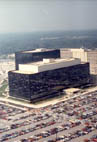
NSA Headquarters

NSA HQ

By IAN ALLEN | intelNews.org |
American counterintelligence investigators are allegedly trying to uncover at least one Russian-handled double agent operating inside the US National Security Agency (NSA), according to information published on Wednesday in The Washington Times. The paper based its allegation on an interview with an anonymous “former intelligence official” with close ties to the NSA —America’s largest intelligence agency, which is tasked with worldwide communications surveillance as well as communications security. The anonymous source told the Times that the probe is directly connected to the arrest of nearly a dozen Russian deep-cover operatives by the FBI last summer. Washington eventually exchanged the Russian spies with several Western-handled Russian operatives captured by Moscow and held in Russian prisons. But the FBI allegedly believes that the deep-cover operatives, most of whom used false identity papers and had lived in the US for years, were primarily tasked with aiding at least one Russian-handled double spy operating inside the NSA’s Forge George F. Meade headquarters, in the US state of Maryland. Read more of this post

News you may have missed #457

  • Belgium investigates Colombian spying allegations. Judicial authorities in Brussels have formally opened an investigation into the alleged spying activities of Colombia’s foreign intelligence agency, DAS, in Belgium. The investigation is in response to claims by human rights organizations that the DAS broke Belgium’s espionage laws and spied on European Union politicians.
  • Russia reshuffles foreign intelligence after spy scandal. Russia’s foreign intelligence service, the SVR, is holding a “minor staff reshuffle” following last summer’s Russian-American spy scandal, in which 10 alleged deep-cover Russian spies were arrested in the United States.
  • Israel gets new spy chief amid big shuffle. Israel’s Prime Minister Binyamin Netanyahu has appointed Tamir Pardo, a veteran spy, as the new chief of the Mossad, Israel’s foreign intelligence service. Pardo, who was twice deputy director of the Mossad, will replace hard-charging former army general and black operations specialist Meir Dagan, who has run the agency since 2002.

News you may have missed #454

  • Georgia lets Russian envoy visit jailed spy suspect. Georgia says it has allowed a representative of the Russian consulate to meet with a Russian citizen detained on charges of espionage. The jailed man is one of 13 individuals suspected of spying for Russia, who were arrested by Georgian counterintelligence earlier this month. Four of the detained suspects are Russian citizens and nine are Georgian nationals.
  • Danish agency aware of CIA spying since 2004. The Danish security services have released a statement saying they have known since 2004 that the US Embassy in Copenhagen was collecting information on Danish citizens. Last week, several Scandinavian countries launched investigations into the activities of intelligence gathering networks employed by US embassies.
  • Iran charges German reporters with espionage. Iranian officers detained the journalists, who were pretending to be tourists, as they conducted an interview with the son of Sakineh Mohammadi Ashtiani, a 43-year-old mother of two, condemned to death by stoning.

Did FSB leak Russian double spy’s name to the media?

SVR seal

SVR seal

By JOSEPH FITSANAKIS | intelNews.org |
The revelation that a double agent betrayed the ten Russian deep-cover spies, who were arrested in the United States last summer, may have been leaked to the media as part of a turf war between two rival Russian spy agencies. On November 11, Russian newspaper Kommersant disclosed that a senior officer in Russia’s Foreign Intelligence Service (SVR) had defected to the United States shortly before the arrest of ten Russian deep-cover spies by the FBI, on June 27, 2010. The paper identified the alleged double agent as “Colonel Shcherbakov”, believed by veteran KGB officer Oleg Kalugin to be Aleksandr Vasilyevich Shcherbakov. The Kommersant disclosure was later confirmed by no other than Russian President Dmitry Medvedev. But who leaked Shcherbakov’s name to Kommersant, and why? According to Pavel Felgenhauer, military and intelligence correspondent for Russia’s Novaya Gazeta newspaper, the leak originated from within the Russian intelligence establishment. Specifically, Felgenhauer suggests that it was Russia’s Federal Security Service (FSB) that leaked the information to the media, in an attempt to score points against the SVR. Read more of this post

News you may have missed #452

  • Britain’s GCHQ turns to Google for help. GCHQ, Britain’s Cheltenham-based signals intelligence agency, is recruiting an expert on MapReduce, the patented number-crunching technique developed by Google to distribute the load of billions of web searches across its cluster of hundreds of thousands of commodity servers.
  • CIA double agent pleads guilty from prison. CIA officer Harold James Nicholson, who in 1997 was jailed for spying for Russia, has pleaded guilty to enlisting his son Nathan to sell the Russians more secrets and collect money owed to him by the Russian spy services.
  • Georgia offers to negotiate with Russia over spies. Tbilisi is ready for negotiations with Moscow on the repatriation of several alleged Russian spies arrested in Georgia, the country’s Deputy Foreign Minister Nino Kalandadze has said.

News you may have missed #448

  • Russian intel source threatens WikiLeaks. A Russian secret services expert has denied that whistleblower website WikiLeaks poses a threat to Russia, and warned that the “right team” of people could simply shut down WikiLeaks “forever” if it posts classified Russian government documents.
  • UK female spy gave rare interview about WWII exploits. It has emerged that British wartime spy Eileen Nearne, who died aged 89 in September, and whose exploits echoed the fictional character Charlotte Gray, gave an interview 13 years ago –in disguise– in which she told how she was tortured by the Gestapo.
  • Lebanon sentences 3 to death for spying for Israel. A Lebanese military court on Monday sentenced three people to death for spying for Israel. Two of the Lebanese nationals, Sami Farhat and Amar al-Halabi, were sentenced in absentia because they have fled the country. The third man, Jawdat el-Hakim, is held by Lebanese authorities. Dozens of alleged Israeli spy cells have been uncovered in Lebanon in the past year.

News you may have missed #447

  • UK MI6 chief speaks publicly for the first time. Sir John Sawers, the head of Britain’s Secret Intelligence Service, also known as MI6, has delivered what he said was the first public address by a serving chief of the agency in its 101-year history.
  • WikiLeaks to release secret Russia, China logs. Whistleblower website WikiLeaks, which has published hundreds of US war logs, is preparing to release secret files from Russia and China, Russian newspaper Kommersant said on Tuesday.
  • Renegade CIA agent’s papers acquired by NYU. The private papers of the late Philip Agee, the disaffected CIA operative whose unauthorized publication of agency secrets 35 years ago was arguably far more controversial than anything WikiLeaks has produced, have been obtained by New York University, which plans to make them public next spring.