Russia-US spy swap plan was almost shelved, say Russian media

Igor Sutyagin

Igor Sutyagin

By IAN ALLEN | intelNews.org |
The unprecedented spy exchange between Russia and the United States nearly failed, after American and Russian planners came across several unforeseen problems during the run-up to the swap. Moscow-based daily newspaper Moskovsky Komzomolez cited a confidential source in Russian intelligence, who said that Washington almost cancelled the exchange deal in the early hours of July 9. This was after Russian media published the names of the four jailed Russian citizens who were to be given up by Moscow, in exchange for the ten Russian deep-cover spies arrested by the FBI in several US cities in June. The agreement almost came to a standstill again a few hours later, after Russian nuclear weapons expert Igor Sutyagin refused to officially admit guilt, a step that was required for the planned exchange to take place. The Russian scientist, who chaired a division in the Russian Academy of Sciences’ USA and Canada Institute, was serving a 15-year sentence for allegedly passing state secrets to a foreign company that was a front for the CIA. Read more of this post

News you may have missed #390 (Russia-US spy swap edition I)

  • In spy swap, agents were pawns in a practiced game. The US arrests were not made to facilitate a swap, said a US official, speaking on condition of anonymity. Rather, they were precipitated, at least partly, by the plans of several of the Russians to leave this country this summer.
  • Russian spies get tepid reception in Moscow. The 10 spies who pleaded guilty to acting as foreign agents in the United States, including one Peruvian, were given a tepid, uneasy reception in Russia on Friday. State-controlled national television channels reported their return briefly, with no patriotic fervor. No national TV channels carried live coverage of the plane’s landing, even though it was available from international news agencies.
  • Russian, US spies start new lives but mystery swirls. The 14 spies swapped by Moscow and Washington were starting new lives in Russia and the West last weekend, but mystery shrouded their precise whereabouts. In one case, Igor Sutyagin, a Russian nuclear arms expert who allegedly spied for the US, found himself at a hotel somewhere in Britain, without a visa and still wearing his Russian prison clothes.

Bookmark and Share

Dead defector not connected to Russian spies, insists friend

Sergei Tretyakov

Sergei Tretyakov

By IAN ALLEN | intelNews.org |
On July 2, based on an excellent analysis by Stratfor of the 10 Russian deep-cover agents arrested in the US in June, we entertained the possibility that Sergei Tretyakov, a senior Russian SVR agent who defected to the US in 2000, may have helped the FBI identify the Russian spy ring. Last Friday, it emerged that 53-year-old Tretyakov had died at his home in Florida. When he defected to the US, along with his wife and daughter, Tretyakov was second-in-command at the SVR (Russian external intelligence) station operating out of Russia’s United Nations mission in New York. This is the same outfit that coordinated the 10 Russian deep-cover agents arrested by the FBI in June. Tretyakov’s death was announced by the late Russian spy’s friend and confidante Pete Earley, who in 2008 wrote a book about the defector. It is worth noting that Tretyakov actually died on June 13, but his wife, Helen Tretyakov, requested that his death not be publicly announced until the precise cause of death was determined. Read more of this post

Russia, US, in largest spy swap since World War II

Igor Sutyagin

Igor Sutyagin

By IAN ALLEN | intelNews.org |
The Russian and American governments have agreed to conduct one of history’s largest spy exchanges, as ten Russian agents captured in the US last month have been swapped for four Russian citizens imprisoned by Moscow for spying for the US and Britain. The ten Russians arrested by the FBI in June were non-official-cover (NOC) operatives, otherwise known as ‘illegals’, a term used to identify deep-cover intelligence operatives not associated with a country’s diplomatic representation. According to reports, they were all instructed by the SVR, Russia’s equivalent of MI6, which is responsible for all foreign intelligence operations abroad, to plead guilty to “acting as unregistered foreign agents” a charge not equivalent to espionage in either seriousness or repercussions. They were then legally forbidden from ever returning to the United States and summarily expelled. They were taken from the courtroom directly to the airport, where they boarded a plane to Vienna, Austria. In return, Russian government sources have confirmed that four Russian citizens, arrested in recent years for spying on behalf of the US or Britain, will be released from prison and delivered to US authorities. Read more of this post

Austrian probe finds Chechen president behind Vienna killing

Ramzan Kadyrov

Ramzan Kadyrov

By IAN ALLEN | intelNews.org |
A report by Austrian government officials has found that the Moscow-appointed President of Chechnya ordered the 2009 assassination in Vienna of a Chechen dissident, who had been given political asylum by Austrian authorities. In 2009, Umar Israilov, who was once a bodyguard of Chechen President Ramzan Kadyrov, alleged in Vienna and in the European Court of Human Rights in Strasbourg that Kadyrov had “personally participated in the torture of detainees”. But on January 13, 2009, Israilov was shot dead by two men in broad daylight outside a grocery store located less than two miles from Vienna’s historic city center. Now the Vienna Office for the Protection of the Constitution and Counterterrorism has said in a detailed report that Israilov’s murder was a political assassination ordered personally by Chechen President Kadyrov, who is a close ally of Russian President Vladimir Putin. Read more of this post

News you may have missed #384


Bookmark and Share

News you may have missed #383 (Russian spy ring edition IV)

  • Analysis: Why Russia and the US still spy. The sensationalist media coverage of the FBI’s recent bust of a Russian spy ring in the US has failed to examine this development in light of the post-Cold War relations between Russia and the United States. The fact is that espionage will continue, even as the United States and Russia work out a new post-Cold War modus vivendi, says Peter Earnest, a 35-year CIA veteran.
  • Analysis: The lure of the SVR. For most Russians, getting a job in the country’s vast bureaucracy is a happy career step. Even more glamorous is the FSB, Russia’s ubiquitous domestic intelligence service. But the most prestigious agency of all is still the SVR, Russia’s equivalent of MI6, which is responsible for all foreign intelligence operations abroad, including the long-term, deep cover espionage ring just busted by the FBI. The Cold War may be over, but the SVR still offers a globe-trotting career for a small, elite group of ambitious graduates with the right connections.
  • Analysis: Was the Russian spy operation worth the trouble? The FBI has alleged no espionage or loss of classified materials as a result of the operations of the 11-member Russian spy ring. Indeed, much of what it maintains the Russians were seeking could be gleaned from a Google search. So the wider ramifications of the spy arrests may turn out to be primarily political rather than cloak-and-dagger.

Bookmark and Share

Analysis: What we know about the Russian spy ring case

SVR seal

SVR seal

By JOSEPH FITSANAKIS | intelNews.org |
If you are frustrated with the increasingly idiotic and sex-obsessed media coverage of the Russian spy ring recently busted by the FBI, you are not alone. Less than a week since news of the arrests in the US of ten alleged deep-cover agents of Russia’s SVR intelligence agency emerged, sensationalist media hacks have left no stone unturned. Thankfully, Stratfor Global Intelligence has produced an excellent early summary of this developing story, complete with a useful diagram of the known members of the SVR spy ring. The summary correctly points out some of the critical issues in the espionage case, including the fact that the 11 suspects appeared to be primarily run out of the SVR residence at the Russian mission to the United Nations in New York, and not out of the Russian Embassy in Washington DC. Read more of this post

News you may have missed #382 (Russian spy ring edition III)

Bookmark and Share

News you may have missed #381 (Russian spy ring edition II)

  • Accused Russian spies lived perfect Boston lives. It is almost certain that the members of the Russian spy ring, arrested by the FBI last weekend, trained for years in Moscow’s most elite SVR intelligence school to pass as Canadians or Americans. Their real-life identities and backgrounds may never be learned.
  • Russian spies blended well, sought contacts. The 11 people arrested and accused of being members of a Russian spy ring operating under deep cover in America’s suburbs were active in the East Coast networking circuit.
  • Kremlin adopts calmer tone on US spy affair. Moscow on Wednesday softened its initially furious reaction to this week’s spy scandal in the US, when it said that the arrest of 11 people accused of working for Russian intelligence would not have a negative impact on bilateral relations. Earlier in the week, Vladimir Putin had accused US authorities of having “gone on a rampage”.

Bookmark and Share

Wanted Russian spy ring member skips bail in Cyprus

Achilleos Hotel

Achilleos Hotel

By JOSEPH FITSANAKIS | intelNews.org |
Police in the Mediterranean island nation of Cyprus have issued an arrest warrant for a member of an alleged Russian spy ring in the United States, who had been released on bail following his capture on Tuesday. The FBI says that Christopher R. Metsos, who holds Canadian citizenship, was the financial go-between in the 11-member Russian spy ring, which was busted in a series of coordinated raids across several US states on Saturday. On June 25, Interpol issued an international arrest warrant for Metsos, who escaped arrest in the US because he was in Cyprus, where he had arrived on June 17. He was arrested at the island’s Larnaca International Airport on Tuesday, while trying to board a flight for Budapest, Hungary. Remarkably, however, Metsos was soon released on bail, awaiting an extradition request from Washington. Predictably, on Wednesday, he failed to report to Larnaca police, as stipulated in his bail release court order. Read more of this post

News you may have missed #380 (Russian spy ring edition I)

Bookmark and Share

FBI busts alleged Russian spy ring, 11 arrested [updated]

Anna Chapman

Anna Chapman

By JOSEPH FITSANAKIS | intelNews.org |
Ten members of an alleged Russian spy ring operating in America’s East Coast were arrested in a series of coordinated raids on Sunday. US Department of Justice insiders said that the arrests, which took place in Arlington, New Jersey, New York, and Boston, marked the culmination of an FBI counterintelligence operation initiated during the second administration of President Bill Clinton. It appears that the alleged Russian agents were non-official-cover (NOC) operatives, otherwise known as ‘illegals’, a term used to identify deep-cover intelligence operatives not associated with the diplomatic representation of the Russian Federation in the United States. Eight of the arrestees were married couples and all were using fake identities. Almost all are fluent in several languages; they include “Vicky Pelaez”, who worked for a New York Spanish-language newspaper, another woman identified as “Anna Chapman” (see photo), and “Mikhail Semenko”, who is said to be fluent in English, Spanish, Russian, and even Mandarin. An eleventh alleged member of the spy ring, named as “Christopher R. Metsos”, remains at large and is wanted by the FBI was captured by Greek-Cypriot authorities at Larnaca airport earlier today, while trying to board a flight for Hungary. Read more of this post

Senior Russian nuclear expert found dead in Malta

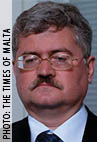
Alexander Pikayev

Alexander Pikayev

By JOSEPH FITSANAKIS | intelNews.org |
Authorities in Malta have reported the death of a senior Russian expert on nuclear disarmament, whose body was discovered in his holiday apartment. Dr. Alexander Pikayev, 48, was the director of the Department of Disarmament and Conflict Resolution at the Moscow-based Institute of World Economy and International Relations. His work on nuclear armaments policy is internationally recognized and he was among Russia’s most visible media commentators on issues relating to nuclear proliferation. But last Wednesday, Dr. Pikayev’s body was discovered lying on the floor of an apartment he owned in Bugibba, Malta, where he had been holidaying since earlier this month. The German Press Agency reports that the Russian scientist appeared to have “accidentally slipped” and hit his head on a door. Read more of this post

News you may have missed #370

  • Ukrainians ‘not spying any more’ on Russian FSB. Ukrainian counterintelligence services have stopped monitoring Russian Federal Security Service (FSB) officials stationed in Ukraine, according to a leading Ukrainian weekly. Ukrainian-Russian relations have dramatically improved since February, when Ukraine’s pro-Moscow leader Viktor Yanukovych was elected President.
  • US House votes to allow auditing of spy agencies. Despite several veto threats from the White House, the US House of Representatives has adopted an amendment to defense authorization bill HR 5136, which would give the Government Accountability Office the power to audit intelligence agencies.
  • Leading Turkish daily wiretapped. Turkish former deputy police chief Emin Aslan, who was arrested in 2009 in a drug trafficking investigation, says he was told in 2008 that the phone lines at Turkey’s leading daily Milliyet were wiretapped. The wiretapping appears to be connected to the notorious Ergenekon affair.

Bookmark and Share