News you may have missed #382 (Russian spy ring edition III)

Bookmark and Share

News you may have missed #381 (Russian spy ring edition II)

  • Accused Russian spies lived perfect Boston lives. It is almost certain that the members of the Russian spy ring, arrested by the FBI last weekend, trained for years in Moscow’s most elite SVR intelligence school to pass as Canadians or Americans. Their real-life identities and backgrounds may never be learned.
  • Russian spies blended well, sought contacts. The 11 people arrested and accused of being members of a Russian spy ring operating under deep cover in America’s suburbs were active in the East Coast networking circuit.
  • Kremlin adopts calmer tone on US spy affair. Moscow on Wednesday softened its initially furious reaction to this week’s spy scandal in the US, when it said that the arrest of 11 people accused of working for Russian intelligence would not have a negative impact on bilateral relations. Earlier in the week, Vladimir Putin had accused US authorities of having “gone on a rampage”.

Bookmark and Share

Wanted Russian spy ring member skips bail in Cyprus

Achilleos Hotel

Achilleos Hotel

By JOSEPH FITSANAKIS | intelNews.org |
Police in the Mediterranean island nation of Cyprus have issued an arrest warrant for a member of an alleged Russian spy ring in the United States, who had been released on bail following his capture on Tuesday. The FBI says that Christopher R. Metsos, who holds Canadian citizenship, was the financial go-between in the 11-member Russian spy ring, which was busted in a series of coordinated raids across several US states on Saturday. On June 25, Interpol issued an international arrest warrant for Metsos, who escaped arrest in the US because he was in Cyprus, where he had arrived on June 17. He was arrested at the island’s Larnaca International Airport on Tuesday, while trying to board a flight for Budapest, Hungary. Remarkably, however, Metsos was soon released on bail, awaiting an extradition request from Washington. Predictably, on Wednesday, he failed to report to Larnaca police, as stipulated in his bail release court order. Read more of this post

News you may have missed #380 (Russian spy ring edition I)

Bookmark and Share

FBI busts alleged Russian spy ring, 11 arrested [updated]

Anna Chapman

Anna Chapman

By JOSEPH FITSANAKIS | intelNews.org |
Ten members of an alleged Russian spy ring operating in America’s East Coast were arrested in a series of coordinated raids on Sunday. US Department of Justice insiders said that the arrests, which took place in Arlington, New Jersey, New York, and Boston, marked the culmination of an FBI counterintelligence operation initiated during the second administration of President Bill Clinton. It appears that the alleged Russian agents were non-official-cover (NOC) operatives, otherwise known as ‘illegals’, a term used to identify deep-cover intelligence operatives not associated with the diplomatic representation of the Russian Federation in the United States. Eight of the arrestees were married couples and all were using fake identities. Almost all are fluent in several languages; they include “Vicky Pelaez”, who worked for a New York Spanish-language newspaper, another woman identified as “Anna Chapman” (see photo), and “Mikhail Semenko”, who is said to be fluent in English, Spanish, Russian, and even Mandarin. An eleventh alleged member of the spy ring, named as “Christopher R. Metsos”, remains at large and is wanted by the FBI was captured by Greek-Cypriot authorities at Larnaca airport earlier today, while trying to board a flight for Hungary. Read more of this post

Senior Russian nuclear expert found dead in Malta

Alexander Pikayev

Alexander Pikayev

By JOSEPH FITSANAKIS | intelNews.org |
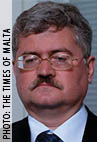
Authorities in Malta have reported the death of a senior Russian expert on nuclear disarmament, whose body was discovered in his holiday apartment. Dr. Alexander Pikayev, 48, was the director of the Department of Disarmament and Conflict Resolution at the Moscow-based Institute of World Economy and International Relations. His work on nuclear armaments policy is internationally recognized and he was among Russia’s most visible media commentators on issues relating to nuclear proliferation. But last Wednesday, Dr. Pikayev’s body was discovered lying on the floor of an apartment he owned in Bugibba, Malta, where he had been holidaying since earlier this month. The German Press Agency reports that the Russian scientist appeared to have “accidentally slipped” and hit his head on a door. Read more of this post

News you may have missed #370

  • Ukrainians ‘not spying any more’ on Russian FSB. Ukrainian counterintelligence services have stopped monitoring Russian Federal Security Service (FSB) officials stationed in Ukraine, according to a leading Ukrainian weekly. Ukrainian-Russian relations have dramatically improved since February, when Ukraine’s pro-Moscow leader Viktor Yanukovych was elected President.
  • US House votes to allow auditing of spy agencies. Despite several veto threats from the White House, the US House of Representatives has adopted an amendment to defense authorization bill HR 5136, which would give the Government Accountability Office the power to audit intelligence agencies.
  • Leading Turkish daily wiretapped. Turkish former deputy police chief Emin Aslan, who was arrested in 2009 in a drug trafficking investigation, says he was told in 2008 that the phone lines at Turkey’s leading daily Milliyet were wiretapped. The wiretapping appears to be connected to the notorious Ergenekon affair.

Bookmark and Share

News you may have missed #369

  • UN official criticizes US over drone attacks. The use of targeted killings by the CIA, with weapons like drone aircraft, poses a growing challenge to the international rule of law, according to Philip Alston, United Nations special rapporteur on extrajudicial killings.
  • Russian spies less active during Obama administration. The Czech Republic’s Military Intelligence Service said in its annual report on Tuesday that Russian agents have reduced their activities in the country since US President Barack Obama abandoned Bush-era plans for missile defense systems in Eastern Europe.
  • Analysis: A look back at US intelligence reform. The 2004 US Intelligence Reform and Terrorism Prevention Act was supposed to “address institutional obstacles that had complicated the intelligence community’s struggle to adapt to new technologies and a changing national security environment”. But five years later, many of those original obstacles remain in place.

Bookmark and Share

News you may have missed #353

  • Name of British Mossad agent handed to Interpol. Dubai police have identified another suspect in the January murder of Hamas operative Mahmoud al-Mabhouh, by Israeli intelligence agency Mossad. He is reportedly a 62-year-old British citizen, who is believed to be currently hiding in western Africa.
  • Russia jails man for spying for the US. Gennady Sipachyov, a Russian whose age and profession have been kept secret by Moscow, has been sentenced to a four-year sentence for allegedly emailing secret military maps identifying classified Russian military infrastructure to the US Pentagon in 2008. Earlier this month, a Russian court rejected an appeal by another alleged US spy, Igor Sutyagin.
  • Bulgarian government wants to copy CIA. Bulgaria’s Defense Minister, Anyu Angelov, has proposed the merging of intelligence services to create a mega-structure of the CIA type. Meanwhile, a panel investigating Bulgaria’s communist-era police files has exposed two of the country’s former counterintelligence heads as former communist state security agents.

Bookmark and Share

News you may have missed #341

  • Russian court rejects ‘spy’ scientist’s appeal. A Russian court has rejected an appeal for the release of academic Igor Sutyagin, former division head in the Russian Academy of Sciences’ USA and Canada Institute, who is serving a 15-year sentence for allegedly passing state secrets to foreign officials.
  • Ex-CIA agent’s arrest in VA was eventful, say sources. We reported earlier this week that Andrew M. Warren, the CIA’s Algiers station chief, who is accused of having drugged and raped two Algerian women at his official residence, was arrested at a Norfolk, Virginia motel, after he failed to show up for a court hearing. It now appears that Warren “had a gun in his waistband […] and officers used a taser to subdue him”.
  • Documents show CIA thought Gary Powers had defected. Declassified documents show the CIA did not believe that Gary Powers, who piloted the U2 spy plane shot down over Russia in 1960, causing the U2 incident, had been shot down. Instead, the agency spread the rumor that Powers “baled out and spent his first night as a defector in a Sverdlovsk nightclub”!

Bookmark and Share

Russian intelligence arrests, extradites fmr Kyrgyz interior minister

Moldomusa Kongantiyev

Kongantiyev

By JOSEPH FITSANAKIS | intelNews.org |
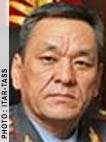
If there were any doubts that Russia is aggressively courting the new interim government in Kyrgyzstan, they were dispelled earlier today with the announcement that Russian authorities arrested the Central Asian republic’s former interior minister. Kyrgyzstan’s National Security State Service (NSSS) announced that Moldomusa Kongantiyev was arrested on Sunday in Moscow, by agents of Russia’s Federal Security Service (FSB), and will be extradited to Bishkek, where he will face charges of using state repression against demonstrators. Kongantiyev had escaped to Russia in mid-April, after he was abducted and viciously beaten by Kyrgyz opposition demonstrators, who released him after his family paid a significant amount of money as ransom. IntelNews hears that Kongantiyev suspected that Moscow planned to extradite him to Kyrgyzstan, and that some of the supporters of the deposed regime in Russia offered to hide him. But their attempt to smuggle him out of a hospital in Moscow, where he was receiving medical care, was thwarted by the FSB, after a tip from  NSSS. Read more of this post

Russian honey-trap may have affected aircraft carrier deal with India

Admiral Gorshkov

Admiral Gorshkov

By JOSEPH FITSANAKIS | intelNews.org |
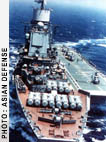
The recent court disclosure of an Indian engineer’s affair with a Russian woman has added fresh controversy in a multi-billion dollar deal gone sour between Russia and India, over the purchase of an aircraft carrier. In 2004, India purchased Admiral Gorshkov, a Soviet-built, 45,000-ton warship, for $974 million. But the negotiations between the two countries over the refit and repair project quickly deteriorated, with Sevmash Enterprise, the Russian shipyard in charge of the project, hiking the price twice in less than three years. At the end of fierce negotiations that scarred the bilateral defense relationship between the two countries, the Indian Navy was forced to pay in excess of $2.3 billion for the 30-year-old warship. In recent weeks, however, a series of explicit photographs were circulated, showing an unidentified Russian woman with Commodore Sukhjinder Singh, an Indian engineer whom the Indian Navy stationed in Russia and tasked him with overseeing Admiral Gorshkov’s refit from 2005 to 2007.   Read more of this post

News you may have missed #321 (CIA edition)

  • Uruguay ex-president sent to prison for 1973 coup. Declassified documents show that, at the time of the coup, Juan María Bordaberry told the US ambassador that “Uruguay’s democratic traditions and institutions […] were themselves the real threat to democracy”.
  • FSB ‘dropped the ball’ in Moscow metro bombings. Two Russian intelligence observers argue that Russia’s new strategy has shifted toward preventing coordinated actions by large groups of militants, which has come at the expense of taking measures to prevent individual suicide attacks, such as those of last Monday in Moscow.
  • Calls for expanded DoJ probe of FBI killing of Detroit imam. The US Justice Department is probing the killing of Detroit-area Islamic cleric Imam Luqman Ameen Abdullah, who was shot dead during an FBI raid shortly after being indicted on charges of conspiracy to commit federal crimes. The FBI said Abdullah was shot after he opened fire, but critics say he may have been targeted for assassination.

Bookmark and Share

News you may have missed #320

  • Wikileaks alleges US government surveillance. British quality broadsheet The Guardian is one of a handful of mainstream media outlets to seriously examine the allegation of Wikileaks, that its editor and co-founder, Julian Assange, became the target of “half a dozen attempts at covert surveillance in Reykjavik”, by individuals who said they represented the US Department of State. The article, written by Joseph Huff-Hannon, also cites intelNews.
  • Saudi charity wins wiretap case against NSA. The Saudi-based charity Al-Haramain was taken to court in September 2004 by the US government, which accused it of maintaining terrorist links. But the charity has successfully demonstrated that the National Security Agency engaged in warrantless spying on it. However, the judge limited liability in the case to the government as an institution, rejecting the lawsuit’s effort to hold individual US government officials personally liable.
  • Kremlin accused of KGB-style honey-traps. The Kremlin has been accused of sanctioning a Soviet-style honey-trap campaign against opposition politicians and journalists using entrapment techniques based on money, drugs and women. The allegations follow the release of a string of videos on the web purporting to show an opposition politician, a political analyst and the editor of the Russian edition of Newsweek magazine in compromising situations.

Bookmark and Share

News you may have missed #296

Bookmark and Share