News you may have missed #421 (‘not news’ edition)

  • Not news: Senior Afghan officials on CIA payroll. The New York Times‘ Mark Mazzetti and Dexter Filkins are right to air this story, but the real news here is the media industry’s collective gasp of fake shock and horror. Really?
  • Not news: Pentagon breached by foreign hacker. US Deputy Defense Secretary William Lynn has disclosed that an undisclosed foreign spy agency carried out a serious cyberattack on US military networks with the help of a tainted flash drive that was inserted into a laptop in the Middle East. Ah, the old memory-stick gift trick…
  • Not news: Sex-obsessed coverage of Russian espionage continues. Russian and US media keep avoiding serious analysis of post-Cold-War Russian intelligence operations by focusing on Anna Chapman. This is no surprise, since pursuing the real story behind Russian deep-cover espionage in the United States takes hard work.>response to Le Carre’s comments.

News you may have missed #418

  • US military pays for intel widely available online. Experts say that the vast majority of the ‘intelligence’ needed by the United States is freely available on the Internet. But that has not stopped a company called Military Periscope from selling its subscription services to the US government, on things such as updates on foreign militaries, peacekeeping missions, weapons databases and terrorist organizations “via monthly CD-ROM delivery”.
  • Son of Russian spies could return to US for school. Tim Foley, the elder son of Donald Howard Heathfield and Tracey Lee Ann Foley, the two deported US residents who were living a double life as Russian spies, may be trying to return to study in the United States, but his younger brother plans to stay in Moscow.
  • German spy chief notes cyberattack surge. Cyberattacks against German corporate and government computers have been on the rise since 2005, according to Heinz Fromm, Director of Germany’s Federal Office for the Protection of the Constitution. He said the attacks “come mainly from Asia, often from China”, and that often “state agencies are involved”.

News you may have missed #417

  • US Senators question Chinese telecom hardware bid. Senior Republican senators have called for an investigation on whether US national security will be compromised by the Chinese telecommunications company Huawei seeking to sell equipment to Sprint Nextel, which provides services to the US military and law enforcement agencies.
  • Pakistan environmental chaos causes security concerns. The catastrophic floods in Pakistan, which have displaced millions of persons over the last several weeks, when combined with the other socioeconomic and political stresses on Pakistan, have the potential to further weaken an already weak Pakistani state, according to a new US Congressional Research Service report.
  • Russian base in Armenia to stay through 2044. Russia has secured a long-term foothold in the energy-rich and unstable Caucasus region by signing a deal with Armenia that allows a Russian military base to operate until 2044 in exchange for a promise of new weaponry and fresh security guarantees.

Bookmark and Share

‘Lord of War’ weapons smuggler enjoys Russian protection

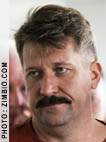
Viktor Bout

Viktor Bout

By JOSEPH FITSANAKIS | intelNews.org |
The case of notorious arms smuggler Viktor Bout is well known. Born in Dushanbe, Soviet Tajikistan, in 1967, Bout served in the GRU (Soviet military intelligence) until the collapse of the USSR, at which point he began supplying weapons to shady groups, ranging from Congolese rebels and Angolan paramilitaries to the Taliban and al-Qaeda. In March of 2008, Bout, known as ‘Lord of War’, was finally arrested by the Royal Thai Police, after a tip by US Drug Enforcement Administration (DEA) officers. The latter had managed to lure Bout to Thailand by pretending to be Colombian FARC arms procurers. Recently, Washington scored a second victory by convincing Thai authorities to extradite Bout to the United States on terrorism charges. Presumably, Bout will be tried as an arms smuggler acting on his own accord. But is this right? Read more of this post

Russia, Romania, expel diplomats in spy tit-for-tat

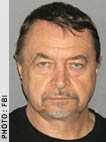
Gabriel Grecu

Gabriel Grecu

By IAN ALLEN | intelNews.org |
The Russian and Romanian governments have expelled each other’s diplomats in a spy scandal that made headlines in both countries last week. The spy affair began last Monday, August 16, when Russia’s Federal Security Service (FSB) announced the arrest of a Romanian diplomatic official, who was allegedly caught in the act of espionage. The official was later named as Gabriel Grecu, who was First Secretary of the Political Department of the Romanian embassy in Moscow. According to a laconic FSB press release, Grecu was detained while “attempting to solicit classified military information from a Russian national”. According to Russian media, the Romanian official was found “in possession of various pieces of espionage equipment”. Read more of this post

News you may have missed #415

  • GCHQ tech arm adopts new personnel evaluation tests. The Communications Electronics Security Group is the information assurance arm of the General Communications Headquarters –Britain’s equivalent of the National Security Agency. CESG has now adopted a new testing method of verifying the competency of its IT security professionals, because apparently there are “not enough security professionals in the public and private sectors to go around”.
  • Swapped Russian insists he was no CIA spy. Of the four jailed Russians the US received from Moscow in exchange for the 11 Russian illegals in July, only one is talking. But Igor Sutyagin, a nuclear proliferation expert, who was convicted of links with a CIA front-company, insists he was no CIA spy. However, if that is so, why was he on Washington’s swap list in the first place?
  • Militants target Yemen spy officials. Two officers in Yemen’s Political Security Organization, Colonel Ali Abdul Kareem al-Ban, and Juman Safian, have been shot dead in recent days. Al-Qaeda militants, who assumed responsibility for the attacks, warned they will be stepping up operations inside neighboring Saudi Arabia.

Bookmark and Share

Russian alleged CIA spy gives interview

Igor Sutyagin

Igor Sutyagin

By IAN ALLEN | intelNews.org |
Of the four Russians alleged spies that the US and the UK received from Moscow in exchange for the 11 Russian illegals in July, only one is talking to the media. The Russian government convicted Igor Sutyagin, a nuclear proliferation expert, of having links with Alternative Futures, a British consulting company alleged by Moscow to be a CIA front. This past weekend, Sutyagin, who now lives in an undisclosed London location, gave a detailed interview to Natalya Golitsyna, a London-based correspondent for US government-owned Radio Liberty’s. As in his previous statements to the press, the Russian scientist rejected he was ever a spy, claiming that “[t]he first thing in my mind […] was doing and thinking for my country”. He also rejected accusations that he provided Alternative Futures with classified information on Russian nuclear weapons policy: “there was no transfer of information”, said Sutyagin, noting that the information he shared with the British-registered company “was just an illustration of the processes that are going on in Russia tasks”. Read more of this post

Analysis: Russian-Czech spy scandals show new direction in Russian espionage

ÚZSI seal

ÚZSI seal

By JOSEPH FITSANAKIS | intelNews.org |
Last July saw the resignations of three Czech Generals, including the head of the president’s military office and the country’s representative to NATO, following revelations that one of their senior staffers had a relationship with a Russian spy.  Intelligence observers have become accustomed to frequent reports of Russian-Czech spy scandals in recent years. But, according to reports from Prague, recent Russian intelligence activity in the Czech Republic may indicate a change of direction by Moscow. Some say that Russia’s new espionage doctrine focuses less on military intelligence in the post-US-missile-shield strategic environment, and more on political and economic espionage. To be sure, Russia’s intelligence presence in the Czech capital remains substantial: Czech counterintelligence sources estimate that at least 60 –that is, one in three– Russian diplomats in Prague are engaged in intelligence-related activities. But the intensity of Russian espionage in Prague is not unique. Read more of this post

Swapped spy says he is not Russian, wants to move to Peru

Mikhail Vasenkov

Mikhail Vasenkov

By IAN ALLEN | intelNews.org |
One of the 11 Russian spies arrested in the US in June, and later swapped with CIA assets held in Russian prisons, claims he is not Russian, speaks no Russian, and wants to move to Peru, where he lived in the 1970s. Juan Lazaro was arrested by the FBI on June 27, along with 9 other (and later one more) Russian deep-cover operatives, who had lived in the United States under false identities for up to three decades. Lazaro, who lived in Yonkers, New York, had a doctorate in Political Science, worked as an adjunct professor, and was married to Peruvian-born journalist Vicky Pelaez. But FBI investigators unmasked Lazaro’s real name, which is Mikhail Vasenkov, before deporting him and his wife, who is also accused of working for the Russian secret services, to Moscow. According to FBI records, Vasenkov assumed the Juan Lazaro identity and ‘legend’ (biographical narrative and supporting documentation for intelligence purposes) while living in Latin America in the 1970s, using the papers of the real Juan Lazaro, an Uruguayan child who died at age 3. But now Vasenkov’s American lawyer, Genesis Peduto, claims her client is not from Russia, speaks no Russian, but is in fact the real Juan Lazaro, and wishes to leave Russia for Peru. Read more of this post

News you may have missed #408

  • Russian military spy supervised Czech prisons. Robert Rakhardzho, a Russian spy whose relationship with a Czech female Army major prompted the resignation of three senior Czech military officials, worked as a psychologist at the Czech Prison Service headquarters until last September. Rakhardzho is now hiding in Russia.
  • US undercover feds able to easily obtain fraudulent passports. Gregory Kutz, an investigator for the US Government Accountability Office, testified last week to a Senate panel about how his team of undercover Federal agents was able to get the State Department to issue five of the seven e-Passports it requested using fraudulent information. The government apparently failed to detect such basic red flags as a fake driver’s license.
  • Russia widens powers of KGB successor agency. Russian president Dmitry Medvedev has signed a law widening (again) the powers of the Federal Security Service, the KGB’s main successor agency. The new law allows the FSB to issue warnings to people suspected of preparing to commit “crimes against Russia’s security”. Perpetrators face fines or up to 15 days detention.

Bookmark and Share

News you may have missed #407

Bookmark and Share

Comment: Is Lebanon Using US Assistance to Capture Israeli Agents?

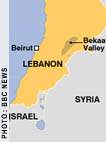
Lebanon

Lebanon

By JOSEPH FITSANAKIS | intelNews.org |
A minor revolution has been taking place in Lebanon over the past 16 months. Since April of 2009, Lebanese authorities have arrested nearly 100 individuals on charges of spying for Israel, three of whom have been sentenced to death. Judging by numbers alone, this may be one of the most astonishing coups in the annals of counterintelligence. There are several reasons why this is happening.

Read more of this post

News you may have missed #402

Bookmark and Share

Did fugitive spy Metsos lead to Russian spy arrests?

Christopher Metsos

C.R. Metsos

By JOSEPH FITSANAKIS | intelNews.org |
Soon after the June 27 arrests of 10 Russian non-official-cover (NOC) spies in several US cities, one name came to the attention of intelligence observers: Sergei Tretyakov. Tretyakov was a senior Russian Foreign Intelligence Service (SVR) officer who defected to the US in 2000, while second-in-command at the SVR station in Russia’s United Nations mission in New York –the same outfit that run the deep-cover operatives arrested in June by the FBI. The Bureau’s own admission that it began monitoring the operatives around 2001, has caused many to believe that Tretyakov, who died suddenly on June 13, at age 53, may have tipped off the FBI about the NOCs. But Russian investigative journalist Yulia Latynina has raised a second possibility, no less intriguing than the first. Namely that it was not Tretyakov who betrayed the deep-cover operatives to the FBI, but rather the mysterious so-called 11th spy, Christopher R. Metsos, a seasoned SVR operative who is said to have acted as a go-between and financier for all 10 Russian spies. Read more of this post

News you may have missed #401

Bookmark and Share