News you may have missed #482

  • Kissinger wants US spy for Israel freed. Former US Secretary of State Henry Kissinger is urging President Barack Obama to release Jonathan Pollard, an American convicted of spying on the US for Israel 24 years ago. He has sent Obama a letter, in which he writes “I believe justice would be served by commuting” Pollard’s life sentence.
  • MI5 short of surveillance officers says minister. A senior British official has revealed MI5 does not have enough spies to allow it to increase its counterintelligence surveillance, as per government plans. Security Minister Baroness Pauline Neville-Jones said the Security Service needed to recruit and train more surveillance officers.
  • US spy agencies lack fluent bilingual speakers. Many Americans don’t learn a second or a third language from birth, let alone a language that the CIA or US Foreign Service might want. The situation has forced US government agencies to learn how to cultivate the most talented second-language speakers from among college students with little to no other-language expertise.

News you may have missed #465

  • Germany denies secret spy collaboration with the US. Germany’s aerospace center denied Monday that it is working with the US on a $270 million high-tech secret spy program, insisting that its plans for a high-resolution optical satellite have purely scientific and security uses. The denial was in response to US State Department cables obtained by WikiLeaks and revealed by Norwegian daily Aftenposten.
  • Was Iranian nuclear defector tortured? Iranian nuclear scientist Shahram Amiri, who returned to Tehran in July after what he called a “kidnapping” by the CIA, has been held in detention by Iranian authorities for two months and tortured so badly he was hospitalized, according to a dissident Iranian web site.
  • WikiLeaks reveals France leads industrial spying in Europe. France is the country that conducts the most industrial espionage on other European countries, even ahead of China and Russia, according to leaked US diplomatic cables, reported in a translation by Agence France Presse of Norwegian daily Aftenposten‘s reporting.
Mystery ‘spy devices’ found in Lebanon mountains

Surveillance device

Spy device

By IAN ALLEN | intelNews.org |
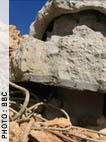
A statement issued by the Lebanese armed forces last week details the discovery of at least two mysterious spy devices located in mountain ranges around the Lebanese capital Beirut. The discovery, which was apparently made early last week, concerns two allegedly Israeli-made electronic devices hidden under two fake boulders. According to the statement, the two devices were found carefully concealed in the mountain of Sannine, directly north of Beirut, and Barouk, which is adjacent to the city’s southern suburbs. There were also reports last Wednesday of a loud explosion in Sidon, a port in southern Lebanon, which some news media said was an operation by unknown assailants to destroy a third surveillance device before it was discovered by the Lebanese security forces. The two devices captured by the Lebanese forces consist of surveillance cameras, electronic transmitters, as well as satellite signal reception systems. One of them was even connected to a third fake boulder, containing long-lasting batteries, which powered the device. Read more of this post

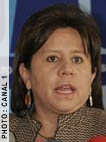
Colombians blast Panama for sheltering ex-spy director

María del Pilar Hurtado

María Hurtado

By IAN ALLEN| intelNews.org |
Public prosecutors in Colombia have strongly criticized the Panamanian government for granting political asylum to one of Colombia’s former spy directors, who is facing charges of spying on opposition figures. María del Pilar Hurtado directed the highly disreputable Administrative Department for Security (DAS) from 2007 to 2008. But on October 31, she apparently left Colombia unobstructed, despite being among the chief subjects of a high-level investigation into political spying by DAS. Hours later, she surfaced in Panama, where she formally requested political asylum. The latter was granted on November 19, causing the amazement of public prosecutors in Bogota, who have accused the Panamanian government of subverting (what little is left of) Colombian justice. Hurtado is among 18 senior officials in the administration of Alvaro Uribe, a close ally of the United States and hardline proponent of Washington’s ‘war on drugs’. Critics of DAS accuse him of authorizing a massive program of political surveillance, which targeted the former Presidents, Supreme Court judges, prominent journalists, union leaders, human rights campaigners, and even European politicians. Read more of this post

Scandinavians launch probes into US spying activities

Scandinavia

Scandinavia

By JOSEPH FITSANAKIS | intelNews.org |
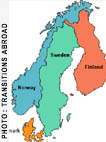
Norway, Sweden and Denmark have launched official investigations into media reports that accuse US embassies in Scandinavian countries of operating illegal intelligence gathering networks. The issue first emerged last Wednesday, when a report by Norway’s TV2 channel alleged that the US embassy in Oslo maintained a network of around 20 local former police and intelligence officers, who were conducting “illegal systematic surveillance of Norwegian citizens”. According to TV2, the surveillance network was tasked with collecting visual and physical intelligence on individuals “thought to pose a threat to American interests”. The US Department of State responded to the allegations by arguing that the US embassy had “fully informed” the Norwegian authorities of the surveillance activities. But Norwegian investigations expressed fears that the intelligence collection, which dates back to 2000, may constitute a violation of Norwegian diplomatic legislation, and have launched an investigation into the affair. Read more of this post

Irish republicans used cameras to spy on MI5

Palace Barracks

Palace Barracks

By JOSEPH FITSANAKIS | intelNews.org |
British government officials in Northern Ireland have ordered 20 trees cut down outside a spying installation, after a number of surveillance cameras were discovered hidden among the tree branches. The trees are located around a multimillion-dollar spying base belonging to MI5, Britain’s primary domestic intelligence organization. The base, which serves as MI5’s headquarters in Northern Ireland, is located in Holywood, County Down, inside a British Army installation named Palace Barracks. Eyebrows were raised on April 12, when a dissident republican group managed to detonate a massive car bomb inside the maximum-security base. The bomb was carried into the base by a local taxi driver, who had been forced by paramilitaries at gunpoint to smuggle it into the facility. British media initially attributed the attack to the Real Irish Republican Army (RIRA), but it was later blamed on Óglaigh na hÉireann (ONH), which split from the Continuity Irish Republican Army (CIRA) four years ago. Read more of this post

News you may have missed #420

  • Nokia and Siemens deny helping Iranian spying. Isa Saharkhiz, a one-time reporter for the Islamic Republic News Agency, is suing Nokia Siemens Networks in US federal court, claiming the companies facilitated his capture and torture at the hands of the Iranian government. The European-based consortium denies the allegations.
  • New Aussie spy agency HQ ‘on time and on budget’. The new ASIO $606 million  (USD $540 million) headquarters in Parkes, Canberra, is progressing on time and on budget, with completion scheduled for mid-2012. Meanwhile, the 270 construction workers on site have been vetted for security clearance, must pass security checkpoints each day, and have signed papers not to discuss anything that happens on site.
  • US Pentagon spends big on outsourced spy imagery. The production and maintenance of US spy satellites used to be in government hands, but now this critical aspect of national security is routinely outsourced. The National Geospatial-Intelligence Agency (NGA), the Department of Defense’s operator of military spy satellites, recently awarded $7.3 billion in contracts for its EnhancedView commercial imagery program.

Has US Pentagon revived Bush-era domestic spy program?

US Pentagon

US Pentagon

By JOSEPH FITSANAKIS | intelNews.org |
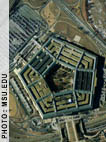
A little-known US Department of Defense counterintelligence is suspected to have resuscitated a notorious Bush-era domestic surveillance program, which was banned by Congress for being too obtrusive. In 2002, the then Deputy Secretary of Defense, Paul Wolfowitz authorized the Threat and Local Observation Notice (TALON), a US Air Force intelligence collection program aimed to gather data on potential threats to American armed forces personnel in the US and abroad. But the initiative was allegedly shelved by the Bush administration, after it emerged that TALON intelligence collection focused largely on political policing against lawful antiwar groups. But now new reports suggest that an obscure unit under the Pentagon’s Defense Intelligence Agency (DIA), called the Defense Counterintelligence and Human Intelligence Center (DCHC), is creating a new system of consolidated databases whose focus closely resembles that of TALON. Read more of this post

News you may have missed #376

  • Dubai plans more cameras after Mossad operation. Dubai will beef up its surveillance capability by installing more cameras around the city-state after the Israeli hit squad that murdered a senior Hamas operative was caught on a hotel video. As intelNews has reported before, Mossad has really helped the Gulf surveillance industry.
  • Iran hangs ‘spy’ with alleged US connections. Iran hanged Sunni militant leader Abdolmalek Rigi last weekend for allegedly having connections with foreign secret services, including “intelligence officers of the US and Israel working under the cover of NATO and certain Arab countries” as well as “anti-revolutionary expatriate groups such as the MEK”, the People’s Mujahedeen Organization of Iran.
  • Analysis: FBI use of Muslim informers now part of daily life. Gathering information on people in Muslim communities in the United States has become part of daily life. After 9/11, all data is considered useful. But, Stephan Salisbury of The Philadelphia Inquirer asks, is that how America should be?

Bookmark and Share

US intel wants to automate analysis of online videos

IARPA logo

IARPA logo

By IAN ALLEN | intelNews.org |
A new project funded by the US intelligence community’s research unit aims to automate the collection and analysis of videos from YouTube and other popular online platforms, with the intent of unearthing “valuable intelligence”. The program is called Automated Low-Level Analysis and Description of Diverse Intelligence Video (ALADDIN). It is directed by the Intelligence Advanced Research Projects Activity (IARPA), whose mission is to work under the Director of National Intelligence to create hi-tech applications for America’s intelligence agencies. Few people are aware of the existence of IARPA, which was quietly established in 2007, is based at the University of Maryland, and is staffed mostly by CIA personnel. The research body’s latest project apparently aims to equip the US intelligence community with the ability to scan “for the occurrence of specific events of interest” embedded in online video files, and then “rapidly and automatically produce a textual English-language recounting [and] describing the particular scene, actors, objects and activities involved”. Read more of this post

News you may have missed #330

  • Pakistan released captured Taliban behind CIA’s back. IntelNews has not joined the chorus of commentators who have been claiming that the relationship between Pakistan’s Inter-Services Intelligence (ISI) directorate and the CIA has warmed up. It now appears that even as the ISI was collaborating with the CIA, it quietly freed at least two captured senior Afghan Taliban figures.
  • Kiwi activists accuse police of spying. New Zealand’s Peace Action Wellington has submitted an Official Information Act (OIA) request relating to domestic police surveillance, after accusing the police of “heavily spying on and running operations on protest groups”. It is not the first time that similar accusations have been directed against the country’s police force.
  • CIA suspected existence of Israeli nukes in 1974. Israel will neither confirm nor deny the rumored existence of its nuclear arsenal. But the CIA, which has kept an eye on Israel’s nuclear weapons project since at least the early 1960s, was convinced of its existence by 1974, according to a declassified report.

Bookmark and Share

Essential links on WikiLeaks video of Iraq shooting

WikiLeaks

WikiLeaks

By JOSEPH FITSANAKIS | intelNews.org |
Whistleblower site WikiLeaks has released a leaked video taken from a US military helicopter in July 2007, showing US forces indiscriminately firing on Iraqi civilians, killing 12 people and wounding two children. The dead included two employees of the Reuters news agency. There are several edited versions of the video, which can be found in its entirety here. Cryptome offers a series of selected stills from the leaked WikiLeaks video, with some visual analysis of the footage. It is worth keeping in mind that the leaked video is of substantially lower quality than what the US helicopter pilots saw, because it was converted through several stages before it was released by WikiLeaks. Read more of this post

News you may have missed #320

  • Wikileaks alleges US government surveillance. British quality broadsheet The Guardian is one of a handful of mainstream media outlets to seriously examine the allegation of Wikileaks, that its editor and co-founder, Julian Assange, became the target of “half a dozen attempts at covert surveillance in Reykjavik”, by individuals who said they represented the US Department of State. The article, written by Joseph Huff-Hannon, also cites intelNews.
  • Saudi charity wins wiretap case against NSA. The Saudi-based charity Al-Haramain was taken to court in September 2004 by the US government, which accused it of maintaining terrorist links. But the charity has successfully demonstrated that the National Security Agency engaged in warrantless spying on it. However, the judge limited liability in the case to the government as an institution, rejecting the lawsuit’s effort to hold individual US government officials personally liable.
  • Kremlin accused of KGB-style honey-traps. The Kremlin has been accused of sanctioning a Soviet-style honey-trap campaign against opposition politicians and journalists using entrapment techniques based on money, drugs and women. The allegations follow the release of a string of videos on the web purporting to show an opposition politician, a political analyst and the editor of the Russian edition of Newsweek magazine in compromising situations.

Bookmark and Share

How many government informants are there in China?

Kailu County

Kailu County

By JOSEPH FITSANAKIS | intelNews.org |
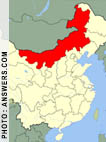
The interest of intelligence observers was stirred last week by a rare revelation made by a Chinese regional police official, who said that his bureau employs one in every 33 local residents as an informant. Speaking to Xinhua News Agency, Liu Xingchen, deputy public security bureau director for Inner Mongolia’s Kailu County, said his force employed 12,093 informants out of approximately 400,000 inhabitants. The informants’ task, he said, was to provide government with intelligence, to weed out “non-harmonious elements”, and to uncover “all sorts of information that might destabilize society”. Some reports note that, when applied nationwide, these statistics point to the possible existence of “at least 39 million informants”, a number that represents 3 per cent of China’s population and “lays bare the enormous scale of China’s surveillance network”. Such extrapolations, however, are risky for a number of reasons. Read more of this post

News you may have missed #0244

  • Former S. African spy chief dies. Mike Louw former head of South Africa’s apartheid-era National Intelligence Service (NIS) and later the South African Secret Service (SASS), has died. As deputy director general at NIS, Louw helped facilitate some of the very first meetings between the government of F.W. De Klerk and Nelson Mandela, the then imprisoned leader of the African National Congress.
  • Kiwi spies get augmented cyber-surveillance powers. Reports from New Zealand indicate that new “cyber-monitoring measures have been quietly introduced”, giving the country’s law enforcement and intelligence services increased online surveillance powers. Veteran intelligence observer Nicky Hager describes the changes as “the largest expansion of police and [intelligence] surveillance capabilities [in New Zealand] for decades”.

Bookmark and Share