Spy archivist discusses fate of Swedish diplomat abducted by KGB
September 29, 2011 2 Comments
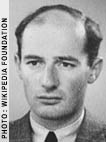
Raoul Wallenberg
By JOSEPH FITSANAKIS | intelNews.org |
The fate of Swedish diplomat Raoul Wallenberg, who was abducted by Soviet intelligence officers in the closing stages of World War II, is one of the unsolved mysteries of 20th century espionage. The 33-year-old Wallenberg was a shrewd businessman who, in the summer of 1944, was posted as Sweden’s ambassador in Budapest, Hungary. During his time in Budapest, he was able to save over 20,000 Hungarian Jews from the Nazi concentration camps, by supplying them with Swedish travel documentation, or smuggling them out of the country through a network of safe houses. He is also reported to have managed to dissuade German military commanders from launching an all-out attack on Budapest’s Jewish ghetto. But Wallenberg was also an American intelligence asset, having been recruited by a US spy operating out of the War Refugee Board, an American government outfit with offices throughout Eastern Europe. In January of 1945, as Soviet forces descended on Axis ally Hungary, Moscow gave orders for Wallenberg’s arrest on charges of spying for Washington. The Swedish diplomat disappeared, never to be seen in public again. Some historians speculate that Joseph Stalin initially intended to exchange Wallenberg for a number of Soviet diplomats and intelligence officers who had defected to Sweden. But according to official Soviet government reports, Wallenberg died of a heart attack on July 17, 1947, while being interrogated at the Lubyanka, a KGB-affiliated prison complex in downtown Moscow. Despite the claims of the official Soviet record, historians have cited periodic reports that Wallenberg may have managed to survive in the Soviet concentration camp system until as late as the 1980s. Earlier this week, Lt. Gen. Vasily Khristoforov, Chief Archivist for the Russian Federal Security Service (FSB), one of two successor agencies to the old Soviet KGB, gave an interview about Wallenberg to the Associated Press. Read more of this post













 intelNews.org
News you may have missed #642
December 5, 2011 by Ian Allen 1 Comment
Predator drone
►►Australia concerned China using civilian satellites to spy. Concerns that China may use civilian satellite tracking stations to monitor Australian military operations have been dismissed by the Swedish Space Corporation. The company owns and operates two satellite tracking stations 400 km north of the West Australian capital, Perth. One was used by the China Satellite Launch Company last month in China’s first space docking operation.
►►Did Iran capture US stealth drone intact? For the second time this year, the Iranian government is claiming it forced down a stealthy US Air Force spy drone. Only this time, it says it bagged the RQ-170 “with little damage” by jamming its control signal —a potentially worrying development for American forces heavily reliant on remote-controlled aircraft. A US official, who asked not to be named, told Reuters that “there is absolutely no indication up to this point that Iranians shot down this drone”.
►►Canadian Mounties spied on native protest groups. Canada’s federal government created a vast surveillance network in early 2007 to monitor protests by First Nations, including those that would attract national attention or target “critical infrastructure” like highways, railways and pipelines, according to RCMP documents. The RCMP intelligence unit reported weekly to approximately 450 recipients in law enforcement, government, and unnamed “industry partners” in the energy and private sector. The news follows revelations last month of the RCMP’s largest-ever domestic intelligence operation, aimed against G8 and G20 protesters.
Filed under Expert news and commentary on intelligence, espionage, spies and spying Tagged with 0 Australia concerned China using civilian satellites to spy, 0 Canadian Mounties spied on native protest groups, 0 Did Iran capture US stealth drone intact?, aerial reconnaissance, Australia, Canada, China, China Satellite Launch Company, domestic intelligence, Iran, military intelligence, News, news you may have missed, political activism, Predator drones, Royal Canadian Mounted Police, RQ-170 Sentinel, satellite reconnaissance, Sweden, Swedish Space Corporation, United States, US Air Force