An assessment of Russia’s espionage network in Switzerland
July 5, 2022 4 Comments
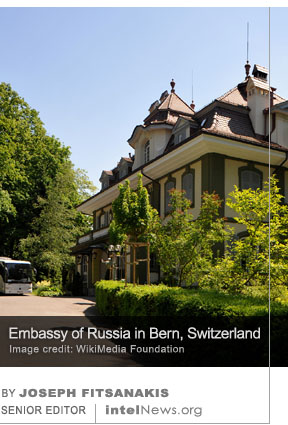 SINCE LATE FEBRUARY, WHEN Russian troops invaded Ukraine, over 500 Russian diplomats have been expelled from Western countries. Even former Russian allies have contributed to the growing list of expulsions —most recently Bulgaria, which ousted a near-unprecedented 70 Russian diplomats last week, citing espionage concerns. Amidst that sea of expulsions, Switzerland remains an island. It is among the few European countries that have yet to officially expel Russian diplomats. Abiding by its centuries-old policy of neutrality, it has resisted calls to take sides in the intelligence war between the West and Russia.
“No-Questions-Asked” Approach to Espionage
Russia has been able to take advantage of Switzerland’s neutrality policy since February. Instead of returning to Moscow, at least some of the expelled Russian diplomats have been reposted to Switzerland. They continue to operate there under a “no-questions-asked” policy, which has prevailed since the days of the Cold War. For this and other reasons (i.e. proximity to prime intelligence targets, safety, advanced telecommunications systems), Switzerland has been a major intelligence hub for decades. According to the Nachrichtendienst des Bundes (NDB), Switzerland’s Federal Intelligence Service, the past few years have witnessed higher levels of activity by foreign intelligence services than any other period since the Cold War.
Russia’s Intelligence Presence in Switzerland
During that time, Russia has been able to build a pan-European espionage hub in the small alpine state. That is the conclusion of a report by Jonas Roth, which was published last week in the Neue Zürcher Zeitung (NZZ), Switzerland’s newspaper of record. The report, entitled “So Spioniert Russland in der Schweiz” (“How Russian spies operate in Switzerland”), features commentary by several experts and government officials. One source tells Roth that, despite the intense diplomatic pressure Russia has faced globally since February, its espionage structures in Swiss cities like Geneva and Bern “are still intact”.
How many Russian intelligence officers are currently operating in Switzerland? According to the report, at least a third of Russia’s 220-strong diplomatic presence in the country consists of intelligence officers. These 70 or so intelligence officers represent all three of Russia’s primary intelligence agencies, namely the Foreign Intelligence Service (SVR), the Main Directorate of the Armed Forces’ General Staff (GRU), and the Federal Security Service (FSB). Officers from these agencies handle an unknown number of informants and agents; these are Swiss or third-country nationals, who provide the Russians with intelligence on a regular basis. Special activities are carried out by Russian intelligence personnel who travel to Switzerland on an ad hoc basis. Read more of this post
 ISRAEL’S PRIMARY EXTERNAL INTELLIGENCE agency, the Mossad, was likely behind a series of mysterious bombings in 1981, which targeted German and Swiss engineering firms believed to be aiding the Pakistani nuclear program, according to new exposé by a leading Swiss newspaper. Several bomb attacks targeted a number of engineering firms in Switzerland and what was then West Germany in 1981. Alongside these attacks, there were threatening telephone calls that targeted West German and Swiss engineers.
 A POPULAR TURKISH NEWSPAPER has published an interview with a member of a network of spies who were allegedly recruited by the Israeli agency Mossad to spy on Palestinian students living in Turkey. As intelNews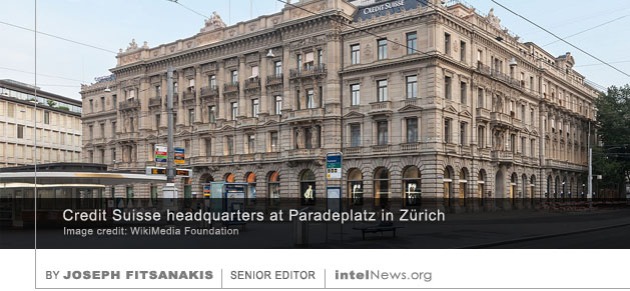

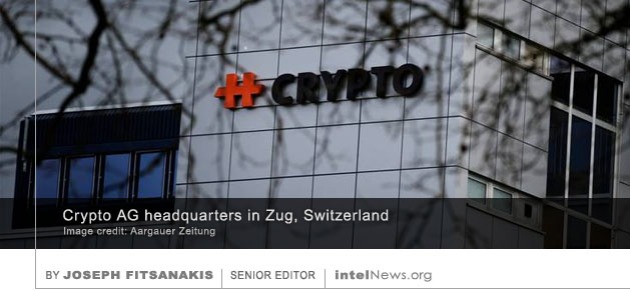 Switzerland is reeling from the shock caused by revelations last week that Crypto AG, the world’s leading manufacturer or cryptologic equipment during the Cold War, whose clients included over 120 governments around the world, was a front company owned by the United States Central Intelligence Agency.
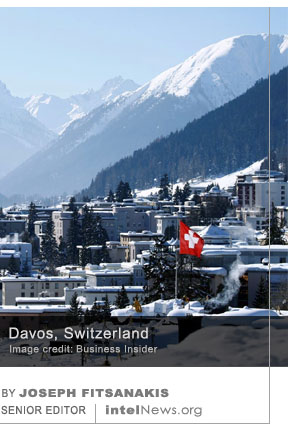 A Swiss newspaper has revealed a previously unreported detention of two Russian diplomats in the luxury Swiss Alpine resort of Davos, which is currently hosting the annual meeting of the World Economic Forum (WEF). The development prompted British authorities to warn some British citizens participating in the WEF meeting that they may be in physical danger.
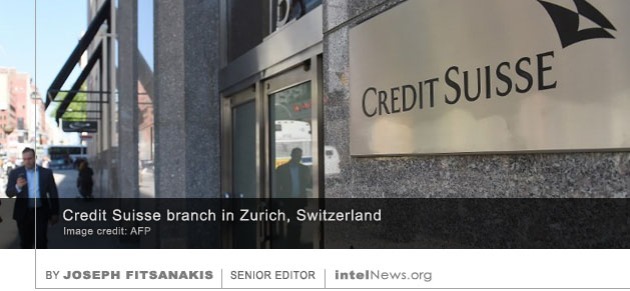 Credit Suisse, one of the world’s most powerful banking firms, says it has opened an investigation into claims that it paid private investigators to spy at individuals, just two months after a similar scandal involving espionage and surveillance rocked the company.
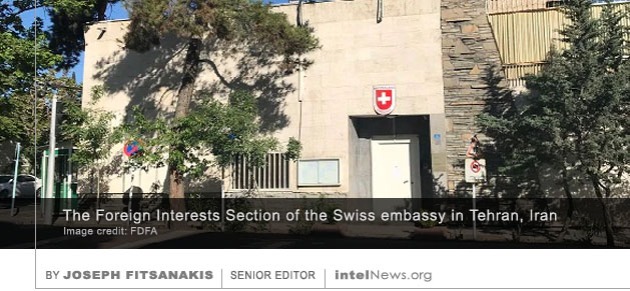
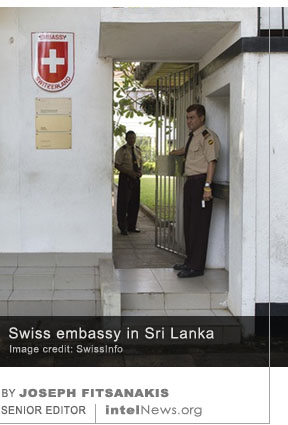 Switzerland has filed a formal complaint after an employee of the Swiss embassy in Sri Lanka was allegedly abducted by men who forced her to divulge sensitive information about the embassy and its activities. The Swiss Ministry of Foreign Affairs
 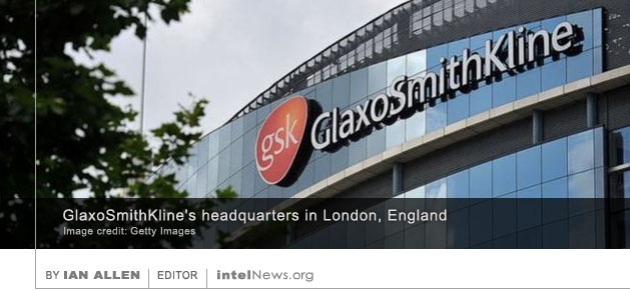 A Swiss court has ordered the extradition to the United States of the brother of one of the world’s leading biochemists, who spied on a British pharmaceutical firm to help a Chinese startup. The extradition is part of a large corporate espionage case centered on Yu Xue, a Chinese scientist described by US federal prosecutors as “one of the world’s top protein biochemists”. Yu specializes in drug research for cancer and other serious terminal illnesses. From 2006 until 2016 he worked in the US for GlaxoSmithKline (GSK), a leading British pharmaceutical group.
 Russian espionage activities in Switzerland are increasing and are crossing long-established “red lines”, according to senior Swiss defense and intelligence officials who spoke at a news conference last week. The claims were made by Guy Parmelin, head of Switzerland’s Federal Department of Defense, and Jean-Philippe Gaudin, director of the Swiss Federal Intelligence Service (NDB). The two men spoke on Friday before reporters in Bern. Following the news conference, Gaudin spoke with reporters from the Reuters news agency.






 intelNews.org
Switzerland overrun with foreign spies, Swiss intelligence service warns
June 28, 2023 by Joseph Fitsanakis 1 Comment
Traditionally neutral Switzerland has not joined most other European countries in expelling Russian intelligence officers —posing as diplomats— following Russia’s full-scale invasion of Ukraine in 2022. Therefore, as Russia tries to rebuild its shattered intelligence-gathering networks in Europe, it is using Switzerland as a forward-operating base, according to the FIS. As of 2023, the number of Russian intelligence personnel stationed on Swiss soil, and the ensuing espionage activity, “is notably high”, states the report.
According to the FIS report, that the lion’s share of Russian intelligence officers —“several dozen”— are stationed “at the Russian diplomatic and consular missions in Geneva”. A major international diplomatic hub, Geneva is an “ideal operational environment” for foreign intelligence agencies. It hosts a significant number of international organizations —including one of the four major offices of the United Nations. Additionally, it is situated close to the largely unmonitored French border. This allows intelligence operatives to move seamlessly in and out of European Union soil.
Furthermore, as Western intelligence agencies increase their presence in Switzerland, in order to counter Russian intelligence activities there, “espionage levels […] are continuously rising”, according to the FIS report. This situation is unlikely to change in the coming year, as “intensifying competition between superpowers” is expected to continue to involve Switzerland as an espionage battlefield that draws in rival intelligence agencies, the FIS report concludes.
► Author: Joseph Fitsanakis | Date: 28 June 2023 | Permalink
Filed under Expert news and commentary on intelligence, espionage, spies and spying Tagged with 0 Accused Russian spies lived perfect Boston lives, counterintelligence, espionage, FIS (Switzerland), Geneva (Switzerland), Russia, Switzerland