News you may have missed #800

MI6 headquartersBy IAN ALLEN | intelNews.org |
►►British MI6 spy agency feeling shaken not stirred. Analysis on Salon.com about the current state of MI6, Britain’s external intelligence agency, featuring comments by intelNews‘ own Joseph Fitsanakis. The article, written by former CNN and BBC correspondent Barry Neild, argues that MI6 is feeling the heat caused by a series of recent allegations which threaten to disrupt its clandestine operations. The agency, he suggests, is thus undergoing one of the most troubling periods of its hundred-year existence.
►►Germany charges couple with spying for Russia. German government prosecutors say the couple, who called themselves Andreas and Heidrun Anschlag, worked in Germany for Russia’s foreign intelligence service for more than 20 years, gathering information on European Union and NATO strategy. The pair entered Germany in 1988 and 1990, claiming to be Austrian citizens of South American origin. They were arrested in October 2011. German media said it is the first such case in Germany since the end of the Cold War.
►►US allegedly widens covert operations in North Africa. The Associated Press quotes “three US counterterror[ism] officials and a former intelligence official” as saying that the United States is in the process of building “a new military task force” in the North African region. But by the time the US consulate in the east Libyan city of Benghazi was attacked last month, the new task force consisted only of “liaison officers who were assigned to establish relationships with local governments and US officials in the region”.

News you may have missed #799

Russell TiceBy IAN ALLEN | intelNews.org |
►►Is NSA using UK spy base to guide predator drones? Surrounded by farmland and sheep, hundreds of National Security Agency staff go to work every day at RAF Menwith Hill, where they eavesdrop on communications intercepted by satellite dishes contained in about 30 huge golf ball-like domes. Menwith Hill has been used by the NSA since the 1960s; but lately there is growing disquiet in Britain over whether intelligence gathered at the base is being used to help with the CIA’s controversial clandestine drone strikes. And the British government is keeping mum.
►►Aussie envoy seduced by spy feared her phone was bugged. Former senior Austrade commissioner to Hanoi Elizabeth Masamune, who recently admitted before an Australian court that she had sexual relations with a Vietnamese intelligence officer, told police she feared her Hanoi offices were bugged. In her statement during the trial of eight former Reserve Bank company executives on bribery charges, she said that after receiving a call from a journalist she recalled “being concerned of the level of information which she had. I was also more concerned about whether my phone was being monitored”, she said.
►►NSA whistleblower describes beating polygraph test. Russell Tice, the National Security Agency whistleblower who helped blow the lid open on warrantless wiretapping conducted by the federal government on US citizens post-9/11, says that he took between 12 and 15 polygraph tests during his nearly 20-year-long government career. The tests mellowed over time, Tice says, and they may have also gotten easier to beat. Tice, who is no longer at the NSA, says he, along with those still in contact with at the agency, marvel at how easy it is to beat the lie detector.
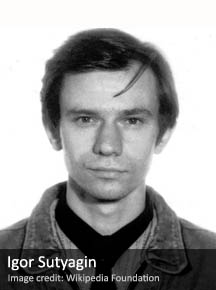

Russian court upholds 15-year prison sentence for alleged CIA spy

Igor SutyaginBy JOSEPH FITSANAKIS | intelNews.org |
Russia’s highest court has upheld a lengthy prison sentence given to a Russian arms control and nuclear weapons expert, who Moscow alleges was a spy for the United States. The Russian government accuses Igor Sutyagin of collaborating with Alternative Futures, a British-registered consulting company alleged by Moscow to be a front for the United States Central Intelligence Agency. Before his 1999 arrest, Sutyagin was Division Chairman on the Russian Academy of Sciences’ USA and Canada Institute. His indictment, prepared by the Russian Federal Security Service, said that he shared with the CIA “classified technical information” about nuclear submarine technology. Sutyagin maintained his innocence throughout his trial, and Human Rights Watch as well as Amnesty International classified him as a political prisoner. The two groups brought the accused spy’s case before the European Court of Human Rights, which ruled that Russian government prosecutors had violated Sutyagin’s right to a fair trial. Moreover, the Court ruled that Sutyagin’s pre-trial detention, which lasted five years, was illegal. Eventually, Moscow complied with the Court’s ruling and a retrial was ordered, to the delight of Sutyagin’s family. In the retrial, which ended last week, Russia’s Supreme Court agreed with the European Court of Human Rights that Sutyagin’s pre-trial detention had been unlawful; but the court upheld Sutyagin’s 15-yeard sentenced as “entirely legitimate”. Sutyagin was tried in absentia, however, because in the summer of 2010 he was released and fled to the West, as part of the largest postwar spy-exchange between Russia and United States. Sutyagin was one of four men behind bars in Russia, who were swapped for 10 Russian non-official-cover intelligence operatives that had been arrested in a sting operation by the Federal Bureau of Investigation. Read more of this post

News you may have missed #798

Alexander LitvinenkoBy IAN ALLEN | intelNews.org |
►►Britain to hold inquest over death of ex-KGB officer. Britain and Russia appear to be on a collision course over the death of Alexander Litvinenko, a former Russian intelligence officer who died in 2006 after ingesting polonium-210, a rare radioactive isotope. Britain’s Crown Prosecution Service has accused Andrei Lugovoi and Dmitry Kovtun, both former KGB agents, for the death of Litvinenko. Russia has refused British requests to extradite the two, leading to a row with Moscow and the tit-for-tat expulsion of Russian and British diplomats. Until now, the British Foreign Office had attempted to limit the scope of an inquest into the death of Litvinenko, fearing further diplomatic fallout. But coroner Sir Robert Owen said last week that he endorsed a previous ruling by his predecessor in the case, Andrew Reid, that there should be an “open and fearless” investigation into the matter.
►►Ex-CIA operative who illegally sold arms to Libya dies. Edwin P. Wilson, a former CIA officer who was convicted in 1983 for illegally shipping 20 tons of C4 plastc explosives to Libya, has died aged 84. In his trial he claimed he had shipped the weapons to Libya at the request of the CIA, because, as he said, the agency was trying to establish good relations with the Libyan government. But the court did not buy his story, so he spent over 20 years in prison, mostly in solitary confinement, until his release in 2004. He maintained his innocence to the very end.
►►Analysis: Libya an opportunity for CIA if it sticks around. The attack in Benghazi, Libya, that killed four Americans, including a US ambassador and two former Navy SEALs, has led Americans to vacate Benghazi for their safety, even though various militant groups continue their operations. It is a disaster for US intelligence efforts in the region, especially since the attack has made brutally clear how real the jihadi threat in eastern Libya remains. But there may be the smallest of silver linings to this black cloud, if American operatives are able to capitalize on it. The aftermath of the attack shows widespread displeasure with Benghazi’s jihadist groups, with thousands marching in protest. That is an opportunity the CIA could use to rebuild its intelligence gathering.

News you may have missed #796

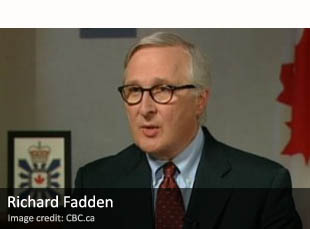
Richard FaddenBy IAN ALLEN | intelNews.org |
►►Iranian spy scandal sparks outrage in Turkey. After a nearly yearlong investigation into an alleged Iranian spy ring in Turkey, seven people were charged in early September with “providing information related to state security and establishing an [illegal] organization”. The charges against five Turkish citizens and two Iranian nationals followed a raid on the suspects’ residences and workplaces on August 29, in which videos and pictures of border security, documents, correspondence with Iranian intelligence and weapons were found, according to the investigation materials. Tehran denied any connections to those arrested, while officials in Ankara revealed more alleged evidence showing that Iran is providing support to the PKK.
►►British SIGINT agency ‘helps US drone attacks’. Britain’s former Director of Public Prosecutions, Lord Macdonald, has said there is “pretty compelling” evidence that the British government’s signals intelligence agency, GCHQ, is passing information to the United States to help it locate targets for controversial drone attacks in Pakistan. Earlier this year David Anderson, the British state’s independent reviewer of terrorism-related legislation, warned that the British government faced “a raft of civil cases” over possible complicity in the CIA drone attacks.
►►Canada’s top spy dismisses call for human rights scrutiny. In a newly declassified memo, CSIS director Richard Fadden appears to dismiss the Canadian Human Rights Commission’s recommendation that national security agencies do more to ensure they are not taking part in racial profiling or other objectionable practices. “I am confident in the service’s existing human rights policies and procedures, as well as our accountability and review structures”, Fadden says in the January 2012 memo, which is addressed to Canada’s Public Safety Minister Vic Toews. The memo —initially classified secret— was discovered by Mike Larsen, a criminology instructor in British Columbia, who obtained it under the Access to Information Act.

News you may have missed #794

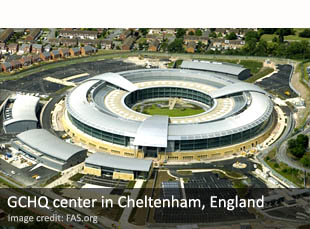
GCHQ center in Cheltenham, EnglandBy IAN ALLEN | intelNews.org |
►►Racism charge against GCHQ settled out of court. The British government’s SIGINT agency, GCHQ has been spared having its inner workings broadcast in public after a potentially embarrassing racism case was settled out of court at the last minute. The racial harassment and constructive dismissal lawsuit had been filed by Alfred Bacchus, a 42-year-old former employee. There are unconfirmed reports that, as part of the settlement, the plaintiff has signed a non-disclosure agreement banning him from revealing any more details about his complaints.
►►US spy agencies renew call for electronic surveillance rights. US intelligence officials had made a public plea on Tuesday, the 11th anniversary of the September 11, 2001, attacks, for quick Congressional action to extend a sweeping but controversial US electronic surveillance law. If the law, which expires at the end of 2012, is not extended, US spy agencies say they would lose access to what they describe as a “very, very important source of valuable intelligence information”. But at least one congressional critic of the surveillance law, Democratic Senator Ron Wyden, says he is willing to use legislative tactics to stall the bill, which has been passed by the House, unless the administration and other legislators agree to include stronger provisions to protect Americans’ civil liberties.
►►Yemen claims arrest of ‘Mossad agent’. Al-Nas, a Yemeni weekly associated with the Islamist Yemeni Reform Party, reported last weekend that an Israeli citizen, identified only by his initials and year of birth, 1982, was arrested in the southwestern city of Taizz. He reportedly admitted to smuggling children out of Yemen to neighboring countries and from there to Israel “through Zionist organizations”. Bizarrely, the man reportedly told his Yemeni interrogators that he “spent three years in a Greek prison for researching the biographies of well-known computer hackers”.

News you may have missed #793

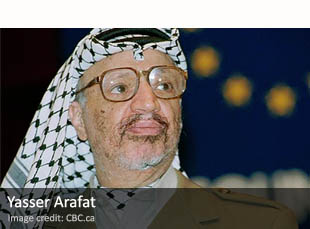
Yasser ArafatBy IAN ALLEN | intelNews.org |
►►Britain recruits tech start-ups for spy gadgets. British security services seem to have decided to widen the net for suppliers of state-of-the-art spyware for “covert surveillance”. Traditionally, British intelligence organizations including MI5 and GCHQ, have relied on a network of trusted contractors. But the change in approach represents an opportunity for burgeoning technology companies. According to a senior Whitehall official, who spoke to The Financial Times, these agencies “are appealing to a wide range of innovators, small and large, and saying: ‘Here are some problems we encounter. Can you solve them?’”.
►►French investigators to exhume Arafat’s remains. Three French investigating magistrates will travel to Ramallah in the West Bank to exhume the remains of the late Palestinian President Yasser Arafat so they can take tissue samples to determine what killed him. New evidence emerged from an investigation in July by the Al Jazeera television network when the Institut de Radiophysique, in Lausanne, Switzerland, said it had discovered significant traces of the rare radioactive element polonium-210 on the late leader’s clothing and toothbrush.
►►Panetta speaks out against book on bin Laden killing. As former US Navy SEAL Matt Bissonnette continues to make headlines about his book, No Easy Day, about the killing of al-Qaeda founder Osama bin Laden, US Defense Secretary Leon Panetta has spoken out publicly on the subject for the first time. The former Director of the CIA said “the American people have a right to know about this operation”. But, he added, “people who are a part of that operation, who commit themselves to the promise that they will not reveal the sensitive operations and not public anything […] when they fail to do that, we have got to make sure that they stand by the promise that they made to this country”.

MI6 chief paid ‘extremely rare’ secret visit to Israel: newspaper

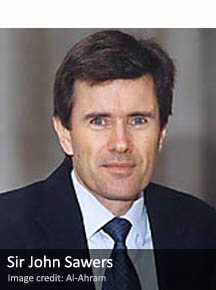
Sir John SawersBy JOSEPH FITSANAKIS | intelNews.org |
The Director of Britain’s Secret Intelligence Service, widely known as MI6, visited Israel in secret in late August in an effort to convince the Israelis not to launch military strikes on Iran, according to a British newspaper. In an article published on Tuesday, The Daily Mail said Sir John Sawers, who leads Britain’s foremost external spy agency, held private meetings with leading Israeli officials, among them Prime Minister Benjamin Netanyahu and Defense Minister Ehud Barak. His message, according to the paper, was that London wanted more time so that the economic and diplomatic sanctions imposed on Iran by the international community to bear fruit. Sanctions are considered by some in the West a viable alternative to calls by Israeli officials for direct military attacks on Iran, aimed at stopping the country’s nuclear program. If confirmed, Sir John’s visit to Israel would represent a near-unprecedented move; this is because, unlike his counterpart at the United States Central Intelligence Agency, the Director of MI6, known informally as ‘C’, does not routinely travel to foreign countries as a diplomatic messenger of the British government. Many, therefore, will see Sawers’ alleged trip to Israel as yet another sign that the Jewish state is beginning to lean heavily in favor of attacking Iran using overt military means. In a possibly related development, Israel’s Minister for Intelligence and Atomic Energy said on Wednesday that he supported international sanctions on Iran. Read more of this post

News you may have missed #789

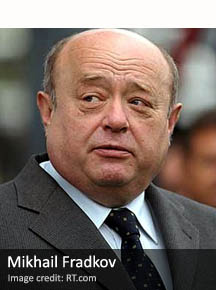
Mikhail FradkovBy IAN ALLEN | intelNews.org |
►►Putin adds spy chief to energy commission. Russian President Vladimir Putin has reinforced a presidential commission seen as Kremlin’s vehicle for vying for control over the country’s crucial oil and gas sector, by adding the country’s top police officer and senior spy to its ranks. They are Interior Minister Vladimir Kolokoltsev and Mikhail Fradkov, director of the Foreign Intelligence Service, formerly a department of the KGB. The commission is driven by Igor Sechin, a former KGB officer and close ally of President Putin.
►►US spy sat agency plans major expansion. The National Reconnaissance Office (NRO), America’s secretive spy satellite agency, operates a vast constellation of spy satellites in orbit. But these surveillance spacecraft have traditionally only been able to gaze down on a few small areas of the planet at a time, like flashlights probing the dark. And this, only with careful advance planning by human operators on the ground. Now the NRO wants to expand the current flashlight-like satellite deployment to a horizon-spanning, overhead spotlight that can illuminate vast swaths of the planet all at once. The agency also wants new spacecraft that can crunch the resulting data using sophisticated computer algorithms, freeing the satellites somewhat from their current reliance on human analysts.
►►GCHQ warns of ‘unprecedented’ cyberattack threat. The British government’s electronic eavesdropping and security agency, GCHQ, has warned the chief executives of Britain’s biggest companies about an allegedly “unprecedented threat” from cyber-attacks. “GCHQ now sees real and credible threats to cybersecurity of an unprecedented scale, diversity, and complexity”, said Ian Lobban, the agency’s director. The magnitude and tempo of the attacks pose a real threat to Britain’s economic security’, Lobban adds, but notes that about 80% of known attacks would be defeated by embedding basic information security practices.

News you may have missed #785 (interview edition)

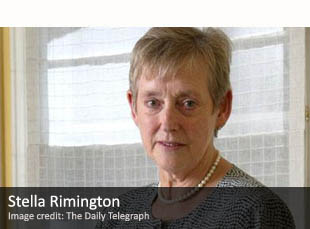
Stella RimingtonBy IAN ALLEN | intelNews.org |
►►Interview with first-ever NSA Compliance Director. John DeLong, the first-ever compliance director at the US National Security Agency, has given an interview to NextGov. In it, he says that “we’re nothing if we lose the confidence of the American people”. He is referring to frequent allegations, by whistleblowers and others, that the Agency is increasingly spying on Americans’ communications. As Compliance Director, DeLong is responsible for ensuring that the NSA abides by US law, which forbids it from intercepting electronic messages exchanged between US citizens or persons.
►►Ex-MI5 boss offers comment on WikiLeaks. Former MI5 Director-General Dame Stella Rimington has criticized “the indiscriminate pouring out into the public domain of streams of leaked documents by Julian Assange and his WikiLeaks organization”. But she also said that the US government should have taken better steps to prevent WikiLeaks from acquiring the information in the first place. Speaking at an international archiving conference in Brisbane, Australia, Dame Stella said that while the WikiLeaks saga could prompt the US government to come up with better databases, it would more likely encourage it to be even more secretive. This, she added, “must be absolutely the opposite effect of what WikiLeaks was seeking”.
►►Interview with NSA whistleblower. Filmmaker Laura Poitras interviews William Binney, a 32-year veteran of the US National Security Agency, who helped set up STELLAR WIND, the NSA’s top-secret domestic spying program, which was put in place after 9/11. The program was so controversial that it nearly caused top Justice Department officials to resign in protest in 2004. Binney, who resigned over STELLAR WIND in 2001, and began speaking out publicly in the last year, explains how the program he created for foreign intelligence gathering was turned inward on America.

Interview with NSA whistleblower

Missing section of Cold War spy tunnel unearthed in Germany

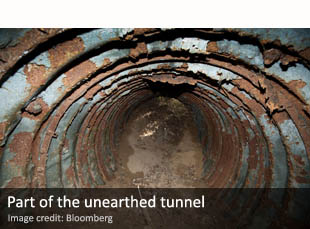
Part of the unearthed tunnelBy JOSEPH FITSANAKIS | intelNews.org |

A missing section of a secret tunnel, constructed by British and American intelligence agencies to spy on Soviet and East German government communications during the Cold War has been unearthed in Germany. The tunnel, believed to be nearly half a kilometer (1/3 mile) long, was part of the Central Intelligence Agency’s Operation GOLD, also known as Operation STOPWATCH in Britain. It was based on an idea initially suggested to the Americans in the early 1950s by Britain’s Secret Intelligence Service (MI6), which had carried out a similar scheme in Soviet-occupied Austria. The CIA adopted and funded the program at the cost of nearly $7 million. At its completion, the underground tunnel connected a secret entry-point in Rudow, West Berlin, to a location beneath Alt-Glienicke in East Berlin. The aim behind the project was to tap into underground telephone cables facilitating Soviet and East German military and civilian government communications. But the KGB, the Soviet Union’s foremost intelligence agency during the Cold War, was aware of the project almost from its infancy, thanks to George Blake, a British informant who was later convicted to 42 years in prison, but managed to escape to Moscow in 1966. Interestingly, the KGB did not reveal the tunnel’s existence to the Soviet and East German militaries, fearing that a sudden rerouting of communications cables would expose Blake as a Soviet mole. Instead, they allowed the tunnel to operate for nearly a year before publicly exposing its existence in 1956. At that time, Soviet and East German authorities dug up the eastern section of the tunnel and bussed in hundreds of international reporters, as well as tens of thousands of East Germans, to view the tunnel, in a massive propaganda campaign. In 1997, part of the tunnel that crossed West Berlin was excavated and transported to the Allied Museum in Berlin. Read more of this post

Germany, UK, share intelligence with Free Syrian Army [updated]

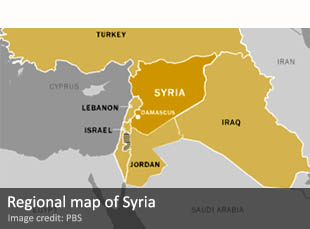
Regional map of SyriaBy JOSEPH FITSANAKIS | intelNews.org |
Two newspapers alleged over the weekend that German and British spy services routinely share critical intelligence on Syrian government troops with rebel forces in the country. In a leading article, German newspaper Bild am Sonntag claimed yesterday that Germany’s intelligence activities in Syria were far broader than officially acknowledged. The paper quoted an unnamed official from Germany’s Federal Intelligence Service (BND), who said that the country “can be proud of the significant contribution we are making to the fall of the Assad regime”. Also quoted in the article was an unidentified American intelligence official, who claimed that “no Western intelligence service has such good sources inside Syria as Germany’s BND”. According to Bild, the BND collects most of its intelligence on Syria through a number of ships, equipped with signals intelligence platforms, stationed in international waters off the Syrian coast. These ships can collect data on Syrian troop movements as far inland as 600 kilometers, or 400 miles. The collected data is then forwarded to BND officers stationed at the North Atlantic Treaty Organization base in Adana, Turkey, who are also tasked with intercepting radio messages and telephone exchanges between members of the Syrian government and/or military. The information is then passed on to members of the Free Syrian Army (FSA), the primary armed force engaged in a fierce civil war against the Syrian regime of Bashar al-Assad. Also on Sunday, the London-based Times newspaper quoted an unnamed FSA official as saying that the rebel forces are routinely given intelligence by British spy agencies. The official told the paper that “the British are giving the information to the Turks and the Americans and we are getting it from the Turks”. Read more of this post

News you may have missed #780

Syrian rebel video of downed dronesBy IAN ALLEN | intelNews.org |
►►Israeli Prime Minister rebukes President’s Iran comments. Aides to Israeli Prime Minister Benjamin Netanyahu launched a stinging rebuke to the country’s president, Shimon Peres, after he said that Israel should not act alone in launching military action against Iran’s nuclear program. In an interview on Israeli television, Peres said: “It is clear to us we cannot do it on our own. We can only delay [Iran’s progress]. Thus it’s clear to us that we need to go together with America”. Officials from Netanyahu’s office were quoted in the Israeli media as saying: “Shimon Peres forgets what the role of the president of Israel is”. The row is a stark example of the sharp differences at the heart of Israel’s political, military and intelligence establishment over the merits and dangers of an early unilateral military strike on Iran.
►►Russian embassy in UK alleges attack by Syrian activists. Russia’s embassy in London accused British police on Friday of taking no action to prevent an attack on its building by a group of activists protesting Moscow’s support for Syrian President Bashar al-Assad. It made the accusation as about 40 protesters clad in balaclavas demonstrated outside the embassy, located in an upscale part of London, against the verdict in a trial of the Russian feminist punk band Pussy Riot in Moscow. An embassy spokesman said a group of protesters chanting anti-Assad slogans attacked the building overnight, throwing stones and smashing windows.
►►Syrian rebels put captured Iranian drones on YouTube. The opposition to Bashar al-Assad says it’s captured spy drones made by Assad’s patron, Iran. And it’s put the evidence on YouTube. In the video, Syrian rebels show off three smallish, unarmed surveillance drones they say they downed. The two larger drones appear to be variants of Iran’s homemade Ababil, or Swallow, surveillance aircraft. All three show signs of damage, with the tiny drone’s nose cone looking to have taken the worst, and alongside the drones are pamphlets displaying the face of the dead Iranian ayatollah Ruhollah Khomeini. It’s yet more evidence that Iran considers Syria’s civil war to be a proxy contest with much at stake for their influence in the region.

News you may have missed #777

KH-9 HexagonBy IAN ALLEN | intelNews.org |
►►Egypt sacks spy chief after border attacks.  Egypt’s President Mohamed Morsi sacked the Director of the General Intelligence Directorate, Murad Muwafi, two generals and the governor of north Sinai region on Wednesday, after gunmen killed 16 border guards there on Sunday before last. Mowafi was the most high-profile official who lost his job, forced into early retirement as Egypt’s intelligence agencies were criticized for missing or ignoring warnings about the attack.
►►Photos reveal CIA deep-sea rescue of a spy satellite. On July 10, 1971, America’s newest photo reconnaissance satellite, the KH-9 Hexagon, dropped a capsule loaded with film toward the Earth. Due to a technical error, the capsule sunk in the Pacific Ocean. Last week, the CIA declassified documents and photographs showing how it went 16,000 feet into the sea to recover the Hexagon capsule.
►►Pre-inquest review into death of ex-KGB officer Litvinenko. A British High Court judge will soon hold a pre-inquest review into the death of Russian spy Alexander Litvinenko, officials have said. Litvinenko, who was working for MI6 following his defection from Russia, is believed to have been poisoned with radioactive polonium-210 in London, in November 2006. British prosecutors accuse former KGB operatives Andrei Lugovoy and Dmitry Kovtun for the murder. However, earlier this year Lugovoy reportedly passed a lie detector test on the subject of Litvinenko’s death, which was administered in Moscow by the British Polygraph Association.

Canadian spy compromised Australian, British intelligence

Jeffrey Paul DelisleBy JOSEPH FITSANAKIS | intelNews.org |
Most regular readers of this blog are undoubtedly familiar with the case of Jeffrey Paul Delisle, a Sub-Lieutenant in the Royal Canadian Navy, who until recently was employed at Canada’s ultra-secure TRINITY communications center in Halifax. Delisle was arrested in January on suspicion of passing information gathered from radio and radar signal interceptions to a foreign power, most likely Russia. Back in May, when it was disclosed that the United States helped Canadian counterintelligence investigators build their case against Delisle, we warned that “a far more important subject concerns the degree in which [Delisle’s] penetration has affected Canada’s intelligence-sharing relationship with its […] partners”. Now a new report in The Sydney Morning Herald reveals that Delisle’s espionage activities compromised Australian secrets that had been shared with Canada under longstanding intelligence cooperation arrangements. Citing “Australian security sources”, the paper said that the Delisle case “has sent shock waves through Western security agencies” due to the volume of compromised information. The Herald claims that the stolen intelligence is “on a scale comparable to the alleged handover to WikiLeaks of US military and diplomatic reports by US Army private Bradley Manning”. An unnamed “Australian security source” told the paper that Delisle’s access to classified information was “apparently very wide” and that Australian intercepts were “inevitably compromised”. Read more of this post