British Channel Islands being used as ‘offshore global spy center’ study finds
December 22, 2020 Leave a comment
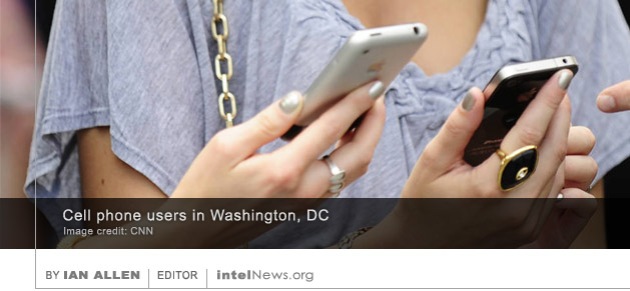 THE CHANNEL ISLANDS, AN archipelago consisting of dependencies of the British Crown located off the northern coast of France, are being used as an offshore global spy center due to their unregulated telecommunications industry, according to a new study. The archipelago is made up of Jersey and Guernsey, groups of islands that are not technically part of Britain, but are instead considered offshore British territories. They are regularly new study as offshore tax havens.
But now a referred to by Britain’s Guardian newspaper and the Bureau of Investigative Journalism, claims that lax regulation of the Channel Islands’ telecommunications systems is allowing foreign spy agencies and contractors to use them as a base to carry out worldwide surveillance operations. Many of these operations rely on SS7, a decades-old feature of the global cellular telecommunications system, which allows cellular providers to provide service to mobile phone users as they travel internationally.
The SS7 system allows a mobile phone registered in a specific country to be used in a different country, and its user to be billed for the service. But to do so with accuracy, the SS7 system enables the service provider to track the owner of the device being charged for the phone call. This is done through what is known in cellular telecommunications parlance as a Provide Subscriber Location, or PSL, request.
Citing “leaked data, documents and interviews with industry insiders”, the study claims that intelligence agencies exploit the Channel Islands’ lax telecommunications regulation, which allows them to file PSL requests, not for billing purposes, but to detect the physical whereabouts of targets around the world. They do so by renting access from mobile phone operators based in the Channel Islands.
These PSL requests originate from Britain’s +44 country code, which is generally trusted in the global telecommunications industry, and are thus facilitated without raising suspicions. Notably, many of these PSL queries do not seek to acquire bulk data on users, but rather target specific individuals around the world. Additionally, if handled in certain ways, PSL queries can provide spies with access to the content of targeted communications, and thus information relating to unsuspecting users’ personal data, including text messages, bank accounts and passwords.
The study suggests that the British government is aware of this misuse of the system, but is finding it difficult to stop it because it has no direct legal jurisdiction over the Channel Islands.
► Author: Ian Allen | Date: 22 December 2020 | Permalink
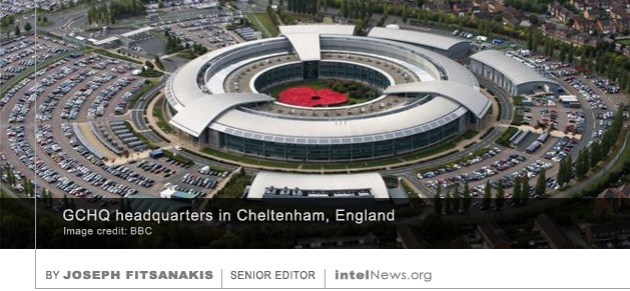 BRITAIN’S SIGNALS INTELLIGENCE AGENCY has been severely criticized in a report for undertaking a pointless “vanity project” that exceeded its allocated funds by 83 percent and needlessly cut into its operational budget. The agency, known as the Government Communications Headquarters (GCHQ) is responsible for collecting signals intelligence (SIGINT) and protecting the information systems of the British government and Armed Forces.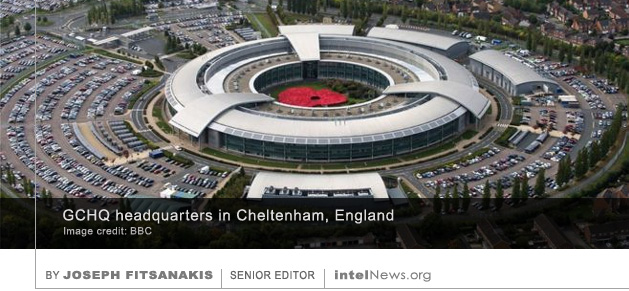
 A former employee of British intelligence has strongly denied accusations, which surfaced last week in the European press, that he gave secrets to two Chinese operatives in exchange for money. Some news outlets have suggested that he is currently under investigation by at least one European government.
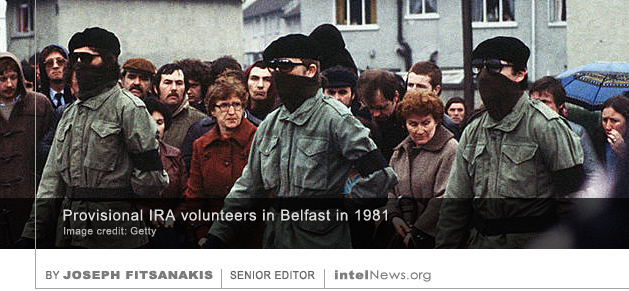
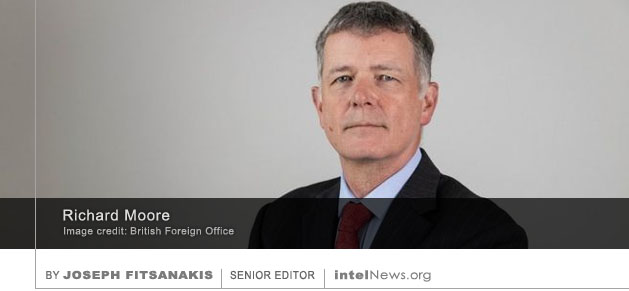 The grandfather of the incoming director of Britain’s main external intelligence agency was a member of the Irish Republican Army and was awarded a medal by Irish separatists for fighting against British rule in Ireland. British Foreign Secretary Dominic Raab
  Senior United Kingdom officials have said the country will seek to “modernize” its laws on counterespionage, after a long-awaited parliamentary report criticized the government for failing to stop Russian spy operations. Earlier this week saw the release of the report by the British Parliament’s Intelligence and Security Committee. The
 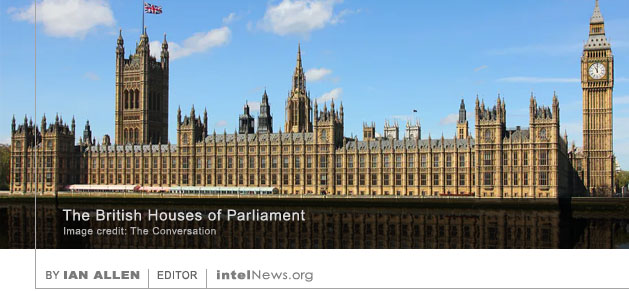 Britain is abuzz today with news of the long-awaited release of the Parliament’s
  considerably longer. It was given to the prime minister on October 17. But by November 6, when parliament was dissolved in preparation for the election that brought Boris Johnson to power, it had not been approved. It finally came out yesterday, after numerous and inexplicable delays. Many speculated that the government did not want to deal with the uncomfortable conclusions in the report.
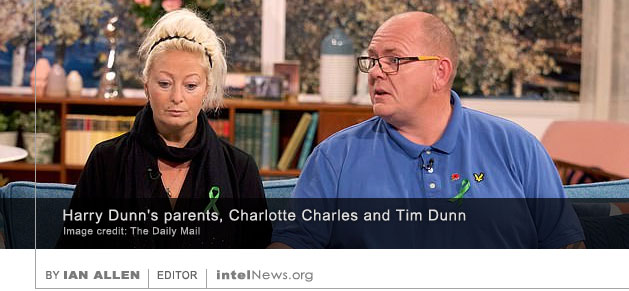 A so-called ‘red notice’ has been issued by INTERPOL for Anne Sacoolas, an alleged former employee of the United States Central Intelligence Agency, who is accused of causing an accident that killed a man in the United Kingdom last year. The accident victim is Harry Dunn, 19, who died on August 27, 2019, after a collision with a automobile that was being driven by Sacoolas. British police have said that Sacoolas’ car was being driven on the wrong side of the street at the time of the accident.
 The United States could end all sensitive intelligence operations and withdraw its intelligence assets from the United Kingdom if a leading Chinese company is hired to upgrade the country’s telecommunications network. The British government has come under
 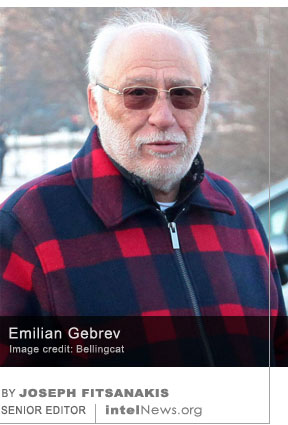 A Russian intelligence officer, who was allegedly involved in an attempt to kill a Bulgarian arms dealer in Sofia in 2015, is now a diplomat, according to report published on Tuesday by the investigative website Bellingcat. The website also claimed that there is a possible connection between the intelligence officer and the
 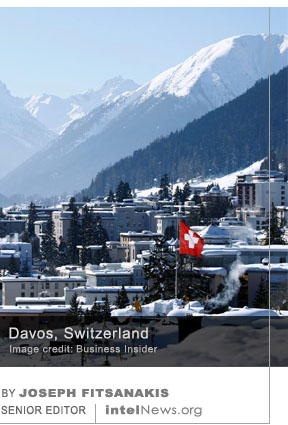 A Swiss newspaper has revealed a previously unreported detention of two Russian diplomats in the luxury Swiss Alpine resort of Davos, which is currently hosting the annual meeting of the World Economic Forum (WEF). The development prompted British authorities to warn some British citizens participating in the WEF meeting that they may be in physical danger.
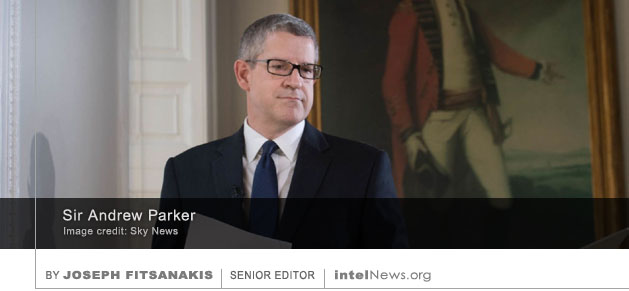 The director of Britain’s domestic intelligence agency has dismissed warnings by the United States that intelligence sharing between the two allies will be impeded if London decides to use Chinese-made telecommunications hardware. The British government has come under relentless pressure by Washington to bar Huawei Technologies, one of the world’s leading telecommunications hardware manufacturers, from competing for contracts to build the United Kingdom’s 5th generation cellular communications infrastructure.
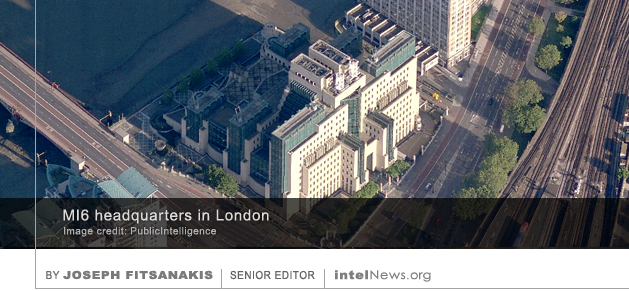 The floor plans of the headquarters of MI6, Britain’s foreign-intelligence agency, were temporarily lost by a contractor, an incident that led to a temporary lockdown of the building and the termination of the contract, according to media reports. The alleged incident took place at 85 Albert Embankment, a distinctive-looking building that has served since 1994 as the headquarters of MI6 —known officially as the Secret Intelligence Service, or SIS. The imposing structure is located on the bank of the River Thames alongside Vauxhall Bridge in downtown London.






 intelNews.org
George Blake, arguably the most prolific Soviet spy of the Cold War, dies at 98
December 28, 2020 by Joseph Fitsanakis 3 Comments
Blake was nearly 18 when German troops entered his native Holland, prompting him to join the local anti-Nazi resistance forces. A British subject thanks to his Egyptian Jewish father, who had acquired British citizenship by fighting in British uniform during World War I, Blake eventually made his way to London via neutral Spain and Gibraltar. Within two years, he had been recruited by the Secret Intelligence Service, or MI6, and by war’s end he was working in its Dutch Section.
Named after King George by his fiercely pro-British and royalist father, Blake drew no suspicion by his MI6 colleagues. He was hard-working and came across as a strict Calvinist, with strong religious leanings. But his view of the Soviet Union began to change at Cambridge University, where he had been sent by MI6 to learn Russian language and history. In 1950, while he was serving under official cover at the British embassy in Seoul, Korea, he was captured and detained for three years by North Korean forces. His ideological defection to communism appears to have taken place during his capture, during which he was given access to English-language Marxist literature and had long discussions with Soviet political instructors.
By 1953, when he was released by his captors and returned to a hero’s welcome in London, Blake was a committed communist. Less than a month following his release, he made contact with Nikolai Rodin (codename SERGEI) who was the KGB’s station chief in London. He began to spy for the Soviet Union, and did so for eight years, including during his stint as an MI6 case officer in Berlin. During that time, he is believed to have betrayed information that led to the detection of over 500 Western intelligence officers and assets operating behind the Iron Curtain, with as many as 44 of those losing their lives as a result. His career as a double spy ended in 1960, when he was betrayed by Polish defector Michael Goleniewski. Goleniewski’s debriefing by the United States Central Intelligence Agency helped Britain identify two Soviet moles inside its intelligence establishment, one of whom was Blake.
In 1960, after pleading guilty to espionage, Blake began serving a 42-year prison sentence in Britain’s Wormwood Scrubs maximum security prison complex. But in 1966 he was able to escape with the help of a group of Irish republican prisoners, and made contact with Soviet intelligence. He was eventually smuggled into East Germany and from there to Russia. Once there, he joined the KGB and served as a consultant and instructor until his retirement in the early 1990s. He learned to speak Russian fluently, married a Russian wife (his British wife having divorced him once he was convicted of espionage) and had a son.
Russian President Vladimir Putin issued a statement on Sunday, praising Blake’s espionage “in the cause of peace”, while the SVR described him as a model intelligence officer. A report published by RIA Novosti on Sunday said that the Moscow city council was considering a proposal to rename a street in the Russian capital after Blake.
► Author: Joseph Fitsanakis | Date: 28 December 2020 | Permalink
Filed under Expert news and commentary on intelligence, espionage, spies and spying Tagged with Cold War, defectors, espionage, George Blake, history, KGB, MI6, News, obituaries, UK