News you may have missed #0135

  • More revelations in “unprecedented” book on MI5 history. More revelations in Christopher Andrew’s In Defense of the Realm include the disclosure that Margaret Thatcher tried to get MI5 to spy on British trade union activists when she was Prime Minister (MI5 refused). Meanwhile, Professor Andrew has begun serializing selected chapters of the book in The London Times, here and here.
  • Court lets Canadian spies snoop on targets overseas. A court ruling has permitted the Canadian Security Intelligence Service and the Communications Security Establishment to eavesdrop on Canadian nationals traveling overseas. Until now, the two agencies could spy on Canadians so long as they were within the country’s borders.
  • CIA endorses cloud computing. The CIA is emerging as one of the US government’s strongest advocates of cloud computing, even though “cloud computing as a term really didn’t hit our vocabulary until a year ago”, according to Jill Tummler Singer, the CIA’s deputy Chief Intelligence Officer. This article, however, fails to mention that the NSA is also moving to cloud computing in a big way.

Bookmark and Share

News you may have missed #0134

  • S. Korean government tries to silence anti-surveillance activist. Park Won-sun, the executive director of the Hope Institute, a civic think tank, says he will continue to criticize the country’s National Intelligence Service (NIS) for spying on civilians, despite charges filed against him by the government.
  • Cleric in CIA kidnap trial seeks millions. Hassan Moustafa Osama Nasr, an Egyptian cleric kidnapped by the CIA from a Milan street in 2003, has asked for €10 million ($15 million) in damages from the American and Italian defendants charged in his abduction.
  • Three US-based Chinese nationals accused of selling arms to China. Chinese nationals Zhen Zhou Wu, Yufeng Wei, Bo Li and Chitron Electronics and Shenzhen Chitron Electronics Co. Ltd., face a 38-count indictment for conspiring to violate the US Arms Export Control Act for allegedly exporting defense weapons and electronics, money laundering and filing false documents with the US Department of Commerce.

Bookmark and Share

News you may have missed #0133

  • Book examines Central Asian espionage in WWI. On Secret Service East of Constantinople, by Peter Hopkirk (John Murray Publishers), examines the role of German intelligence services in Kaiser Wilhelm’s attempt to gain influence in the Ottoman Empire, the Caucasus, Persia, Afghanistan and India. A very interesting, under-researched aspect of World War I.
  • CIA intercepted communication between Zazi and al-Qaeda. A local TV station in Denver, Colorado, quotes “intelligence officials familiar with the investigation” of Najibullah Zazi, as saying that the CIA alerted US federal agencies after intercepting a conversation between Zazi and a senior al-Qaida operative. No word yet about this from the FBI, which is supposed to handle domestic terrorism cases.
  • US defense secretary hints at more secret nuke sites in Iran. Speaking alongside Secretary of State Hillary Clinton last night at a CNN/George Washington University forum, Robert Gates dropped what seemed to be a big hint that the United States knows much more about the Iranian nuclear program than the Iranians might think.

Bookmark and Share

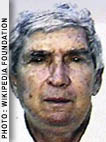
Anti-Castro terrorist was CIA informant, declassified documents show

Luis Posada Carriles

Posada Carriles

By JOSEPH FITSANAKIS | intelNews.org |
An anti-Castro operative, who has admitted planting bombs against civilian targets in Cuba, and currently faces immigration fraud charges in the US, was a CIA informant, newly declassified documents show. Five CIA memoranda from 1965 and 1966 reveal that Luis Posada Carriles, code name “A15”, acted as an information link between Langley and violent anti-Castro groups in Miami, Florida, in which he was active. The five documents were declassified by the CIA between 1998 and 2003 and were made public on Tuesday by Peter Kornbluh, who heads the National Security Archive’s Cuba Documentation Project at George Washington University. Remarkably, the documents show that Posada’ handler at the CIA, Grover T. Lythcott, believed that the Cuban exile was a “moderate force” who could be counted on not to embarrass the US government or the CIA with his actions. Read more of this post

Documents show Japan government aide was CIA mole

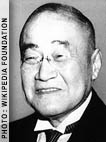
Shigeru Yoshida

Shigeru Yoshida

By JOSEPH FITSANAKIS | intelNews.org |
A senior military aide to Japanese Prime Minister Shigeru Yoshida in the 1950s was an informant for the CIA, according to documents unearthed at the US National Archives. A CIA memorandum dated November 26, 1956, describes Lt. Gen. Eiichi Tatsumi (ret.), who advised the Japanese Prime Minister on defense matters, as “one of the best, safest, most qualified persons in Japan today for CIA use”. Waseda University professor Tetsuo Arima, who unearthed the documents, said the CIA codenamed Tatsumi POLESTAR-5. Bearing fresh memories from Japan’s destructive participation in World War II, the government of Prime Minister Yoshida refused calls to remilitarize Japan. But a hardcore group of senior military officials, including Tatsumi, who had fought in the war, wished to see Japan rearm. Washington, which interpreted Yoshida’s refusal to rearm as a friendly gesture to Russia, also wanted to see Japan remilitarize. Read more of this post

Analysis: Spy agencies disagree on status of Iran’s nuclear program

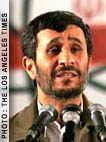
M. Ahmadinejad

M. Ahmadinejad

By JOSEPH FITSANAKIS | intelNews.org |
Western intelligence agencies agree that Iran’s ultimate aim is to fortify its military posture with nuclear weapons. Putting aside, however, the broad concurrence of opinion about Iran’s long-term goal, very little is clear about the immediate status of the country’s nuclear program. Iran maintains that its goal is peaceful; namely to invest in nuclear energy so as to free up large quantities of oil for exports. It is important to stress that the consensus among America’s intelligence agencies is that this is in fact Iran’s immediate goal. This was pronounced in the 2007 National Intelligence Estimate (NIE), a publicly available annual report cooperatively authored by the heads of all 16 US intelligence agencies. The 2007 report stated “with high confidence that in fall 2003, Tehran halted its nuclear weapons program”.  The reality is that the existence of Iran’s second uranium enrichment plant –of which, incidentally, Western and Israeli intelligence agencies have been aware for years– does not necessarily contest the findings of the 2007 NIE. IntelNews editor Dr. Joseph Fitsanakis explains why this is so on the website of the Research Institute for European and American Studies. Read article →

Bookmark and Share

News you may have missed #0128

  • US government appeals judge’s order in Cuban Five spy case. US government officials are contending a judge’s order because they say it would be detrimental to US national security. The order requires the US government to turn over any national security damage assessments in the Cuban Five case. Washington accuses the Five of spying on the US for Cuba. Three of the five are to be given new sentences on October 13 after an appeals court ruled that the initial sentences they received (ranging from 19 years to life) were too long.
  • Indian spies want access to missed calls. Indian security agencies have told the country’s Department of Telecommunications that they need access to missed calls because “anti-social elements” may be using the system to communicate without actually making a call. Last month, India’s Intelligence Bureau asked for all VOIP (internet-based) calls in the country to be blocked until it figures out a mechanism to track them. It also said it wants access to the content of all mobile phone calls in the country.
  • New book investigates Stasi’s scientific espionage. Documents from the vaults of HVA (Hauptverwaltung Aufklärung), the foreign department of the Stasi, the East German Ministry for State Security, which were purchased by the CIA from a German informant in 1992, were made available in 2005 to Kristie Macrakis professor of history at the Georgia Institute of Technology in Atlanta. Her book, Seduced by Secrets: Inside the Stasi’s Spy-Tech World, offers a rare look into the Stasi’s secret technical methods and sources. Macrakis’s analysis of the CIA material reportedly reveals that about 40% of all HVA sources planted in West German companies, research institutions and universities were stealing scientific and technical secrets.

Bookmark and Share

Emirates authorities expel Lebanese who refuse to spy on Hezbollah

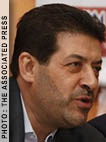
Hassan Alayan

Hassan Alayan

By JOSEPH FITSANAKIS | intelNews.org |
A story by Agence France Presse appears to corroborate allegations, reported on by intelNews on September 4, that United Arab Emirates authorities are systematically expelling from the country Lebanese Shiites who refuse to spy on Hezbollah. A spokesman for the expelled Lebanese said hundreds of them were “summoned by the security services in the UAE before being expelled, and were asked to spy on fellow Lebanese in the Emirates as well as Hezbollah members or face deportation”. Speaking at a conference in Beirut, Hassan Alayan said the expulsions began last June, and so far have specifically targeted the 100,000-strong Lebanese community in the Emirates. Read more of this post

News you may have missed #0125

  • US officials deny deal with Russia on missile shield. Officials from the US Department of Defense have denied persistent rumors that Washington’s decision to scrap the controversial missile defense shield was part of a secret deal with Moscow. They also continue to insist that “[t]his is not about Russia. It never has been about Russia”, according to US defense undersecretary Michele Flournoy.
  • US DHS is hiring cyber experts. The Obama Administration has approved a request by the US Department of Homeland Security to hire of up to 1,000 cyber experts over the next three years. The recruits will include “cyber analysts, developers and engineers”. One hopes the move will also patch the countless holes in the Department’s cyber defense posture, which were revealed last month in an internal report, to little media attention.
  • MI6 is also hiring. Britain’s Secret Intelligence Service –also known as MI6– is hiring and has uploaded a snap test (called “selection tool”) on its website to test whether those interested have what it takes to be a spy. The test, which evaluates how well potential candidates can lie, is located here.

Bookmark and Share

FBI ordered to release Cheney records in Valerie Plame probe

Valerie Plame

Valerie Plame

By IAN ALLEN | intelNews.org |
A US federal judge has ordered the FBI to release the transcript of an interview with former US vice-president Dick Cheney, conducted during an investigation into who leaked the identity of CIA operative Valerie Plame. Plame sought compensation after she was publicly named as a secret CIA operative. Along with her husband, former ambassador Joseph Wilson, she has fought a legal campaign, arguing that several Bush administration officials, including former Vice President Dick Cheney, and even President George W. Bush himself, were behind the leak of her CIA role. Cheney had a lengthy interview with prosecutors pursuing the leak case, but the transcripts of the exchange have so far remained secret on national security grounds. But US district Judge Emmet G. Sullivan said yesterday that there is no justification to withhold the entire interview since the FBI investigation has now concluded. Read more of this post

US Looks Away from Worsening Philippines Rights Record

Lumbera

Lumbera

By JOSEPH FITSANAKIS and IAN ALLEN | intelNews.org |
Just days after Filipino prizewinning poet and dramatist Bienvenido Lumbera caught a Naval Intelligence Security Force agent spying on him outside his home, another Filipino intellectual has come forward with allegations of government spying. Pedro “Jun” Cruz Reyes, professor of creative writing at the University of the Philippines in Diliman, Quezon City, said he has been the subject of surveillance investigations by government agents since 2006. Such incidents are not a new phenomenon in the Philippines. In 2005, the US State Department noted in its annual human rights report that the Philippines National Police was the country’s “worst abuser of human rights” and that government security elements often “sanction extrajudicial killings and vigilantism”. However, the report adds that these practices are utilized “as expedient means of fighting crime and terrorism”, which may explain why no discernable action has been taken by US authorities to prevent them. In an article published today in The Foreign Policy Journal we examine the recent record of US-Philippine relations. Continue reading at The Foreign Policy Journal

Bookmark and Share

News you may have missed #0123

  • Get ready for body cavity airport searches! Security officials are concerned over a tactic newly employed by al Qaeda, whereby suicide bombers store explosives inside their bodies to avoid detection.
  • Did the US do a deal with Russia on Iran? Two weeks ago, Russian President Dmitry Medvedev hinted that Russia could back tougher sanctions against Iran’s nuclear energy program. Does this signify a deal with Washington, namely US scrapping its missile shield program if Moscow would back efforts to impose tougher sanctions against Iran?
  • Lebanese mayor accused of spying for Israel. Lebanese authorities say Ziad Homsi, mayor of the city of Saadnayel, was recruited by Israeli intelligence in Beijing, China. Lebanon’s immense counterintelligence operation is widening by the hour.

Bookmark and Share

Pakistani spies “visibly angry” at US charge of Taliban links

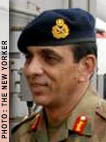
A.S. Pasha

A.S. Pasha

By IAN ALLEN | intelNews.org |
Recently, Inter-Services Intelligence (ISI), Pakistan’s secretive spy service, gave Washington Post’s associate editor, David Ignatius, a rare look inside its Islamabad headquarters. However, the first known visit to the ISI by a Western journalist in recent years failed to impress the Pakistanis. The latter became “visibly angry” when Ignatius asked them whether they are withholding information about al-Qaeda and the Taliban, as the CIA and other US intelligence agencies claim. The charges, which are disputed by Pakistani officials, led to “a long and animated conversation” with ISI Director, Lieutenant General Ahmed Shuja Pasha, who forbade the US journalist from quoting him directly. Read more of this post

US State Dept. third highest official was espionage suspect, says ex-FBI agent

Marc Grossman

Marc Grossman

By IAN ALLEN | intelNews.org |
Marc Grossman, Under Secretary of State during the Bush Administration, was suspect in a lengthy counterespionage probe by the FBI, according to a former senior Bureau agent. John M. Cole, an 18-year FBI veteran who worked for the Counterintelligence Division of the Bureau’s National Security Branch, said the investigation into Grossman centered on activities by Turkish and Israeli intelligence in the United States. Cole was speaking to former CIA agent Philip Giraldi, currently of The American Conservative magazine, a paleoconservative publication, which was one of a handful of US media outlets that gave column space to recent revelations of Turkish intelligence activities by FBI whistleblower Sibel Edmonds. Edmonds, a translator for the FBI, spent seven years trying to get a US court to hear her allegations that Turkish intelligence agents penetrated her unit, the State Department, the Pentagon and Congress. Read more of this post

News you may have missed #0122

  • Canada authorities push for Internet spy bill. The push for new Internet surveillance capabilities in Canada –dubbed the “lawful access” initiative– dates back to 1999, when government officials began crafting proposals to institute new surveillance technologies in Canadian fifth-generation networks. Internet Service Providers are skeptical of the initiative, while law enforcement and security agencies argue that the changes are long overdue.
  • Peru’s former leader guilty of spying, bribery. Peru’s former strongman Alberto Fujimori pleaded guilty today to charges of wiretapping opponents and paying bribes to lawmakers and publishers during his rule from 1990 to 2000. Unfortunately, the CIA supported Fujimori and his right-hand man, Vladimiro Montesinos and even suppressed a CIA officer who tried to argue that supporting such lowlifes was politically wrong and ethically immoral.
  • CIA honors two spies. CIA director Leon Panetta awarded the Trailblazer Medal (the supreme decoration in the US intelligence community) to two agents, one of whom is the late John Guilsher, who recruited Soviet scientist Adolf Tolkachev at the height of the Cold War. Are we to presume that Panetta has not read the recent paper by Benjamin Fischer, former CIA clandestine operative and retired CIA historian, who claims that Tolkachev was actually a KGB double agent tasked by Soviet intelligence with providing US military strategists with false information?

Bookmark and Share