News you may have missed #787

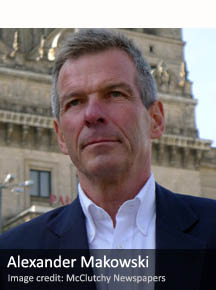
Alexander Makowski By IAN ALLEN | intelNews.org |
►►An interview with a senior Yemeni spy. Here’s something you don’t read every day: an interview with Ahmed Bin Mo’aili, 66 (pictured here), who worked as a spy for Yemen’s Political Security Organization (PSO) for more than 30 years. He says that, due to his “different duties in different countries”, which required him to travel in several Arab countries, he acquired “tens of wives” over the years. He is now upset with the PSO because the Organization has “separted him from his 31 children who live all around the Arab countries he has worked in and who are awaiting his return”.
►►Cyprus wants answers from UK over Syria spy claims. Dr. Erato Kozakou-Marcoullis, the Minister of Foreign Affairs of the Republic of Cyprus, has asked British authorities for “a full explanation” into media reports that UK military installations in Cyprus are providing intelligence to Syrian rebels. Earlier this month, The London Times claimed that two British military bases on Cyprus, located in Dhekelia and Akrotiri, were being used to collect signals intelligence on Syria. The data collected at the listening posts, operated by the General Communications Headquarters, Britain’s foremost signals intelligence agency, was passed on to the Free Syrian Army through Turkish intelligence operatives, said The Times. But the Cypriot Foreign Minister said that it was crucial that the bases were not being used for purposes not enshrined in the island’s Treaty of Establishment, which mandates the British Bases to be used for defensive purposes only.
►►CIA ‘turned down offer’ to kill bin Laden in 1999. In late 1999, two years before the 9/11 terrorist attacks, which killed nearly 3,000 people, a group of Afghan agents loyal to an anti-Taliban guerrilla leader proposed assassinating Osama bin Laden. In returne, they asked for the $5 million reward the Bill Clinton administration had offered for bin Laden’s capture. But the CIA rejected the plan, saying: “we do not have a license to kill”. This is according to the book Ferreting Out Bin Laden (not yet available in English), by Polish former spy Alexander Makowski (pictured), who claims he was the Afghans’ go-between on the plot. Makowski’s credentials are many: the son of a spy, he attended primary school in Great Britain, high school in the United States, and received a postgraduate law degree from Harvard. He graduated from the Polish military intelligence academy at Stare Kiejkuty before spending 20 years in Polish intelligence.
News you may have missed #786

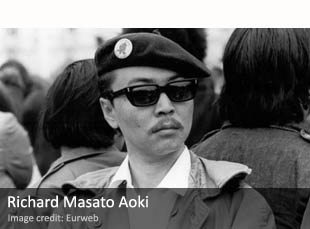
Richard Masato AokiBy IAN ALLEN | intelNews.org |
►►US Pentagon wants to share intel with Egypt. The US Department of Defense is offering Egypt a package of classified intelligence-sharing capabilities designed to help it identify military threats along its border with Israel. According to an unnamed senior US official, the Pentagon leadership is concerned about “rising militancy” along the Egyptian-Israeli border. The purported intelligence package includes satellite imagery, data collected through unmanned drones, as well as intercepts of cell phone and other communications among militants suspected of planning attacks. The Egyptian intelligence chief was summarily fired earlier this month, after more than a dozen Egyptian soldiers were killed near Israel’s border when gunmen attacked a post and tried to enter Israel.
►►Researcher disputes Aoki was FBI informant. Last week author Seth Rosenfeld alleged that prominent 1960s Black Panther Party member Richard Masato Aoki, who gave the Black Panthers some of their first firearms and weapons training, was an undercover FBI informer. But the claim, which is detailed in Rosenfeld’s new book, Subversives, is disputed by another researcher, Diane C. Fujino. A professor and chair of Asian American studies at UC Santa Barbara, and author of the recently published Samurai Among Panthers, Fujino argues that Rosenfeld has not met the burden of proof on Aoki, and that he “made definitive conclusions based on inconclusive evidence”.
►►Russian intelligence to monitor blogosphere. Russia’s Foreign Intelligence Service, the FSB, says it plans to fund a program that monitors the Internet’s “blogosphere”, with an aim to “shape public views through social networking”. Citing unnamed sources from inside the FSB, Russian newspaper Kommersant said that the project’s research stage will cost around $1 million. The article implies that the online surveillance and opinion-shaping program will target both Russian- and foreign-language online users. This is not the first time that the FSB has displayed interest in online social networking in recent years.

Cuban Vice President’s daughter defects to the United States

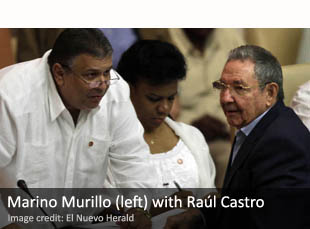
Marino Murillo (left) with Raúl CastroBy JOSEPH FITSANAKIS | intelNews.org |
The daughter of one of Cuba’s most senior government officials secretly defected to the United States earlier this month and is now living in Tampa, Florida, according to a Spanish-language newspaper. The paper, El Nuevo Herald, published in Florida, said Glenda Murillo Diaz, 24, daughter of Cuban Vice President Marino Murillo Jorge, defected on August 16, 2012. Diaz, a psychology student at the University of Havana, had apparently left Cuba earlier this month to attend an international psychology conference in Mexico. But instead of appearing at the conference, she crossed from Mexico into the US at Laredo, Texas. Her father, Marino Murillo, a prominent Cuban economist, is currently Vice President of Cuba’s State Council and longtime member of the Cuban Communist Party’s Political Bureau. In 2009, soon succeeding his brother Fidel to the post of Cuba’s President, Raúl Castro appointed Murillo Minister of Planning and Economy. Upon assuming this post, Murillo became the leading figure in the implementation of the administration’s ambitious economic reform, which is aimed at revitalizing the island’s finances. Since then, Murillo is often mentioned as one of a number of possible successors to Raúl Castro. He has made headlines recently, after voicing criticism of economic reforms taking place in China and Vietnam, and claiming that Cuba’s economic reforms aim at the establishment of a hybrid planned and market economy, but that “the planned economy will remain dominant”. Read more of this post

News you may have missed #785 (interview edition)

Stella RimingtonBy IAN ALLEN | intelNews.org |
►►Interview with first-ever NSA Compliance Director. John DeLong, the first-ever compliance director at the US National Security Agency, has given an interview to NextGov. In it, he says that “we’re nothing if we lose the confidence of the American people”. He is referring to frequent allegations, by whistleblowers and others, that the Agency is increasingly spying on Americans’ communications. As Compliance Director, DeLong is responsible for ensuring that the NSA abides by US law, which forbids it from intercepting electronic messages exchanged between US citizens or persons.
►►Ex-MI5 boss offers comment on WikiLeaks. Former MI5 Director-General Dame Stella Rimington has criticized “the indiscriminate pouring out into the public domain of streams of leaked documents by Julian Assange and his WikiLeaks organization”. But she also said that the US government should have taken better steps to prevent WikiLeaks from acquiring the information in the first place. Speaking at an international archiving conference in Brisbane, Australia, Dame Stella said that while the WikiLeaks saga could prompt the US government to come up with better databases, it would more likely encourage it to be even more secretive. This, she added, “must be absolutely the opposite effect of what WikiLeaks was seeking”.
►►Interview with NSA whistleblower. Filmmaker Laura Poitras interviews William Binney, a 32-year veteran of the US National Security Agency, who helped set up STELLAR WIND, the NSA’s top-secret domestic spying program, which was put in place after 9/11. The program was so controversial that it nearly caused top Justice Department officials to resign in protest in 2004. Binney, who resigned over STELLAR WIND in 2001, and began speaking out publicly in the last year, explains how the program he created for foreign intelligence gathering was turned inward on America.

Interview with NSA whistleblower

Situation Report: Is DARPA’s Phoenix Program Intelligence-Related?

DARPA's Phoenix ProgramBy TIMOTHY W. COLEMAN| intelNews.org |
The Defense Advanced Research Projects Agency (DARPA), the out-there research arm of the United States Department of Defense, is well known for it’s futuristic and bleeding-edge technology research projects. Often times, the Agency’s highflying efforts seem to protrude a motto of “failure is an option”. In fact, a 2003 article in The Los Angeles Times states that DARPA’s failure rates are between 85 and 90 percent. But this has not prevented the Agency from trying out new things, which sometimes help shape the future. It’s predecessor, Advanced Research Projects Agency, renamed DARPA in 1972, helped create what is today the Internet. Multiplexed Information and Computing Service (aka UNIX), Speech Interpretation and Recognition Interface (Siri, that female voice on your iPhone —yup, she’s a spinout from a DARPA Artificial Intelligence project called CALO), and Onion Routing (core technique for anonymous communications over computer networks, i.e. the base technology underlying Tor), were all funded, in part, by DARPA. Unsurprisingly, DARPA is at it again. The question remains, though, can the hype become a reality or will the new effort find a home in the vast majority of DARPAs forward-looking failed adventures? Read more of this post

Judge orders CIA to release files on drug kingpin Pablo Escobar

Pablo EscobarBy JOSEPH FITSANAKIS | intelNews.org |

In the late 1980s, it was nearly impossible to sit through a primetime news bulletin without coming across the name ‘Pablo Escobar’. Born in 1949 in the town of Rionegro, Colombia, Escobar rose to become the leader of the Medellín cartel, history’s most notorious narcotics smuggling ring. By 1986, the Medellín cartel controlled over 80 percent of the global cocaine market, shipping daily around 15 tons of the drug (worth an estimated street value of $500,000) to the United States. In 1989, Forbes magazine included Escobar on his list of the world’s richest persons, with an estimated net worth of $3 billion. By that time, the Medellín cartel had become powerful enough to directly threaten the very institutional integrity of the Colombian state. At the same time, Escobar carefully cultivated his ‘Robin Hood’ image by regularly building hospitals, schools, and churches in some of Colombia’s most impoverished regions. He was thus able to surround himself with a sea of grateful and devoted supporters, who directly depended on his generosity for their livelihood. They also shielded him from the reach of the Colombian and United States government forces, which repeatedly went after him without success. Eventually, the Colombian government, in association with the US Drug Enforcement Administration and the Central Intelligence Agency, managed to stop Escobar by creating a rival organization called Los PEPES —a Spanish-language acronym that stands for ‘People Persecuted by Pablo Escobar’. Los PEPES, which consisted of members of rival drug smuggling cartels, as well as trained mercenaries belonging to Colombian rightwing militias, went after Escobar’s closest associates with indescribable ruthlessness. They hunted down and eventually tortured and killed several of his relatives, advisors and bodyguards. Ultimately, in 1993, they helped the Colombian National Police corner Escobar and shoot him dead at a Medellín barrio. The celebrations in Washington and Bogotá didn’t last long; as soon as Los PEPES disbanded, many of its leading members regrouped to found the United Self-Defense Forces of Colombia (AUC), a rightwing paramilitary group that has since killed thousands of civilians in Colombia’s bitter civil war. The AUC, which funds its operations through kidnappings and drug trafficking, is today a designated terrorist group by most Western governments, including the United States and the European Union. Read more of this post

News you may have missed #783

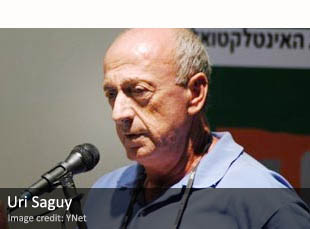
Uri SaguyBy IAN ALLEN | intelNews.org |
►►Israeli ex-intel chief says warns of ‘hysteria’ over Iran. Major General Uri Saguy (a.k.a. Uri Sagi), who was head of the IDF’s Operations Directorate during the 1982 Lebanon war, and Military Intelligence chief from 1991 to 1995, has warned of an “orchestrated and purposely timed hysteria that puts the country into a state of anxiety, artificial or not”, regarding the Iranian nuclear issue. Saguy, who resigned from the IDF in 1995 due to a conflict between him and the Chief of General Staff, added that “it would be a mistake if Israel uses force, certainly now, in order to thwart the Iranian nuclear potential”. The essence of Saguy’s message, notes Ha’aretz‘s Amir Oren, is that Israel’s citizens cannot trust Defense Minister Ehud Barak or Prime Minister Benjamin Netanyahu.
►►Australian spy chief warns of economic espionage. The director-general of the Australian Security Intelligence Organisation, David Irvine, has warned that the online revolution has left Australian companies increasingly vulnerable to cyber attacks and commercial espionage. Speaking to a business audience in Canberra, Irvine said that most online attacks in the business world go undetected, despite growing awareness of the threat. Asked how much commercial cyber crime went undetected, he said: “I would be very surprised if we who are active in this area are picking up the greater proportion of it, in fact, quite the reverse”.
►►Top US military official objects to attack on Iran. As Israeli officials are telling local reporters that they’re really, really ready to attack Iran’s nuclear facilities, and they mean it this time, the top US military officer is saying what a terrible idea that would be. “I may not know about all of [Israel’s] capabilities”, said General Martin Dempsey, the chairman of the Joint Chiefs of Staff. “But I think that it’s a fair characterization to say that they could delay but not destroy Iran’s nuclear capabilities”. Left unsaid: in a few years, the US and Israel would be back to the same standoff with Iran —except this time it might do so amidst a proxy terrorist war to avenge the Iranians.

Ex-CIA officer urges Bulgaria to probe alleged Hezbollah attack alone

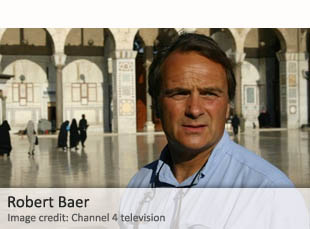
Robert BaerBy JOSEPH FITSANAKIS | intelNews.org |
A 22-year veteran of the United States Central Intelligence Agency, who spent over a decade in the Middle East, has urged Bulgaria to probe a recent suicide attack against Israeli tourists on its soil without relying on American or Israeli assistance. Robert Baer, who is considered a foremost intelligence expert on Hezbollah, the Lebanese Shiite group accused of orchestrating the attack, said that Bulgarian authorities should keep the investigation free of the “intelligence games” currently taking place between the US, Israel and Iran. He was speaking Sunday on Bulgaria’s bTV, in reference to the July 18 blast that hit a bus stationed outside the main airport building in the Black Sea resort town of Burgas. The suicide bomber, whose identity remains unknown, killed himself, the Bulgarian bus driver and five Israeli tourists. Soon after the attack, Israel announced that it had gathered “unquestionable intelligence” showing that Hezbollah, backed by Iran, was behind the suicide bombing. But according to Baer, who spent several years in Lebanon in the 1980s, Israeli and American intelligence investigators are too politicized to be able to provide objective evidence as to the culprits of the attack. The former CIA case officer told bTV that both Tel Aviv and Washington “want to lead a war in Iran” and that they will be tempted to point at Tehran as the main instigator of the suicide blast in Burgas. Read more of this post

News you may have missed #782 (history edition)

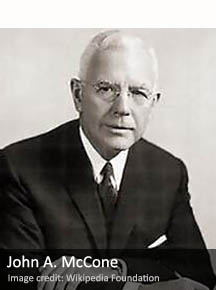
John A. McConeBy IAN ALLEN | intelNews.org |
►►Did US DCI McCone authorize CIA assassinations? By the CIA’s own admission, we do know the Agency was involved in attempts to kill or overthrow several Third World leaders during the Cold War. But the doctrine of plausible deniability meant there is no paper trail identifying those who ordered such operations. Evidence is reasonably clear that Allen W. Dulles, who served as Director of Central Intelligence (DCI) for nearly nine years, sanctioned them. But what about John A. McCone (pictured), whom Kennedy appointed as DCI in 1961? Is it possible that the CIA carried out assassination plots without his approval or even in the face of his disapproval? Newly discovered notes from a cryptic telephone call McCone made to Secretary of State Dean Rusk on August 21, 1962, support the claim that, while McCone opposed any open discussion of assassination proposals, he did not oppose the efforts as a matter of principle.
►►Ronald Reagan was FBI informant (Note: this is not new information, but it helps to refresh one’s memory from time to time). In the early stages of the Cold War, FBI Director J. Edgar Hoover feared a ‘Kremlin-controlled conspiracy’ to infiltrate Hollywood and use the world’s largest producer of motion pictures to manipulate public opinion against America. In 1945, Ronald Reagan, then an actor, passed along some political gossip of special interest to Hoover. Eventually, Reagan served as an informer in the Bureau’s investigation of alleged communist infiltration of the radio and television industry. He was listed as “Confidential Informant T-36”. Agents described him as “reliable”.
►►Senior Black Panther member was FBI informant. Prominent 1960s Black Panther Party member Richard Masato Aoki, who gave the Black Panthers some of their first firearms and weapons training, was an undercover FBI informer in California, a former agent and FBI report reveal. Aoki’s role inside the Black Panthers was discovered by Seth Rosenfeld while researching his book Subversives: The FBI’s War on Student Radicals, and Reagan’s Rise to Power, which was published today by Farrar, Straus and Giroux. Aoki’s life in the Black Panthers was documented in a 2009 film, Aoki and a 2012 biography titled Samurai Among Panthers. Neither mentioned his work with the FBI. Rosenfeld said Aoki had contended in a 2007 interview it wasn’t true he was an informant, but added: “people change. It is complex. Layer upon layer”.

Missing section of Cold War spy tunnel unearthed in Germany

Part of the unearthed tunnelBy JOSEPH FITSANAKIS | intelNews.org |
A missing section of a secret tunnel, constructed by British and American intelligence agencies to spy on Soviet and East German government communications during the Cold War has been unearthed in Germany. The tunnel, believed to be nearly half a kilometer (1/3 mile) long, was part of the Central Intelligence Agency’s Operation GOLD, also known as Operation STOPWATCH in Britain. It was based on an idea initially suggested to the Americans in the early 1950s by Britain’s Secret Intelligence Service (MI6), which had carried out a similar scheme in Soviet-occupied Austria. The CIA adopted and funded the program at the cost of nearly $7 million. At its completion, the underground tunnel connected a secret entry-point in Rudow, West Berlin, to a location beneath Alt-Glienicke in East Berlin. The aim behind the project was to tap into underground telephone cables facilitating Soviet and East German military and civilian government communications. But the KGB, the Soviet Union’s foremost intelligence agency during the Cold War, was aware of the project almost from its infancy, thanks to George Blake, a British informant who was later convicted to 42 years in prison, but managed to escape to Moscow in 1966. Interestingly, the KGB did not reveal the tunnel’s existence to the Soviet and East German militaries, fearing that a sudden rerouting of communications cables would expose Blake as a Soviet mole. Instead, they allowed the tunnel to operate for nearly a year before publicly exposing its existence in 1956. At that time, Soviet and East German authorities dug up the eastern section of the tunnel and bussed in hundreds of international reporters, as well as tens of thousands of East Germans, to view the tunnel, in a massive propaganda campaign. In 1997, part of the tunnel that crossed West Berlin was excavated and transported to the Allied Museum in Berlin. Read more of this post

News you may have missed #778 (analysis edition)

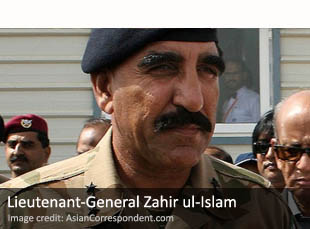
Lieutenant-General Zahir ul-IslamBy IAN ALLEN | intelNews.org |
►►Some rules restrain Mossad’s work in Iran. It is widely believed that at least four assassinations of Iranian nuclear scientists in Tehran were carried out in recent years by Mossad operatives. The perpetrators were part of an elite unit within Israeli intelligence, called Kidon, founded in 1972 to avenge the killing of 11 Israeli athletes at the Munich Olympics, by any means necessary. But veteran Israeli intelligence correspondents Dan Raviv and Yossi Melman argue that the Kidon is not technically a ‘lawless’ organization; it has to comply with a set of “unwritten regulations” adopted by Israel’s secret agencies fifty years ago.
►►Are US and Pakistani spy agencies starting to get along? The relationship between the CIA and Pakistan’s Inter-Services Intelligence (ISI) agency has been at the core of Washington and Islamabad’s alliance for over a decade now. But over the past two years, as suspicions have grown, the two sides had become near adversaries. After months of relations languishing at an all-time low, Pakistan and the US may now be opening up a fresh phase of engagement. Following US Secretary of State Hillary Clinton’s recent apology for the loss of 24 Pakistani soldiers at a border checkpoint last November, NATO supplies are rumbling through again. Washington has also released funds for Pakistani military operations it had previously withheld. And, perhaps most crucially, the two fractious allies’ top spies are said to be talking again. New ISI Director Zahir ul-Islam (pictured) visited Washington for talks earlier this month.
►►Why the US isn’t arming Syria’s opposition –yet. Up until this point, the only thing the US has owned up to is providing humanitarian assistance and communications equipment to Syrian opposition groups. A report earlier this month revealed that US President Barack Obama signed a secret “finding” in July, which allows the CIA to take action in Syria, but does not include lethal support. In other words, the US won’t be sending in Seal Team Six to take down Assad any time soon, but it is training certain groups to handle and gather intelligence. Why is that?

Comment: Why did US Government Take Blackwater to Court?

Blackwater/Academi headquartersBy JOSEPH FITSANAKIS | intelNews.org |
Last week I gave a live television interview to the main news program of RT, about the company formerly known as Blackwater. As intelNews reported on August 8, the private military outfit, which rebranded itself to Academi in late 2011, agreed to pay $7.5 million to settle no fewer than 17 violations of United States federal laws, including several charges of illegal weapons exports. This was hardly the first time that the scandal-prone company made headlines for breaking the law. Last week’s settlement followed a separate $42 million settlement agreed in 2010 with the US Department of State. The latter had charged Blackwater/Academi with violating the US Arms Export Control and International Trafficking in Arms Regulations Acts. Those familiar with the murky world of private military contractors are aware that these companies are often hired by governments precisely because they are willing and able to break the law in pursuit of tactical directives. In fact, the main difference between Blackwater/Academi and other private military contractors is not its disregard for legal boundaries, but the lack of discretion with which it keeps breaking the law. This is precisely the reason why it regularly finds itself charged with a host of different criminal violations. Read more of this post

Situation Report: Intel-on-Demand in a Web 2.0 World (Exclusive)

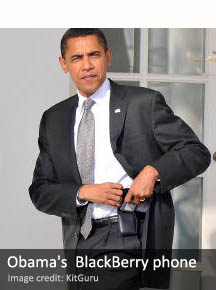
US President Barack Obama and his BlackBerry phoneBy TIMOTHY W. COLEMAN | intelNews.org |
In the United States, the President’s Daily Brief (PDB), “the highest-level intelligence analysis targeted at the key national security issues and concerns of the President”, is increasingly going digital. For that matter, so is much of the output produced by the US Intelligence Community at large. According to AOL Defense News, “The President and his top officials want and will get a single mobile device allowing them to access highly classified and unclassified data wherever they are”. The mobility feature is driven by a desire not to be tethered to a desk or a Sensitive Compartmented Information Facility (SCIF). In addition to the obvious benefits of mobility, the digitized PDB allows for a more in-depth and interactive reading of intelligence matters. In the example of the PDB, as the President reviews the nation’s most sensitive intelligence information on a specialized tablet, he can jump back and forth, click on links to take a deeper dive, see follow-up briefings, review background materials for greater context, view videos, photographs, maps and other visual aids. In fact, the PDB has gone from a static page to an interactive assessment of top intelligence concerns, landing it squarely in a quasi Web 2.0 world for the Intelligence Community. That is not to say that the President is checking Twitter, Facebook or the Rasmussen Report’s daily Presidential Tracking Poll numbers. Instead, reports indicate the digitized hardware has been scaled way down. For obvious reasons, specific details regarding the hardware’s composition and features remain classified. Read more of this post

News you may have missed #777

KH-9 HexagonBy IAN ALLEN | intelNews.org |
►►Egypt sacks spy chief after border attacks.  Egypt’s President Mohamed Morsi sacked the Director of the General Intelligence Directorate, Murad Muwafi, two generals and the governor of north Sinai region on Wednesday, after gunmen killed 16 border guards there on Sunday before last. Mowafi was the most high-profile official who lost his job, forced into early retirement as Egypt’s intelligence agencies were criticized for missing or ignoring warnings about the attack.
►►Photos reveal CIA deep-sea rescue of a spy satellite. On July 10, 1971, America’s newest photo reconnaissance satellite, the KH-9 Hexagon, dropped a capsule loaded with film toward the Earth. Due to a technical error, the capsule sunk in the Pacific Ocean. Last week, the CIA declassified documents and photographs showing how it went 16,000 feet into the sea to recover the Hexagon capsule.
►►Pre-inquest review into death of ex-KGB officer Litvinenko. A British High Court judge will soon hold a pre-inquest review into the death of Russian spy Alexander Litvinenko, officials have said. Litvinenko, who was working for MI6 following his defection from Russia, is believed to have been poisoned with radioactive polonium-210 in London, in November 2006. British prosecutors accuse former KGB operatives Andrei Lugovoy and Dmitry Kovtun for the murder. However, earlier this year Lugovoy reportedly passed a lie detector test on the subject of Litvinenko’s death, which was administered in Moscow by the British Polygraph Association.

White House silent on rumors of ‘alarming’ info about Iran nukes

Ehud BarakBy JOSEPH FITSANAKIS | intelNews.org |
The White House has refused comment on news from Israel that a recent American intelligence report contains “explosive” new findings on Iran’s nuclear program. Israeli newspaper Ha’aretz said yesterday that, according to Israel’s Minister of Defense, Ehud Barak, a new National Intelligence Estimate (NIE) on Iran is currently “being passed around senior [government] offices” in the United States. Speaking on Thursday on government-owned Israel Radio, Barak said that the new NIE has brought American estimates on Iran’s nuclear program “closer to the Israeli position”. The NIE is a classified report, produced annually, that presents the consensus view of the US Intelligence Community on critical issues affecting American national security. Notably, a series of recent NIE reports have consistently argued that the Iranian government remains essentially indecisive about whether to militarize its nuclear program. IntelNews regulars may recall that, according to The New York Times, Israel’s primary external intelligence agency, the Mossad, is in broad agreement with the premise of recent American NIEs. Like its American equivalent, the CIA, the Israeli agency does not believe that Iran’s nuclear program has been militarized at this point. There is, however, one crucial difference between American and Israeli estimates on the subject: namely Tel Aviv’s view that the Iranian nuclear program should be militarily confronted regardless of Tehran’s future policy goals. According to Barak, the new American intelligence report contains “alarming […] information” that Iran has achieved “surprising, notable progress” on the research and development stage of its nuclear program. Read more of this post