News you may have missed #727

Jeffrey Paul DelisleBy IAN ALLEN | intelNews.org |
►►US government-authorized wiretaps increased in 2011. The US Justice Department sought 1,745 secret wiretapping warrants in 2011, an increase of 239 over 2010, according to correspondence sent to Congressional leaders and oversight committees. The secret warrants are governed under the Foreign Intelligence Surveillance Act (FISA) and are used in terrorist and espionage investigations by the FBI. The letter, dated April 30, 2012, also notes that the FBI issued 16,511 National Security Letters (NSLs) to obtain certain records and information in investigations. It further asserts that the requests were for investigations relating to 7,201 different US persons. The number of NSLs declined dramatically from 2010 when the FBI had sought 24,287.
►►Australia axes spy agency funding. Large budget cuts by the Australian Labour government, which is trying to engineer a federal budget surplus, are expected to affect funding for the country’s intelligence agencies. The six agencies of the Australian intelligence community have been given a collective budget of $81 million over four years, a figure that is $20.4 million lower than previous budgets. The government said that savings will be “redirected to support other national intelligence priorities”.
►►Canada spy case adjourned until June. The case of Jeffrey Delisle, a Halifax naval intelligence officer accused of espionage, has been adjourned until next month because his lawyer has not yet received all of the files in the case. Delisle is charged with communicating information to a foreign entity —probably Russia— that could harm national interests. Until 2010, Delisle worked for both Canada’s Chief of Defence Intelligence and at the Strategic Joint Staff, which oversees virtually every major aspect of the military’s domestic and international plans and operations.

News you may have missed #726

Barbara Annette RobbinsBy IAN ALLEN | intelNews.org |
►►Portrait of first female CIA officer to die in line of duty. In 1965, a 21-year-old American woman, Barbara Annette Robbins (photo), was among the victims of a car bombing at the US Embassy in Saigon, South Vietnam. Washington said she was a diplomat. But, at a ceremony last year, the CIA admitted she was an employee of the Agency. This makes her the first woman at the male-dominated CIA killed in the line of duty. She is also the youngest CIA employee ever killed. And she appears to be the first American woman to die in the Vietnam War. The Washington Post has an interesting article about her short life and career.
►►US Jewish leader says release of Israeli spy Pollard ‘inevitable’. The release of Jonathan Pollard, who is serving a life sentence in a US prison for spying on the US for Israel, is “inevitable” and could take place shortly on “technical grounds”, according to Jack Rosen, a prominent Jewish leader and supporter of US President Barack Obama. A New York City real estate executive who hosted Obama at his Upper East Side home for a Democratic Party fundraiser last November, Rosen said that “there are some technical reasons, I’m told, why [Pollard] will be released. I think there’s an inevitability to that happening”.
►►Senior reshuffle at South Korean spy agency. South Korean President Lee Myung-bak reshuffled two top posts at South Korea’s main intelligence agency Monday in a shake-up that also affected five other vice-ministerial posts. Nam Joo-hong, a former well-known security scholar who has so far served as ambassador to Canada, was named the first deputy chief of the National Intelligence Service, while Cha Moon-hee, a veteran intelligence official, was tapped as the agency’s second deputy chief. The spy agency’s first and second deputy chiefs are in charge of its overseas and domestic operations, respectively.

News you may have missed #725 (al-Qaeda edition)

Fahd al-QusoBy IAN ALLEN | intelNews.org |
►►Al-Qaeda airline bomb plot thwarted by CIA. US intelligence services foiled a plot hatched by al-Qaeda in the Arabian Peninsula (al-Qaeda’s Yemeni affiliate) to blow up a plane bound for America using a more sophisticated version of the underwear bomb deployed unsuccessfully in 2009, according to the White House and the FBI. The Associated Press quoted unnamed US officials as saying that the would-be bomber, based in Yemen, had been given the bomb by al-Qaida, which had left the choice of plane and the timing to him. The CIA intervened to seize the bomb. The fate of the alleged bomber is still unknown.
►►CIA kills al-Qaeda man wanted for attack on USS Cole. Fahd al-Quso, who was on the FBI’s most-wanted list for his part in the bombing of the warship USS Cole in 2000, was hit by a missile fired from the unmanned CIA aircraft on Sunday as he and another al-Qaeda operative stepped out of a vehicle in the southern province of Shabwa, Yemen. Al-Quso (photo) had served more than five years in a Yemeni prison for his role in the USS Cole attack and was released in 2007.
►►Al-Qaeda attacks Yemeni base hours after CIA strike. Al-Qaeda militants staged a surprise attack Monday on a Yemeni army base in the south, killing 20 soldiers and capturing 25 just hours after a US drone strike killed Fahd al-Quso, one of its senior figures, who had participated in the 2000 bombing of the USS Cole in Yemen. The militants managed to reach the base both from the sea and by land, gunning down troops and making away with weapons and other military hardware after the blitz attack.

News you may have missed #724

Shakil AfridiBy IAN ALLEN | intelNews.org |
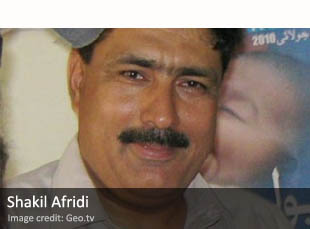
►►Aid group denies link to US intelligence in Pakistan. Aid group Save the Children denied accusations it has ties to US intelligence agencies in Pakistan. The organization’s denial came shortly after Dr. Shakil Afridi, a doctor the CIA recruited to help in the search for Osama bin Laden, told Pakistani interrogators that Save the Children played a role in his becoming involved with the CIA. Following Afridi’s interrogation, the Pakistani government banned some Save the Children members from leaving the country and aid supplies –including medical supplies– have been blocked by customs.
►►Is MI6 double spy’s case linked with Gareth Williams’ death? In 2010, British authorities jailed for a year MI6 employee Daniel Houghton, after he was caught trying to sell classified documents to MI5 spooks posing as foreign agents. According to newspaper The Daily Mirror, British police are now “probing a possible link between the Houghton’s case and the death of MI6 employee Gareth Williams, who was found dead in his London apartment in 2010. According to the paper, police detectives “want assurances from MI6 that Williams’ details [and] identity were not compromised” by Houghton.
►►Fears of spying hinder US license for China Mobile. China Mobile, the world’s largest mobile provider, applied in October for a license from the Federal Communications Commission to provide service between China and the United States and to build facilities on American soil. But officials from the FBI, the Department of Homeland Security and the Justice Department’s National Security Division are concerned that the move would give the company access to physical infrastructure and Internet traffic that might allow China to spy more easily on the US government and steal intellectual property from American companies. This is according to The Los Angeles Times, which cites “people familiar with the process who declined to be identified because the deliberations are secret”. US officials and lawmakers have expressed similar concerns about a Chinese telecommunications hardware manufacturer Huawei Technologies, which is alleged to have contacts with the Chinese People’s Liberation Army and the Ministry of State Security.

News you may have missed #722

Jose RodriguezBy IAN ALLEN | intelNews.org |
►►Vienna police say Libyan defector’s death probably an accident. Former Libyan oil minister Shukri Ghanem, whose body was found floating Sunday in the Danube river, died from drowning, Austrian police said. Autopsy results on Ghanem’s corpse showed no signs of violence, a police spokesman said, adding that Ghanem, 69, had complained to his daughter late Saturday that he was not feeling well. No suicide note has been found and there is no evidence Ghanem was under threat, according to police. The results of toxicological tests are expected later this week.
►►Canadian spymaster’s card found in Gaddafi’s intel complex. It appears that William “Jack” Hooper, former Deputy Director for the Canadian Security Intelligence Service (CSIS), was among the Western intelligence officials who had cultivated ties with Libyan security services under the regime of Colonel Muammar Gaddafi. Hooper’s business card was recovered last year in a trove of intelligence documents in Libya, providing a physical link between Canadian security agencies and Libyan spy services. Following his retirement in 2007, Hooper told The Toronto Star that Canada’s spy service has no choice but to team up with some unsavory foreign counterparts to protect Canada from terrorism.
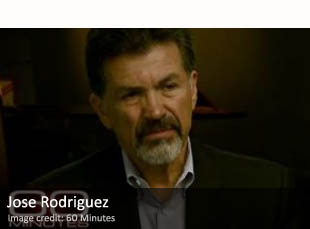
►►Ex-CIA official defends torture of terrorism detainees. In an interview Sunday, Jose Rodriguez, who headed the CIA’s Counterterrorist Center until his retirement in 2008, said waterboarding and other interrogation methods now banned by the Obama Administration were essential to fighting terrorism after September 11, 2001. He also said that he ordered the 92 videotapes showing his CIA colleagues torturing al Qaeda detainees in order “to protect them from possible retaliation by al-Qaeda”. He said he was afraid the material would be leaked: “you really doubt that those tapes would not be out in the open now, that they would not be on YouTube?”. After the tapes were destroyed in an “industrial-sized disintegrator”, he said, “I felt good”.

News you may have missed #721

Yuval DiskinBy IAN ALLEN | intelNews.org |
►►US spies clash with military over outsourcing spy satellites. Members of the US intelligence community and the military are finding themselves on opposite sides regarding the future of American spy satellites. Since the US first began using satellites to collect intelligence data, the government largely relied on its own technology. But in recent years, as private companies have developed sophisticated satellites of their own, Washington has been increasingly relying on commercial sources for spy missions. Now senior intelligence officials have urged the Obama administration to move away from relying on commercial satellite imagery.
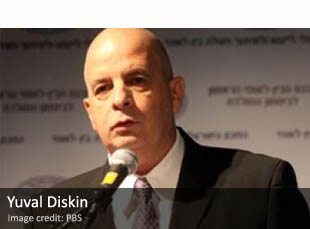
►►Israeli ex-spy criticizes plans for war with Iran. Many Israeli retired officials have criticized Prime Minister Benjamin Netanyahu’s government, but the censure from Yuval Diskin, who stepped down as head of the Shin Bet domestic intelligence service last year, was especially harsh. “I have no faith in the prime minister, nor in the defense minister”, Diskin said in the remarks broadcast by Israeli media on Saturday. “I really don’t have faith in a leadership that makes decisions out of messianic feelings”. Speaking in New York, former Mossad Director Meir Dagan said simply that Diskin “spoke his own truth”.
►►Litvinenko’s widow still waiting for answers. In 2000, after Vladimir Putin became President of the Russian Federation, KGB/FSB officer Alexander Litvinenko fled with his family to the UK, where they claimed political asylum and, later, British citizenship. During his time in London, Litvinenko consulted for MI5 and MI6, worked at a corporate security agency, and wrote two books, including Blowing Up Russia, which alleged that the Russian apartment bombings of 1999 were organized by the FSB, to justify war with Chechnya and sweep Putin into power. He died in 2006 of radioactive poisoning. Six years on, Litvinenko’s widow, Marina, says she is still waiting for answers.

News you may have missed #719

Benny GantzBy IAN ALLEN | intelNews.org |
►►Iran says it has cracked US spy drone secrets. Iran claims it has cracked the encryption on the computer software onboard a US RQ-170 Sentinel drone which crashed in the country in December. General Amir Ali Hajizadeh, head of the Revolutionary Guards aerospace division, said engineers were decoding the last pieces of data from the spy plane, which came down near the Afghan border. An Iranian defense official recently said that Tehran has had several requests for information on the craft and that China and Russia have shown an interest.
►►Israel steps up covert operations says defense chief. Israel’s defense chief, Lieutenant General Benny Gantz, has confirmed his forces are carrying out increased special operations beyond the country’s borders. In an interview published on Wednesday to mark the eve of Israel’s Independence Day, Gantz said Israel was ready to attack Iran’s nuclear sites if ordered to do so. But he added that did not mean he was about to order the air force to strike. He also said that he had increased the number of covert Israeli operations in other countries, but gave no details. “I do not think you will find a point in time where there is not something happening, somewhere in the world”, he said.
►►US Pentagon plans new intelligence-gathering service. The US Pentagon is revamping its spy operations to focus on high-priority targets like Iran and China in a reorganization that reflects a shift away from the war zones of Iraq and Afghanistan that have dominated America’s security landscape for the past decade. Under the plan approved last week by Defense Secretary Leon E. Panetta, case officers from the new Defense Clandestine Service would work more closely with counterparts from the Central Intelligence Agency at a time when the military and spy agency are increasingly focused on similar threats.

News you may have missed #717

Lieutenant General Michael FlynnBy IAN ALLEN | intelNews.org |
►►CIA wants more drone strikes in Yemen. The CIA is seeking permission to launch more airborne drone strikes in Yemen, even when there is a risk the victims might not always be terrorists, The Washington Post reports. The paper quotes an unnamed Obama administration official saying that “there is still a very firm emphasis on being surgical and targeting only those who have a direct interest in attacking the United States”. But critics of the drone program say killings of innocent victims could become more common if the strikes are expanded. The CIA proposal for the “signature strikes” is awaiting a decision by the National Security Council, The Post quotes unnamed US officials as saying.
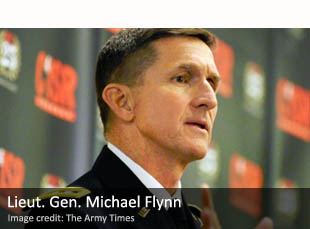
►►US military intelligence critic to lead spy agency. Lieutenant General Michael Flynn, who once blasted the work of US military spies in Afghanistan as “only marginally relevant”, has been nominated to take over the Defense Intelligence Agency, which is the US Pentagon’s intelligence organization. Flynn was a scathing public critic of military intelligence in Afghanistan, where he served as a top intelligence officer in 2010, saying it failed to provide decision makers with a clear picture of conditions on the ground. Flynn is credited with playing an influential role during his tenure at Joint Special Operations Command (JSOC), the secretive headquarters that oversees elite commandos like the team that killed Osama bin Laden in May 2011.
►►Taiwanese man detained for spying for China. A Taiwanese businessman, identified by his surname Cheng, has been detained for allegedly spying for China. He was allegedly recruited by China when he moved to the southeastern coastal province of Fujian to do business a few years ago, prosecutors said. Cheng is accused of trying to lure a former classmate, who is now a military officer, to meet with Chinese officials abroad for money; but the officer turned him in to Taiwanese authorities.

News you may have missed #716 (analysis edition)

Mordechai VanunuBy IAN ALLEN | intelNews.org |
►►Kabul attacks show intel failures in Afghanistan. Dozens, possibly hundreds of people would have been involved in training, equipping and then infiltrating into the heart of Kabul the large number of insurgents who were prepared to fight to a certain death in the Afghan capital last Sunday. Yet neither Afghan nor foreign intelligence operatives appeared to have any idea that an unprecedented wave of attacks was about to engulf both Kabul and several other key locations around the country. So it seems that Afghan President Hamid Karzai may have a point when he says that the “infiltration in Kabul and other provinces is an intelligence failure for us and especially for NATO and should be seriously investigated”.
►►Report claims China spies on US space technology. China is stealing US military and civilian space technology in an effort to disrupt US access to intelligence, navigation and communications satellites, according to a report authored by the State and Defense Departments. The report (.pdf) argues China should be excluded from recommendations made to the US government to ease restrictions on exports of communications and remote-sensing satellites and equipment. Chinese officials have denied the report’s allegations, calling it a “Cold War ghost”.
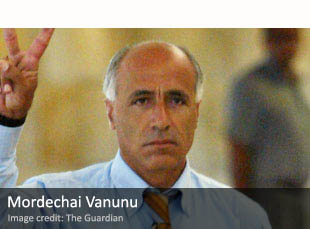
►►The long and sordid history of sex and espionage. Using seduction to extract valuable information is as old as the Old Testament —literally— Whether from conviction or for profit, women —and men— have traded sex for secrets for centuries. The Cold War provided plenty of opportunities for so-called “honey-pot” scandals. Perhaps the most dramatic case of seduction in recent times involved Israeli nuclear technician Mordechai Vanunu. In 1986 he visited London and provided The Sunday Times with dozens of photographs of Israel’s alleged nuclear weapons program. But Mossad was on his trail and a female agent —Cheryl Ben Tov— befriended him (reportedly bumping into him at a cigarette kiosk in London’s Leicester Square). She lured him to Rome for a weekend, where he was drugged and spirited to Israel.

News you may have missed #715 (Israel edition)

Dan MeridorBy IAN ALLEN | intelNews.org |
►►Israeli Deputy PM says “attack on Iran won’t help us”. In this interview conducted at Israel’s embassy in London, the country’s Deputy Prime Minister and Minister of Intelligence and Atomic Energy, Dan Meridor, says that “an attack on Iran wouldn’t add anything to [Israel’s] security”. He adds that “it’s possible that we have to use force”. But, he notes, “I don’t think Israel should use the military option. I don’t agree with some of my colleagues who support a military strike”. Compare that with the last time he spoke about this issue.
►►Analysis: Beware of faulty intelligence on Iran. The experienced Israeli intelligence correspondent Ronen Bergman argues that the decision to attack Israeli militarily “will be driven to an extraordinary extent by intelligence reports” produced by Washington and Tel Aviv. For this reason, he argues, “even a slight intelligence gaffe could have an outcome of historic proportions”. Furthermore, he calls on America and Israel not to rely on “scraps of information […] as the basis for action against Iran”, insisting that “a miscalculation could be the worst possible outcome”.
►►Israeli spy Pollard back in prison after hospitalization. Israeli President Shimon Peres sent a letter to United States President Barack Obama last week urging him to consider granting clemency to convicted spy Jonathan Pollard based on his ill health. The White House rejected the appeal and now Pollard, who was convicted in 1987 for selling classified US government information to Israel, is back in prison.

Ex-CIA officer sheds light on 1977 spy arrests in Moscow

Martha D. PetersonBy JOSEPH FITSANAKIS | intelNews.org |
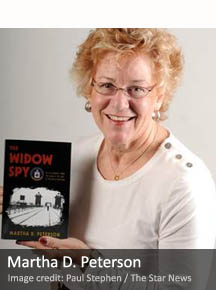
A recently retired CIA officer has spoken publicly for the first time about the 1977 arrest and eventual suicide of a Soviet double agent considered one of the Central Intelligence Agency’s most important assets during the Cold War. Aleksandr Dmitryevich Ogorodnik was an official in the Soviet diplomatic service who, while stationed at the Soviet embassy in Bogotá, Colombia, was compromised and later blackmailed by Colombian intelligence into spying on Moscow. Ogorodnik was initially handled by the Colombians, with little success. Later, however, when he was moved to a sensitive post in the Soviet Ministry of Foreign Affairs in Moscow, the Colombians turned him over to the CIA. He was handled by CIA officer Aldrich Ames —himself a double spy for the Soviet KGB— who gave Ogorodnik the codename TRIGON. After establishing contact with him in Moscow, the CIA provided Ogorodnik with a miniature camera and other essentials, which he used regularly to take photographs of classified Soviet documents. As a go-between, the Agency selected Martha D. Peterson, the first female CIA case officer ever to be posted in Moscow. Peterson was a fresh CIA recruit, who had completed her Career Training program in 1974, less than a year before being sent to the Soviet capital. Having retired in 2003, after 31 years with the CIA, Peterson has now published a memoire entitled The Widow Spy. In it, she reveals that she coordinated regular dead-drops with Ogorodnik for nearly two years, picking up his used film while supplying him with fresh film and other espionage accessories. On July 15, 1977, however, her mission was abruptly terminated after she was arrested by a large team of KGB officers underneath a railway bridge in Moscow, a few minutes after conducting a dead-drop for Ogorodnik. She was taken to the KGB’s Lubyanka prison, where she says she was interrogated for three days before being released by way of her diplomatic immunity, and ordered to leave the USSR. Ogorodnik was not so fortunate. A few months prior to his arrest, he had requested that the CIA provide him with a poison pill, which he could take in case he was arrested by the KGB. Read more of this post

Iran allegedly busts ‘Israel-backed’ sabotage ring

Israel and IranBy IAN ALLEN | intelNews.org |
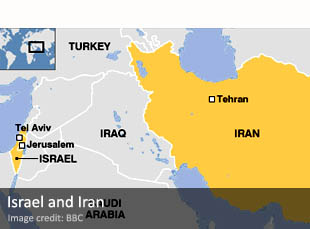
The government of Iran has announced the arrests of a “terrorist network” that was allegedly planning sabotage and assassination operations inside the Islamic Republic. The announcement was released by the Iranian Intelligence Ministry and aired by a host of state-controlled media on Tuesday. The reports were vague, but claimed that the sabotage ring was supported by Israel, and that its members were “plotting fresh attacks” against Iranian government targets. The Intelligence Ministry said that Iranian counterterrorist teams decided to move against the “large and sophisticated” network after preparing the ground during “months of operations”. An unidentified Iranian government official was quoted as saying that the arrests of the group members involved the “recovery of large bombs, automatic weapons, handguns, [as well as] telecommunications equipment” from houses and apartments belonging to alleged sabotage group members. One report stated that some of the arrests were concluded following “firefights” between the suspects and Iranian government forces. Reports also claimed that the network led officials to the discovery of a separate “regional command center in a third country”, which was not named, but which is widely suspected to be Azerbaijan. Earlier this week, The Washington Post reported that American intelligence agencies had ramped up intelligence and sabotage missions directed against Iran’s nuclear program. Read more of this post

News you may have missed #712

Abdel Hakim BelhajBy IAN ALLEN | intelNews.org |
►►New US spy satellite could include ‘domestic surveillance. Last week, a new US spy satellite was launched into orbit as part of a secretive military program enabling the surveillance of Earth from space. An official at the Vandenberg base told The Los Angeles Times that the NROL-25 was part of a “national security payload”, which could mean it is to be used for any number of purposes, possibly including domestic surveillance.
►►US steps up intelligence and sabotage missions in Iran. American intelligence agencies are ramping up intelligence and sabotage missions focused on Iran’s nuclear program, according to The Washington Post. Officials from the National Security Agency have increased efforts to intercept email and electronic communications coming from Tehran, according to reports in The Post‘s Sunday edition. The CIA and other agencies have also ramped up sabotage missions in the country, geared toward disrupting Iran’s ongoing nuclear work, the paper reports.
►►MI6 ‘considers paying off’ Libyan official. Britain’s MI6 chiefs allegedly plan to offer more than £1 million ($1.6 million) hush money to a Libyan who claims British spies sent him to be tortured by the Gaddafi regime. The Secret Intelligence Service is scrambling to prevent Abdel Hakim Belhaj releasing details of his case following the revelation that a Labour Party minister sanctioned his extraordinary rendition —contravening UK policy on torture.

News you may have missed #711 (ex-spy edition)

Glenn L. CarleBy IAN ALLEN | intelNews.org |
►►Egypt ex-spy chief to run for President. Omar Suleiman, 74, announced his candidacy on Friday and collected around 72,000 signatures of eligible voters in one day, more than twice the 30,000 required. Hosni Mubarak’s former intelligence chief insisted that his bid for the presidency does not have the support of Egypt’s military rulers and accused Islamists of sending him death threats. Mr Suleiman, made vice-president by Mubarak in the last days of his three-decade rule, symbolizes that era’s tough security regime and poses a threat to Islamists, who were routinely harassed and arrested during Mubarak’s era, and to liberals, who spearheaded Mubarak’s ouster. But his candidacy might appeal to some Egyptians hoping for an end to political instability.
►►Ex-CIA officer says evidence in alleged case was flawed. Information from the US Central Intelligence Agency used by Canada to link accused Ottawa terrorist Mohamed Harkat to al-Qaeda was untrue, according to Glenn Carle, a retired CIA case officer who interrogated Harkat at secret CIA black site prisons in 2002. Speaking to promote his blistering memoir about the case, The Interrogator: An Education, Carle said that Harkat, who was thought to be Osama bin Laden’s main financial administrator, “wasn’t the senior member of al-Qaeda that we had assessed. He wasn’t even a member of al-Qaeda”. Yet as recently as 2010, Canadian Security Intelligence Service evidence and testimony before the Federal Court of Canada continued to point to Harkat’s relationship with Haji Pacha Wazir as evidence of Harkat’s ties to the bin Laden terror network.
►►Ex-KGB agent wins South Ossetia vote. Former senior KGB agent Leonid Tibilov has won a tense run-off to lead Georgia’s rebel pro-Russian region of South Ossetia, after two earlier polls ended in turmoil. Tibilov won 54.12 percent of the vote with all ballots counted against human rights commissioner David Sanakoyev’s 42.65 percent. The peaceful end to the election contrasts sharply with the angry protests that followed a November 27 ballot in which Alla Dzhioyeva, a female candidate who opposed the local administration was disqualified after coming out ahead in the poll. Dzhioyeva was then hospitalized in February after being interrogated and allegedly beaten by police following allegations that she planned to seize power.