News you may have missed #643 (Israel edition)

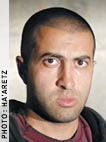
Mosab Hassan Yousef

Yousef/Joseph

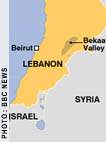
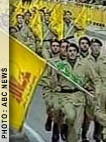
►►Hezbollah uncovers more Israeli spy devices. Lebanese media reported on Friday that two people were wounded in a blast that occurred in the south of the country, between the towns of Srifa and Deir Kifa. According to some of the reports, the blast targeted espionage devices which were destroyed by Israel after being exposed by Hezbollah. This is not the first time such devices have been discovered in Lebanon: see here and here for previous such incidents.
►►PLO subpoenas Palestinian who spied for Israel. The Palestine Liberation Organization served Mosab Hassan Yousef, who says he is a former spy for Israeli domestic intelligence agency Shin Bet, with a subpoena in the United States last month. The Palestinian group says it wants his notes and details of his spy work for the Israeli government.
►►Analysis: The complex relationship between the Mossad and Israeli media. “Former Mossad chief Meir Dagan’s crusade this week against an Israeli strike on Iran took on a new dimension with his several media interviews. His campaign also reflects the Mossad’s attitude toward journalists, something along the lines of respect them, suspect them and use them. The degree shifts from one Mossad head to the next”. An enlightening analysis by veteran Israeli intelligence correspondent Yossi Melman.
News you may have missed #642

Predator drone

Predator drone

►►Australia concerned China using civilian satellites to spy. Concerns that China may use civilian satellite tracking stations to monitor Australian military operations have been dismissed by the Swedish Space Corporation. The company owns and operates two satellite tracking stations 400 km north of the West Australian capital, Perth. One was used by the China Satellite Launch Company last month in China’s first space docking operation.
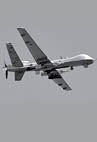
►►Did Iran capture US stealth drone intact? For the second time this year, the Iranian government is claiming it forced down a stealthy US Air Force spy drone. Only this time, it says it bagged the RQ-170 “with little damage” by jamming its control signal —a potentially worrying development for American forces heavily reliant on remote-controlled aircraft. A US official, who asked not to be named, told Reuters that “there is absolutely no indication up to this point that Iranians shot down this drone”.
►►Canadian Mounties spied on native protest groups. Canada’s federal government created a vast surveillance network in early 2007 to monitor protests by First Nations, including those that would attract national attention or target “critical infrastructure” like highways, railways and pipelines, according to RCMP documents. The RCMP intelligence unit reported weekly to approximately 450 recipients in law enforcement, government, and unnamed “industry partners” in the energy and private sector. The news follows revelations last month of the RCMP’s largest-ever domestic intelligence operation, aimed against G8 and G20 protesters.

News you may have missed #641 (US edition)

Dennis Blair

Dennis Blair

►► US Navy memo had warned Roosevelt of 1941 attack. Three days before the December 7, 1941, Japanese attack on Pearl Harbor, US President F.D. Roosevelt was warned in a memo from US naval intelligence that Tokyo’s military and spy network was focused on Hawaii. The 20-page memo has been published in the new book December 1941: 31 Days that Changed America and Saved the World, by Craig Shirley.
►►US spy agencies cut their holiday parties. Holiday gatherings have provided rare opportunities for US congressional staff, embassy aides, government officials, and the media to mix it up —off the record— with the spy set. But this year, agency budget Scrooges have taken aim at high-priced holiday merriment. The Director of National Intelligence has canceled holiday parties altogether, and the Central Intelligence Agency has drastically downsized its guest list and lavish spread by more than 50%.
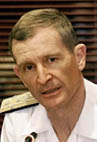
►►Ex-DNI Blair wants Pentagon in charge of drone strikes. The United States’ former Director of National Intelligence Dennis Blair, who previously proposed scaling back the armed drone operation run in Pakistan by the CIA, is now urging that the program be publicly acknowledged and placed in the hands of the US military.

Analysis: How serious a blow did the CIA suffer in Lebanon?

Lebanon

Lebanon

By JOSEPH FITSANAKIS | intelNews.org |
Late last month, the Central Intelligence Agency admitted that a number of its agents in Lebanon had been captured by Hezbollah, the Shiite militant group that controls large parts of the country. The group announced the arrests in the summer, but in was only on November 21 that the Associated Press confirmed the accuracy of Hezbollah’s claims from a US intelligence source. Neither Hezbollah nor the CIA have offered details of the arrests, but it is generally assumed that the captured agents were not officers of the CIA, but rather Lebanese or Iranian citizens who had been recruited as assets by CIA case officers. Regardless, the incident has undoubtedly directly impacted the Agency’s operations in Lebanon, and maybe Iran. The question is, how much? Former CIA operations officer Robert Baer, who spent several years in Lebanon in the 1980s, has penned an analysis article in Time magazine, in which he says that his sources tell him the arrests of the CIA agents represent “a serious compromise”, and that the Agency is “still trying to get to the bottom of [it]”. Baer also provides some new information about the method used by Hezbollah counterintelligence to capture the CIA agents. Last week, ABC News reported that the arrests were caused by careless spy tradecraft on behalf of the CIA. Specifically, according to ABC, “Hezbollah operatives figured out that CIA informants, who had infiltrated the Iranian proxy group, were meeting with their agency handlers at a Beirut Pizza Hut. How could Hezbollah deduce that location? The CIA used the codeword ‘PIZZA’ when discussing where to meet with the agents”. But Baer says that the arrests were not necessarily caused by CIA errors; rather it may have been advanced counterintelligence analysis by Hezbollah that compromised the agents. He claims that Hezbollah is using telephone link analysis, a type of signals intelligence testing that utilizes advanced software “capable of combing through trillions of gigabytes of phone-call data”. The aim of telephone link analysis is to search for unusual communications patterns —such as too many brief calls, or heavy reliance on prepaid cell phones that seem to become disused after only a few calls. Read more of this post

News you may have missed #639

GCHQ

GCHQ

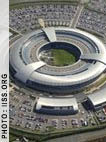
►►GCHQ will sell cyberdefense tech to private firms. The GCHQ, Britain’s signals intelligence agency, is to market some of its security technologies to companies in the private sector, in an attempt to bolster defenses against the foreboding threat of cyberwarfare. The UK government’s “cyber security strategy”, which was unveiled this month, has earmarked £650 million in public funding to set up a four-year National Cyber Security Program, a percentage of which will be used to collaborate with private companies. Click here for an excellent analysis on the public-private cybersecurity collaboration in Britain.
►►Was there a coup attempt in Trinidad? Many in Trinidad and Tobago were expressing skepticism yesterday about an alleged assassination plot, which Prime Minister Kamla Persad-Bissessar said had been uncovered against her and several of her ministers. Police said nearly a dozen people had been arrested, including members of the army and police, but authorities have not given more details, citing the need to maintain security in operations to dismantle the plot.
►►US Senators resist $7 Billion in spending cuts for spy satellites. The Obama Administration wants to stop incessant spending by Defense Department contractors, especially those who have wasted billions of US taxpayers’ money in failed spy satellite projects. But the contractors’ friends in Congress, including lawmakers on the US Senate Intelligence Committee, are trying to stop the White House from cutting a $7 billion commercial satellite program being developed by GeoEye Inc. and DigitalGlobe Inc. What else is new?

Analysis: Cloud computing causes ‘cosmic shift’ in US spy community

Cloud computing

Cloud computing

By JOSEPH FITSANAKIS | intelNews.org |
While many are focusing on recent reports of arrests of CIA operatives in Lebanon and Iran, American intelligence planners have other things on their minds: the latest buzzword is ‘cloud’; specifically, ‘cloud computing’. The term means storing information and software on a network, which can then be shared on demand by users of interconnected electronic devices. The US intelligence community’s interest in this form of data organizing has been known for quite some time. But according to specialist publication Federal Computer Week, cloud computing is rapidly becoming a reality, as one after the other, US intelligence agencies are “moving their classified, sensitive information off their own servers and into the cloud”. Such a change “might have sounded crazy five years ago”, says FCW, and the fact that it is happening marks nothing less than a “cosmic shift” for American intelligence. The migration unto the cloud was spearheaded two years ago by the National Security Agency; the NSA was later joined by the Defense Intelligence Agency, the National Geospatial-Intelligence Agency, and the super-secretive National Reconnaissance Office. Soon the CIA wanted in: in 2009, Jill Tummler Singer, the CIA’s deputy Chief Intelligence Officer, told ComputerWorld that the CIA was becoming one of the US government’s strongest advocates for cloud computing, even though “the term really didn’t hit our vocabulary until a year ago”. Not everyone is super-excited about the cloud. Last year, Brian Snow, the NSA’s former Technical Director, said at a conference that he didn’t trust cloud services, mostly because of the existence of countless unpatched software vulnerabilities. But the move is heavily supported by two of America’s most senior intelligence officials: Keith Alexander, commander of US Cyber Command and director of NSA —America’s largest intelligence agency— and Director of National Intelligence James Clapper. Read more of this post

News you may have missed #636

Lebanon

Lebanon

►►Careless codeword may have cost CIA its Lebanon network. Hezbollah have reportedly just rolled up the CIA’s network of spies in Lebanon. If so, it’s because of one of the stupidest, least secure code words in history. According to ABC News, Hezbollah operatives figured out that CIA informants, who had infiltrated the Iranian proxy group, were meeting with their agency handlers at a Beirut Pizza Hut. How could Hezbollah deduce that location? “The CIA used the codeword ‘PIZZA’ when discussing where to meet with the agents,” ABC reports.
►►UK spy chiefs to be publicly questioned for first time. The heads of British intelligence agencies are set to be questioned for the first time in public, under plans to make spies more accountable. The directors of MI5, MI6 and GCHQ will face Parliamentarians on the Intelligence and Security Committee. Although, they have recently begun to make rare public appearances, and deliver speeches, it will be the first time the intelligence agency heads will face public cross-examination over their activities.
►►Documents reveal largest domestic spy operation in Canadian history. Police organizations across Canada co-operated to spy on community organizations and activists in what the Royal Canadian Mounted Police called one of the largest domestic intelligence operations in Canadian history, documents reveal. Information about the extensive police surveillance in advance of last year’s G8 and G20 meetings in southern Ontario comes from evidence presented in the case of 17 people accused of orchestrating street turmoil during the summits.

Did US agencies fail to heed warnings of 2008 Mumbai attacks?

David Coleman Headley

David Headley

By JOSEPH FITSANAKIS | intelNews.org |
We have written before that the CIA alerted Indian authorities prior to the 2008 Mumbai attacks, which killed 166 people, including six American citizens. The incident, which was perpetrated by Pakistani-based militant group Lashkar-e-Taiba, is routinely described as the most sophisticated and spectacular terrorist strike since 9/11.  But there are numerous questions about the complex relationship between the United States, Lashkar-e-Taiba, and Pakistan’s Inter-Services Intelligence (ISI) directorate, which is widely believed to be protecting the terrorist group. Many of these questions center on David Coleman Headley, an American citizen, born in Washington, DC, who is currently in US custody, having confessed to helping plan the Mumbai attacks. According to Headley’s own court testimony, he worked for the ISI; moreover, despite early denials, the US government eventually admitted that Headley was a paid informant for the US Drug Enforcement Administration. There is, however, intense speculation in India and Pakistan that Headley, who is of Pakistani background, is in fact a CIA agent-gone-rogue, who used his CIA connections to pursue his militant plans undisturbed (something with the CIA flatly denies). Such rumors are reinforced by the US authorities’ puzzling refusal to allow Indian government investigators of the Mumbai attacks access to Headley. The curious relationship between US intelligence agencies and David Headley has been probed by several media outlets, including The New York Times, which in March of 2010 pointed out that Headley “moved effortlessly between the United States, Pakistan and India for nearly seven years, training at a militant camp in Pakistan on five occasions”. Now a new documentary by investigative group ProPublica, which aired on Tuesday as part of PBS’ Frontline television series, has unearthed new information that shows US government agencies failed to heed “repeated warnings over seven years”, which might have helped prevent the Mumbai attacks. Read more of this post

News you may have missed #633

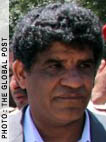
Abdullah al-Senussi

Al-Senussi

►►Is Britain secretly assisting the CIA’s drone campaign? In the latest casualties from America’s hidden war in Pakistan, two British nationals, Ibrahim Adam and Mohammed Azmir, have reportedly been killed by drone missiles. The death of two men already known to UK authorities raises serious questions about the role that the British intelligence services are playing in the CIA’s unmanned drone war.
►►Gaddafi’s intelligence chief captured. Libya’s interim authorities have captured the last totem of the Gaddafi regime, seizing former intelligence chief Abdullah al-Senussi in the country’s southern desert. The arrest means that all leading figures from the Gaddafi regime have now been killed, captured or driven into exile.
►►South Korea says it caught North spy. A North Korean spy has been arrested after arriving in South Korea posing as a refugee, according to South Korean authorities. The latter claim to have found during a routine background check that the man, surnamed Kim, was assigned to the North’s military intelligence command and had received espionage training.

Hezbollah uncovered CIA network in Lebanon, admit US officials

Hezbollah rally

Hezbollah rally

By JOSEPH FITSANAKIS | intelNews.org |
In June of this year, Lebanese militant group Hezbollah claimed it had rooted out three of its members who were allegedly spying for the United States Central Intelligence Agency. The US State Department refused to comment on the allegations, and the US embassy in Lebanon issued a statement denying Hezbollah’s accusation. But the Associated Press now says that the Lebanese Shiite group’s claims were accurate, and that the CIA has had to significantly scale back its operations in Lebanon, as a result of Hezbollah’s counterintelligence success. The news agency cites current and former US officials, who say that the Agency’s operations in Lebanon were “badly damaged” after Hezbollah identified and captured several CIA ‘assets’. It appears that the militant group, which controls large parts of southern Lebanon, was able to capture CIA agents —local ‘assets’ recruited by CIA case officers to spy on behalf of Washington— but not actual CIA officers. Still, according to the Associated Press, the operational blow suffered by the Agency’s station in the Near Eastern country has been substantial, and local CIA case officers “have secretly been scrambling to protect their remaining spies […] before Hezbollah can find them”. The agency quotes an unnamed government source, who claims that the damage to the CIA’s network of agents in Lebanon has been “greater than usual”. Many attribute the Shiite group’s counterintelligence success to a relatively new counterespionage apparatus, which Hezbollah’s leader, Sheik Hassan Hasrallah often calls the “spy combat unit”. The group, which is said to have gone operational in 2004, is responsible for essentially decimating Israel’s intelligence network in southern Lebanon, having conducted over 100 arrests since 2009.   Read more of this post

Revealed: Afghan government at war with ‘CIA vigilante group’

Afghanistan

Afghanistan

By JOSEPH FITSANAKIS | intelNews.org |
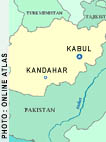
Very little has been written about the Kandahar Strike Force, a controversial CIA-funded vigilante group operating in Afghanistan’s Kandahar, Zabul and Uruzgan provinces. In 2009, The New York Times reported that the late Ahmed Wali Karzai, notorious drug lord and younger brother of Afghan President Hamid Karzai, helped the CIA run the group. But ever since Wali Karzai’s assassination, in July of this year, the CIA-operated group appears to be engaged in a brutal war, not with the Taliban and al-Qaeda, but with provisional Afghan authorities. The Christian Science monitor spoke to the former leader of the Kandahar Strike Force, Atal Afghanzai, who is currently in prison, having been convicted of shooting dead a senior Afghan police commander in broad daylight. The group is made up of elite members of Afghanistan’s regular army, selected by CIA case officers and trained by US Special Forces personnel in Kandahar’s Camp Gecko, a former al-Qaeda base built by Osama bin Laden’s forces in 1996. The group operates outside the institutional parameters of the Afghan government, and answers directly to the CIA, says The Monitor, which claims to have corroborated this information with “US diplomats, other Western officials, and Afghan authorities”. The group’s imprisoned former leader told the newspaper that he and his men were paid directly by the CIA, and that they were transported by United States Blackhawk helicopters to various locations around the country, where they were expected to conduct “raids on Taliban targets at a moment’s notice”. Afghanzai claims that the group’s operations were so effective that they received letters of appreciation by no other than Hamid Karzai. But the idyllic relationship between the Kandahar Strike Force and the Afghan government appears to have ended, as members of the group are now accused of “extrajudicial killings, torture, rape, and larceny”. Read more of this post

News you may have missed #628 (analysis edition)

Michael Scheuer

Michael Scheuer

►►Should intelligence agencies chase tax evaders? Three years ago, Germany’s foreign intelligence service, the BND, paid a whistleblower close to $7 million for DVDs containing information on thousands of secret accounts at a leading Liechtenstein bank. The discs contained data on 4,527 Liechtenstein foundations and financial entities, 1,400 of which were owned by Germans. But should a spy agency like the BND take part in the unglamorous and politically charged business of collecting information on tax cheats?
►►UK ex-spy chief says Google makes spies work harder. The rise of the web and Google means Britain’s spies have to work harder to produce genuinely secret intelligence, according to Sir David Pepper, the former director of GCHQ, Britain’s signals intelligence agency. He said “the Google effect” of so much information being readily available online had “very substantially” raised the “threshold for producing intelligence” for MI5, MI6 and GCHQ.
►►Ex-CIA official says America ‘creates its own enemies’. Americans are in the crosshairs of terrorists worldwide purely due to Washington’s policy in the Muslim world, according to former CIA officer Michael Scheuer, who spoke to Russia Today. Scheuer, author of Through Our Enemies’ Eyes, worked for the CIA for over 20 years and at one time was the chief of the agency’s ‘Bin Laden unit’.

News you may have missed #627

Omar Suleiman

Omar Suleiman

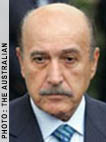
►►Egyptian ex-spy chief appointed security adviser to Saudi Crown Prince. Saudi Arabia’s Crown Prince Nayef bin Abdul Aziz has appointed Egypt’s former Director of General Intelligence, Omar Suleiman, as his security advisor. From 1986 until his forced resignation in spring this year, Suleiman had been the main conduit between Washington, Tel Aviv and the government of Hosni Mubarak.
►►Russia’s spy chief in rare interview. It is very rare that the men that run Russia’s powerful intelligence services give detailed interviews. But that’s just what Alexander Shlyakhturov, the head of military intelligence service, known as the GRU, did earlier this month with the Russian newspaper Rossiyskaya Gazeta.
►►US intel agencies brace for budget cuts. After seeing spending double over a decade, US intelligence agencies are bracing for about $25 billion in budget cuts over the next 10 years. “We’re going to have less capability in 10 years than we have today”, said Director of National Intelligence James Clapper, who sits atop the 16 departments, agencies and offices that comprise the US intelligence community and spend a combined $80 billion a year.

News you may have missed #626

Katia Zatuliveter

Katia Zatuliveter

►►Analysis: On largely forgotten CIA officer Jim Thompson. The CIA’s longtime man in Southeast Asia, Jim Thompson, fought to stop the agency’s progression from a small spy ring to a large paramilitary agency. He was in many ways unique, but by the 1950s and early 1960s he would become part of a larger, growing, and much less idealistic machine, one that would expose his naiveté –and punish him for it. Interesting historical analysis from Foreign Policy.
►►Court blocks naming NATO official who had affair with alleged Russian spy. We have written before that Katia Zatuliveter, who is accused by British MI5 of being a spy for Russia, has admitted having a four-year affair with Liberal Democrat MP Mike Hancock, as well as with a Dutch diplomat and a NATO official. The latter, a German diplomat, was pictured in a newspaper last week. However, his face was obscured because of the terms of a court order that means he cannot be identified.
►►Promises made about Colombia’s new spy agency. Colombia’s disgraced DAS intelligence agency has finally been dissolved. Now the government’s senior National Security adviser, Sergio Jaramillo, has said that Colombia’s new intelligence service will focus on combating “government infiltration by criminal organizations”. I guess it doesn’t hurt to be ambitious.

News you may have missed #625

Ahmed Al Hawan

Ahmed Al Hawan

►►Egypt’s most famous spy dies at 74. Egypt’s most famed spy on Israel, Ahmed Al Hawan, 74, has died after a long fight with illness, local media reported on Wednesday. Al Hawan worked for the Egyptian intelligence service during the years that followed Egypt’s military defeat by Israel in 1967. He supplied the Israelis with mistaken and misleading information that was crucial in Egypt’s war with Israel in 1973.
►►Analysis: Dark days for Taiwan’s spies. When Taiwan’s government last month announced budget cuts in military intelligence, the Ministry of National Defense (MND) insisted operations against mainland China would not be affected. However, media paint a vastly different picture, suggesting Taiwan’s future leaders will be completely deaf and blind to secretive developments across the Taiwan Strait.
►►US cyberespionage report names adversaries. A US intelligence report released last week concluded China and Russia are “the most aggressive collectors” of US economic information and technology online. But the report also states that America’s “allies and partners“, including the “French and the Israelis” are also stealing the s vital industrial and commercial secrets by infiltrating computer networks.