US misused our intel to justify Iraq War, says German ex-spy chief

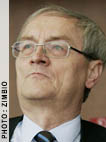
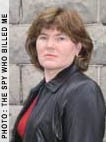
August Hanning

August Hanning

By JOSEPH FITSANAKIS | intelNews.org |
The former Director of Germany’s foreign intelligence service has accused the Bush administration of consciously falsifying intelligence supplied by Germany in order to justify going to war in Iraq. August Hanning, who served as Director of Germany’s Bundesnachrichtendienst (known as BND) from 1998 to 2005, said that the BND had no part in the deception, and that “the responsibility for the war lies solely with the Americans”. In an interview to the Sunday edition of German national newspaper Die Welt, Hanning explained that the administration of US President George W. Bush was especially interested in intelligence collected by the BND from an Iraqi defector codenamed ‘Curveball’. The defector, whose real name is Rafid Ahmed Alwan al-Janabi, arrived in Germany in 1999 and applied for political asylum, saying he had been employed as a senior scientist in Iraq’s biological weapons program. Among other things, he told his BND debriefing team that Saddam Hussein had built a fleet of biological weapons labs on wheels, in order to avoid detection from America and other countries. After consulting with biological weapons experts, the BND expressed serious doubts about Curveball’s reliability, but kept him in Germany nonetheless. Several years later, al-Janabi confirmed the BND’s suspicions, by admitting that he had invented his allegations in order to help bring down the regime of Saddam Hussein. He also admitted that he was in reality a taxi driver from Baghdad, who had used his undergraduate knowledge of engineering to get asylum in Germany. At the time, said Hanning, the BND strongly and repeatedly communicated to the CIA its doubts about Curveball’s claims, something which is known. What is not known, however, is that Hanning personally wrote to then CIA Director George Tenet and urged him to adopt a skeptical approach to the defector’s allegations. The former BND chief told Die Welt that he was “assured by the Americans that our intelligence would not be used in Powell’s speech”. Read more of this post
News you may have missed #578

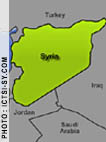
Syria

Syria

►►CIA agent who helped kill Che wants payout from Cuba. This is from the “news that isn’t” department: Gustavo Villoldo, a Cuban-born CIA operative, who helped track down and kill Che Guevara in Bolivia, has won $2.8 billion in damages from the Cuban government, for confiscating his family property after the 1959 revolution. But he is unlikely to ever collect the money because Cuba does not recognize US court rulings.
►►Cheney wanted Bush to destroy suspected Syrian nuke site. Former US Vice President Dick Cheney says in a new memoir that he urged President George W. Bush to bomb a suspected Syrian nuclear reactor site in June 2007. But, he wrote, Bush opted for a diplomatic approach expressed misgivings. Eventually Israeli jets bombed the site. Cheney’s account of the discussion appears in his autobiography, In My Time: A Personal and Political Memoir, which is to be published by Simon & Schuster next week.
►►South Korea indicts five for spying for North. Five South Koreans, including a former parliamentary aide, have been indicted for allegedly spying for North Korea, in connection with the Wangjaesan spy ring.

News you may have missed #577

Waihopai base

Waihopai base

►►Interview with Michael Hayden. The former director of the CIA and the NSA gave a lengthy interview in preparation for his keynote speech at the Raleigh Spy Conference. Among other things, he says that he does “not immediately conclude that senior levels of the Pakistani government knew about” Osama bin Laden’s whereabouts.
►►CIA denies helping police spy on NY Muslims. The Central Intelligence Agency is denying a news report that it helped the New York Police Department conduct covert surveillance on Muslims. The agency said suggestions that it engaged in domestic spying were “simply wrong” and that the report “mischaracterized the nature and scope” of the CIA’s support for the New York police.
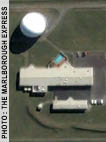
►►Spy base reservoir not a pool after all... A journalist at New Zealand’s Marlborough Express newspaper noticed what looked suspiciously like a swimming pool on a satellite photo (pictured) of the super-secret Waihopai listening base near Blenheim. Do spies go swimming on the base, he asked? It turns out they don’t. According to Government Communications Security Bureau Waihopai station chief Chris Farrow, the landmark is in fact a water reservoir, to be used in case of fire.

News you may have missed #575

IARPA logo

IARPA logo

►►Inquest into death of MI6 spy to go ahead. The inquest into the bizarre death of MI6 and GCHQ officer Gareth Williams will go ahead before Christmas without a jury, according to London-based newspaper The Express. The paper says that “12 spy chiefs will attend [the inquest] to explain the background to the case”.
►►Colombia’s ex-president denies role in spy scandal. Alvaro Uribe has denied, during a 3½-hour appearance before a Colombian congressional committee, that he ordered the country’s domestic intelligence agency to spy on judges, journalists and political foes. More than 20 agents of the DAS intelligence agency have been imprisoned for alleged roles in the spying. Two more have pleaded guilty in exchange for reduced sentences.
►►US spy research firm eyes stock market. IARPA, the US intelligence community’s research arm, plans to introduce a new program to develop tools to help analysts “quickly and accurately assess petabytes of complex anonymized financial data”. According to a conference presentation, the program would help spies “analyze massive amounts of data to spot indicators of market behavior, find relationships between seemingly unrelated transactions across hundreds of global markets, and provide insight into specific events and general financial trends”.

Western spies, security contractors, won Libyan war for rebels

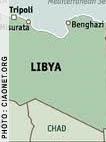
Libya

Libya

By JOSEPH FITSANAKIS | intelNews.org |
As I write these lines, celebratory gunfire is being heard all across Tripoli and the rebel National Transitional Council is appointing civilians to replace the crumbling administration of longtime Libyan leader Muammar al-Gaddafi. But a handful of news outlets discreetly remind us that the rebels’ claim to victory rests on vital covert assistance provided by several Western intelligence services. British daily The Independent notes that the victorious rebels were assisted on all levels by “an army of [British] diplomats, spooks, military advisers and former members of the special forces”, all of whom allowed “London to influence events in Libya beyond the activities of warplanes and naval vessels”. Early indications of Britain’s substantial covert involvement in the Libyan civil war emerged in March, when a secret operation involving a team of 20 Special Air Service (SAS) personnel was disrupted by a group of Libyan rebels, who thought the foreigners were employed by the Libyan government. Eight captured SAS members were soon released by the red-faced rebels, but not before the botched operation had made headlines all over the world. That experience prompted British intelligence planners to rethink their methodology. Eventually, notes The Independent, the British government decided to prompt the rebel National Transitional Council to use British funds to hire teams of former special forces operatives working for private security firms. This, according to the paper, accounts for the “small groups of […] Caucasian males, many with British accents [and] equipped with sunglasses, 4×4 vehicles and locally acquired weaponry, who [were] seen regularly by reporters in the vanguard of the rebels’ haphazard journey […] towards Tripoli”. Read more of this post

News you may have missed #573 (analysis edition)

Clair E. George

Clair E. George

►►New report details gaps in US spy collaboration. Nearly 10 years after the 9/11 attacks, US intelligence agencies are still struggling to strengthen the information sharing networks that broke down in 2001, according to the latest report by the US Congressional Research Service. Among other things, the 33-page report (pdf) points out that “agencies that obtain highly sensitive information are reluctant to share it throughout the intelligence community out of a determination to protect their sources”.
►►CIA Iran-Contra figure Clair George dies. Clair E. George, a consummate spymaster who was convicted of lying to Congress about the Iran-Contra affair, has died. George was known for operating in what spies call the “night soil circuit” –the less desirable posts of the world. He worked in Africa, Asia, Europe and the Middle East. He was the CIA’s station chief in Beirut when civil war erupted there in 1975. He then volunteered to replace the CIA’s Athens station chief, who had just been assassinated by November 17 Revolutionary Organization.
►►Here’s why CIA ‘mind control’ lawsuit was thrown out. A very good and succinct analysis of why a federal lawsuit against the CIA by the Vietnam Veterans of America, for allegedly subjecting US military personnel to chemical, biological and mind control experiments, was thrown out of court earlier this month. It includes the CIA’s court filing in a pdf link, here.

News you may have missed #572

David Wise

David Wise

►►New Zealand spy service now welcomes online tip-offs. Ten years ago, the New Zealand Security Intelligence Service (NZSIS) introduced a free telephone number that people could ring if they suspected any suspicious intelligence activity. Now the spy service has entered the 21st century by changing its website so the public can provide details online.
►►Book claims Coco Chanel spied for Nazis. Frankly, who gives a damn? Is anyone surprised to hear that yet another member of French high society was pro-Nazi in the lead-up to World War II? It is disappointing to see how many news outlets are going over-the-top with this story, while mostly ignoring the truly important historical revelation of the last few days, namely the declassification of the CIA’s Official History of the Bay of Pigs Invasion.
►►David Wise on Sino-American spy wars. Longtime investigative journalist David Wise, who focuses on the intelligence community, talks to Democracy Now! and Amy Goodman about his new book Tiger Trap: America’s Secret Spy War with China.

Former Finnish diplomat reveals she worked for the CIA

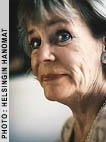
Marja-Liisa Linkoaho

Linkoaho

By JOSEPH FITSANAKIS | intelNews.org |
A Finnish diplomat in Cold-War East Germany has revealed how she was recruited by the US Central Intelligence Agency in the 1960s, shortly after the construction of the Berlin Wall. Marja-Liisa Linkoaho spoke to the Sunday edition of Finland’s Helsingin Sanomat newspaper, and admitted that she worked for American intelligence. She did so despite representing Finland, which was notably pro-Soviet during the presidency of ‘neutralist’ Finnish statesman Urho Kekkonen. She told the paper that, in 1961, at age 27, she became an assistant at the Finnish trade mission in East Germany, which at the time served as Finland’s de facto embassy in the communist country. The trade mission was headed by Consul General Olavi Wanne, and was centrally located on Mauerstrasse, within walking distance from the border between East and West Berlin. In August of 1961, less than three months after Linkoaho moved to East Germany, the country’s government, under Walter Ulbricht, took the decision to begin the construction of the Berlin Wall. However, as a foreign diplomat, Linkoaho was able to travel freely between East and West Germany despite the construction in Berlin of the heavily policed partition barrier. Several months later, Linkoaho borrowed a sum of money by one of her Finnish co-workers at the trade commission, which she used to purchase a German-made Volkswagen Beetle, from an American car dealership in West Berlin. However, shortly after she returned to East Berlin with her new car, it was stolen. Interestingly, Linkoaho said that, soon after the theft of her car, she was contacted by the CIA and asked to work for them as an agent, in return for money and a new car. The Finnish former diplomat told the Helsingin Sanomat that she had been contacted by the CIA “a few times before”, but had politely declined the Agency’s offers for work. This time, however, she needed the money, and the car, so she took up the offer. Read more of this post

News you may have missed #570

Nassr al-Mabrouk Abdullah

Abdullah Nassr

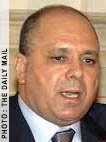
►►Libya internal security chief defects. Egyptian airport officials said Nassr al-Mabrouk Abdullah, Muammar al-Gaddafi’s interior minister, landed in a private plane in Cairo with nine family members traveling on tourist visas. Nassr was the minister responsible for police, civil defense, domestic intelligence, and some border security units.
►►S. Korea admits 1962 death occurred in spy training camp. A special committee is reviewing whether the family of a South Korean man who died half a century ago while being trained as a spy for elite missions into North Korea is eligible for compensation. South Korea’s military intelligence command admitted in a July 14 letter that “Mr. Jeon Gwang-su died during training on Sept. 30 of 1962 ahead of being dispatched for a mission in the North”.
►►NSA announces ‘hiring blitz’. The National Security Agency, America’s largest cryptologic intelligence agency, has announced its intention to hire as many as 3,000 people over the next two years, many of them cybersecurity experts. In fact, NSA recruiters even took a trip to Las Vegas in the last few weeks to look for potential hires at DefCon, a high-profile hacker conference there.

CIA shot own planes, used napalm in Bay of Pigs, documents show

CIA documents

CIA documents

By JOSEPH FITSANAKIS | intelNews.org |
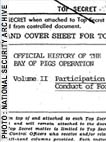
Newly declassified documents show that the CIA mistakenly fired at its own assault planes and resorted to using napalm to stave off successive Cuban counterattacks during the Bay of Pigs invasion. The revelations are included in a multi-volume Official History of the covert operation, which the CIA was forced to declassify after a lawsuit by George Washington University’s National Security Archive. On April 17, 1961, a brigade of 1,300 CIA-funded and -trained anticommunist Cubans mounted a surprise assault on the Caribbean island. But prior intelligence collected by spies working for Havana, and stiff resistance by pro-Castro troops, resulted in the CIA’s biggest known covert action failure. Approximately 1,200 surviving members of the CIA’s army were captured by pro-Castro forces, many of whom were severely interrogated or executed in subsequent years. According to the declassified documents, CIA forces eventually resorted to bombing Cuban government troops with napalm. Initially, operation planners were hesitant about using napalm, because of fears that doing so “would cause concern and public outcry”. But all hesitation had dissolved by the early hours of April 18, as American military commanders faced the possibility of seeing invading troops completely annihilated by successive waves of counterattacks. The documents also reveal that at least one CIA paramilitary officer opened fire on the Agency’s B-26 planes, which had been disguised to resemble those used by the Cuban Revolutionary Air Defense Force. Read more of this post

News you may have missed #567

Thuraya satellite telephone

Thuraya phone

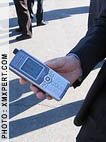
►►Libya bans unauthorized cell phone use. The government of Libya warned Thursday that any of its citizens found using a Thuraya satellite phone without a permit will be treated as spies for NATO, and may face the death penalty. The reason, according to an official statement, is that “spies [of] NATO use the Thuraya telephones to give crusaders the coordinates of some locations to be bombed, which has caused the deaths of a large number of civilians”. Thuraya is a popular satellite phone provider based in the United Arab Emirates, with over a quarter of a million subscribers in the Middle East and Africa.
►►Uzbekistan jails senior mining scientist for spying. A court in Uzbekistan has convicted Said Ashurov, who worked as chief metallurgist for British mining company Oxus Gold, to 12 years in prison on charges of industrial espionage. Ashurov was arrested in March as he tried to cross the border into Tajikistan. A lawyer for the mining company described Ashurov’s case as a fabrication and said that the Uzbek government was using him as a pawn in their battle to take control of the Amantaytau Goldfields project, which is developing “some of the world’s most promising gold fields”.
►►Ex-White House official claims CIA tried to recruit 9/11 hijackers. Richard Clarke, who served in two US administrations as a White House counterterrorism adviser, says he now suspects the CIA hid its knowledge that two of the September 11 hijackers had entered the United States Read more of this post

Saudis paid Pakistan to shelter bin Laden, claims security expert

R.J. Hillhouse

R.J. Hillhouse

By JOSEPH FITSANAKIS | intelNews.org |
An American academic and security expert with deep links in the intelligence community claims that, at the time of his killing by US Special Forces, Osama bin Laden was living under house arrest, following a secret arrangement between Pakistan and Saudi Arabia. Former professor and Fulbright Fellow R.J. Hillhouse has cited “sources in the intelligence community” in alleging that the CIA discovered bin Laden’s whereabouts through a Pakistani intelligence officer. The officer, who was privy to the alleged deal between the Saudis and the Pakistanis, appeared as ‘a walk-in’, a term meaning someone who voluntarily contacts an intelligence outpost, usually by simply walking into an embassy or consulate and asking to speak to the intelligence officer on duty. According to Hillhouse, the ‘walk-in’ provided CIA officers with detailed information as to the al-Qaeda leader’s whereabouts, in exchange for US citizenship for him and his family and the $25 million reward offered by the US Department of State for bin Laden’s head. According to Hillhouse’s story, which was picked up yesterday by The Daily Telegraph and The Sydney Morning Herald, the Pakistani informant also told the Americans that elements in the government of Saudi Arabia had entered into a complex monetary agreement with senior members of Pakistan’s main spy agency, the Inter-Services Intelligence directorate (ISI). Under the arrangement, the ISI was paid to keep bin Laden under house arrest in Abbottabad —a military community in Pakistan, selected precisely in order to keep bin Laden under constant and close supervision. Read more of this post

News you may have missed #561

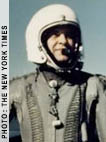
Francis Gary Powers

Francis G. Powers

►►US to phase out U-2 spy plane after 50 years. After more than 50 years gathering intelligence 13 miles above the ground, the United States’ U-2 spy planes will be phased out and replaced by unmanned drones by 2015, according to reports this past week. The classified U-2 program came to light in 1960, when a Soviet surface-to-air missile brought down a U-2 flown by CIA pilot Gary Powers, who parachuted to safety but was soon captured.
►►Security company unearths ‘massive’ cyberespionage operation. A widespread cyberespionage campaign stole government secrets, sensitive corporate documents, and other intellectual property for five years from more than 70 public and private organizations in 14 countries. This is according to Dmitri Alperovitch, vice president of threat research at the cyber-security firm McAfee, who uncovered the alleged plot. The operation, dubbed SHADY RAT, targeted the United Nations and the United States, among other national and international entities.
►►South Korea expands spy ring investigation. South Korean authorities have expanded the controversial investigation into the alleged Wangjaesan spy ring, to include Read more of this post

News you may have missed #560 (new books edition)

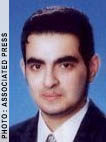
Khalil al-Balawi

Khalil al-Balawi

►►New book on CIA’s Khost bomb disaster. Washington Post reporter Joby Warrick has authored a new book, examining the December 31, 2009, killing of seven CIA operatives by Jordanian doctor Humam Khalil al-Balawi in Khost, Afghanistan. In the book, entitled The Triple Agent, Warrick quotes several “anonymous” sources from within CIA and Jordan’s General Intelligence Department (GID), which was involved in running al-Balawi. Aside from blaming GID, Warrick says the CIA’s Amman station chief was partly responsible for the botched operation.
►►Hollywood producer was Mossad spy, says new book. The book Confidential: The Life of Secret Agent Turned Hollywood Tycoon Arnon Milchan, says that Milchan was a full-fledged operative for Israel’s now-defunct intelligence agency, Lakam. The agency, which was also known as Israel’s Bureau of Scientific Relations, collected scientific and technical intelligence abroad. It was disbanded in 1986 following the arrest of US Navy analyst Jonathan Pollard for engaging in espionage on behalf of Israel. The book’s authors, Meir Doron and Joseph Gelman, argue that Milchan, who produced such movies as Love and Other Drugs and Knight and Day, worked for Israeli intelligence by supervising government-backed accounts and front companies that financed “the special needs of the entirety of Israel’s intelligence operations outside the country”.
►►Book alleges US-Russian spy swap deal. In 2010 the CIA considered a swap deal that would have delivered to Moscow two Americans currently imprisoned in the US for spying for Russia. This information is included Read more of this post

News you may have missed #559

Manuel Noriega

Manuel Noriega

►►Why did Pakistani spy chief secretly visit China? Reports reveal Lt. Gen. Ahmed Shuja Pasha, head of Pakistan’s main military intelligence agency, the ISI, flew on a secret mission to Beijing for urgent talks this Monday. China’s ties with Pakistan have traditionally been tense, and have become worse in recent years, because China accuses Pakistan of harboring secessionist Chinese Muslim militants. Some observers suggest that Pasha’s trip may have been more of a summons than a visit.
►►France to extradite Manuel Noriega to Panama. France has confirmed it will extradite Manuel Noriega to Panama, where he is wanted over human rights violations during his rule in the 1980s. The former Panamanian military leader is currently serving a prison sentence in France for money laundering. Speaking during his trial in Paris last year, the former US ally claimed that millions of dollars he deposited in several French bank accounts were CIA payments for his services, not income from illicit drug sales.
►►US intel budget drops by $500 million. More than $500 million would be cut from US intelligence agencies under a bill authorizing programs and spending for spying operations next year, Read more of this post