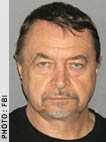
Police see ‘professional job’ in British spy’s death

Gareth Williams

Gareth Williams

By JOSEPH FITSANAKIS | intelNews.org |
As authorities investigate the recent death of British spy Dr. Gareth Williams, the country’s notorious tabloid media industry is having a field day disorienting interested observers. It is thus easy to miss important news breakthroughs in the cacophony of sensationalized headlines about Williams, whose body was discovered a week ago, stuffed in a sports duffle bag in the bath of his London apartment. One such breakthrough was yesterday’s report by Britain’s widely respected Channel 4, which said that law enforcement investigators described Williams’ death as “a neat job”, a term used to refer to professional killings. The Channel 4 report was preceded by strong official denials by police that Williams’ murder was sex-related, as had been previously reported. Some investigators now believe that Williams was killed by a foreign agent, who then deliberately “planted a trail of clues” pointing to a homosexual link to the death. Read more of this post

News you may have missed #418

  • US military pays for intel widely available online. Experts say that the vast majority of the ‘intelligence’ needed by the United States is freely available on the Internet. But that has not stopped a company called Military Periscope from selling its subscription services to the US government, on things such as updates on foreign militaries, peacekeeping missions, weapons databases and terrorist organizations “via monthly CD-ROM delivery”.
  • Son of Russian spies could return to US for school. Tim Foley, the elder son of Donald Howard Heathfield and Tracey Lee Ann Foley, the two deported US residents who were living a double life as Russian spies, may be trying to return to study in the United States, but his younger brother plans to stay in Moscow.
  • German spy chief notes cyberattack surge. Cyberattacks against German corporate and government computers have been on the rise since 2005, according to Heinz Fromm, Director of Germany’s Federal Office for the Protection of the Constitution. He said the attacks “come mainly from Asia, often from China”, and that often “state agencies are involved”.
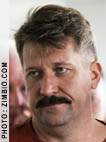
‘Lord of War’ weapons smuggler enjoys Russian protection

Viktor Bout

Viktor Bout

By JOSEPH FITSANAKIS | intelNews.org |
The case of notorious arms smuggler Viktor Bout is well known. Born in Dushanbe, Soviet Tajikistan, in 1967, Bout served in the GRU (Soviet military intelligence) until the collapse of the USSR, at which point he began supplying weapons to shady groups, ranging from Congolese rebels and Angolan paramilitaries to the Taliban and al-Qaeda. In March of 2008, Bout, known as ‘Lord of War’, was finally arrested by the Royal Thai Police, after a tip by US Drug Enforcement Administration (DEA) officers. The latter had managed to lure Bout to Thailand by pretending to be Colombian FARC arms procurers. Recently, Washington scored a second victory by convincing Thai authorities to extradite Bout to the United States on terrorism charges. Presumably, Bout will be tried as an arms smuggler acting on his own accord. But is this right? Read more of this post

News you may have missed #416 (Iran edition)

  • Israel not to attack Iran in 2011, say US sources. The Obama administration, citing evidence of continued troubles inside Iran’s nuclear program, has persuaded Israel that it would take roughly a year for Iran to complete a “dash” for a nuclear weapon. US officials say the assessment has dimmed the prospect that Israel would pre-emptively strike Iran within the next year.
  • Iran launches first spy drone. Iran has launched a domestically made long-range high-altitude drone, called Karrar, according to state media. Hamed Saeedi, managing director of Farnas Aerospace Company, which is in charge of the project, said plans are under way to produce additional drones and unmanned choppers.
  • Iranian tried for espionage collapses in Armenian court. Behnam Bagheri, an Iranian citizen being tried in Armenia on charges of spying for Azerbaijan, collapsed in court in Yerevan on August 19 while delivering his defense speech, according to reports. In a similar case in October of 2009, Armenia charged one of its own officers with spying for Azerbaijan.

Bookmark and Share

News you may have missed #415

  • GCHQ tech arm adopts new personnel evaluation tests. The Communications Electronics Security Group is the information assurance arm of the General Communications Headquarters –Britain’s equivalent of the National Security Agency. CESG has now adopted a new testing method of verifying the competency of its IT security professionals, because apparently there are “not enough security professionals in the public and private sectors to go around”.
  • Swapped Russian insists he was no CIA spy. Of the four jailed Russians the US received from Moscow in exchange for the 11 Russian illegals in July, only one is talking. But Igor Sutyagin, a nuclear proliferation expert, who was convicted of links with a CIA front-company, insists he was no CIA spy. However, if that is so, why was he on Washington’s swap list in the first place?
  • Militants target Yemen spy officials. Two officers in Yemen’s Political Security Organization, Colonel Ali Abdul Kareem al-Ban, and Juman Safian, have been shot dead in recent days. Al-Qaeda militants, who assumed responsibility for the attacks, warned they will be stepping up operations inside neighboring Saudi Arabia.

Bookmark and Share

News you may have missed #414

Bookmark and Share

Russian alleged CIA spy gives interview

Igor Sutyagin

Igor Sutyagin

By IAN ALLEN | intelNews.org |
Of the four Russians alleged spies that the US and the UK received from Moscow in exchange for the 11 Russian illegals in July, only one is talking to the media. The Russian government convicted Igor Sutyagin, a nuclear proliferation expert, of having links with Alternative Futures, a British consulting company alleged by Moscow to be a CIA front. This past weekend, Sutyagin, who now lives in an undisclosed London location, gave a detailed interview to Natalya Golitsyna, a London-based correspondent for US government-owned Radio Liberty’s. As in his previous statements to the press, the Russian scientist rejected he was ever a spy, claiming that “[t]he first thing in my mind […] was doing and thinking for my country”. He also rejected accusations that he provided Alternative Futures with classified information on Russian nuclear weapons policy: “there was no transfer of information”, said Sutyagin, noting that the information he shared with the British-registered company “was just an illustration of the processes that are going on in Russia tasks”. Read more of this post

News you may have missed #413

  • Complex politics behind Ugandan spy chief’s removal. The recent sacking of Dr Amos Mukumbi from heading Uganda‘s Internal Security Organisation (ISO) was the handiwork of politics, intrigue and suspicion within the country’s intelligence community and between politicians. It was also related to ongoing turf wars between the ISO and its sister agency, the External Security Organisation.
  • Experts still evaluating WikiLeaks impact. Some analysts believe that the US intelligence establishment will call for an increased clampdown on secrecy in the wake of the WikiLeaks Afghan War Diary files release. But the data dump has also spurred those arguing that the US government needs to reduce the amount of information it classifies as secret, much of which may be unnecessary.
  • Radio program investigates the Mossad. BBC Radio has aired a relatively well-produced primer on Israeli intelligence agency Mossad. The BBC’s Security Correspondent Gordon Corera interviews former Mossad Director Efraim Halevy and former Mossad operative Rafi Eitan, among others.

Bookmark and Share

CIA hid terrorism prisoners from US Supreme Court

CIA HQ

CIA HQ

By JOSEPH FITSANAKIS | intelNews.org |
The Central Intelligence Agency purposefully concealed at least four terrorism detainees from the US legal system, including the Supreme Court, according to an exclusive report by the Associated Press. The news agency has revealed that the CIA secretly transported the four to Guantánamo Bay Detention Camp on Cuba in 2003, two years before it publicly admitted their capture. It then secretly transferred them again to other sites in its black site prison network in various countries around the world, just three months before their prolonged stay at Guantánamo would entitle them to legal representation. While at Guantánamo, the four prisoners, Abd al-Nashiri, Mustafa al-Hawsawi, Ramzi Binalshibh and Abu Zubaydah, were kept at a facility known as ‘Strawberry Fields’, which is detached from the main prison site at the bay. By hiding the four, the Bush Administration managed to keep them under CIA custody while denying them legal representation for two years longer than allowed by US law. It also concealed their detention from national and international human rights monitoring bodies and from the US justice system, including the Supreme Court. Read more of this post

News you may have missed #412

Bookmark and Share

News you may have missed #411

  • Third Lebanese telecom worker charged with spying for Israel. A Lebanese prosecutor has charged a third state telecommunications employee with spying for Israel. Milad Eid, who worked at the state-owned fixed-line operator Ogero, is accused of “dealing with the Israeli enemy [and] giving them technical information in his position as head of international communications at the Telecommunications Ministry”.
  • Author Roald Dahl was British spy, new book claims. A new book by Donald Sturrock, entitled Storyteller: The Life of Roald Dahl, claims that children’s author worked for British Security Coordination (BSC), a 1940s secret service network based in the United States, and was ‘run’ from New York by Canadian industrialist William Stephenson.
  • Israeli nuclear whistleblower wants to leave country. Nuclear whistle-blower Mordechai Vanunu has been released from prison after serving a 10-week sentence for violating the terms of his parole by speaking to a foreign journalist. Upon his release, he asked that he be allowed to leave the country.

Bookmark and Share

Swapped spy says he is not Russian, wants to move to Peru

Mikhail Vasenkov

Mikhail Vasenkov

By IAN ALLEN | intelNews.org |
One of the 11 Russian spies arrested in the US in June, and later swapped with CIA assets held in Russian prisons, claims he is not Russian, speaks no Russian, and wants to move to Peru, where he lived in the 1970s. Juan Lazaro was arrested by the FBI on June 27, along with 9 other (and later one more) Russian deep-cover operatives, who had lived in the United States under false identities for up to three decades. Lazaro, who lived in Yonkers, New York, had a doctorate in Political Science, worked as an adjunct professor, and was married to Peruvian-born journalist Vicky Pelaez. But FBI investigators unmasked Lazaro’s real name, which is Mikhail Vasenkov, before deporting him and his wife, who is also accused of working for the Russian secret services, to Moscow. According to FBI records, Vasenkov assumed the Juan Lazaro identity and ‘legend’ (biographical narrative and supporting documentation for intelligence purposes) while living in Latin America in the 1970s, using the papers of the real Juan Lazaro, an Uruguayan child who died at age 3. But now Vasenkov’s American lawyer, Genesis Peduto, claims her client is not from Russia, speaks no Russian, but is in fact the real Juan Lazaro, and wishes to leave Russia for Peru. Read more of this post

News you may have missed #409

  • Probe unearths secrets of Bulgaria’s assassination bureau. Previously unknown details on Service 7, Bulgaria’s Cold War-era assassination bureau, have been unearthed by one of Bulgaria’s leading newspapers, following a probe into 5,000 pages of declassified archives from the country’s former communist intelligence service, the First Directorate of the Committee on State Security.
  • US Pentagon bars troops from reading WikiLeaks. Any citizen, any foreign spy, any member of the Taliban, and any terrorist can go to the WikiLeaks web site, and download detailed information. Members of that same military, however, are now banned from looking at those internal military documents, because “doing so would introduce potentially classified information on unclassified networks”.
  • Analysis: Chasing Wikileaks. “[W]hatever the imperfections of WikiLeaks as a startup, its emergence points to a real shortcoming within our intelligence community. Secrets can be kept by deterrence –that is, by hunting down the people who leak them […]. But there are other methods: keep far fewer secrets, manage them better –and, perhaps, along the way, become a bit more like WikiLeaks. An official government Web site that would make the implementation of FOIA quicker and more uniform, comprehensive, and accessible”.

Bookmark and Share

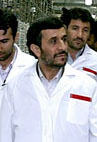
Iran factory blast coincides with reported bomb attack on Ahmadinejad

Ahmadinejad

By JOSEPH FITSANAKIS | intelNews.org |
Official Iranian denials of an alleged bomb attack on the life of President Mahmoud Ahmadinejad on Wednesday have been followed by reports of a simultaneous attack on a state-of-the-art Iranian petrochemicals complex. Specifically, on August 4, Reuters news agency cited an Iranian “presidential office source” in reporting a strong blast “500 meters from Ahmadinejad’s motorcade”. The blast, which Reuters attributed to either a hand grenade or a homemade explosive device, occurred as the Iranian President was being transported from the regional airport of Hamadan, in western Iran, to the city’s sports complex, where he was scheduled to deliver a speech. Reuters’ unnamed source said the President escaped unhurt, but subsequent reports indicated that several other passengers on the motorcade were injured. Interestingly, President Ahmadinejad’s office initially appeared to confirm the assassination attempt, but soon afterwards official state news agency IRNA attributed the blast on “an excited young man from Hamadan [who] exploded a firecracker in order to express his happiness”. Read more of this post

News you may have missed #408

  • Russian military spy supervised Czech prisons. Robert Rakhardzho, a Russian spy whose relationship with a Czech female Army major prompted the resignation of three senior Czech military officials, worked as a psychologist at the Czech Prison Service headquarters until last September. Rakhardzho is now hiding in Russia.
  • US undercover feds able to easily obtain fraudulent passports. Gregory Kutz, an investigator for the US Government Accountability Office, testified last week to a Senate panel about how his team of undercover Federal agents was able to get the State Department to issue five of the seven e-Passports it requested using fraudulent information. The government apparently failed to detect such basic red flags as a fake driver’s license.
  • Russia widens powers of KGB successor agency. Russian president Dmitry Medvedev has signed a law widening (again) the powers of the Federal Security Service, the KGB’s main successor agency. The new law allows the FSB to issue warnings to people suspected of preparing to commit “crimes against Russia’s security”. Perpetrators face fines or up to 15 days detention.

Bookmark and Share