Does Norway engage in international espionage?

NIS HQ

NIS HQ

By IAN ALLEN | intelNews.org |
The death sentences handed down earlier this week by a Congolese military court to two alleged Norwegian spies, prompted Brian Palmer, of Slate magazine, to ask: do small countries like Norway engage in international espionage? The answer, of course, is yes. Palmer explains that intelligence agencies of smaller countries tend to be extremely focused on bordering nations. As a result, when it comes to their immediate geographical neighborhood, their intelligence knowledge and capabilities often surpass those of larger intelligence powers. Norway is a good example of this. Read more of this post

News you may have missed #0093

Bookmark and Share

News you may have missed #0086

Bookmark and Share

Analysis: Assessing the record of Russian espionage

R. Kupchinsky

R. Kupchinsky

By JOSEPH FITSANAKIS | intelNews.org |
Roman Kupchinsky has penned an article for The Prague Post, in which he examines the recent expulsion of two Russian spies from the Czech Republic as part of a broader decline in Russian intelligence operations. The Jamestown Foundation analyst explains that Vladimir Putin’s campaign to rebuild the Russian espionage activities abroad to their former glory has not borne fruits. Rather, the gradual decay in Russia’s global intelligence presence, which began in the early 1980s, continues to mire the country’s Foreign Intelligence Service (SVR). The SVR is the successor to the KGB’s First Chief Directorate (PGU), which was responsible for foreign operations and intelligence collection. Although Kupchinsky’s view is shared by a many Western intelligence observers, some remain skeptical. Read more of this post

FBI investigates attorneys for trying to identify CIA torturers

By IAN ALLEN | intelNews.org |
The Washington Post and The New York Times are reporting three military attorneys at Guantánamo Bay have been questioned by the FBI for allegedly showing pictures of CIA operatives to prisoners accused of plotting the 9/11 attacks. In some cases, the pictures were taken surreptitiously outside the operatives’ homes. The lawyers were apparently trying to identify agents who may have been involved in torturing prisoners at US jails overseas. But US military officials say the lawyers could have broken laws shielding the identity of classified intelligence. The FBI investigation is reportedly headed by John Dion, head of the US Justice Department’s counterespionage section. Dion has worked on several high-profile national security cases, including the prosecution of Aldrich H. Ames, the CIA double agent who spied for the USSR. Read more of this post

BBC releases archival documents on KGB spy Guy Burgess

Guy Burgess

Guy Burgess

By JOSEPH FITSANAKIS | intelNews.org |
The BBC’s archive unit has released 24 previously unpublished documents on Guy Burgess, a British-born KGB double spy who defected to Moscow during the early stages of the Cold War. Prior to joining the British Foreign Office, Burgess worked for the BBC as a producer of its Week in Westminster radio program, which covered British Parliamentary activity. The archival documents, some of which date back to 1936, shed light on his activities while at the BBC. They include a reference letter addressed to the BBC from Burgess’ academic mentor, renowned Cambridge University historian Sir George Trevelyan. In the letter, Professor Trevelyan describes Burgess as “a first rate man” and notes that “[h]e has passed through the communist measles that so many of our clever young men go through and is well out of it”. Read more of this post

News you may have missed #0061

  • Finland police identify body of WWII Soviet spy. Police believe a body found near Kouvola, Finland, to be the World War II remnants of a Soviet spy. The man apparently parachuted to his death. The body will be offered to the Russian Embassy for repatriation –an offer that is expected to be refused.
  • Hacker conferences attract spies, thieves. Interesting account of Defcon conference anecdotes by CNET correspondent Elinor Mills, who has been attending Defcon since 1995.
  • Interesting interview with lawyer behind CIA lawsuit. McClatchy news agency has published a rare interview with Brian Leighton, the lawyer representing retired Drug Enforcement Agency (DEA) officer Richard A. Horn, who in 1994 claimed that CIA agents illegally wiretapped his conversations while he was stationed in Burma.

Bookmark and Share

Kim Philby’s granddaughter describes memories of her grandfather

Charlotte Philby

Charlotte Philby

By JOSEPH FITSANAKIS | intelNews.org |
Charlotte Philby, daughter of John Philby, H.A.R. “Kim” Philby’s oldest son, has penned an extensive account of her memories of her grandfather. In her article, published yesterday in British daily The Independent, she describes Kim Philby as “a proud man, and one who chose to publicly stand by his actions”. Kim Philby was probably the most successful double spy in history. While working as a senior member of British intelligence, he spied on behalf of the Soviet KGB and NKVD from the early 1930s until 1963, when he defected to Moscow. Two years later he was awarded the Order of the Red Banner. The Soviet authorities buried him with honors when he died in 1988. Read more of this post

Documents reveal CIA meddling in Japanese elections

Taketora Ogata

Taketora Ogata

By JOSEPH FITSANAKIS | intelNews.org |
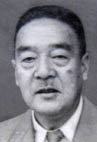
Researchers from three Japanese universities have unearthed US documents that detail CIA activities to monitor and influence Japanese politics in the early 1950s. Dubbed “The Ogata File”, the five-volume, 1,000-page document collection, which was declassified in 2005, relays CIA efforts to assist the electoral campaigns of Japanese conservative politician Taketora Ogata. Ogata led the Japan Liberal Party in the early 1950s and in 1955 was instrumental in merging his party along with other conservative groups into the Liberal Democratic Party, which has ruled Japan for most of the post-war period. Read more of this post

News you may have missed #0042

  • Postcards containing Cold War spy messages unearthed. The postcards, containing chess moves, were posted in 1950 by an unidentified man in Frankfurt, thought to have been an undercover agent, to Graham Mitchell, who was then deputy director general of MI5. The problem is, researchers are not quite sure whether the cryptic text on the postcards is based on British or Soviet codes, because Mitchell was suspected of being a secret Soviet agent at the time.
  • Is NSA actively mapping social networks? There are rumors out there that NSA is monitoring social networking tools, such as Tweeter, Facebook and MySpace, in order to make links between individuals and construct elaborate data-mining-based maps of who associates with whom.
  • US Senate bill would disclose intelligence budget. The US Senate version of the FY2010 intelligence authorization bill would require the President to disclose the aggregate amount requested for intelligence each year. Disclosure of the budget request would enable Congress to appropriate a stand-alone intelligence budget that would no longer need to be concealed misleadingly in other non-intelligence budget accounts.

Bookmark and Share

Cambridge spy ring member’s memoir reveals motives behind actions

Anthony Blunt

Anthony Blunt

By IAN ALLEN | intelNews.org |
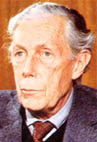
The British Library kept its promise and released yesterday the closely guarded, incomplete autobiographical manuscript of Anthony Blunt, fourth member of the Cambridge spy ring. The group of British spies, which worked secretly for the Soviet Union from the 1930s until the 1960s, included Guy Burgess, Donald Maclean and H.A.R. “Kim” Philby, all of whom eventually defected to the Soviet Union. In his 30,000-word memoir, Blunt, an art history professor who in 1945 became Surveyor of the King’s Pictures and was knighted in 1954, describes his recruitment to spy for the Soviets as “the most important decision of my life”. Read more of this post

Article on formerly unknown Soviet spy published

George Koval

George Koval

By JOSEPH FITSANAKIS | intelNews.org |
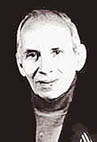
On November 2, 2007, some of Russia’s most senior military and intelligence officials gathered at the Kremlin to honor a Soviet spy whose name was until then completely absent from the annals of espionage history. Russian defense minister Anatoly Serdyukov and Main Intelligence Directorate (GRU) chief Valentin Korabelnikov were among several officials who joined Russian president Vladimir Putin to pay tribute to George Koval. Koval was an American citizen born in Iowa to immigrant parents from Belarus. In 1932, Koval, his parents and two brothers, all of whom were US citizens, moved back to the then rapidly developing Soviet Union to escape the effects of the Great Depression. It was there that the young George Koval was recruited by the GRU, the foreign military intelligence directorate of the General Staff of the Soviet Armed Forces. He received Soviet citizenship and returned to the US through San Francisco in October 1940. Read more of this post

Ex-CIA historian claims Soviet asset was double agent

Adolf Tolkachev

Adolf Tolkachev

By JOSEPH FITSANAKIS | intelNews.org |
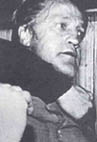
In official historical accounts of the CIA, Adolf Tolkachev is described as the Agency’s greatest Soviet asset in the 1980s, whose impact was “limitless” and of “immense value”. Tolkachev, codenamed GTVANQUISH in internal CIA documents, was a Soviet electronics engineer who conducted research for the Soviet armed forces. From 1979 until his capture in 1985, he secretly collaborated with the CIA and give the Agency countless documents on Soviet avionics and radar systems. But Benjamin Fischer, a former CIA clandestine operative and retired CIA historian, now claims that Tolkachev was actually a KGB double agent tasked by Soviet intelligence with providing US military strategists with false information. Read more of this post

Polish priest claims Soviets tried to kill Pope in 1987

Zdzisław Król

Zdzisław Król

By JOSEPH FITSANAKIS| intelNews.org |
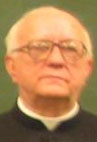
A Polish Catholic priest, who accompanied Pope John Paul II during his 1987 trip to Poland, has said he helped foil a Soviet attempt to assassinate the Pontiff. Zdzisław Król, who today heads the Warsaw Metropolitan Curia, Poland’s largest Catholic institute, claims that the Soviet Union’s foreign military intelligence directorate (GRU) had planned to assassinate the Pope during his speech at Pauline monastery of Jasna Góra, in the city of Częstochowa. The monastery houses the Black Madonna painting, a popular shrine to the Virgin Mary. Zdzisław Król, claims that GRU had supplied a Bulgarian operative living in Poland with precise information on the Pope’s travel itinerary, which had not been publicized for security reasons, as well as train tickets to Częstochowa. Read more of this post

Former KGB officer to publish “new data” on nuclear espionage

By JOSEPH FITSANAKIS | intelNews.org |
Alexander Vassiliev, who worked in the American Division of the KGB from 1987 to 1990, is well known to intelligence historians. His first book, Haunted Wood: Soviet Espionage in America (1999) included information the author claims to have copied from internal KGB records. Among several critics of the book was Rutgers University professor John Lowenthal, who dismissed it as containing a “plethora of errors, and […] strategic omissions [that] leave it demonstrably untrustworthy [and] far below minimal standards of scholarly or journalistic rigor for any serious consideration”. Now Vassiliev is preparing his return with a second book, entitled Spies: The Rise and Fall of the KGB in America, which he co-wrote with John Earl Haynes and Harvey Klehr. The book, which is scheduled for publication by Yale University Press in March, is also based on internal KGB “files, copied by Mr. Vassiliev into notebooks” before he resigned from his post at the KGB. Read more of this post