Japan officials discuss strengthening counterespionage, establishing CIA-like agency
October 9, 2026 1 Comment
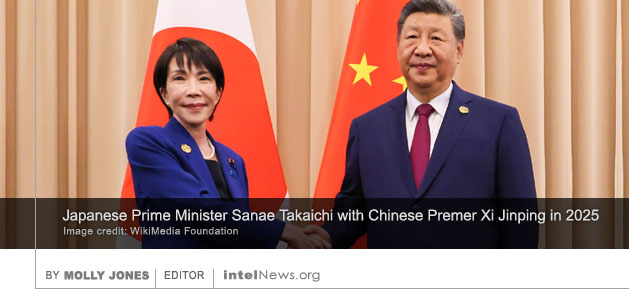 JAPAN HAS HELD THE first meeting of an expert panel to discuss strengthening intelligence capabilities and anti-espionage measures. The agenda included weighing proposals for establishing a new foreign-oriented intelligence agency, as the Japanese government seeks to address long-standing gaps in its counterespionage posture and laws.
The closed-door session took place in late September. It was joined by Japanese Prime Minister Sanae Takaichi, who led a 17-member panel of officials. The session reportedly focused on strengthening Japan’s intelligence capabilities and planned the drafting of a formal medium and long-term national intelligence-strategy document.
The panel reviewed counter-espionage legalization through establishing a new foreign interference prevention law, among other legal innovations. Japan has lacked a comprehensive anti-espionage law since Allied occupation authorities dismantled most of its intelligence-gathering apparatus following World War II. The lack of an anti-espionage law has limited the nation’s ability to prosecute spies and negotiate exchanges for Japanese nationals detained abroad.
The panel also discussed the creation of an external intelligence agency, comparable to the United States Central Intelligence Agency. Such a body was affirmed as a priority in the October 2025 coalition agreement between Takaichi’s Liberal Democratic Party and the Japan Innovation Party, with the new agency reportedly set to be established by early 2028. If realized, such a move would represent a significant shift in Japan’s intelligence infrastructure.
Following the meeting, Prime Minister Takaichi held a press conference in which she expressed her concerns over what she referred to as the increasing threats to Japan’s advanced technology, cyberattacks targeting both public and private sectors, and the challenge of foreign disinformation campaigns. She highlighted the need to expand Japan’s foreign intelligence capabilities to prevent “undue interference from abroad”, referring to increased cooperation between China, North Korea and Russia, and the threats it presents.
Since taking office in October 2025, Takaichi has made intelligence and security reform a top policy priority of her government. She has repeatedly stated her intention to increase Japan’s intelligence and counterespionage capabilities, with the aim of addressing growing security threats. TextIn March 2026, Takaichi’s administration adopted a bill to establish the Japanese equivalent of the Committee on Foreign Investment in the United States (CFIUS), aimed at tightening scrutiny of foreign investment in sensitive sectors. In July 2026, the Japanese government launched the National Intelligence Council—chaired by Takaichi herself—and the National Intelligence Bureau, both of which are tasked with collecting intelligence related to national security and public safety.
► Author: Molly Jones | Date: 9 October 2026 | Permalink
 ON THE MORNING OF October 6, 2026, news broke that German investigators had arrested August Hanning at his home in Nordwalde, near Münster, on suspicion of espionage and the disclosure of state secrets, potentially constituting treason. The 80-year-old Hanning is also accused of attempted treason and of acting as an agent for a foreign intelligence service.
 delivered to the foreign agent. While it is not known which foreign country the intelligence service belongs to, it was almost immediately alleged that it is not Russia. This has the hallmarks of a controlled leak by the German authorities, who presumably wish to advertise this with a very high degree of certainty to the German public and their allies alike.
 AN ARTICLE PUBLISHED LAST summer in Mabat Malam, the journal of the Israel Intelligence Heritage and Commemoration Center, identified “insider threats”, ranging from aircrew members to airport employees, as major dangers to civil aviation. The
  UNITED STATES AUTHORITIES HAVE charged a Cuban dance teacher living in Russia with conspiracy to finance terrorism. According to the U.S. government, the Cuban national used the online alias “Dios” while coordinating a series of arson attacks across four European countries on behalf of the Russian intelligence services.
 TWO MEN HAVE BEEN charged with conspiracy to commit wire fraud after allegedly concealing a software company’s Russian ownership from the United States government and trying to work as contractors for the Secret Service. Founded in 1865 and currently operating under the Department of Homeland Security, the Secret Service is a federal law enforcement agency with a dual mission of protecting America’s national leaders and investigating financial crimes.
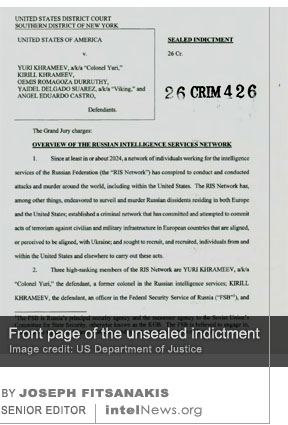 THE UNITED STATES DEPARTMENT of Justice
 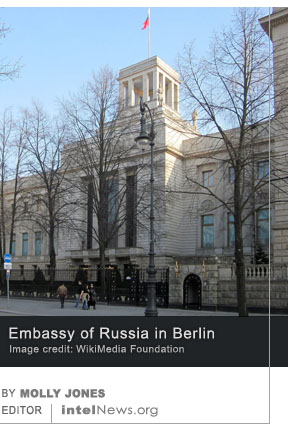 GERMAN FEDERAL PROSECUTORS HAVE formally charged a businesswoman with espionage on behalf of Russian intelligence, claiming she was tasked with gaining access to political and military circles in Germany. The woman, 56, officially identified only as Ilona W., is believed to hold German, Russian, and Ukrainian citizenship. She was arrested on January 21, 2026, and remains in pre-trial detention. The indictment was filed by Germany’s Federal Public Prosecutor’s Office on September 7, 2026.
 A MILITARY OFFICER FROM Spain—a North Atlantic Treaty Organization (NATO) member—has been suspended from duty following an investigation into his relationship with a woman born in the former Soviet Union, amid fears she may have been spying for Moscow.
 A CHINESE-BELGIAN NATIONAL and former senior employee at a now-bankrupt microchip manufacturer
  AVNER BARNEA’S
  A CHINESE-OWNED LUXURY hotel in Cyprus has sparked concerns among British intelligence and military officials that it could be
  SOUTH KOREA’S SUPREME COURT has
  GERMAN INVESTIGATORS SUSPECT THAT a hidden weapons cache discovered in a forest near Berlin was intended to be used by Russian intelligence operatives to carry out assassinations on German soil. The discovery of the cache was
 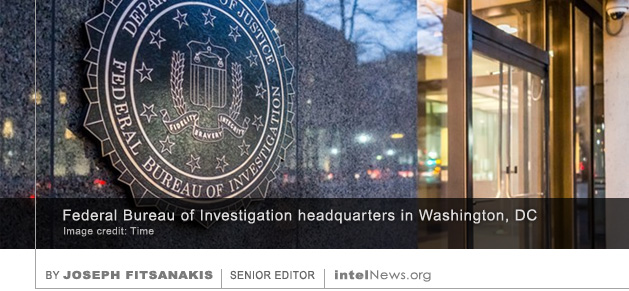 A COUNTERINTELLIGENCE INVESTIGATION INVOLVING five countries has uncovered a network of professionally designed websites offering to hire Western experts as consultants, but which are allegedly part of a Chinese spy operation. Thirteen websites have already been seized by the United States Federal Bureau of Investigation in coordination with counterintelligence agencies in Australia, Canada, the United Kingdom, and New Zealand.








Finland to probe mysterious intrusions of elected officials’ homes
October 12, 2026 by intelNews Leave a comment
Officials with the Helsinki Police Department, which is leading the preliminary investigation, said the first break-in was reported about a year ago. As in subsequent incidents, there were no obvious signs of forced entry, and nothing appeared to have been stolen. However, several doors were left open and lights switched on, which residents said they did not remember leaving that way.
According to Yle, Finland’s state broadcaster, the Parliament’s First Deputy Speaker Paula Riskikko learned about the first suspected intrusion on the evening of 23 September. Upon learning of subsequent break-ins, Riskikko informed the Parliament’s Director of Security, Aaro Toivonen, who then convened a meeting with leaders of Parliamentary groups to discuss security concerns. The meeting aimed to establish how pervasive the intrusions were across MPs’ residences, as more cases emerged.
At a press conference held at the Finnish Parliament, Speaker Jussi Halla-aho suggested the intrusions could be part of a deliberate tactic to signal that intruders can access MPs’ homes at will, and said the behavior was “associated with state actors”. He added that officials do not yet know the exact number of MPs affected, but described the incidents as “significant”, emphasizing that there was no information concerning the motive or those responsible. Finnish President Alexander Stub, also spoke about the reported incidents, saying that “an attack on a member of parliament is an attack on democracy”.
Some have suggested that the incidents may be connected with the upcoming Finnish parliamentary elections, which are scheduled to be held in six months. Asked by a reporter if foreign involvement was likely, Prime Minister Petteri Orpo said it was “very possible, quite possible in this day and age.” He added that the break-ins raise the risk of election interference, and noted they must be monitored meticulously. Orpo also pointed to the possibility of foreign involvement, stating: “We see in several European countries that Russia has sought to influence elections”.
Finland shares a 1,320-kilometer (830-mile) border with Russia and ended decades of military non-alignment by joining the North Atlantic Treaty Organization in April 2023. Helsinki has previously accused Moscow of conducting hybrid warfare, including orchestrating a surge of migrants at the Finnish-Russian border in late 2023. There is currently no evidence that the break-ins are intended to influence the upcoming election or intimidate MPs, or that they form part of a foreign-directed malign influence campaign.
► Author: Molly Jones | Date: 12 October 2026 | Permalink
Filed under Expert news and commentary on intelligence, espionage, spies and spying Tagged with covert operations, Finland, News, nondestructive entry, Parliament of Finland