Colombian government to probe calls for ‘military coup’

President Santos (in blue tie) with Colombian military officialsBy IAN ALLEN | intelNews.org |
Colombian authorities have opened an official investigation into calls to remove the government of the country, which were found circulating among former and current military officials. The investigation was announced on Tuesday, nearly two weeks after the appearance in the Colombian media of a series of personal email exchanges, which appeared to suggest that the national administration of President Juan Manuel Santos should be removed from power. Some of the emails were exchanged between two influential retired military officers, Major Jorge Galvis Noyes and General Eduardo Santos Quiñones. One message was authored by Galvis on May 15, 2012, shortly after a massive bomb exploded in Colombian capital Bogota, which killed five people and injured 17. The bomb, according to President Santos, was directed against the country’s former Minister of the Interior, Fernando Londoño Hoyos, who is said to have links with rightwing paramilitary groups. Galvis’ email lamented the “attempt [that] was made on the life of Fernando Londoño” and criticized the government of President Santos for not preventing it. He continued by suggesting that Santos should “fulfill his political duties […], otherwise he should be “removed from office”. Around that time, General Quiñones authored an open call against President Santos, which he apparently circulated via email among dozens of senior military officers. The letter blasted the Santos administration, stating that Colombia was ready for “a real leader”. In recent months, rightwing political figures connected to Colombia’s previous President, Alvaro Uribe, have been virulently attacking the Santos administration, accusing it of being “soft” against leftwing paramilitary groups –primarily the Revolutionary Armed Forces of Colombia (FARC). Read more of this post

News you may have missed #741

Glenn CarleBy IAN ALLEN | intelNews.org |
►►MI6 role in rendition could be concealed in new bill. Libyan government officials Sami al-Saadi and Abdel Hakim Belhaj, who allege that they were taken by rendition by Britain to Libya eight years ago, are expected to begin legal proceedings against the British government and Jack Straw, Britain’s former foreign secretary, next month. However, after pressure from the security services, MI5 and MI6, the British government is preparing to publish a Justice and Security Bill that could allow these cases to be held in their entirety behind closed doors.
►►Aussie spy agency defends new headquarters. The Australian Security Intelligence Organisation says its new headquarters in Canberra is not at risk of being spied upon, despite the use of a lot of glass. ASIO director general David Irvine told a senate committee on Thursday it would be impossible for someone with a high resolution camera on the other side of Lake Burley Griffin to spy on the nation’s spies. Australian Greens senator Scott Ludlam had asked whether the design of the “glass palace” could threaten the secrecy of its work.
►►Good interview with ex-CIA officer Glenn Carle. In this interview, Carle, a retired CIA case officer who wrote The Interrogator: An Education, says his former employers have called his publisher asking them to pulp his book; they rang every major network to prevent him going on air. They are, he says several times, “vicious” and have perpetrated a stain on America’s national character.

News you may have missed #740

Timo KivimäkiBy IAN ALLEN | intelNews.org |
►►Denmark professor accused of spying challenges court secrecy. Timo Kivimäki, a Finnish humanities professor at the University of Copenhagen, is accused of spying for the Russians and is being tried at the city court in the Danish city of Glostrup behind closed doors, meaning no information about the trial, including the precise charges, can be disseminated. But following demands from both Kivimäki’s lawyer and the Danish media, he has been granted permission to appeal against the decision to hold the trial in secret.
►►Analysis: CIA’s links with Hollywood are longstanding. Some US officials are suggesting that the producers of a new motion picture, which deals with the raid that killed al-Qaeda founder Osama bin Laden, received “extremely close, unprecedented and potentially dangerous collaboration” from the Obama administration, and particularly the US Intelligence Community. In light of this, a well-researched article in The Los Angeles Times reminds readers that the close connection between the movie industry and the US military and intelligence community goes back decades. The US military has been using movies to drive up recruitment since the 1920s; and the CIA these days even posts potential movie story lines on its website.
►►CIA funds helped launch literary journal. The Paris Review has been hailed by Time magazine as the “biggest ‘little magazine’ in history”. At the celebration of its 200th issue this spring, current editors and board members ran down the roster of literary heavyweights it helped launch since its first issue in 1953. Philip Roth, V. S. Naipaul, T.C. Boyle, Edward P. Jones and Rick Moody published their first stories in The Review; Jack Kerouac, Jim Carroll, Jonathan Franzen and Jeffrey Eugenides all had important early stories in its pages. But as American novelist Peter Matthiessen has told interviewers –most recently at Penn State– the journal also began as part of his CIA cover.

News you may have missed #739

The US Department of DefenseBy IAN ALLEN | intelNews.org |
►►US Supreme Court to consider case on secret wiretapping. The Supreme Court has agreed to consider blocking a constitutional challenge to the government’s secret wiretapping of international phone calls and emails. At issue is whether Americans who have regular dealings with overseas clients and co-workers can sue to challenge the sweep of this surveillance if they have a “reasonable fear” their calls will be monitored. The case, to be heard in the fall, will put a spotlight on a secret surveillance program that won congressional approval in the last year of President George W. Bush’s presidency.
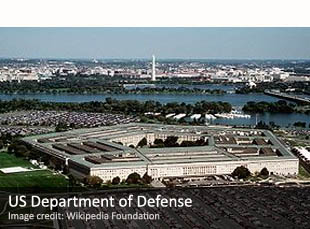
►►Analysis: Why is CIA applauding DoD’s intel grab? Last month, Director of National Intelligence James Clapper and Secretary of Defense Leon Panetta announced the creation of a new US espionage agency: the Defense Clandestine Service, or DCS. The new agency is expected to expand the Pentagon’s espionage personnel by several hundred over the next few years, while reportedly leaving budgets largely unchanged. The news nonetheless surprised some observers in Washington because the move appeared, at least initially, to be a direct challenge to the Central Intelligence Agency, whose National Clandestine Service leads the country’s spy work overseas. Then came a second surprise: former CIA officers and other intelligence experts started applauding. The question is why.
►►FBI forms secretive online surveillance unit. On May 22, CNet’s Declan McCullagh revealed that the FBI had quietly formed a new Domestic Communications Assistance Center (DCAC), tasked with developing new electronic surveillance technologies, including intercepting Internet, wireless, and VoIP communications. According to McCullagh, DCAC’s goal is “to invent technology that will […] more readily eavesdrop on Internet and wireless communications”. Read more of this post

News you may have missed #738

Gareth WilliamsBy IAN ALLEN | intelNews.org |
►►Pathologist says MI6 spy may have died alone. Leading British pathologist Richard Shepherd has told the BBC there is “credible evidence” that MI6 officer Gareth Williams died alone. Williams, a mathematician in the employment of Britain’s signals intelligence agency, GCHQ, was found dead in a padlocked sports bag at his home in Pimlico, London, in 2010. According to Dr. Shepherd, bags identical to the one Williams was found in, can be locked by someone inside the bag.
►►Turkey may indict Israeli officers Over Gaza flotilla raid. A prosecutor in Turkey has prepared indictments and recommended life sentences for four senior Israeli officers over the killing of nine activists aboard a Gaza-bound aid flotilla forcibly intercepted in international waters by Israeli commandos two years ago. The indictments, which have not been formally approved by the Turkish judiciary, could further strain relations between Turkey and Israel, which were once close but which deteriorated badly after the flotilla raid on May 31, 2010.
►►Czech secret services alarmed by drastic drop in funding. The BIS, Czech Republic’s counterintelligence service, is used to operating on Kč 1.149 billion (around US$60 million). According to the Finance Ministry’s plan, the agency’s budget will be reduced to Kč 911 million (US$45 million) in 2013. The news has prompted former interior minister and current member of parliament František Bublan to accuse the government of effectively leading to the spy service’s “liquidation”. But Finance Minister Miroslav Kalousek argues that all state institutions must cut back in order to help achieve a balanced budget by 2016.

News you may have missed #737

Shakil AfridiBy IAN ALLEN | intelNews.org |
►►Turkey suspects bird of being Israeli spy. News agencies are poking fun at Turkish authorities, who say they believe that they have found a bird used for espionage purposes by Israel. An investigation was reportedly launched in Ankara several days ago, after a farmer discovered a dead Merops Apiaster, commonly known as the European Bee-Eater, in his field. The bird had a ring reading “Israel” on one of its legs. The reports undoubtedly lend a certain degree of irony to the announcement that Israel Aerospace Industries (owned by the Israeli government) is in fact developing insect drones for indoor surveillance.
►►CIA discloses names of 15 killed officers. The CIA has disclosed the names of 15 of its operatives killed in the line of duty over the last 30 years, the result of a new effort to honor fallen officers. Fourteen of the dead already had a star inscribed in their memory on the CIA’s wall of honor in the lobby of the old headquarters building on the agency’s Langley, VA, campus. But their names had been withheld. In a closed agency ceremony Monday their names were added to the Book of Honor, which accompanies the stars. In addition, a new star was added this year for Jeffrey R. Patneau, who died at age 26 in Yemen in 2008 from injuries sustained in a car accident. He was the 103rd CIA officer recognized as having died in the line of duty.
►►Pakistan convicts doctor who helped CIA find bin Laden. A Pakistani court imposed a 33-year sentence Wednesday on Shakil Afridi, a doctor who assisted the CIA hunt for Osama bin Laden. Afridi, a government surgeon in the semiautonomous Khyber Agency along the border with Afghanistan, was convicted of treason for using a vaccination drive to try to gather DNA samples at the compound where bin Laden was in hiding. His conviction prompted dismay among US officials, who said that the punishment will lead to cuts in aid. According to a Pakistani prison official, Afridi “has been kept away from other prisoners to avert any danger to his life”.

Car explosion in Port Sudan linked to Israel

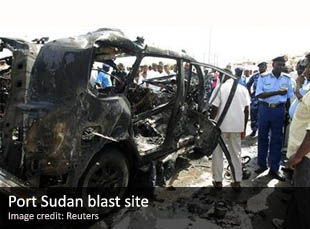
Blast site in Port SudanBy IAN ALLEN | intelNews.org |
A powerful car explosion, which rocked Sudan’s main port on Tuesday, killing one person, has been linked to Israel by Sudanese government officials. The car was blown up by what appears to have been a missile attack, in Port Sudan, a city of over half a million people on the Red Sea. A local reporter told Reuters news agency that the blast site featured “two small but deep holes” and “another hole beneath” what was left of the gutted car. Many observers consider Port Sudan, an ancient city that has traditionally connected Sudan with Egypt in the north and Saudi Arabia across the Red Sea, as a major link in the complex smuggling network that supplies goods and weapons to the Gaza Strip. Israel has long asserted that the smuggled items are secretly carried from Port Sudan into Egypt, before eventually ending up in the Palestinian enclave that is controlled by militant group Hamas. The government of Sudan vehemently denies these charges. But a “local security source” in Port Sudan told Reuters that the car’s driver, Nasser Awadallah Ahmed Said, who was killed in the blast, was an eminent member of the Red Sea’s Ababda Bedouin tribe, whose members have a long history of smuggling weapons and goods to and from Sudan. Speaking on Tuesday, Sudan’s Minister of Foreign Affairs, Ali Ahmed Karti, stopped just short of directly fingering Israel as the culprit of the attack. Karti, who is Sudan’s most senior government official to have so far commented on the blast, told local news media that “the style of the car explosion was similar to Israel’s attack on [Sudan’s] Red Sea State [province] last year”. He was referring to a similar incident that took place in April of last year in the very same province where Port Sudan is located. At that time, Khartoum directly blamed Israel for the strike. Read more of this post

News you may have missed #736

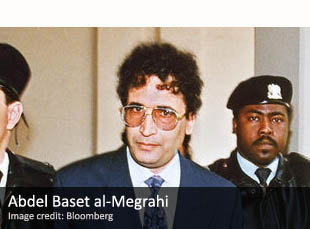
Abdel Baset al-MegrahiBy IAN ALLEN | intelNews.org |
►►Convicted Lockerbie bomber dies. Abdelbaset al-Megrahi, a former Libyan intelligence officer who was the only person ever convicted in the 1988 Lockerbie bombing, died at home in Tripoli Sunday, nearly three years after he was released from a Scottish prison to the outrage of the relatives of the attack’s 270 victims. He was 60. Scotland released Mr. al-Megrahi on Aug. 20, 2009, on compassionate grounds to let him return home to die after he was diagnosed with prostate cancer. Anger over the release was further stoked by subsequent allegations that London had sought his release to preserve business interests in the oil-rich North African nation, strongly denied by the British and Scottish governments.
►►Federal appeals panel to hear CIA leak case. A federal appeals panel in the United States will hear the case of ex-CIA officer Jeffrey Sterling, who has been charged with leaking classified information about Iran’s nuclear program to New York Times reporter James Risen. Prosecutors say Sterling was a key source in Risen’s 2006 book, State of War. They are also challenging the court’s decision to strike two government witnesses and allow disclosure of the identities of covert CIA operatives to Sterling’s lawyers.
►►New study of British Empire’s spies published. British newspaper The Guardian has published a review of William Beaver’s newly published book, Under Every Leaf: How Britain Played The Greater Game From Afghanistan to Africa. Much of the book concerns the creation in the mid-1850s of the British War Office Intelligence Department. According to the review, the book does much to restore the “missing dimension” to Britain’s military-imperial history between 1855 and the creation of her modern intelligence agencies in the early 1900s.

How an ambitious Nazi spy operation in the US ended in failure

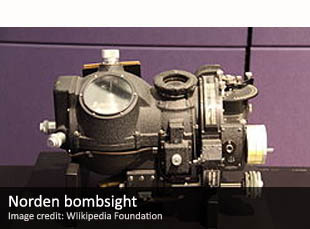
Norden bombsightBy IAN ALLEN | intelNews.org |
A well-researched article in The Chicago Tribune revisits one of the least known covert action episodes of World War II, which involved an ambitious Nazi espionage operation on US soil. The article, written by Ron Grossman, centers on Herbert Haupt, one of several American citizens and Nazi sympathizers, who were involved in the ruse. The German-born Haupt grew up in Chicago’s North Side and was working in West Garfield Park, at a factory that produced parts used for the Norden bombsight. The Norden bombsight was a sophisticated device that calculated the trajectory of a bomb dropped by an airplane, based on real-time flight conditions; moreover, it was connected to the aircraft’s autopilot, and was thus able to alter bomb trajectories according to changes in the wind, altitude, aircraft speed, or other effects. The Norden bombsight facilitated unprecedented bombing accuracy from high altitudes, and was thus rightly considered one of America’s most highly valued military secrets. In 1941, shortly before the United States entered World War II, Haupt took a leave of absence from his factory job and disappeared from the streets of Chicago’s North Side. It was later revealed that he traveled to Mexico City and presented himself at the German embassy there, offering to conduct espionage work for Nazi Germany. After securing a sum of money from German embassy officials, Haupt sailed to Japan and eventually made his way to Germany. A few months later, he illegally re-entered the US, sailing on a German U-boat that landed secretly in Florida carrying four German agents, all fluent English speakers. A second U-boat, carrying another four German agents, had landed almost simultaneously on Long Island. Haupt’s mission was to reenlist at the Norden bombsight factory in Chicago, so as to provide Nazi Germany with access to the top-secret device. Read more of this post

News you may have missed #735

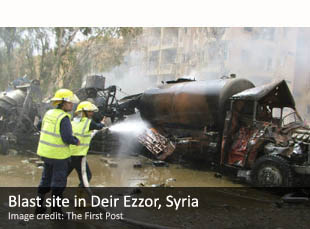
Blast site in Deir Ezzor, SyriaBy IAN ALLEN | intelNews.org |
►►Pakistan imposes new restrictions on CIA operatives. The government of Pakistan has issued a set of new rules and regulations for officials, ambassadors and contractors of the United States Central Intelligence Agency (CIA). According to Pakistani news reports, Pakistan and the US finalized these new rules in the course of 13 meetings between representatives of both countries. Under the new rules, CIA officers deployed in Pakistan “must prove their identity” to Pakistani counterintelligence officials. Some officials, including former Pakistani ambassador to the United States Sherry Rehman, are already talking of a “new beginning for US-Pakistani relations”.
►►Car bomb strikes near Syrian intelligence agency. The Syrian Observatory for Human Rights confirmed reports on Saturday of an explosion in the Ghazi Ayyash neighborhood of the eastern Syrian city Deir al-Zour. The site of the blast, which killed at least seven people and injured 100 others, was close to the city branches of the Military Intelligence Directorate and Air Force Intelligence, the London-based activist group reported. There has been no immediate claim of responsibility for the attack.
►►China denies US cyberespionage claims. The Chinese government has hit back at a US Pentagon report that said it is carrying out aggressive cyber-spying as part of a military build-up. Chinese Foreign Ministry spokesman Hong Lei said “China’s justified and normal military development” had been unjustly criticized in the annual report, which was released on Friday. The development of China’s “limited” military force was only geared towards safeguarding its independence, sovereignty and territorial integrity, said the spokesman.

News you may have missed #734

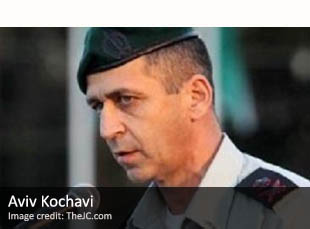
Aviv KochaviBy IAN ALLEN | intelNews.org |
►►Australian spy agency in rent dispute. The Australian government insists there is no dispute over the lease of the new, state-of-the-art headquarters of the Australian Security Intelligence Organisation, which cost nearly A$589 to build. But according to a number of government sources, the property has become the subject of a standoff between the ASIO and Australia’s Department of Finance and Deregulation. The Canberra Times reports that the Finance Department has told ASIO it will have to hand over more money than anticipated because of a blowout to building costs and timing. But the ASIO is refusing to pay more than initially agreed.
►►US unveils spy model of bin Laden compound. The United States intelligence community has unveiled a scale model of the compound in Abbottabad, Pakistan, where Osama bin Laden spent the last few years of his life in hiding. The model was built by the National Geospatial-Intelligence Agency (NGIA) and used by military and intelligence leaders to plan the daring night raid on May 2, 2011, that killed the al Qaeda founder. Its scale is an exact 1:84; every tree, bush, wall, animal pen, trash can and physical structure in the model existed at one time at the original compound in Abbottabad.
►►Israel military intelligence head in secret US visit. Israeli military intelligence chief Aviv Kochavi made a “secret visit” to Washington earlier this month to discuss the upcoming talks between world powers and Iran. An Israeli security official confirmed the visit, which was reported in Israel’s Haaretz newspaper, but could not provide further details. Meanwhile, three senior IDF intelligence officers resigned recently, following what they called “questionable” appointments to key positions. The three colonels held some of the most senior and classified positions in the Israeli military intelligence community.

News you may have missed #733

Stella RimingtonBy IAN ALLEN | intelNews.org |
►►Women in US intelligence seek balance in life. Nada Bakos (photo) was one of many women serving as CIA analysts before 9/11, who then moved to the operations side after the terrorist attacks. She didn’t yet have a family when she accepted her assignment as a targeting officer in Iraq. After a couple of years, as Bakos was deep into her career on the operations side, she decided she wanted to start a family. That was a problem. At least 160 other women feel her pain. Women from the CIA, the National Security Agency, Naval Office of Intelligence and dozens of other agencies met last week at the Women in National Security conference in McLean, Virginia, to try and find a better way.
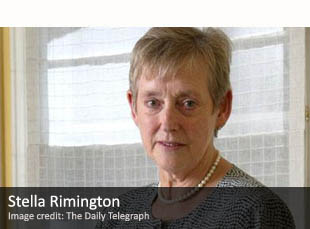
►►Interview with ex-MI5 Director Stella Rimington. Australian Radio hosts an interesting audio interview with Dame Stella Rimington, who headed MI5, Britain’s domestic intelligence agency, from 1992 to 1995. She speaks about the experience of being the first director of MI5 to be publicly identified and the sometimes sinister invasions to her privacy as a result. Moreover, she says the only thing that surprised her about the Leveson inquiry into phone hacking and the conduct of the British media is that nobody recognized it was going on before.
►►US government think-tank warns against strikes on Iran. The RAND Corporation, a think tank which advises the United States Department of Defense, warned last week Tuesday against an Israeli or American attack on Iran’s nuclear reactors, and recommended that the administration of Barack Obama try to “quietly influence the internal Israeli discussion over the use of  military force”. In 2009, before Stuxnet, a RAND report had argued that the US may be better off focusing on cyber-defense instead of resorting to cyberattacks.

News you may have missed #732 (interview edition)

Thomas DrakeBy IAN ALLEN | intelNews.org |
►►Interview with H. Keith Melton. A well written interview with H. Keith Melton, one of the world’s best-known intelligence historians, who describes himself as “a historical consultant within the US intelligence community”. Melton has been a guest lecturer at the Federal Bureau of Investigation, the National Security Agency and the Joint Military Intelligence College. He also says he is “an ongoing adviser to other US intelligence agencies”.
►►Interview with editor of Eye Spy magazine. An extensive interview with Mark Birdsall, editor of the only independent publication dedicated to espionage and intelligence. He shares the story behind the magazine, his take on the current state of espionage and security, and on global security issues. Among other things, Birdsall says that some claim Eye Spy is “a government organ, [while] others an attempt to glean information that should not be published”. He also states that “it has taken a decade of hard work for the title to get recognition in some intelligence circles”.
►►Interview with NSA whistleblower Thomas Drake. Drake began his NSA career as a contractor in 1991, and formally joined the Agency in 2001, working until 2008 in the Agency’s Signals Intelligence and Engineering directorates. The US government took Drake to court, accusing him of leaking secrets about the NSA to a journalist. But the judge in his case, Richard D. Bennett, refused to sentence him to prison, recognizing that his genuine intention in leaking the secrets was to expose mismanagement at the NSA.

News you may have missed #731 (Henry Crumpton edition)

Henry 'Hank' CrumptonBy IAN ALLEN | intelNews.org |
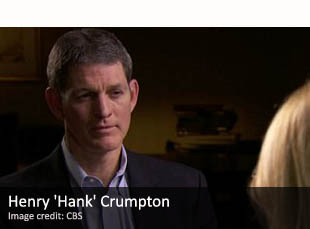
►►Ex-CIA officer says more spies in US than ever before. Henry “Hank” Crumpton, who served as Deputy Director of the CIA’s Counter-Terrorism Center, and led the US intelligence response to 9/11, spoke to CBS’ 60 Minutes about his life as a spy. He told the program that “I would hazard to guess there are more foreign intelligence officers inside the US working against US interests now than even at the height of the Cold War”. IntelNews regulars may recall the last time Crumpton spoke on 60 Minutes.
►►Introduction to Crumpton’s The Art of Intelligence. The introduction to Hank Crumpton’s The Art of Intelligence, which came out earlier this week, has been republished by MSNBC, by arrangement with the Penguin Press, a member of Penguin Group. There are at least 20 pages of the book available on the MSNBC website.
►►Can the FBI understand intelligence? Editorial by Hank Crumpton for Politico, in which he says that “the FBI is still measuring success based on arrests and criminal convictions –not on the value of intelligence collected and disseminated to its customers”. He makes a ten-point argument to claim that the FBI, unlike the CIA, does “not understand intelligence”.

News you may have missed #730

Majid Jamali FashiBy IAN ALLEN | intelNews.org |
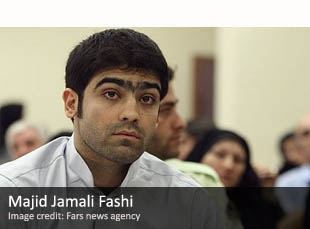
►►Iran executes man convicted of killing nuclear physicist. Iran on Tuesday hanged Majid Jamali Fashi, convicted of playing a key role in the 2010 murder of Iranian nuclear scientist Masoud Ali Mohammadi, and of spying for Israel. Mohammadi, a particle physics professor at Tehran University who was killed in a bomb attack outside his home in January 2010.
►►Bahrain sentences man accused of spying for Iran. Bahraini authorities accused the unnamed 47-year-old man of having leaked high-level information on Bahrain’s military, Interior Ministry and US Naval Base. He was allegedly paid more than BD27,000 on behalf of Iran’s Revolutionary Guard by two Iranians who lived in Kuwait. The two Iranians, who worked as diplomats in the Iranian Embassy in Kuwait, were convicted in absentia for selling military, industrial and economic information to Iran between 2002 and last April.
►►NSA declassifies document after publishing it. The National Security Agency last week invoked a rarely-used authority in order to declassify a secret document that was mistakenly posted on the NSA website with all of its classified passages intact. The article (.pdf) is a historical study entitled Maybe You Had to Be There: The SIGINT on Thirteen Soviet Shootdowns of US Reconnaissance Aircraft. It was written by Michael L. Peterson and was originally published in the classified journal Cryptologic Quarterly in 1993.