Australia continues to detain whistleblower who revealed espionage behind oil deal

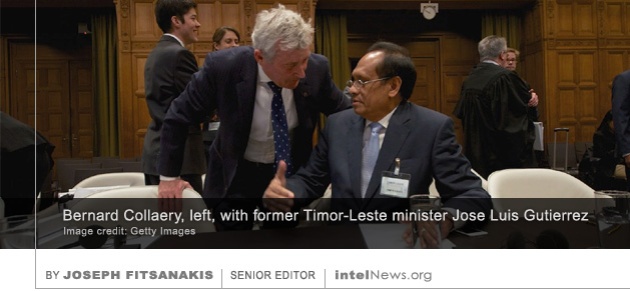
Bernard CollaeryAustralia continues to deny freedom of movement to a former intelligence officer who revealed that Canberra bugged government offices in the small island nation of Timor-Leste, in an effort to secure a lucrative oil deal. The former intelligence officer, known only as “Witness K.”, is believed to be a former director of technical operations in the Australian Secret Intelligence Service (ASIS), Australia’s foreign-intelligence agency. In 2013, he publicly objected to an intelligence-collection operation that targeted the impoverished Pacific island nation of Timor-Leste, known also as East Timor.
According to Witness K., a group of ASIS officers disguised themselves as members of a renovation crew and planted numerous electronic surveillance devices in an East Timorese government complex. The inside information collected from those devices allegedly allowed the Australian government to gain the upper hand in a series of complex negotiations that led to the 2004 Certain Maritime Arrangements in the Timor Sea (CMATS) treaty. The treaty awards Australia a share from profits from oil exploration in the Greater Sunrise oil and gas field, which is claimed by both Australia and East Timor. But in 2013, the East Timorese government took Australia to the Permanent Court of Arbitration in The Hague, claiming that the CMATS treaty should be scrapped. The East Timorese claimed that during the sensitive negotiations that preceded the CMATS treaty, the Australian government was in possession of intelligence acquired through ASIS bugging.

The claim of the East Timorese government was supported by Witness K., who argued that ASIS’ espionage operation was both “immoral and wrong” because it was designed to benefit the interests of large energy conglomerates and had nothing to do with Australian national security. But as soon as the East Timorese told the Permanent Court of Arbitration that they would be questioning a witness from ASIS, officers from the Australian Security Intelligence Organisation (ASIO), the country’s domestic intelligence agency, raided the Canberra law offices of Bernard Collaery, East Timor’s lawyer in the case. The raiders took away documents that disclosed the identity of Witness K., and then proceeded to detain him for questioning. They also confiscated his passport, which prevented him from traveling to the Netherlands to testify in the case. Read more of this post

Analysis: All evidence points to professionals behind Skripal poisoning

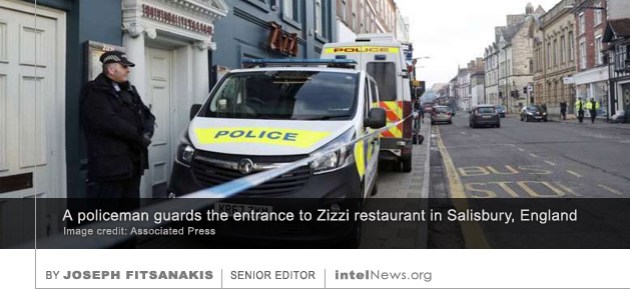
Skripal SalisburyMost state-sponsored assassinations tend to be covert operations, which means that the sponsoring party cannot be conclusively identified, even if it is suspected. Because of their covert nature, assassinations tend to be extremely complex intelligence-led operations, which are designed to provide plausible deniability to their sponsors. Consequently, the planning and implementation of these operations usually involves a large number of people, each with a narrow set of unique skills. But —and herein lies an interesting contradiction— their execution is invariably simple, both in style and method. The attempted assassination of Sergei Skripal last Sunday in England fits the profile of a state-sponsored covert operation in almost every way.

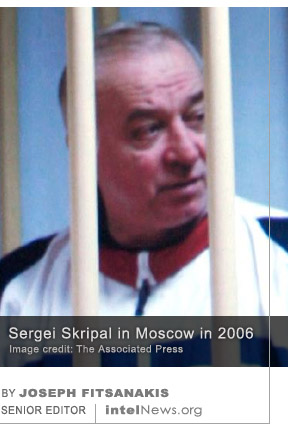
Some have expressed surprise that Skripal, a Russian intelligence officer who was jailed in 2004 for selling Moscow’s secrets to British spies, would have been targeted by the Russian state. Before being allowed to resettle in the British countryside in 2010, Skripal was officially pardoned by the Kremlin. He was then released from prison along with four other Russian double agents, in exchange for 10 Russian deep-cover spies who had been caught in the United States earlier that year. According to this argument, “a swap has been a guarantee of peaceful retirement” in the past. Thus killing a pardoned spy who has been swapped with some of your own violates the tacit rules of espionage, which exist even between bitter rivals like Russia and the United States.

This assumption, however, is baseless. There are no rules in espionage, and swapped spies are no safer than defectors, especially if they are judged to have caused significant damage to their employers. It is also generally assumed that pardoned spies who are allowed to resettle abroad will fade into retirement, not continue to work for their foreign handlers, as was the case with Skripal, who continued to provide his services to British intelligence as a consultant while living in the idyllic surroundings of Wiltshire. Like the late Russian defector Alexander Litvinenko, who died in London of radioactive poisoning in 2006, Skripal entrusted his personal safety to the British state. But in a country that today hosts nearly half a million Russians of all backgrounds and political persuasions, such a decision is exceedingly risky.
On Wednesday, the Metropolitan Police Service announced that Skripal, 66, and his daughter Yulia, 33, had been “targeted specifically” by a nerve agent. The official announcement stopped short of specifying the nerve agent used, but experts point to sarin gas or VX. Both substances are highly toxic and compatible with the clinical symptoms reportedly displayed by the Skripals when they were found in a catatonic state by an ambulance crew and police officers last Sunday. At least one responder, reportedly a police officer, appears to have also been affected by the nerve agent. All three patients are reported to be in a coma. They are lucky to have survived at all, given that nerve agents inhaled through the respiratory system work by debilitating the body’s respiratory muscles, effectively causing the infected organism to die from suffocation.

In the past 24 hours, at least one British newspaper stated that the two Russians were “poisoned by a very rare nerve agent, which only a few laboratories in the world could have produced”. That is not quite true. It would be more accurate to say that few laboratories in the world would dare to produce sarin or VX, which is classified as a weapon of mass destruction. But no advanced mastering of chemistry or highly specialist laboratories are needed to manufacture these agents. Indeed, those with knowledge of military history will know that they were produced in massive quantities prior to and during World War II. Additionally —unlike polonium, which was used to kill Litvinenko in 2006— nerve gas could be produced in situ and would not need to be imported from abroad. It is, in other words, a simple weapon that can be dispensed using a simple method, with little risk to the assailant(s). It fits the profile of a state-sponsored covert killing: carefully planned and designed, yet simply executed, thus ensuring a high probability of success.
By Wednesday, the British security services were reportedly using “hundreds of detectives, forensic specialists, analysts and intelligence officers working around the clock” to find “a network of highly-trained assassins” who are “either present or past state-sponsored actors”. Such actors were almost certainly behind the targeted attack on the Skripals. They must have dispensed the lethal agent in liquid, aerosol or a gas form, either by coming into direct physical contact with their victims, or by using a timed device. Regardless, the method used would have been designed to give the assailants the necessary time to escape unharmed. Still, there are per capita more CCTV cameras in Britain than in any other country in the world, which gives police investigators hope that they may be able to detect the movements of the attackers. It is highly unlikely that the latter remain on British soil. But if they are, and are identified or caught, it is almost certain that they will be found to have direct links with a foreign government.

Author: Joseph Fitsanakis | Date: 08 March 2018 | Permalink

British intelligence already sees Kremlin behind ex-spy’s poisoning, say sources

Sergei SkripalBritain’s counterintelligence service is nearing the conclusion that a foreign government, most likely Russia, tried to kill a Russian double spy and his daughter, who are now fighting for their lives in a British hospital. Sergei Skripal, 66, and his daughter Yulia Skripal, 33, are said to remain in critical condition, after falling violently ill on Sunday afternoon while walking in downtown Salisbury, a picturesque cathedral city in south-central England. Skripal arrived in England in 2010 as part of a large-scale spy-swap between the United States, Britain and Russia. He was among four Russian citizens that Moscow released from prison and allowed to resettle in the West, in exchange for 10 Russian deep-cover intelligence officers, who had been arrested earlier that year by the Federal Bureau of Investigation in the United States.

Since Skripal’s poisoning made headlines on Monday morning, the basic details of his story have been reported extensively. He is believed to have served in Soviet and Russian military intelligence for several decades, rising to the rank of colonel. But in 2004 he was arrested and eventually convicted by Russian authorities for spying on behalf of the British Secret Intelligence Service (MI6). He had served nearly 7 years of a 13-year sentence in 2010, when he was pardoned by then-Russian President Dmitry Medvedev and allowed to resettle in England with his immediate family. He did so in Salisbury, where he was found in a near-fatal state last Sunday, slumped on a street bench next to his equally catatonic daughter. Inevitably, the story brought back memories of the assassination of Alexander Litvinenko, a former officer in the Soviet and Russian intelligence services, who defected to Britain but was poisoned to death with a radioactive substance in 2006. His murder prompted London to expel four Russian diplomats from Britain, a move that was countered by Moscow, which also expelled four British diplomats from the country.

Despite the close parallels between Litvinenko and Skripal, the British government has not publicly blamed Russia for Sunday’s attempted killing. But according to The Times newspaper, officials at the Security Service (MI5), Britain’s counterintelligence agency, are already pointing to Russia as the culprit of the attempt on Skripal’s life. The London-based paper cited anonymous sources in Whitehall, the administrative headquarters of the British government, who said that MI5 experts were already briefing government officials about the details of the assassination attempt by Russian government agents.

Actions taken by the British government in the past 24 hours also point to Whitehall viewing the attempt on Skripal’s life as an operation sponsored by a state, most likely by Russia. The investigation of the incident is now being led by the counterterrorism branch of the Metropolitan Police Service in London. Additionally, samples of the victims’ tissue, as well as blood and other bodily fluids, have been sent for examination by toxicologists at the Ministry of Defence’s top-secret Science and Technology Laboratory in Porton Down. It also emerged last night that British Home Secretary Amber Rudd has called an emergency meeting of the British government’s Cabinet Office Briefing Rooms (COBR, also known as Cobra) group, which she chairs. The group consists of cabinet ministers, senior civil servants, and the leadership of the Metropolitan Police and the intelligence services, who meet to respond to developing emergencies of a national scale.

Author: Joseph Fitsanakis | Date: 06 March 2018 | Permalink

US spy agency to help human rights groups monitor North Korea

NGAThe National Geospatial-Intelligence Agency (NGA), one of America’s most secretive spy organizations, will work with a number of human-rights groups to monitor human rights in North Korea, according to a senior NGA official. Formed in 1996 as the National Imagery and Mapping Agency, the NGA operates under the supervision of the US Department of Defense. It is tasked with supporting US national security by collecting, analyzing and distributing geospatial intelligence. It also performs a combat-support mission for the Pentagon. The agency collects most of its data from satellites, surveillance aircraft and unmanned surveillance drones. Headquartered in a vast 2.3 million square foot building in Washington, the NGA is known for its secretive nature and rarely makes headlines.

Recently, however, NGA data expert Chris Rasmussen told Foreign Policy that the agency is finalizing an innovative agreement to work with human rights groups on North Korea. Rasmussen, a longtime military analyst, said that the NGA would provide the groups with access to raw imagery collected through airborne reconnaissance, and would share with them analyses by its experts. The groups would also be able to use a digital imagery application developed by NGA for use by its analysts. The human rights groups specialize on human rights in North Korea and have in the past used commercial satellite imagery data to help locate mass execution sites and mass graves in the secretive Asian country. They have also been able to locate concentration camps and have evaluated the impact of natural disasters in North Korea. Now the NGA will share its intelligence collection arsenal with these groups, in an attempt to shed further light on the state of human rights in North Korea.

Rasmussen said he could not yet reveal the names of the human rights groups that the NGA is preparing to work with, nor give details about the precise topics that the collaboration would focus on, because the official agreements are still being formalized. However, he said that no US intelligence agency had ever worked so closely with human rights organizations. “This kind of collaboration has never been done before with an intelligence agency”, said Rasmussen. He added that the NGA is hoping to use this collaboration as an incubator to “expand to other areas” with human rights groups and think tanks.

Author: Joseph Fitsanakis | Date: 05 March 2018 | Permalink

North Korean leaders used fraudulent Brazilian passports to travel abroad

Josef PwagThe late Supreme Leader of North Korea, Kim Jong-il, and his son and current Supreme Leader Kim Jong-un, used forged Brazilian passports to secure visas for overseas trips and to travel abroad undetected, according to reports. The Reuters news agency cited five anonymous “senior Western European security sources” in claiming that the two North Korean leaders’ images appear on Brazilian passports issued in the 1990s. The news agency posted images of the passports, which appear to display photographs of Kim Jong-il and Kim Jong-un. It said that the two leaders’ faces had been verified through the use of facial recognition software.

The passports were issued in the name of Josef Pwag and Ijong Tchoi. Both bear fake dates of birth and list Sao Paulo, Brazil, as the passport holders’ birthplace. Both passports bear the issuance stamp of the “Embassy of Brazil in Prague”, Czech Republic, and are dated February 26, 1996. Reuters cited an anonymous source from Brazil, who said that the fake passports were not forged from scratch. They were in fact genuine travel documents that had been sent out in blank form for use by the Brazilian embassy’s passport issuance office. The Reuters report quotes an unnamed Western security official who said that the forged passports were mostly likely used by their holders to secure travel visas from foreign embassies in Southeast Asia, mostly in Japan and Hong Kong. They could also have been used as back-ups, in case the two Kims needed to be evacuated from North Korea in an emergency —for instance an adversarial military coup or a foreign military invasion. At the very least, the passports indicate a desire to secure and safeguard the Kims’ ability to travel internationally.

North Korea’s intelligence services are known for making extensive use of fraudulent passports. Readers of this blog will recall that the two female North Korean agents who killed Kim Jong-nam, Kim Jong-un’s half-brother, in February of 2017, had been supplied with forged passports. The two women, who are now in prison in Malaysia, were using Indonesian and Vietnamese passports.

Reuters said it contacted the Ministry of Foreign Affairs of Brazil, which said it was still investigating the whether the two passports were indeed issued to members of North Korea’s ruling family, and how they came to be issued. The news agency also contacted the embassy of North Korea in Brazil, but officials there declined to comment.

Author: Joseph Fitsanakis | Date: 01 March 2018 | Permalink

Discovery of cocaine in Russian diplomatic luggage leads to numerous arrests

FSB drug arrestsA Russian former diplomatic employee and an Argentine police officer are among six people arrested following the discovery of nearly 1000 pounds of cocaine inside the Russian diplomatic compound in Buenos Aires. The arrests took place last Thursday and were announced in Argentina by the country’s Security Minister Patricia Bullrich. She told reporters that the arrests came after a 14-month investigation in Argentina, Russia and Germany. She added that the investigation unveiled “one of the most complex and extravagant drug-dealing operations” in Argentina’s history.

The 14-month probe dates to December of 2016, when Victor Koronelli, Russia’s ambassador to Argentina, and thee members of Russia’s Federal Security Service, discreetly approached Argentinian authorities. They informed the Argentinians that they had discovered 16 pieces of luggage filled with drugs inside an annex of the Russian embassy in Buenos Aires. Argentinian authorities were given permission to secretly enter the embassy grounds and inspect the suitcases. They confirmed that they contained more than 850 pounds (390 kilos) of cocaine, with a street value of more than $60 million. The suitcases were intended for transfer to Russia via a diplomatic flight. Cargo transferred on diplomatic flights cannot be searched by international customs officials due to the privilege of diplomatic immunity.

According to Bullrich, diplomatic counter-narcotics officers secretly transferred the bags to a separate location, where they replaced the cocaine with flour and fitted the suitcases with GPS tracking devices, before returning them to the Russian embassy annex. The luggage was eventually transferred to Russia via airplane in December 2017, a year after it was bugged by the Argentinians. Several Argentinian customs officers traveled to Russia to monitor the transfer of the shipment, in coordination with Russian authorities. The latter arrested two Russian citizens who tried to collect the suitcases. Another Russian citizen, and former staff member of the Russian embassy in Argentina, Alia Abyanov, was arrested in Moscow. Officials said Abyanov helped plan the transfer of the suitcases to Russia.

Two Argentines with dual Russian citizenship were also arrested in Buenos Aires. One of them has been named as Iván Blizniouk, a police officer, who is believed to have mediated between the drug smugglers and corrupt Argentine customs officers. A seventh suspect, identified only as “Señor K.” by the Argentine authorities, remains at large. He is believed to be living in Germany and is currently wanted by Interpol pursuant to an international warrant that has been issued for his arrest.

Author: Joseph Fitsanakis | Date: 27 February 2018 | Permalink

Latvia warns of ‘hybrid war’ as central bank corruption probe widens

Ilmars RimsevicsLatvian defense officials have hinted that Russia is trying to destabilize Latvia’s economy, as a Western-backed anti-corruption probe at the highest levels of the Baltic country’s banking sector deepens. Developments have progressed at a high speed since Monday of last week, when Latvia’s Corruption Prevention and Combating Bureau arrested Ilmars Rimsevics, the longtime Governor of the Bank of Latvia —the country’s central bank. Bureau investigators said Rimsevics’ arrest related to charges that he received bribes in order to facilitate money laundering from Russia.

Rimsevics became deputy governor of the Bank of Latvia in 1992, just months after the country seceded from the Soviet Union. In 2001 he was promoted to governor, a post that he has held onto ever since. When the small Baltic country joined the European Union, in January 2014, Rimsevics automatically became a member of the Governing Council of the European Central Bank (ECB), which directs the Eurozone’s monetary policy and monitors the performance of the euro. But last week the Latvian government rescinded Rimsevics’ security clearance and a scheduled meeting of the ECB in Frankfurt took place without him.

This dramatic development underscores the troubled state of Latvia’s banking sector, which is a notorious reputation as one of Europe’s most lucrative money-laundering hubs. Soon after it gained its independence, the small country of 2 million became an attractive conduit for Russia’s nouveau riche seeking to funnel their money westward. The country’s sizeable Russian-speaking minority allowed the local banking sector to offer highly sought-after services in the Russian language, which further-facilitated its contacts with wealthy Russian clients. This was further-enhanced by Latvia’s integration into the economic structure of the European Union in 2014. But Western countries began voicing concerns about close links between Latvia’s banking sector and Russian oligarchs in 1996. By 2011, the United States Department of the Treasury had identified numerous Latvian banks as serious violators of laws designed to prevent money laundering. In 2014, and again in 2017, the Organized Crime and Corruption Reporting Project identified Latvia as part of an extensive international money-laundering scheme dubbed “the Russian Laundromat”.

Notably, Rimsevics was arrested less than a week after Washington vowed to impose penalties on ABLV, Latvia’s third largest bank, for “institutionalizing money laundering” and violating a host of financial sanctions imposed by the United Nations, including sanctions against North Korea’s nuclear program. There is no question, therefore, that Rimsevics’ dramatic arrest was designed to combat what The Financial Times recently called “a banking scandal on the Baltic”. In the past few hours, reports from Riga indicate that ABLV may be on the brink of collapse, being unable to withstand the financial effects of the public scandal that emerged in recent days.

But things are never simple in the Baltic region. Soon after Rimsevics’ release on bail, reports in the Latvian media pointed to alleged efforts by Russia to defame him, in an effort to further-tarnish the already damaged reputation of Latvia’s banking sector. On Tuesday of last week, the Latvian Ministry of Defense said it had evidence that Rimsevics was targeted in a “disinformation operation” directed from abroad. It added that there was a “high probability that [a] massive information operation” had been launched for “foreign centers” aimed at destabilizing Latvia’s banks. No evidence or further information about the allegation was revealed. But the Defense Ministry’s allegations seemed to be supported by an analysis of the relevant news reporting by the Atlantic Council’s Digital Forensics Research Lab in Washington.

On February 23, Latvia’s Prime Minister, Maris Kucinskis, and President, Raimonds Vejonis, seemed to endorse the Defense Ministry’s allegations. Despite the fact that both politicians have urged Rimsevics to resign “for the sake of the financial system”, they also warned that Latvia was under attack in an information war. The two men did not make specific allegations, but said that the information attacks experienced by Latvia were “identical” to those seen in recent years in France, Germany, and the United States. Meanwhile, shortly after his release, Rimsevics held a press conference in Riga, where he denied all charges against him. He accused Latvia’s private banks of conspiring against him and said he was the victim of “death threats” to destabilize the country. On the same day Moscow, Kremlin spokesman Dmitry Peskov said that Russia had no comment on the situation in Latvia. “This is an internal political matter for our Latvian comrades [and] we wouldn’t want to get involved”, he said.

Author: Joseph Fitsanakis | Date: 26 February 2018 | Permalink

Previously obscure N. Korean hacker group is now stronger than ever, say experts

APT37A little-known North Korean cyber espionage group has widened its scope and increased its sophistication in the past year, and now threatens targets worldwide, according to a new report by a leading cyber security firm. Since 2010, most cyber-attacks by North Korean hackers have been attributed to a group dubbed “Lazarus” by cyber security specialists. The Lazarus Group is thought to have perpetrated the infamous Sony Pictures attacks in 2014, and the worldwide wave or ransomware attacks dubbed WannaCry by experts in 2017. It is widely believed that the Lazarus Group operates on behalf of the government of North Korea. Most of its operations constitute destructive attacks —mostly cyber sabotage— and financial criminal activity.

For the past six years, a smaller hacker element within the Lazarus Group has engaged in intelligence collection and cyber espionage. Cyber security researchers have dubbed this sub-element “APT37”, “ScarCruft” or “Group123”. Historically, APT37 has focused on civilian and military targets with links to the South Korean government. The hacker group has also targeted human rights groups and individual North Korean defectors living in South Korea. However, a new report warns that APT37 has significantly expanded its activities in terms of both scope and sophistication in the past year. The report, published on Tuesday by the cyber security firm FireEye, suggests that APT37 has recently struck at targets in countries like Vietnam and Japan, and that its activities have disrupted telecommunications networks and commercial hubs in the Middle East.

According to the FireEye report, aerospace companies, financial institutions and telecom- munications service providers in at least three continents have been targeted by APT37 in recent months. What is even more worrying, says the report, is that the hacker group is now capable of exploiting so-called “zero-day” vulnerabilities. These are software bugs and glitches in commonly used software, which have not been detected by software providers and are therefore exploitable by malicious hackers. FireEye said in its report that the North Korean regime will be tempted to use APT37 increasingly often “in previously unfamiliar roles and regions”, as cyber security experts are catching up with some of Pyongyang’s more visible hacker groups, such as Lazarus.

Author: Joseph Fitsanakis | Date: 21 February 2018 | Permalink

Iranian military official says West used lizards to spy on Iran’s nuclear program

Hassan FiruzabadiThe former chief of staff of Iran’s Armed Forces has said that foreign governments used different species of lizards, including chameleons, to spy on the Iranian nuclear program. The claim was made by Hassan Firuzabadi, a veteran Iranian military official, who from 1989 to 2016 served as the chief of staff of the Iranian Armed Forces —the most senior military post in the Islamic Republic. Since his retirement in 2016, Firuzabadi has served in a number of key consultancy roles and is currently a senior military advisor to Ayatollah Ali Khamenei, Iran’s reform-minded supreme leader.

On Tuesday, the Iranian Labor News Agency (ILNA), a pro-reformist news and analysis outlet, published a lengthy interview with Firuzabadi. The former military strongman was speaking in response to reports earlier this week that a prominent Iranian-Canadian environmental campaigner had died in prison, allegedly of suicide. Kavous Seyed Emami, 63, was a professor of sociology, director of the Persian Wildlife Heritage Foundation, and political activist. He was arrested with seven of his colleagues on January 24 and charged with espionage. On February 9, Emami’s family said that they had been informed by authorities of his death in prison, reportedly as a result of suicide. The news was later confirmed by Iran’s chief prosecutor. Emami’s family, as well as numerous environmental campaigners and activists, dispute the government’s claims of suicide as a cause of his death.

But in his interview published on ILNA’s website, Firuzabadi claimed that environmental activists with links to foreign countries have in the past been found to engage in espionage against the Islamic Republic. He told the news outlet that some years ago Iranian authorities arrested a group of foreigners who were visiting Iran to raise funds for Palestinian political prisoners. He added that among the foreigners’ possessions authorities found “a species of desert reptile, like a chameleon”, which puzzled them. Firuzabadi then said that, “following studies” on the lizards, Iranian authorities concluded that their skin “attracts atomic waves”. They therefore concluded that the foreigners were in fact “nuclear spies” who had entered Iran in order to “find out where [in the country] are uranium mines and where the government is engaged in nuclear-related activities”. Firuzabadi also said that many foreigners who are engaged in environmental activism “are not even aware of the fact that they are actually spying” on Iran.

But Western scientists and science reporters dismissed Firuzabadi’s claims as fantastical. On Tuesday, John Timmer, science editor for the United States-based technology and science website Ars Technica, called the Iranian military official’s claims “insane” and added that there was “no scientific evidence that reptiles […] are effective as Geiger counters”.

Author: Joseph Fitsanakis | Date: 16 February 2018 | Research credit: C.F. | Permalink

Presidential candidate accuses Mexican government of political policing

Ricardo AnayaA high-profile presidential candidate in Mexico accused the government of political policing after he caught an agent of the country’s intelligence agency trailing him during a campaign trip. The candidate, Ricardo Anaya, is a rising rightwing politician who previously served as president of Mexico’s Chamber of Deputies and leader of the largest opposition group in the country, the National Action Party. In December of last year, Anaya announced his candidacy for the presidency, for which he will compete in July. His primary opponents are the center-leftist Andres Manuel Lopez Obrador, and José Antonio Meade of the ruling Institutional Revolutionary Party (PRI).

Opposition candidates have long accused the PRI of using state intelligence agencies to spy on them. The accusations surfaced again this week, after Anaya claimed that he was illegally followed by a government intelligence officer during an election campaign trip in Veracruz. The rightist politician said the officer, who was not wearing a uniform, followed his campaign car in a black sports utility vehicle. On Tuesday, Anaya’s campaign team publicized a video showing the presidential candidate walking up to the intelligence officer and asking him who he was. In the video, the officer says he works for Mexico’s National Center for Security and Investigation (CISEN) and claims he is there to protect the candidate from security threats. The officer is then told by Anaya that he never requested a security detail, but responds that he is simply following orders issued by his superiors.

On Wednesday, Mexico’s Secretary of the Interior, Alfonso Navarrete, told reporters that the man in the video is indeed a longtime intelligence employee of CISEN. But he added that the officer’s mission had been to “report potential mishaps” and to protect Anaya from possible attacks by Mexico’s notorious drug cartels. When he was told by reporters that Anaya had not asked to be protected by CISEN, Navarrete claimed that he thought the candidate had been notified by the government about CISEN’s “discreet presence” in his campaign. The interior secretary then said that the incident had been a mistake, and that CISEN simply failed to notify Anaya of its activities. But Anaya dismissed Navarrete’s claims as lies and said he had been followed by other CISEN officers since the beginning of his campaign.

Author: Joseph Fitsanakis | Date: 15 February 2018 | Permalink

Conflicting reports of Russian fighters killed by US forces in Syria

Kurdish SDF There are conflicting reports of Russian and Ukrainian fighters having been killed by American forces in northeastern Syria, with some sources claiming that up to 200 Russians and Ukrainians, most of them private contractors working for the Syrian government, were left dead in clashes last week. If such reports are accurate, they could point to the most lethal American-Russian confrontation since the end of World War II.

According to the United States Department of Defense, the armed confrontation took place on February 7. On that day, a 500-strong Syrian government force crossed the Euphrates River and entered Kurdish-controlled territory in northeastern Syria. A Pentagon spokesman, Colonel Thomas F. Veale, told reporters last week that the pro-government forces crossed the Euphrates near the town of Khursham, in Syria’s Deir al-Zour region. The town is firmly held by the Syrian Democratic Forces (SDF), a Kurdish armed faction that is supported by the US. Veale said that the Syrian government forces advanced in a “battalion-sized formation supported by artillery, tanks, multiple-launch rocket systems and mortars”. The SDF force in the area, which includes embedded American troops, responded with artillery fire, while US military aircraft also launched strikes on the government forces. The latter withdrew across the Euphrates after suffering heavy losses. The US side estimates that over 100 attackers were left dead, with another 200-300 injured. There were allegedly no SDF fatalities during the clash.

On February 8, CBS News cited an unnamed US Pentagon official, who claimed that Russians were among the dead in Deir al-Zour. The BBC said that “at least two Russians” were killed in the attack, while The New York Times raised the toll to “perhaps dozens”. But US news network Bloomberg claimed that over 200 Russians and pro-Russian Ukrainian mercenaries were among the dead. Citing anonymously “three Russians [and] one US official […] familiar with the matter”, the network said that most of the fatalities were Russian and Ukrainian private contractors who were fighting in Syria in support of the government of President Bashar al-Assad. These reports mark the first known instance of Russian citizens killed by American forces in Syria. If the Bloomberg account is accurate, the Deir al-Zour clash could be the most extensive armed confrontation between Americans and Russians since the end of World War II.

Bloomberg said that it spoke by phone to one Russian military contractor who said that “dozens of his wounded men” were still receiving treatment at military hospitals in Russia. On February 8, the Syrian government accused Washington of carrying out a “brutal massacre” in Deir al-Zour, but said nothing about foreign fighters. A statement by the Russian Ministry of Defense said that 25 Syrian troops were hurt in the attack, but denied that Russian soldiers had participated in the February 7 clashes. Speaking on behalf of the Kremlin, Russian government spokesman Dmitry Peskov said that Moscow only tracked casualty data about its official military forces stationed in Syria. He added that no Russian forces were stationed in Deir al-Zour. At a press conference last week, US Secretary of Defense James Mattis refused to discuss the matter, which he referred to as “perplexing”. Bloomberg said that American officials were “in talks” with Russian counterparts “in search of an explanation for what happened”.

Author: Joseph Fitsanakis | Date: 14 February 2018 | Research credit: N.L. | Permalink

Latvian citizen arrested for allegedly spying for Russia

Latvian Security PoliceThe Latvian Security Police have announced the arrest of a man who is suspected of spying for a foreign country, with some reports claiming it is Russia. The Latvian state-owned news agency, LETA, said late last month that the man, who has not been named, was arrested by Security Police officers on Tuesday, December 19, 2017. However, the arrest was not announced by Latvian authorities until recently. A statement issued by government authorities in Riga said that the man’s arrest had been followed by searches at several different properties in the Latvian capital.

The detainee, who is reportedly a Latvian national, is being investigated for espionage and has already been charged with illegally possessing a firearm. A court in the Latvian capital ruled last week that the suspect should be remanded in custody. Initially, the Security Police refused to identify the detainee or reveal the name of the country that he allegedly spied for. But some private Latvian news outlets, who are believed to be close to the government, said on the morning of February 7 that the detainee worked for the Russian state. One report claimed that the man was tasked with collecting military-related information from the region of Latvia that borders Russia. He would then share the information with his Russian handlers, according to the report. On February 8, the Security Police confirmed that the detainee was indeed suspected of working for Russia. According to the agency, he gave his Russian handlers information about the National Armed Forces, Latvia’s military force.

Also on February 8, Latvian authorities warned the country’s citizens that they should remain vigilant. A government statement said that Moscow was intensely interested in collecting classified information about Latvia and that the Russian secret services preferred to recruit Latvians when the latter visited Russia. Reports late last week said that, if found guilty of spying, the detained man could face up to 14 years in prison.

Author: Joseph Fitsanakis | Date: 12 February 2018 | Permalink

US immigration and customs agency seeks to join Intelligence Community

Immigration and Customs Enforcement ICEThe United States Immigration and Customs Enforcement (ICE) is reportedly seeking to join the Intelligence Community, which includes the Central Intelligence Agency, the Defense Intelligence Agency, and other intelligence-focused arms of the federal government. Currently, ICE is a federal law enforcement that operates under the umbrella of the Department of Homeland Security. It consists of two components: Homeland Security Investigations, which probes cross-border criminal activity, including drugs and weapons trafficking, money laundering and cybercrime; and Enforcement and Removal Operations, whose mission is to find and capture undocumented aliens.

But some senior ICE officials have been exploring the possibility of joining the US Intelligence Community. According to The Daily Beast, which reported the alleged plans, the officials believe that by joining the Intelligence Community, ICE will become privy to intelligence that will assist in its mission. They also claim that membership in the Intelligence Community would afford ICE “greater prestige, credibility and authority” within the federal government. The Daily Beast reports that ICE’s effort to join the Intelligence Community began during the administration of US President Barack Obama. However, it has picked up steam following the election of President Donald Trump. Some believe that President Trump would be willing to sign an executive order that would incorporate ICE in the Intelligence Community.

Some civil liberties watchdogs, however, are weary of such plans. They claim that ICE is a domestic law enforcement agency and should not have access to practices and techniques used by spy agencies like the CIA or the National Security Agency. The latter frequently break the laws of foreign countries in pursuit of their mission, which is to steal foreign intelligence. These agencies are characterized by a different culture, say critics, which is not respectful of legal constraints. But supporters of ICE’s proposed inclusion into the Intelligence Community argue that there are several law enforcement agencies that are already members of the Intelligence Community. Notably, the Federal Bureau of Investigation and the Drug Enforcement Administration —both law enforcement agencies— belong to the Intelligence Community.

The Daily Beast said it contacted ICE but a spokesperson refused to comment on the story. The Department of Homeland Security did not return emails and phone calls about the proposal to include ICE in the Intelligence Community.

Author: Joseph Fitsanakis | Date: 08 February 2018 | Permalink

Ex-spy chief claims Palestinian officials worked with CIA to wiretap opponents

Telephones PalestineThe former head of the Palestinian Authority’s spy agency claims that the Palestinian government in the West Bank worked with the United States Central Intelligence Agency to wiretap thousands without court authorization. Tawfiq Tirawi, who headed the Palestinian General Intelligence from its founding in 1994 to 2008, has filed an official complaint against the Palestinian Authority and is calling for a criminal investigation into the alleged wiretaps. The complaint has also been signed by Jawad Obeidat, who is the president of the West Bank’s Bar Association. It is based on a leaked 37-page document that surfaced last month on the social networking application WhatsApp. The document was leaked by an anonymous individual who claims to have worked for a surveillance unit in the Palestinian Preventive Security Service, the Palestinian Authority’s domestic security service.

The leaked document appears to show that the Palestinian Preventive Security Service reached out to the CIA in 2013 asking for assistance with installing a communications surveillance system in the West Bank. The CIA agreed to provide the system in exchange for access to the intercepted data. The two agencies installed the interception system in the summer of 2014 and initiated what appears to have been a large-scale operation that included thousands of telephone subscribers. Initial targets of the operation included members of Hamas —the Palestinian group that controls the Gaza Strip— as well as members of the Iran-supported Islamic Jihad Movement in Palestine. But, according to the Associated Press, over time the targets of the program expanded to include “thousands of Palestinians, from senior figures in militant groups to judges, lawyers, civic leaders and political allies of Abbas”. The list of targets included Tirawi and Obeidat, who filed the official complaint on Tuesday.

The anonymous leaker of the document said he decided to quit his job and reveal the information about the intercepts after US President Donald Trump shifted Washington’s policy on Israel’s capital, by officially recognizing Jerusalem as the capital of the Jewish state. Earlier in February, the Palestinian Authority dismissed the leaked document as “nonsense” and said it was part of a large conspiracy that sought to harm Palestinian interests. The CIA refused to comment on the allegations.

Author: Joseph Fitsanakis | Date: 07 February 2018 | Permalink

Espionage threat is greater now than in Cold War, Australian agency warns

ASIO AustraliaForeign intelligence collection and espionage threats against Australia are greater today than at any time during the Cold War, according to a senior Australian intelligence official. The claim was made on Wednesday by Peter Vickery, deputy director general of the Australian Security Intelligence Organisation (ASIO), the country’s primary counterintelligence agency. He was speaking before a parliamentary committee that is considering aspects of a proposed bill, which aims to combat foreign influence on Australian political and economic life. If enacted, the bill would require anyone who is professionally advocating or campaigning in favor of “foreign entities” to register with the government. Several opposition parties and groups, including the Catholic Church, have expressed concern, saying that the bill is too broad and could curtail the political and religious freedoms of Australians.

But ASIO has come out strongly in favor of the proposed bill. Speaking in parliament on Wednesday, Vickery warned that Australia is today facing more threats from espionage than during the Cold War. “Whilst [the Cold War] was obviously a very busy time” for ASIO, said Vickery, his agency’s assessment is that Cold War espionage was “not on the scale we are experiencing today” in Australia. During the Cold War, ASIO was cognizant and aware of the major adversaries, he added. But today, the espionage landscape features “a raft of unknown players”, many of whom operate on behalf of non-state actors, said Vickery. The phenomenon of globalization further-complicates counterintelligence efforts, he added, because foreign espionage can be conducted from afar with little effort. Vickery noted that espionage and foreign influence in Australia “is not something that we think might happen, or possibly could happen. It is happening now against Australian interests in Australia and Australian interests abroad”. He also warned that the public knows little about the extent of espionage and foreign-influence operations taking place “at a local, state and federal level” throughout the country.

Earlier this week, the Catholic Church of Australia came out in opposition to the proposed legislation, which it sees as too broad. The religious denomination, which represents approximately 20 percent of the country’s population, said that the bill was too broad and could force Australian Catholics to register as agents of a foreign power. Technically, the Catholic Church is headquartered at the Vatican, which would make the organization a foreign entity under the proposed bill, the Church said in a statement.

Author: Joseph Fitsanakis | Date: 01 February 2018 | Permalink