News you may have missed #570

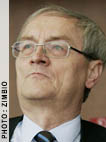
Nassr al-Mabrouk Abdullah

Abdullah Nassr

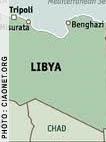
►►Libya internal security chief defects. Egyptian airport officials said Nassr al-Mabrouk Abdullah, Muammar al-Gaddafi’s interior minister, landed in a private plane in Cairo with nine family members traveling on tourist visas. Nassr was the minister responsible for police, civil defense, domestic intelligence, and some border security units.
►►S. Korea admits 1962 death occurred in spy training camp. A special committee is reviewing whether the family of a South Korean man who died half a century ago while being trained as a spy for elite missions into North Korea is eligible for compensation. South Korea’s military intelligence command admitted in a July 14 letter that “Mr. Jeon Gwang-su died during training on Sept. 30 of 1962 ahead of being dispatched for a mission in the North”.
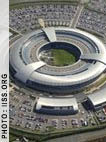
►►NSA announces ‘hiring blitz’. The National Security Agency, America’s largest cryptologic intelligence agency, has announced its intention to hire as many as 3,000 people over the next two years, many of them cybersecurity experts. In fact, NSA recruiters even took a trip to Las Vegas in the last few weeks to look for potential hires at DefCon, a high-profile hacker conference there.

Exclusive: Interview with ex-CIA officer Charles S. Faddis

Charles S. Faddis

Charles S. Faddis

By JOSEPH FITSANAKIS | intelNews.org |
Yesterday I reviewed Charles S. Faddis’ new book, Codename Aphrodite (Orion, 2011), a gripping novel about a former CIA case officer’s freelance operation in Athens, Greece, in pursuit of November 17, one of Europe’s most notorious urban guerrilla groups. Today intelNews hosts an exclusive interview with Faddis, a straight-talking ex-CIA clandestine operations officer, who admits that his novel “is based on some very personal experiences” and that many of the book’s characters “are drawn much more from memory than they are from imagination”. Most regular readers of this blog probably know Charles “Sam” Faddis as the former head of the US National Terrorism Center‘s WMD Unit. His 20-year career as a CIA operations officer, with posts in South Asia, Near East and Europe, arguably culminated in 2002, when he led a CIA team into Iraq to help prepare the ground for the US invasion. He documented this in his 2010 book (co-authored with Mike Tucker) Operation Hotel California: The Clandestine War Inside Iraq. Following his 2008 retirement, Faddis, who was CIA Chief of Station in his last overseas tour, frequently comments on intelligence matters, most notably in his 2009 exposé Beyond Repair: The Decline and Fall of the CIA. Faddis’ answers to intelNews‘ questions are below. Read more of this post

News you may have missed #569

China & Taiwan

China & Taiwan

►►Taiwan begins to deal with its amateur spies caught by China. We have written before about the army of businessmen recruited by Taiwan’s Military Information Bureau (MIB). Many of these amateur spies were sent to collect intelligence in mainland China, often with minimal training or institutional support. Predictably, many were arrested, and dozens are believed to remain in China’s prisons today.
►►Egypt to try Israeli on espionage charges. And, no, it’s not Ilan Grapel, the American-Israeli who was arrested on espionage charges earlier this summer, and who is still in prison in Egypt. This case concerns another alleged Mossad operative, Ofir Herari, who has allegedly escaped and will be tried in absentia. Another man, Jordanian telecommunications engineer Bashar Ibrahim Abu Zeid, has been apprehended on charges of collaborating with Herari. He will be tried for “spying for a foreign country with the purpose of harming Egyptian national interests”.
►►Pakistan ‘gave China access’ to US copter used in bin Laden raid. According to a report in The New York Times, in the days after the raid that killed Osama bin Laden, Pakistan’s intelligence service “probably allowed” Chinese military engineers to examine the wreckage of a stealth American helicopter that crashed during the operation. This is the view of Read more of this post

IntelNews book review: Codename Aphrodite, by Charles S. Faddis

Codename Aphrodite

Codename Aphrodite

By JOSEPH FITSANAKIS | intelNews.org |
Most intelNews regulars know Charles S. Faddis as the former head of the US National Terrorism Center‘s WMD Unit. His 20-year career as a CIA operations officer, with posts in South Asia, Near East and Europe, arguably culminated in 2002, when he led a CIA team into Iraq to help prepare the ground for the US invasion. He documented this in his 2010 book (co-authored with Mike Tucker) Operation Hotel California: The Clandestine War Inside Iraq. Following his 2008 retirement, Faddis, who was CIA Chief of Station in his last overseas tour, frequently comments on intelligence matters. He took a stance against the CIA’s “enhanced interrogation” program (but objected to a government investigation), and has penned hard-hitting critiques of American intelligence culture and practices, most notably in his 2009 exposé Beyond Repair: The Decline and Fall of the CIA. His latest creation, Codename Aphrodite (Orion, 2011), is a gritty novel set in the backstreets of Athens, Greece, where a former CIA clandestine operations officer goes after November 17, one of the world’s most active Marxist terrorist groups. Bill Boyle and his wife, Sarah, are both clandestine officers in the CIA’s European Division. Sarah, who is pregnant with their child, is brutally killed by November 17, after a CIA operation in pursuit of the group goes horribly wrong. Haunted by his wife’s murder, which he witnessed, Boyle quits the Agency and soon ends up as a permanent fixture in a depressing Mexican beach bar. Things take an unexpected turn, however, when political winds change in Greece. Petros Salamis, an ascending Athenian politician and aspiring Prime Minister, contacts Boyle with an irresistible offer: a hefty monetary reward and the satisfaction of revenge for his wife’s death in exchange for returning to Greece and eradicating November 17. Read more of this book review

News you may have missed #568

Gareth Williams

Gareth Williams

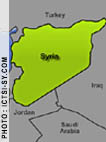
►►Lebanon intercepts covert arms shipment bound for Syria. It looks like anti-Syrian Lebanese groups, allied with former Lebanese Prime Minister Saad Hariri, are smuggling Kalashnikovs and M-16s across the border to anti-government rebels in Banyas and other Syrian towns. The question is, where are these arms coming from? It is also worth noting that the Syrian army claimed last week that it has detained hundreds of Salafi fighters –including Afghans– with Lebanese documents.
►►Russian embassy cars seen near murdered MI6 officer’s flat. British paper The Daily Mail quotes an unnamed “former KGB agent who fled to London 12 years ago”, who says that he “logged two cars with Russian diplomatic number plates […] parked or driving close” to the central London apartment of MI6 and GCHQ officer Gareth Williams. The unnamed former agent says he noticed the vehicles around the time when Williams is believed to have been murdered in his apartment.
►►Indonesian intel reports on West Papua leaked. Hundreds of intelligence briefs from Indonesia’s elite special forces unit, Kopassus, have been obtained by Australian newspaper The Age. They include a detailed analysis of the separatist movement in oil-rich Western Papua. According to the Australian press, the reports “illustrate the level of paranoia in Jakarta about its hold over the resource-rich region”.

CIA shot own planes, used napalm in Bay of Pigs, documents show

CIA documents

CIA documents

By JOSEPH FITSANAKIS | intelNews.org |
Newly declassified documents show that the CIA mistakenly fired at its own assault planes and resorted to using napalm to stave off successive Cuban counterattacks during the Bay of Pigs invasion. The revelations are included in a multi-volume Official History of the covert operation, which the CIA was forced to declassify after a lawsuit by George Washington University’s National Security Archive. On April 17, 1961, a brigade of 1,300 CIA-funded and -trained anticommunist Cubans mounted a surprise assault on the Caribbean island. But prior intelligence collected by spies working for Havana, and stiff resistance by pro-Castro troops, resulted in the CIA’s biggest known covert action failure. Approximately 1,200 surviving members of the CIA’s army were captured by pro-Castro forces, many of whom were severely interrogated or executed in subsequent years. According to the declassified documents, CIA forces eventually resorted to bombing Cuban government troops with napalm. Initially, operation planners were hesitant about using napalm, because of fears that doing so “would cause concern and public outcry”. But all hesitation had dissolved by the early hours of April 18, as American military commanders faced the possibility of seeing invading troops completely annihilated by successive waves of counterattacks. The documents also reveal that at least one CIA paramilitary officer opened fire on the Agency’s B-26 planes, which had been disguised to resemble those used by the Cuban Revolutionary Air Defense Force. Read more of this post

News you may have missed #567

Thuraya satellite telephone

Thuraya phone

►►Libya bans unauthorized cell phone use. The government of Libya warned Thursday that any of its citizens found using a Thuraya satellite phone without a permit will be treated as spies for NATO, and may face the death penalty. The reason, according to an official statement, is that “spies [of] NATO use the Thuraya telephones to give crusaders the coordinates of some locations to be bombed, which has caused the deaths of a large number of civilians”. Thuraya is a popular satellite phone provider based in the United Arab Emirates, with over a quarter of a million subscribers in the Middle East and Africa.
►►Uzbekistan jails senior mining scientist for spying. A court in Uzbekistan has convicted Said Ashurov, who worked as chief metallurgist for British mining company Oxus Gold, to 12 years in prison on charges of industrial espionage. Ashurov was arrested in March as he tried to cross the border into Tajikistan. A lawyer for the mining company described Ashurov’s case as a fabrication and said that the Uzbek government was using him as a pawn in their battle to take control of the Amantaytau Goldfields project, which is developing “some of the world’s most promising gold fields”.
►►Ex-White House official claims CIA tried to recruit 9/11 hijackers. Richard Clarke, who served in two US administrations as a White House counterterrorism adviser, says he now suspects the CIA hid its knowledge that two of the September 11 hijackers had entered the United States Read more of this post

British spies considered giving Hitler female hormones

Adolf Hitler

Adolf Hitler

By JOSEPH FITSANAKIS | intelNews.org |
Thanks to the tireless effort of intelligence historians, we now have a brand new revelation from spy archives that can proudly stand alongside the CIA’s acoustic kitty, and the plan to poison Cuban leader Fidel Castro with a chemical that would make his beard fall out. This latest disclosure, however, surely tops the list of lunatic covert-operation schemes. According to newly discovered documents, British intelligence planners seriously considered secretly administering small doses of estrogen into the food of Adolf Hitler, in order “to make his character less aggressive”. According to the documents, British intelligence had managed to recruit a number of agents who were close enough to the German Chancellor to have physical access to his daily meals. It would have been possible, therefore, to tamper with the Nazi leader’s food intake on a routine basis, in an effort to alter his brain chemistry, which, it was hoped, would “soften his character”. The obvious question to ask, of course, is: if British intelligence had access to the Führer’s food, and if his military policies were considered a clear and present strategic threat to Britain’s security, then why not lethally poison him altogether? According to Cardiff University Professor Brian Ford, who discovered the cunning estrogen plan, British intelligence planners knew that Hitler systematically employed food tasters; it would therefore have been close to impossible to employ food poisoning as a method of assassination. Estrogen, on the other hand, is tasteless, odorless, and —if properly dispensed— could have a subtle and gradual effect on Hitler’s brain chemistry and personality. Read more of this post

News you may have missed #566 (analysis edition)

Jeffrey Richelson

Jeffrey Richelson

►►Stuxnet virus opens new era of cyberwar. Well-argued article by quality German newsmagazine Der Spiegel on Stuxnet, the sophisticated computer virus that attacked the electronic infrastructure of Iran’s nuclear program last year. The article argues that, in terms of strategic significance, the virus, which is widely considered a creation of Israeli intelligence agency Mossad, is comparable to cracking Germany’s Enigma cipher machine by Polish and British cryptanalists during World War II.
►►The fallout from the Turkish Navy’s recent spy scandal. Recently, the Turkish High Criminal court indicted members of an alleged spy ring operating inside the Turkish Navy. According to the indictment, members of the ring stole more than 165,000 confidential documents and obtained dozens of surveillance records and classified military maps. Its biggest customers were allegedly the intelligence services of Israel, Greece and Russia.
►►New edition of classic intelligence handbook published. A new edition of Jeffrey Richelson’s encyclopedic work on Read more of this post

News you may have missed #565 (United States edition)

DHS seal

DHS seal

►►Secret watch-list proposal causes US privacy groups protests. The US Department of Homeland Security (DHS) is planning to duplicate the FBI’s Terrorist Screening Database to expand an extensive database called Watchlist Service. The proposed database will include names, birthdays, photos and biometrics of targeted individuals. But the DHS has proposed to exempt the database from Privacy Act provisions, which means that a person can never know if they are on it.
►►US blacklists Syrian banks over WMD ties. The Obama administration unveiled punitive measures on Wednesday against two Syrian financial institutions for their alleged ties to nuclear proliferation in Syria and North Korea. The government-run Commercial Bank of Syria and a subsidiary, the Syrian-Lebanese Commercial Bank, are now prohibited from engaging in transactions with US individuals and from accessing any assets under US control. The US Department of the Treasury alleges that the banks have carried out transactions on behalf of the Scientific Studies and Research Center in Syria and the Tanchon Commercial Bank in North Korea, both of which the US blacklisted several years ago for supporting “WMD proliferation activities”.
►►FBI revises surveillance exam after cheating revelations. About a year ago, the US Federal Bureau of Investigation revealed that hundreds of its agents were caught having cheated on an examination about new surveillance guidelines (known as Read more of this post

Saudis paid Pakistan to shelter bin Laden, claims security expert

R.J. Hillhouse

R.J. Hillhouse

By JOSEPH FITSANAKIS | intelNews.org |
An American academic and security expert with deep links in the intelligence community claims that, at the time of his killing by US Special Forces, Osama bin Laden was living under house arrest, following a secret arrangement between Pakistan and Saudi Arabia. Former professor and Fulbright Fellow R.J. Hillhouse has cited “sources in the intelligence community” in alleging that the CIA discovered bin Laden’s whereabouts through a Pakistani intelligence officer. The officer, who was privy to the alleged deal between the Saudis and the Pakistanis, appeared as ‘a walk-in’, a term meaning someone who voluntarily contacts an intelligence outpost, usually by simply walking into an embassy or consulate and asking to speak to the intelligence officer on duty. According to Hillhouse, the ‘walk-in’ provided CIA officers with detailed information as to the al-Qaeda leader’s whereabouts, in exchange for US citizenship for him and his family and the $25 million reward offered by the US Department of State for bin Laden’s head. According to Hillhouse’s story, which was picked up yesterday by The Daily Telegraph and The Sydney Morning Herald, the Pakistani informant also told the Americans that elements in the government of Saudi Arabia had entered into a complex monetary agreement with senior members of Pakistan’s main spy agency, the Inter-Services Intelligence directorate (ISI). Under the arrangement, the ISI was paid to keep bin Laden under house arrest in Abbottabad —a military community in Pakistan, selected precisely in order to keep bin Laden under constant and close supervision. Read more of this post

US government wants to use secret witnesses in CIA leak trial

James Risen

James Risen

By JOSEPH FITSANAKIS | intelNews.org |
Prosecutors in the case of an ex-CIA officer accused of disclosing classified information to a journalist have asked the court for permission to introduce evidence in secret and to use privacy screens to shield the identities of witnesses. Jeffrey Sterling, who worked for the CIA’s Iran Task Force,  faces 10 felony counts and up to 120 years in prison for sharing information about the CIA’s operations in Iran. Court documents do not name the recipient of Sterling’s information, but it is common knowledge that Sterling spoke to James Risen, a Pulitzer Prize-winning journalist for The New York Times. In chapter 9 of his 2006 book State of War: The Secret History of the CIA and the Bush Administration, Risen details a botched operation by the Iran Task Force, which tried to pass to the Iranians a series of faulty nuclear bomb design documents. To do this, the CIA apparently recruited a Russian former nuclear scientist, who had defected to the United States. The unnamed scientist was told to travel to Vienna, Austria, in early 2000, and offer to sell the documents to the Iranians. But the documents contained a deliberate technical flaw, which, Risen alleges, the Russian CIA operative thought was so obvious that it could make him look untrustworthy in the eyes of the Iranians, thus endangering the entire mission. The Russian scientist ended up letting the Iranians know about the flaw, reveals Risen. He further alleges that the CIA operation may have actually helped the Iranian nuclear weapons program, as Iranian scientists would have been able to “extract valuable information from the blueprints while ignoring the flaws”. Read more of this post

News you may have missed #564 (China/Taiwan edition)

China & Taiwan

China & Taiwan

►►Taiwan opposition party alleges Chinese hacking. Taiwan’s pro-independence Democratic Progressive Party (DPP) says it has been the target of a Chinese hacking campaign that since March has made daily incursions into its computers, complicating its preparations for presidential elections in January. A DPP spokesman said the hackers had downloaded the party’s research reports, schedules and meeting notes, but hadn’t stolen any sensitive information.
►►Taiwanese businessman sentenced for spying for China. Taiwan’s High Court has sentenced 35-year-old Lai Kun-chieh to 18 months in prison for spying for China. Taiwan’s Defense Ministry says Lai was recruited by Chinese intelligence agents while working in China. But apparently a Taiwanese military officer approached by Lai and asked to share classified information, reported the incident to the authorities.
►►Taiwanese ex-spy arrested in China. There are reports in Southeast Asian news outlets of an arrest in China of a retired Taiwanese intelligence official, who was allegedly vacationing in the country. The former spy, who is identified simply as “Wu” in Chinese-language media, was arrested four months ago, soon after he arrived in China “as a tourist”. It is worth noting that, in 2010, the Deputy Director of Taiwan’s National Security Bureau Secret Service Center, Chang Kan-ping, warned retired intelligence officers to avoid visiting China, “because of the risk of arrest or interrogation there”.

Turkish intel report raises fears of Syrian, Iranian support for PKK

PKK banner

PKK banner

By JOSEPH FITSANAKIS | intelNews.org |
By all accounts, in 1998 Syria discontinued its clandestine support for the Kurdistan Workers’ Party (PKK), a leftist secessionist movement that aspires to create a Kurdish homeland comprising mostly of territories in Turkey’s Anatolia region. But a leading Turkish newspaper claims that, according to a classified intelligence report, Damascus has resumed its support for the PKK. The paper, Zaman, said that according to the report, Turkey’s main intelligence directorate, the MİT, has concluded that Syria has “started to support the PKK” again, thus reverting to its pre-1998 stance. It was on that year that Damascus expelled the PKK’s founder and leader, Abdullah Öcalan, who had previously been given shelter and protection in the country. A few months later, Öcalan was snatched by Turkish commandos from the hands of Greek diplomats in Nairobi, Kenya, and flown to Turkey, where he is now serving a life sentence. Following Öcalan’s expulsion, Syria, which is home to an estimated 400,000 Kurds, quietly began cooperating with Ankara against the PKK and its sister organizations operating on Syrian soil. But the MİT report cited by Zaman says that, under the fear of anti-government militancy and continuous popular and ethnic uprisings, Damascus has tried to mend relations with its Kurdish minority, and is now “providing shelter to some of the PKK’s most important leaders”. The classified report, which Zaman says gives “a highly detailed overview” of the PKK’s regional activities, also alleges that Syria has increased its security collaboration with Iran, which is also home to several thousand ethnic Kurds. Read more of this post

News you may have missed #563 [updated]

Mike McConnell

Mike McConnell

►►Colombia spy official imprisoned for illegal wiretapping. Gustavo Sierra Prieto, the former analysis chief of Colombia’s soon-to-be-dismantled DAS intelligence agency, has been sentenced to eight years and four months in jail for his role in the illegal wiretapping of government opponents, judges and journalists. But the main culprit in the wiretapping scandal, former DAS Director Maria Pilar Hurtado, is still hiding in Panama.
►►Cold War documents detail CIA interest of Canada. The CIA has declassified some of its Cold-War-era reports on Canada. The documents show that the Agency’s interest in America’s northern neighbor was mostly related to the its satellite R&D, as well as its economic sector, with a particular focus on Canada’s energy and minerals sector. There is also discussion in some documents of how to best utilize Canada’s energy resources in a possible war with the Soviet Union.
►►Ex-intel official says US must engage in cyberspying. Is it just me, or is there a calculated echo chamber developing by former senior US spy officials? Read more of this post