Denmark recalls its envoy from Tehran, accuses Iran of assassination plot
October 30, 2018 Leave a comment
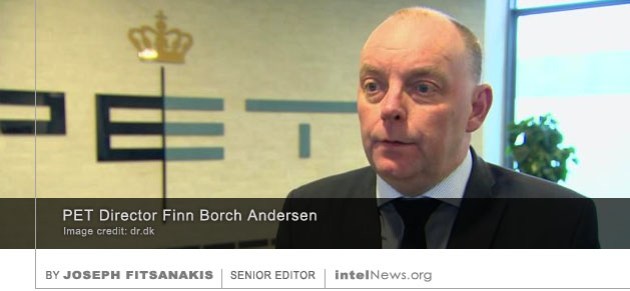 The Danish government has recalled its ambassador from Iran and has accused the intelligence services of the Islamic Republic of plotting an assassination operation on Danish soil. Danish government officials also said that Copenhagen would seek to impose further economic and diplomatic sanctions on Tehran, in coordination with the European Union. The accusations against Iran were leveled during an emergency news conference in the Danish capital on Tuesday, led by Anders Samuelsen, Denmark’s Minister of Foreign Affairs, and Finn Borch Andersen (pictured), Director of the Danish Security and Intelligence Service, known as PET.
The two men said that “an Iranian intelligence agency” had planned “an attack on Danish soil”, which Defense Minister Samuelsen condemned as “completely unacceptable”. PET Director Andersen said that a Norwegian national of Iranian background had been arrested in Sweden on October 21, and was now in custody awaiting extradition to Denmark. The arrestee is an employee of Iranian intelligence, said Andersen, and had been observed conducting surveillance against a Danish-based leading member of an Iranian separatist group. The alleged target is a member of the Arab Struggle Movement for the Liberation of Ahvaz (ASMLA), a hardline separatist group campaigning for a separate homeland for Iran’s Arab minority. Approximately 2 percent of Iranians (around 1.5 million people) belong to the country’s ethnic Arab population. Most of them are concentrated in Khuzestan, a region in Iran’s oil-rich southwest, which borders neighboring Iraq. Some of these ethnic Arabs seek autonomy from Tehran, which they see as an alien regime. ASMLA represents the militant wing of Iran’s separatist Arab community and has a history of staging terrorist attacks inside Iran. Last September, the group claimed it was behind an armed attack on a military parade in the city of Ahvaz —a major urban center in Iran’s Arab-speaking region— which killed 24 people, including some women and children. Later, however, a representative of the group retracted the claim.
On Tuesday, several Iranian officials issued strong denials of the Danish government’s allegations. Speaking in Tehran, Iranian Foreign Ministry Spokesman Bahram Qassemi dismissed Denmark’s claims as “spiteful”. He added that the timing of reports linking Iran to assassination operations on European soil were suspect and described them as “a plot by [Iran’s] enemies to damage Tehran’s growing relations with European countries”. Earlier this month, France seized the financial assets of individuals whom it described as Iranian spies, after blaming Tehran for a foiled bomb attack in Paris. The move followed the arrest of six people in France, Germany and Belgium, who allegedly planned to bomb the annual conference of the National Council of Resistance of Iran (NCRI) last June. The NCRI is led by Mujahedin-e Khalq (MEK), a militant group with roots in radical Islam and Marxism, which Iran sees as a terrorist organization.
► Author: Joseph Fitsanakis | Date: 31 October 2018 | Permalink
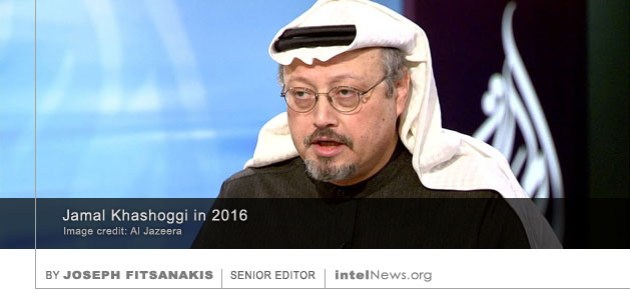 British intelligence had prior knowledge of a plot by the Saudi government to target Jamal Khashoggi, the dissident journalist who was killed in the hands of Saudi intelligence officers in Istanbul on October 2, and allegedly warned Riyadh not to proceed with the plan, according to a report. Khashoggi was a former Saudi government adviser who became critical of the kingdom’s style of governance. He is
  The online arm of the Islamic State, which was once one of the organization’s most noticeable trademarks, has declined markedly in 2018, according to expert observers in the United States and elsewhere. This is especially applicable to the militant group’s online propaganda and recruitment campaign, which appears to have effectively ceased, say experts.
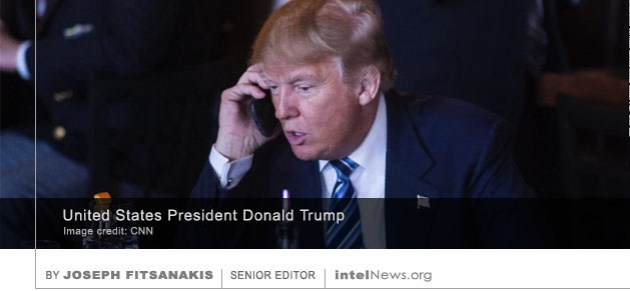 Officials in the White House are concerned about President Donald Trump’s insistence on using an unsecured iPhone to communicate with friends and associates, despite warnings that foreign spies may be listening in. Prior to being elected president, Trump used an Android phone, made by Google, which the NSA advised him to abandon due to security concerns. That is when he switched to using iPhones. Since his election to the presidency, Trump has routinely used three iPhone cell phones. He uses one of them to access a limited list of authorized applications, including Twitter. He uses the second iPhone for phone calls, but cannot use it to send texts, take pictures, or download and install applications. Both of these iPhones have been vetted and secured by the National Security Agency (NSA).
 A French government report warns of an “unprecedented threat” to security after nearly 4,000 leading French civil servants, scientists and senior executives were found to have been accosted by Chinese spies using the popular social media network LinkedIn. The report was authored by France’s main intelligence agencies, the General Directorate for Internal Security (DGSI) and the General Directorate for External Security (DGSE). According to the Paris-based Le Figaro newspaper, which
  Russian espionage activities in Switzerland are increasing and are crossing long-established “red lines”, according to senior Swiss defense and intelligence officials who spoke at a news conference last week. The claims were made by Guy Parmelin, head of Switzerland’s Federal Department of Defense, and Jean-Philippe Gaudin, director of the Swiss Federal Intelligence Service (NDB). The two men spoke on Friday before reporters in Bern. Following the news conference, Gaudin spoke with reporters from the Reuters news agency.
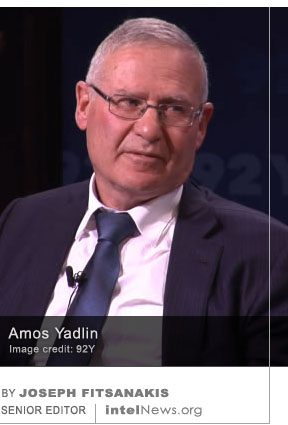 The government of Iran is smuggling parts for ballistic missiles to Lebanon, where they are secretly assembled in clandestine factories operated by the Shiite militant group Hezbollah, according to Israel’s former spy chief. For several months now, the international news agency Reuters has been
 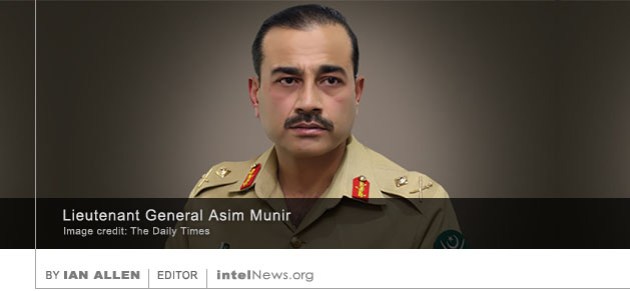 The hardline former director of Pakistan’s military intelligence agency is preparing to take the helm of the country’s powerful spy agency, the Inter-Services Intelligence directorate (ISI). Lieutenant General Asim Munir, who has spent more than two decades as a career military officer, has been officially appointed as director-general of ISI. In one of his first notable assignments, Munir served as a military attaché in Pakistan’s embassy in Saudi Arabia. After being promoted to a two-star general, he was appointed commander of Force Command Northern Areas in Gilgit-Baltistan, Pakistan’s northernmost region. The area borders Jammu and Kashmir, an autonomous Indian-administered region, which the Pakistanis claim belongs to them. Gilgit-Baltistan is also a strategic geopolitical corridor that connects Pakistan with one of its major regional allies, China.
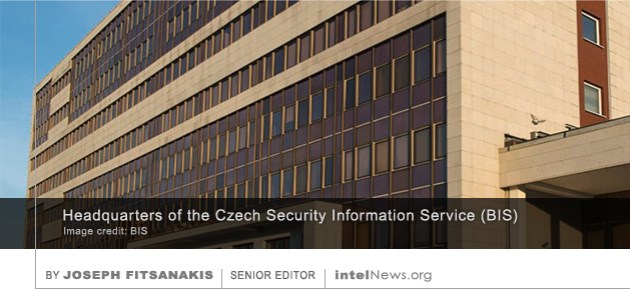 Officials in the Czech Republic have announced that the country’s spy agency headed an operation in several countries, aimed at neutralizing a cyberespionage network operated by the Lebanese militant group Hezbollah. Early last week, the Security Information Service (BIS), the primary domestic national intelligence agency of the Czech Republic, issued a short
 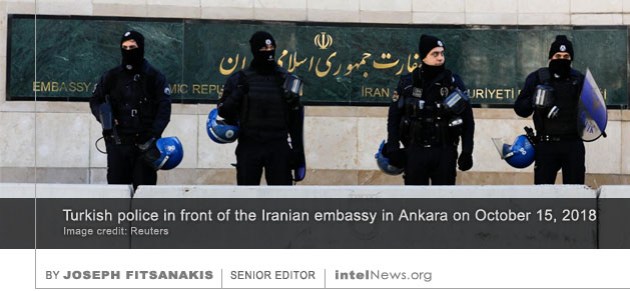 There were conflicting reports yesterday in Ankara of an alleged evacuation of Iran’s ambassador to Turkey, following credible reports of a suicide bomb attack, possibly by the Islamic State. Several Turkish media outlets reported on Monday afternoon that authorities in Ankara had communicated an urgent intelligence warning to the Iranian embassy there of a possible suicide bomb attack. According to the
 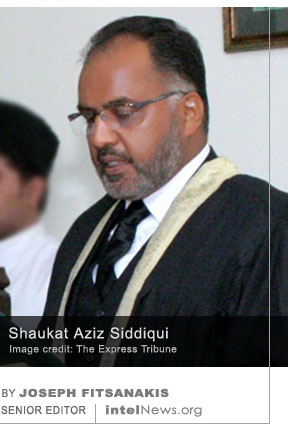 The government of Pakistan has dismissed a High Court judge who accused the country’s powerful intelligence agency of interfering with the judicial process in order to rig the outcome of last July’s general election. On July 25, the governing center-right Pakistan Muslim League – Nawaz (PML-N) was unseated by the conservative-centrist Pakistan Tehreek-e-Insaf, headed by former cricket star Imran Khan. The elections took place amidst a corruption scandal that saw Nawaz Sharif, former prime minister of Pakistan and leading member of PML-N, arrested on charges of fraud. Sharif was charged following the release of the so-called
  A leading suspect in a failed attempt to kill Venezuelan President Nicolas Maduro using drones, has died in mysterious circumstances while being held by the country’s intelligence agency. The
 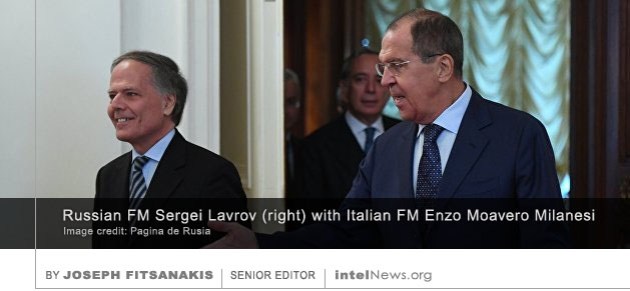 Russia’s minister of foreign affairs has downplayed the arrest and expulsion of four Russian military intelligence officers in Holland last April, saying that the incident was caused by a “misunderstanding”. Last Thursday, the US government named and indicted seven officers of the Main Directorate of the General Staff of Russia’s Armed Forces, known as GRU. The seven are








Suicide bomber who attacked Russian spy agency identified as ‘anarchist-communist’
November 1, 2018 by Joseph Fitsanakis Leave a comment
The bomber was later identified in the Russian media as Mikhail Zhlobitsky, a student at a local technical college. Within hours, reports pointed to posts made on social media platforms by Zhlobitsky, who used several online aliases, including that of “Sergey Nechayev”, one of Russia’s leading 19th-century anarchists, who died in prison for advocating terrorism as a means of revolution. Shortly before the attack, someone using the alias “Valeryan Panov” commented on the social messaging application Telegram that he was about to bomb the FSB in Archangelsk. In the comment, which was posted on an anarchist forum, the user said that he had decided to act “because the FSB falsifies cases and tortures people”. The user added that he would probably die in the attack because he had to manually detonate the improvised explosive device he was carrying with him. He concluded his message with the words: “I wish you a glorious future of anarchist communism!”.
The activities of militant Russian anarchists and anarcho-communists date back to the mid-19th century; anarchist militants are responsible for numerous assassinations of senior Russian officials, including Emperor Alexander II, who was killed by a Russian anarchist in 1881. But the movement was ruthlessly suppressed by the Soviet state and today the FSB and other Russian security services are actively monitoring the remnants of the Russian anarchist movement. These include the Confederation of Revolutionary Anarcho-Syndicalists, the group Autonomous Action, and the Siberian Confederation of Labor. Large sections of these groups have now moved underground, as the government of Russian President Vladimir Putin has named anarchists as primary enemies of order and security in the Russian Federation. Earlier this month, another Russian teenager, Vladislav Roslyakov, killed himself after shooting 19 students and teachers at a technical college in Kerch, a Black Sea port city in Russian-annexed Crimea. No political motive for the attack has been reported.
► Author: Joseph Fitsanakis | Date: 01 November 2018 | Research credit: S.F. | Permalink
Filed under Expert news and commentary on intelligence, espionage, spies and spying Tagged with anarchism, Archangelsk (Russia), communism, domestic terrorism, FSB, Mikhail Zhlobitsky, News, Newstex, Russia, suicide bombings