March 8, 2018
by Joseph Fitsanakis
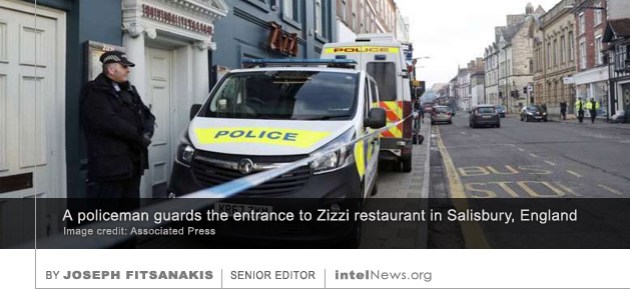 Most state-sponsored assassinations tend to be covert operations, which means that the sponsoring party cannot be conclusively identified, even if it is suspected. Because of their covert nature, assassinations tend to be extremely complex intelligence-led operations, which are designed to provide plausible deniability to their sponsors. Consequently, the planning and implementation of these operations usually involves a large number of people, each with a narrow set of unique skills. But —and herein lies an interesting contradiction— their execution is invariably simple, both in style and method. The attempted assassination of Sergei Skripal last Sunday in England fits the profile of a state-sponsored covert operation in almost every way.
Some have expressed surprise that Skripal, a Russian intelligence officer who was jailed in 2004 for selling Moscow’s secrets to British spies, would have been targeted by the Russian state. Before being allowed to resettle in the British countryside in 2010, Skripal was officially pardoned by the Kremlin. He was then released from prison along with four other Russian double agents, in exchange for 10 Russian deep-cover spies who had been caught in the United States earlier that year. According to this argument, “a swap has been a guarantee of peaceful retirement” in the past. Thus killing a pardoned spy who has been swapped with some of your own violates the tacit rules of espionage, which exist even between bitter rivals like Russia and the United States.
This assumption, however, is baseless. There are no rules in espionage, and swapped spies are no safer than defectors, especially if they are judged to have caused significant damage to their employers. It is also generally assumed that pardoned spies who are allowed to resettle abroad will fade into retirement, not continue to work for their foreign handlers, as was the case with  Skripal, who continued to provide his services to British intelligence as a consultant while living in the idyllic surroundings of Wiltshire. Like the late Russian defector Alexander Litvinenko, who died in London of radioactive poisoning in 2006, Skripal entrusted his personal safety to the British state. But in a country that today hosts nearly half a million Russians of all backgrounds and political persuasions, such a decision is exceedingly risky.
On Wednesday, the Metropolitan Police Service announced that Skripal, 66, and his daughter Yulia, 33, had been “targeted specifically” by a nerve agent. The official announcement stopped short of specifying the nerve agent used, but experts point to sarin gas or VX. Both substances are highly toxic and compatible with the clinical symptoms reportedly displayed by the Skripals when they were found in a catatonic state by an ambulance crew and police officers last Sunday. At least one responder, reportedly a police officer, appears to have also been affected by the nerve agent. All three patients are reported to be in a coma. They are lucky to have survived at all, given that nerve agents inhaled through the respiratory system work by debilitating the body’s respiratory muscles, effectively causing the infected organism to die from suffocation.
In the past 24 hours, at least one British newspaper stated that the two Russians were “poisoned by a very rare nerve agent, which only a few laboratories in the world could have produced”. That is not quite true. It would be more accurate to say that few laboratories in the world would dare to produce sarin or VX, which is classified as a weapon of mass destruction. But no advanced mastering of chemistry or highly specialist laboratories are needed to manufacture these agents. Indeed, those with knowledge of military history will know that they were produced in massive quantities prior to and during World War II. Additionally —unlike polonium, which was used to kill Litvinenko in 2006— nerve gas could be produced in situ and would not need to be imported  from abroad. It is, in other words, a simple weapon that can be dispensed using a simple method, with little risk to the assailant(s). It fits the profile of a state-sponsored covert killing: carefully planned and designed, yet simply executed, thus ensuring a high probability of success.
By Wednesday, the British security services were reportedly using “hundreds of detectives, forensic specialists, analysts and intelligence officers working around the clock” to find “a network of highly-trained assassins” who are “either present or past state-sponsored actors”. Such actors were almost certainly behind the targeted attack on the Skripals. They must have dispensed the lethal agent in liquid, aerosol or a gas form, either by coming into direct physical contact with their victims, or by using a timed device. Regardless, the method used would have been designed to give the assailants the necessary time to escape unharmed. Still, there are per capita more CCTV cameras in Britain than in any other country in the world, which gives police investigators hope that they may be able to detect the movements of the attackers. It is highly unlikely that the latter remain on British soil. But if they are, and are identified or caught, it is almost certain that they will be found to have direct links with a foreign government.
► Author: Joseph Fitsanakis | Date: 08 March 2018 | Permalink
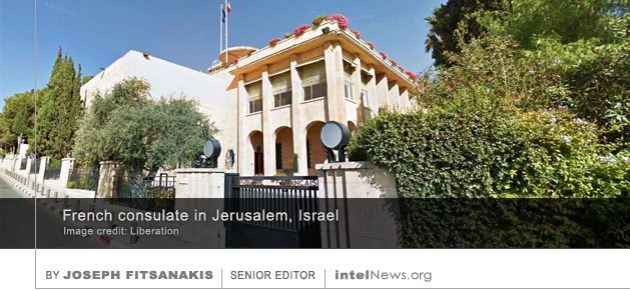 An employee of France’s consulate in Jerusalem is under arrest for allegedly smuggling weapons from the Gaza Strip to the West Bank, according to French media reports, which have been confirmed by Israel. The consular employee has been identified by the Shin Bet, Israel’s domestic security agency, as Romain Franck, 23. He reportedly worked as a driver at the consulate, a job he managed to secure through a prestigious “international volunteer” program sponsored by the French government. The elite program allows recent French college graduates to gain work experience in various countries around the world. Although he had a relatively junior post at the French consulate, Franck carried a diplomatic passport, which allowed him to move through international borders without being searched, due to his diplomatic immunity privileges.
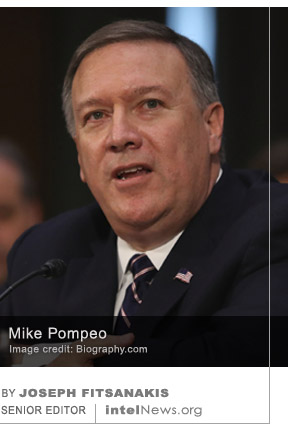 The Central Intelligence Agency has reportedly established back channels for negotiation between the United States and North Korea, which the Department of State is now using to communicate with Pyongyang. Rex Tillerson, who was summarily fired as US Secretary of State by President Donald Trump last week, was famously in favor of diplomatic negotiations between the US and North Korea. The White House had resisted and even publicly criticized Tillerson’s views. Ironically, Tillerson was fired just as his pro-diplomacy views on North Korea are being adopted by the White House.
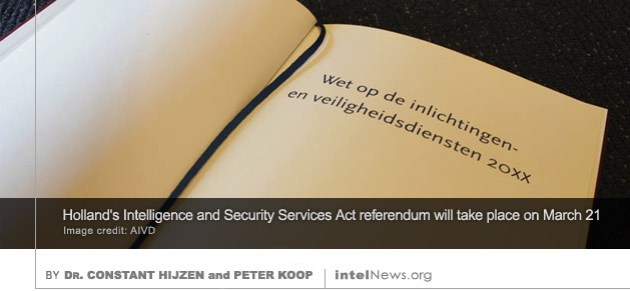 On March 21, the Dutch public cast their vote about the new Intelligence and Security Services Act, in Dutch
 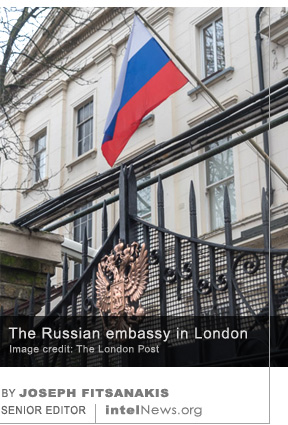 As expected, Moscow snubbed the British government’s demand for information into how a Russian-produced military-grade nerve agent ended up being used in the streets of Salisbury, England. As British Prime Minister Theresa May addressed the House of Commons on Wednesday afternoon, Sergei Skripal continued to fight for his life in a hospital in southern England. His daughter, Yulia, was also comatose, having been poisoned with the same Cold-War-era nerve agent as her father. This blog has
  the latest expulsions are dwarfed by the dramatic expulsion in 1971 of no fewer than 105 Soviet diplomats from Britain, following yet another defection of a Soviet intelligence officer, who remained anonymous.
 The nerve agent that poisoned a Russian double spy in England last week may have been smeared on his car’s door handle, according to sources. Sergei Skripal, 66, and his daughter Yulia, 33, are in critical condition after being
  The British prime minister said on Monday that it was “highly likely” the nerve agent used to attack a Russian defector in England last week was developed by Russia. But sources in London told the BBC that the British government would not invoke Article 5 of the North Atlantic Treaty Organization (NATO), which states that an attack on one member of the alliance is an attack on all. Theresa May was referring to an
 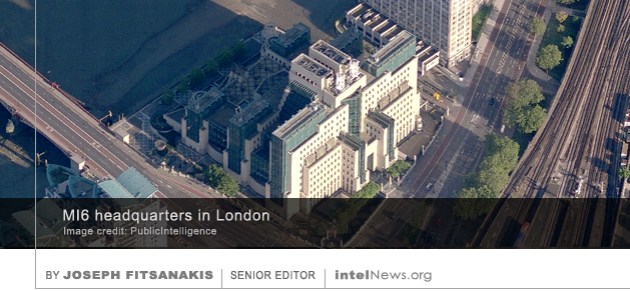 The British secret services have begun tightening the physical security of dozens of Russian defectors living in Britain, a week after the attempted murder of former KGB Colonel Sergei Skripal in southern England. The 66-year-old double spy and his daughter, Yulia, were found in a catatonic state in the town of Salisbury on March 4. It was later determined that they had been attacked with a nerve agent. Russian officials have vehemently denied that the Kremlin had any involvement with the brazen attempt to kill Skripal. But,
 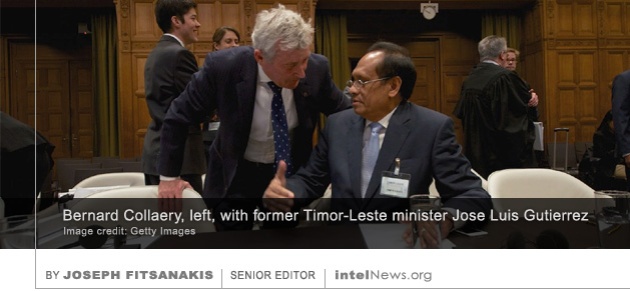 Australia continues to deny freedom of movement to a former intelligence officer who revealed that Canberra bugged government offices in the small island nation of Timor-Leste, in an effort to secure a lucrative oil deal. The former intelligence officer, known only as “Witness K.”, is believed to be a former director of technical operations in the Australian Secret Intelligence Service (ASIS), Australia’s foreign-intelligence agency. In 2013, he publicly objected to an intelligence-collection operation that targeted the impoverished Pacific island nation of Timor-Leste, known also as East Timor.
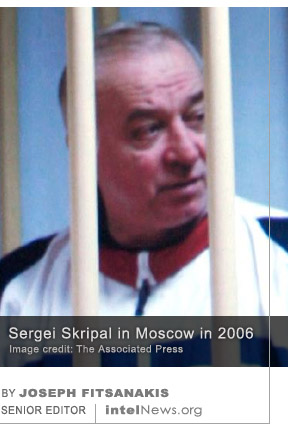 Britain’s counterintelligence service is nearing the conclusion that a foreign government, most likely Russia, tried to kill a Russian double spy and his daughter, who are now fighting for their lives in a British hospital. Sergei Skripal, 66, and his daughter Yulia Skripal, 33, are said to remain in critical condition, after falling violently ill on Sunday afternoon while walking in downtown Salisbury, a picturesque cathedral city in south-central England. Skripal arrived in England in 2010 as part of a large-scale
 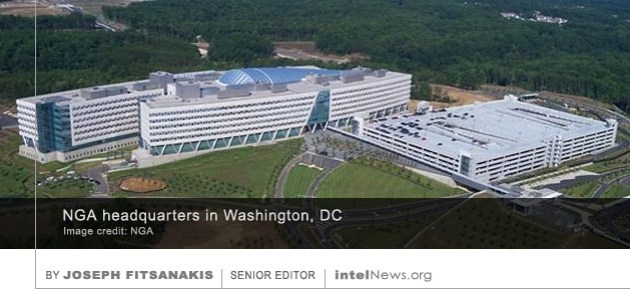 The National Geospatial-Intelligence Agency (NGA), one of America’s most secretive spy organizations, will work with a number of human-rights groups to monitor human rights in North Korea, according to a senior NGA official. Formed in 1996 as the National Imagery and Mapping Agency, the NGA operates under the supervision of the US Department of Defense. It is tasked with supporting US national security by collecting, analyzing and distributing geospatial intelligence. It also performs a combat-support mission for the Pentagon. The agency collects most of its data from satellites, surveillance aircraft and unmanned surveillance drones. Headquartered in a vast 2.3 million square foot building in Washington, the NGA is known for its secretive nature and rarely makes headlines.
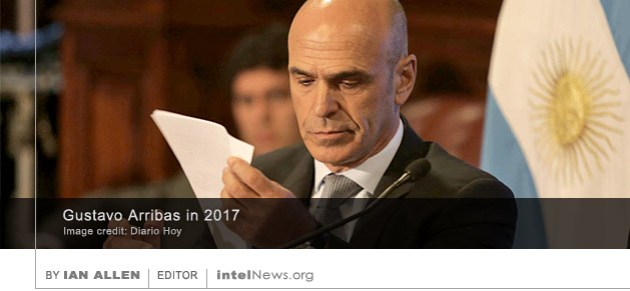 The director of Argentina’s spy agency has been accused by security officials in Brazil of being implicated in a multi-million dollar money-laundering scandal that involves dozens of senior officials across Latin America. The allegations were made in the context of the so-called “operation car wash”, known in Portuguese as Operação Lava Jato. The term refers to a money-laundering probe that began in 2014, following allegations of illegal financial practices by a number of private import-export companies in Brazil. Soon, however, Lava Jato led to the exposure of large-scale corruption, nepotism and bribing practices at the core of Brazil’s state-owned oil company Petrobras. Today, four years later, the constantly expanding investigation has implicated nearly 200 people —many of them well-known politicians— in numerous Latin American countries, including Mexico, Peru and Venezuela.
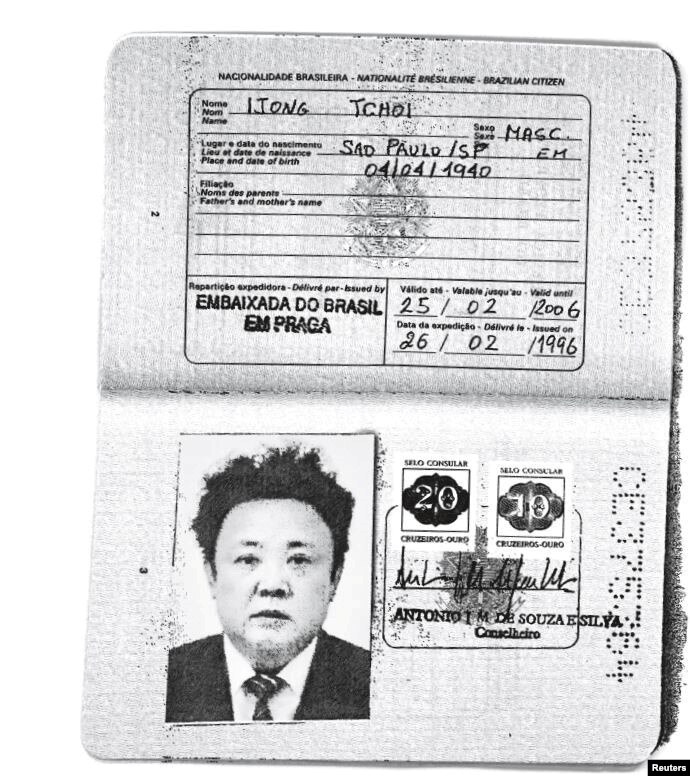
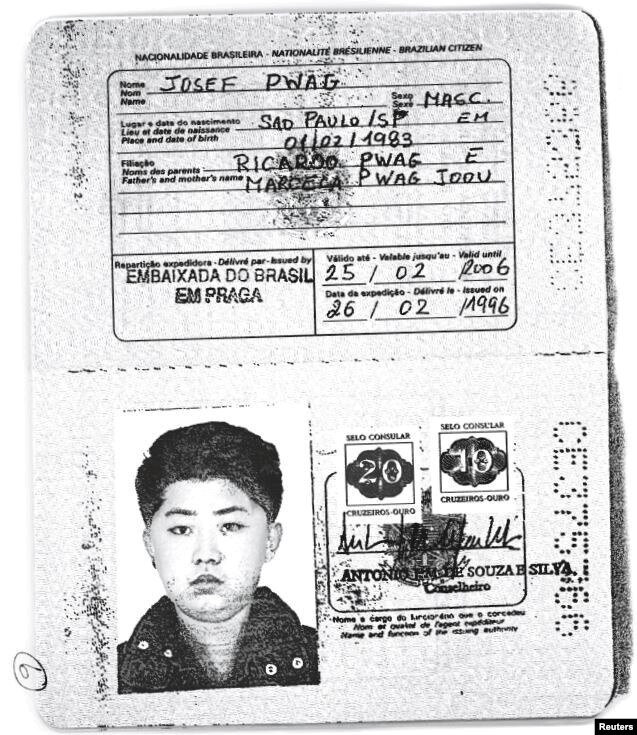
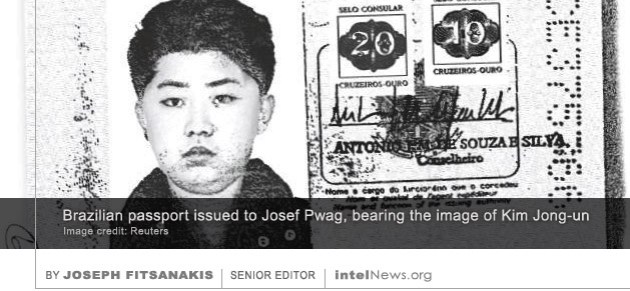 The late Supreme Leader of North Korea, Kim Jong-il, and his son and current Supreme Leader Kim Jong-un, used forged Brazilian passports to secure visas for overseas trips and to travel abroad undetected, according to reports. The Reuters news agency
 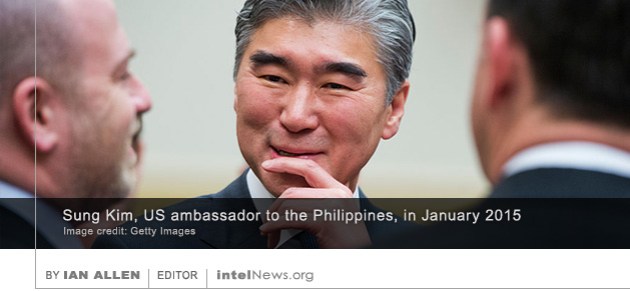 The United States ambassador to the Philippines has been summoned by Manila in response to the publication of an American intelligence report that described President Rodrigo Duterte as a threat to democracy. The report, published on February 13, represents a joint assessment of worldwide challenges to the interests of the United States. It is compiled annually by all 16 member agencies that make up the US Intelligence Community.






 intelNews.org
Analysis: Trump has made record use of US Special Forces since becoming president
March 22, 2018 by Ian Allen 2 Comments
According to the statistics provided by the US Special Operations Command, it appears more than 10 percent (8,000 troops) of the US Special Operations Command’s 70,000 troops are deployed each day. These deployments take place daily in more than 80 countries. This rate of deployment represents a significant increase from the eight years of the administration of US President Barack Obama, which ended in 2016. That year, US Special Forces troops were deployed in 138 countries, according to media reports. The Trump administration’s use of Special Forces troops also represents a jump of approximately 150 percent from the last Republican administration, that of George W. Bush, which ended in early 2008.
Africa represents an area of consistent rise in the rates of deployment of US Special Forces. Currently, US Special Forces troops are active in no fewer than 33 countries across Africa. Most of these countries are witnessing activity by Islamist groups that are described as terrorist by the region’s governments. But the US Special Operations Command has also deployed contingents in Europe, said TomDispatch. Currently, the US maintains Special Forces troops at every country bordering Russia’s western region, with the exception of Belarus.
These numbers echo the record growth of the US Special Forces community since September 11, 2001, when Washington declared its global war on terrorism. Observers estimate the post-9/11 numerical growth of US Special Forces at 75 percent. However, little is known about the nature of campaigns in which US Special Forces are deployed, and whether they are effective in establishing security, or whether they inflame tensions across different battlefronts. There is also limited information about the resulting casualties. The US government has admitted that US Special Forces troops died in 2017 in Syria, Iraq, Afghanistan, Yemen, Niger, Mali and Somalia.
► Author: Ian Allen | Date: 22 March 2018 | Permalink
Filed under Expert news and commentary on intelligence, espionage, spies and spying Tagged with Analysis, Donald Trump, US Special Forces, War on Terrorism