January 3, 2018
by intelNews
 Since 2008, when we launched intelNews, it has been our end-of-year tradition to take a look back and highlight what we see as the most important intelligence-related stories of the past 12 months. In anticipation of what 2018 may bring in this highly volatile field, we give you our selection of the top spy stories of 2017. They are listed below in reverse order of significance. This is the last part in a three-part series. Part one is available here. Part two is available here.
 04. Unprecedented security changes are taking place in Saudi Arabia. Analysts agree that the Kingdom of Saudi Arabia is undergoing its most important political changes in generations. On November 4, 2017, nearly 50 senior Saudi officials, including at least 11 princes, some of them among the world’s wealthiest people, were suddenly fired or arrested. A royal decree issued on that same evening said that the arrests were carried out by a new “anti-corruption committee” led by Crown Prince Mohammed bin Salman, the king’s 32-year-old son, who is first in line to the throne. The king and his son appear to be in the process of removing their last remaining critics from the ranks of the Kingdom’s security services, which they now control almost completely. Earlier in the year, the BBC alleged that Saudi security services were secretly abducting Saudi dissidents from abroad and jailing them in Saudi Arabia. Also in November, Saudi Arabia was seen to be behind a failed attempt by Lebanon’s Prime Minister Saad al-Hariri —a dual Lebanese-Saudi citizen— to resign while on a trip to Saudi Arabia. There were allegations that Hariri was under arrest by the Saudis, who objected to the presence of Hezbollah members in his cabinet. But Hariri later returned to Lebanon and rescinded his resignation.
03. Extraordinary transformation of the intelligence landscape in South Korea. Developments in North Korea have been at the forefront of security reporting in recent months. But reports from the Korean Peninsula have largely ignored the dramatic changes 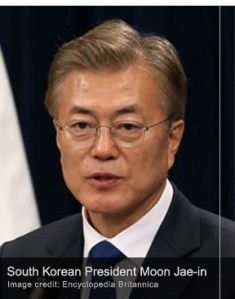 taking place in the intelligence infrastructure of South Korea, which are arguably as important as developments north of the 38th parallel. In June, the new center-left government of President Moon Jae-in banned the powerful National Intelligence Service (NIS) from engaging in domestic intelligence gathering. The move came after a lengthy investigation concluded that the NIS interfered in the 2012 presidential elections and tried to alter the outcome in favor of the conservative candidate, Park Geun-hye, using 30 dedicated teams of officers for that purpose. In November, three former NIS directors were charged with secretly diverting funds from the agency’s clandestine budget to aid Park, who has since been impeached and is now facing a lengthy prison sentence.
02. Turkey’s fallout with the West is affecting spy relations. Turkey has been a NATO member since 1952. However, rising tensions in the country’s domestic political scene are negatively affecting Ankara’s relations with its Western allies, particularly with Germany and the United States. Last month, Turkey issued an arrest warrant for Graham Fuller, an 80-year-old former analyst in the CIA, who Ankara says helped orchestrate the failed July 2016 military coup against the government of President Recep Tayyip Erdoğan. Washington flatly denies these allegations. In May, the Turkish Minister of Foreign Affairs Mevlüt Çavuşoğlu accused “the secret services of [Western] countries” of “using journalists and also bloggers [as spies] in Turkey”. Earlier in the year, a German report claimed that the Turkish state had asked its diplomats stationed all over Europe to spy on Turkish expatriate communities there, in order t to identify those opposed to the government of President Erdoğan. In some cases, Turkish spies have asked their Western European counterparts to help them monitor the activities Turkish expatriates, but such requests have been turned down. Nevertheless, there is increasing unease in Western Europe as Turkey intensifies its unilateral intelligence activities aimed at monitoring political dissent among Turkish communities abroad.
01. With America divided, Russian spies make dramatic post-Cold War comeback. The collapse of the Soviet Union was a traumatic experience for the once all-powerful Russian spy agencies. But, if CIA and FBI assessments are correct, the bitterly divisive state of American politics gave Russian spooks a chance for a dramatic comeback. Using a mixture of human and online intelligence operations, Russian spies helped drive a wedge between the White House and the US Intelligence Community. American intelligence agencies are tasked with providing information to  assist policy-makers, including the president. So when the CIA and the FBI conclude that the Russian government launched an extensive and sophisticated campaign to undermine the 2016 US presidential election, one expects the president to take that advisement under serious consideration. However, the US leader has openly dismissed the conclusions of his own Intelligence Community and has publicly stated that he believes President Vladimir Putin’s assurances that his country did not meddle in the US election.
What we have here, therefore, is a US president who sees the Kremlin as more trustworthy than his own Intelligence Community. This is a remarkable, unprecedented state of affairs in Washington, so much so that some CIA officials have reportedly questioned whether it is safe for them to share information about Russia to President Trump. Throughout that time, the FBI has been conducting an extensive counterintelligence investigation into alleged ties between the president’s campaign team and the Kremlin. As intelNews has noted before, the FBI probe adds yet another layer of complexity in an already intricate affair, from which the country’s institutions will find it difficult to recover for years to come, regardless of the outcome of the investigation. The state of Russian politics may be uncertain, and the country’s economy in bad shape. But Russian spooks can look back to 2017 as the year in which they made an unexpected comeback, scoring a dramatic victory against their decades-old rival.
This is the last part in a three-part series. Part one is available here. Part two is available here.
► Authors: Joseph Fitsanakis and Ian Allen | Date: 03 January 2018 | Permalink
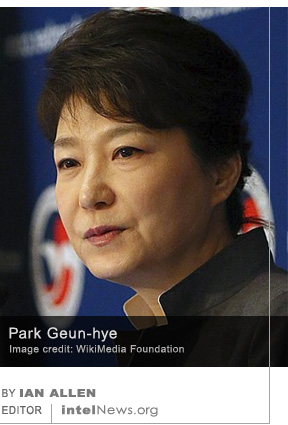 South Korea’s disgraced former president, Park Geun-hye, has been charged with accepting bribes amounting to millions of dollars from the country’s spy agency, according to reports. Park made history in 2013, by becoming the first woman president in South Korean history. However, almost as soon as she assumed office, her administration became embroiled in successive corruption scandals. By 2016, Park’s presidency had been brought to a standstill due to mass protests urging her removal from power, while increasing numbers of officials and administrators were refusing to work with her. She was eventually impeached in 2017, after the Constitutional Court of Korea found that she had violated the country’s laws by promoting the interests of personal friends and private corporations in return for cash and favors. She is currently in custody awaiting trial for 18 different charges, including abuse of power, coercion, blackmail and bribery.
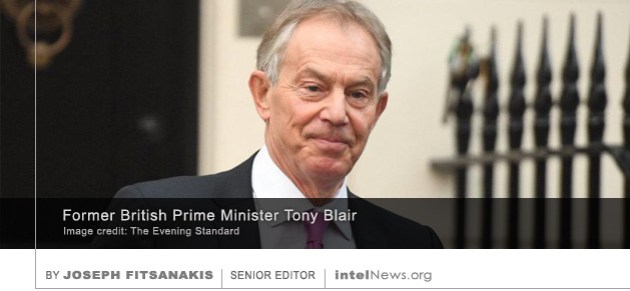 A spokesman for Tony Blair has dismissed as “categorically absurd” allegations that the former British Prime Minister warned the White House that President Donald Trump was targeted by British spy agencies. The claims are made in the book Fire and Fury: Inside the Trump White House, which is due to be published next week. Its author, Michael Wolf, says he based the information in the book on more than 200 interviews that he held with President Trump and members of his inner circle during the past year.
 Since 2008, when we launched intelNews, it has been our
  as a result of “acute poisoning from an undefined substance”, according to his doctors. Also in February, Kim Jong-nam, half-brother of North Korean Supreme Leader Kim Jong-un, was killed in an
  support for the rebels could backfire by causing the suddenly unemployed fighters to join jihadist organizations. In August, there were reports that US troops
  Since 2008, when we launched intelNews, it has been our
 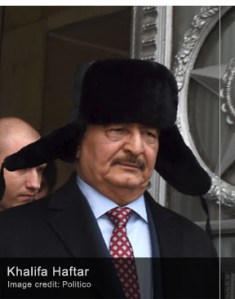 10.
10. 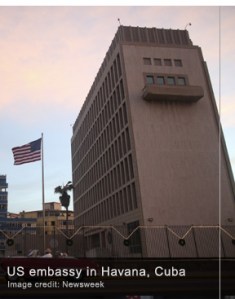 the alleged device may have been deployed by an intelligence service of a third country —possibly Russia— without the knowledge of the Cuban authorities. In October, the White House expelled 15 Cuban diplomats from the US in response to the incident. But the question of what harmed the health of at least 20 employees at the US embassy in Havana remains largely unanswered.
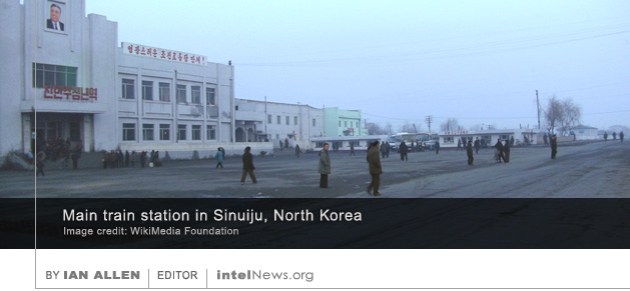 A North Korean nuclear scientist who defected to China but was involuntarily sent back to North Korea in November reportedly killed himself in his North Korean cell hours before he was due to be interrogated. Information about the scientist’s alleged suicide was issued on Thursday by Radio Free Asia (RFA), a multilingual news service based in Washington, DC, which is funded by the United States government. The service said its reporters spoke to an anonymous source in North Hamgyong province, North Korea’s northernmost region that borders China. The source identified the late scientist as Hyun Cheol Huh, but cautioned that this may not be his real name, because the North Korean security services are known to “use […] fake names when referring to important persons” in their custody.
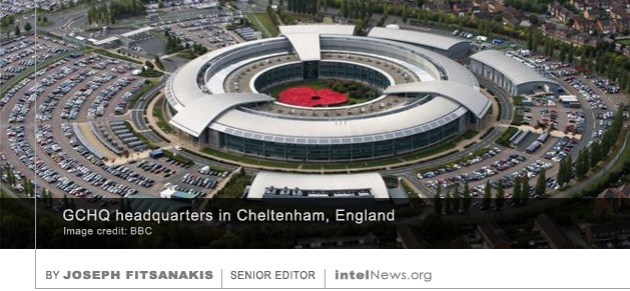 The Government Communications Headquarters (GCHQ), one of Britain’s most powerful intelligence agencies, says it plans to accelerate its vetting process because it is losing top recruits to the private sector. Founded in 1919 and headquartered in Cheltenham, England, the GCHQ is tasked with communications interception. It also provides information assurance to both civilian and military components of the British state. It primarily hires people with technical expertise in communications hardware and software. But in the past fiscal year, the agency fell notably short of its recruitment target, according to a new government report published this week.
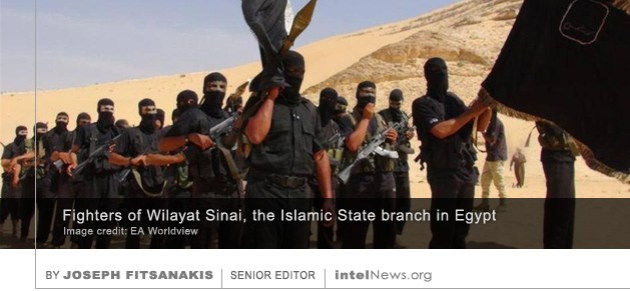 Through a series of meticulously planned terrorist strikes and assassinations, Wilayat Sinai has emerged as the strongest international arm of the Islamic State of Iraq and Syria (ISIS), according to some experts. Known officially as ISIS – Sinai Province, Wilayat Sinai claimed responsibility for the October 2015 downing of Metrojet Flight 9268. All 224 passengers and crew, most of them Russians, died when the plane blew up in midair over Egypt’s Sinai Peninsula. The incident marked the worst aviation disaster in Russian history. The same group, Wilayat Sinai, was behind last month’s attack on the Al Rawda Sufi mosque in bir al-Abed, Egypt. The massacre resulted in the deaths of 311 people, making it the worst terrorist attack in the history of modern Egypt.
 The Russian hacker group that targeted the United States presidential election in 2016 also attacked hundreds of reporters around the world, most of them Americans, an Associated Press investigation shows. The group is often referred to in cyber security circles as Fancy Bear, but is also known as Pawn Storm, Sednit, APT28, Sofacy, and STRONTIUM. It has been linked to a long-lasting series or coordinated attacks against at least 150 senior figures in the US Democratic Party. The attacks occurred in the run-up to last year’s presidential elections in the US, which resulted in a victory for Donald Trump. The hacker group’s targets included Democratic Party presidential candidate Hillary Clinton and her campaign chairman John Podesta. But its hackers also went after senior US diplomatic and intelligence officials, as well as foreign officials in countries like Canada and the Ukraine.
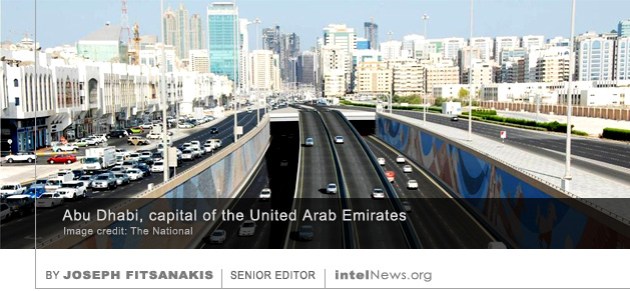 Dozens of Western former spies, most of them Americans, are being hired by the United Arab Emirates, whose ruling family is trying to create a new spy service modeled after the United States Central Intelligence Agency.
 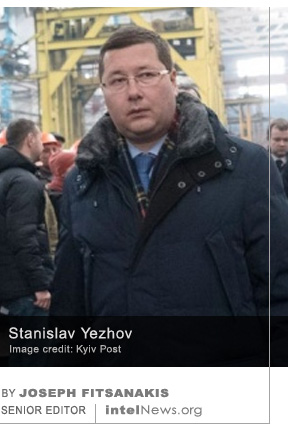 Ukraine’s counterintelligence agency has arrested the principal translator of the country’s prime minister, accusing him of spying for Russia. The translator has been identified as Stanislav Yezhov, who has served as a translator for two consecutive Ukrainian prime ministers. As part of his job, Yezhov has been present at nearly all high-level meetings between Ukraine’s Prime Minister, Volodymyr Groysman, and foreign leaders since 2016, when Groysman assumed his executive post. In the last year alone, Yezhov accompanied the Ukrainian prime minister during official trips to Washington, London and Berlin. Before translating for Groysman, Yezhov is thought to have served as an interpreter for Viktor Yanukovych, Ukraine’s former President. Yanukovych, a pro-Russian politician, occupied that office from 2010 until his ousting from power in 2014, as a result of the 2014 Ukrainian revolution.
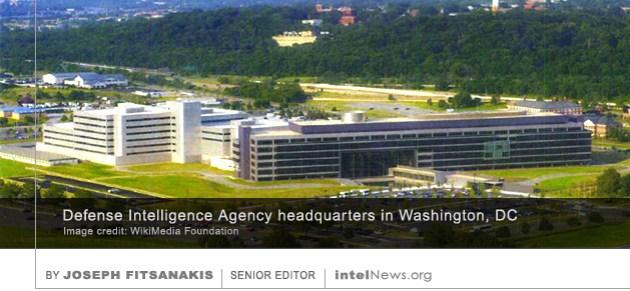 Current and former employees of the United States’ primary military intelligence agency have publicly accused the agency’s senior watchdog of not doing her job and sabotaging the careers of her subordinates.
 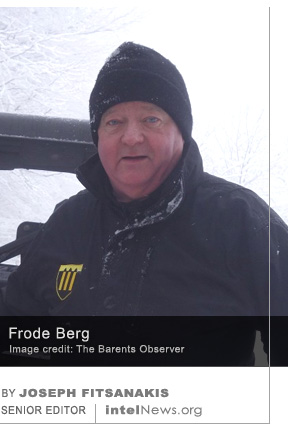 Authorities in Russia have announced the arrest of a Norwegian citizen, whom they accuse of receiving classified information relating to Russia’s Armed Forces. The detainee has been named as Frode Berg, 62, from Kirkenes, a small town in Norway’s far north, located 100 miles from the Russian city of Murmansk. According to articles in the Russian press, Berg is a 24-year veteran of the Office of the Norwegian Border Commissioner, an obscure government agency that operates under Norway’s Ministry of Justice and Public Security. Among other tasks, the Office of the Norwegian Border Commissioner is responsible for enforcing and monitoring bilateral compliance with the Soviet (now Russian)-Norwegian Border Agreement of 1949. Berg, who worked closely with Norway’s National Police Directorate as part of his job, retired from the Office in 2014.
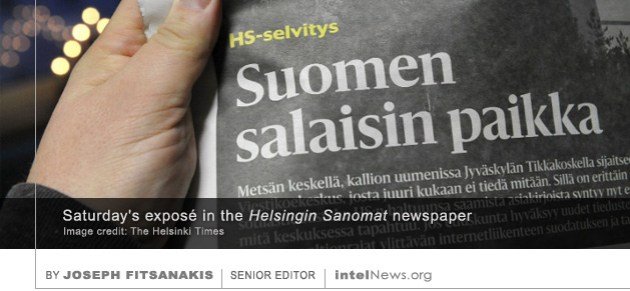 An investigative journalist in Finland, who recently co-authored an exposé of a Finnish intelligence program targeting Russia, destroyed her computer with a hammer, prompting police to enter her house on Sunday. The journalist, Laura Halminen, co-wrote the exposé with her colleague, Tuomo Pietiläinen. Titled “The Secret Behind the Cliff”, the article






 intelNews.org
Man who attended Charlottesville far-right rally tried to derail passenger train
January 8, 2018 by Ian Allen Leave a comment
Now the FBI says that Wilson boarded the train intent on carrying out a terrorist assault, and that he pulled the train’s breaks “with intent to harm those aboard”. In court documents that were unsealed last week, FBI agents state that a search of Wilson’s property in Missouri uncovered a large weapons cache consisting of fifteen firearms, some of which were automatic. Nearly 1,000 rounds of ammunition were also confiscated from Wilson’s house, where federal officers also found literature published by American white supremacist organizations like the National Socialist Movement. According to the indictment, some of the weapons and white nationalist literature had been hidden inside a concealed compartment located behind a refrigerator unit.
It appears that Wilson obtained most of his firearms legally and that he had been issued a concealed carry permit. However, the FBI claims that Wilson’s firearms “have been used for, or obtained in anticipation of engaging in, or planning to engage in, criminal offenses against the United States”. In addition to this claim, the FBI indictment states that Wilson traveled to Charlottesville, Virginia, in August of last year to attend the “Unite the Right” rally, which was organized by various white supremacist, white nationalist, neo-Nazi and militia groups. The FBI says that it has statements from Wilson’s associates and at least one family member, who claim that the accused traveled to Charlottesville as part of a contingent of a neo-Nazi group.
► Author: Ian Allen | Date: 08 January 2018 | Permalink
Filed under Expert news and commentary on intelligence, espionage, spies and spying Tagged with Amtrak, FBI, neo-Nazis, News, rightwing extremism, Taylor M. Wilson, terrorism, transportation security, United States