KGB officer who handled Aussie double spy is now Putin crony

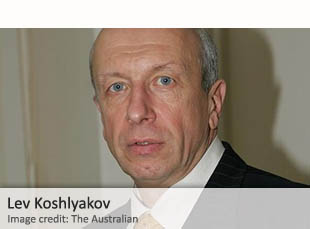
Lev KoshlyakovBy JOSEPH FITSANAKIS | intelNews.org
A KGB intelligence officer, who handled an Australian double spy during the closing stages of the Cold War, now holds several prestigious corporate posts in Moscow and is believed to be close to Russian President Vladimir Putin. Lev Koshlyakov, 69, is director of corporate communications for two Russian airline companies, including the state carrier, Aeroflot, and a member of the prestigious Moscow-based Council for Foreign and Defense Policy. But from 1977 until 1984, Koshlyakov served as the press and information officer for the Russian embassy in Australian capital Canberra. Intelligence sources, however, told The Weekend Australian last week that Koshlyakov’s diplomatic status was in fact a cover for his real job, which was station chief for the Soviet KGB. During his stint in Canberra, Koshlyakov is believed to have handled an especially damaging mole inside the Australian Security Intelligence Organisation (ASIO), who was allegedly recruited by his predecessor, KGB station chief Geronty Lazovik. Canberra was alerted to the existence of the mole in 1992, when the United States Central Intelligence Agency (CIA), along with Britain’s’ Secret Intelligence Service (MI6), briefed Australian officials on information acquired from Russian defectors. Soon afterwards, a government-commissioned report produced by Australian former diplomat Michael Cook described Koshlyakov as “one of the most dangerous KGB officers ever posted” to Australia. Eventually, Koshlyakov was assigned to a desk job by the KGB, after his cover was blown in Norway, where he was also serving as KGB chief of station. The Norwegians expelled Koshlyakov in 1991 after accusing him of espionage activities that were incompatible with his official diplomatic status. Since his retirement, however, Koshlyakov has done well for himself, having been appointed to senior corporate positions —some say with the personal backing of Russia’s President Vladimir Putin. As for the ASIO mole he allegedly handled in the 1980s, The Australian reports that he was forced to retire in 1992, after he was identified by the CIA and MI6. There was insufficient evidence to try him, however, so he “lived out his retirement in Australia” looking nervously over his shoulder, says the paper.

Obama in secret negotiations with Iran over ISIS threat

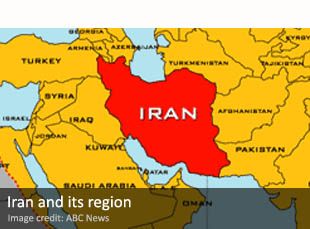
Iran and its regionBy IAN ALLEN | intelNews.org
The president of the United States reportedly sent a secret letter to the supreme leader of Iran, in which he proposes cooperation against the Islamic State of Iraq and Syria (ISIS) in exchange for a nuclear deal. The New York-based Wall Street Journal newspaper reported on Thursday that Barack Obama reached out to Iranian leader Ayatollah Ali Khamenei in October. In the letter, Obama allegedly proposes a nuclear agreement between Washington and Tehran and emphasizes the common threat the two nations face from ISIS, the Sunni Islamist group also known as the Islamic State. The paper said Obama’s letter stresses that any cooperation between America and Iran against the Islamic State is directly contingent on a nuclear agreement between the two governments, which would have to be reached before November 24 of this year. If the Journal’s information is accurate, it would appear that the US president’s move is connected with the latest round in bilateral negotiations between Washington and Tehran, which is scheduled to begin on November 8. US Secretary of State John Kerry and Iran’s Minister of Foreign Affairs Javad Zarif will be leading their respective teams, as the two delegations meet in Muscat, capital of Oman, to explore ways of normalizing their diplomatic relations. If it is real, Obama’s purported letter would not mark the first instance in which the US president wrote to his Iranian counterpart. There are at least three other letters that Obama is known to have sent to various Iranian leaders since 2009, when he assumed the presidency of the US. However, if the proposal in the letter, as outlined in The Wall Street Journal article, is authentic, the move can be seen to highlight the view of the White House that Iran must inevitably be part of a solution regarding ISIS. Nevertheless, the revelation that America is seeking an alliance with Shiite Iran will undoubtedly frustrate America’s Arab allies in the region, especially Saudi Arabia, Bahrain, Kuwait, and other Sunni oil monarchies, which are participating in the ongoing international military campaign against the Islamic State. The Journal contacted the White House but officials there refused to comment on what they said was Obama’s “private correspondence”. When asked by journalists on the matter, White House spokesman Joshua Earnest said only that “the policy that the president and his administration have articulated about Iran remains unchanged”.

Spy satellites detect new nuclear weapons plant in North Korea

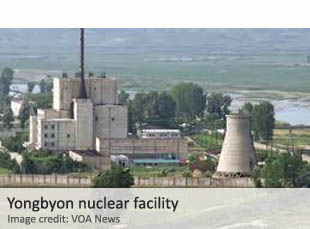
Yongbyon Nuclear Scientific Research CenterBy IAN ALLEN | intelNews.org
A brand new nuclear weapons production plant detected by spy satellites in North Korea would enable the recluse Asian country to double its uranium-based nuclear warheads, according to intelligence sources. South Korean daily newspaper JoongAng Ilbo said the plant was detected by spy satellites equipped with infrared cameras, which are able to sense heat emissions released by gas centrifuges. The latter are essential in separating uranium-235 isotopes from the predominant uranium-238 isotope, which constitutes over 99 percent of natural uranium and cannot be weaponized. JoongAng Ilbo quotes an unnamed South Korean intelligence official, who said the data collected by the spy satellites indicate that Pyongyang has activated a new centrifuge facility inside the Yongbyon Nuclear Scientific Research Center. Located approximately 60 miles north of the capital Pyongyang, Yongbyon is North Korea’s major nuclear facility, which was used to produce the fissile material for North Korea’s first nuclear weapon test in 2006. Prior to the establishment of the newly detected plant on the site, the facility was believed to contain around 2,000 centrifuges. The new facility is thought to have added significantly to North Korea’s existing capacity to enrich uranium, as it appears from its architecture and size that it contains several hundred operational centrifuges. South Korean and Western officials estimate that North Korea has the capacity to produce up to five nuclear warheads, though many doubt that the country’s nuclear engineers have been able to miniaturize the warheads so as to mount them on a long-rage delivery system. In 2012, a court in Ukraine sentenced two North Korean citizens to eight years in prison on charges of trying to obtain secret technical information about missile engines. News media contacted South Korean’s Ministry of Foreign Affairs, which oversees surveillance operations against the North’s nuclear program, but received no answer regarding the discovery of the new production facility.

British spy agencies launch recruitment drive for Russian speakers

MI5 HQ Thames HouseBy JOSEPH FITSANAKIS | intelNews.org
Amid mounting tensions between Russia and the West, British spy agencies have announced an ambitious recruitment campaign aimed at hiring a new generation of Russian-language specialists. The Security Service, known as MI5, which is responsible for domestic security and counterintelligence, posted an advertisement on its website this week, alerting potential applicants that the job search for Russian-language speakers will officially launch “in mid-November 2014”. The recruitment campaign, which is described on the spy agency’s website as “an exciting opportunity to match your language skills to a position in MI5”, appears to be jointly administered with the General Communications Headquarters (GCHQ), Britain’s signals intelligence agency, which is tasked with intercepting foreign communications. The move takes place in a wider context of deteriorating relations between Moscow and Western Europe, notably in response to Russia’s ongoing invasion of southeastern Ukraine and annexation of Crimea. Some suggest that there has also been a low-intensity intelligence war taking place between London and Moscow ever since the assassination in the British capital of former KGB officer Alexander Litvinenko. In late 2012, an officer of the Royal Navy was captured during a counterintelligence sting operation while trying to sell top-secret British government documents to people he believed were Russian intelligence operatives. A few months later, the British government let it be known of its increasing annoyance by persistent allegations made in the Russian media that Denis Keefe, the UK’s deputy ambassador to Moscow, was “an undercover spy, with his diplomatic position serving as a smokescreen”. In March of 2013, Oleg Gordievsky, the Soviet KGB’s former station chief in London, who defected to the UK in the 1980s, alleged in an interview that Russia operates as many spies in Britain today as it did during the Cold War. His comments were echoed earlier this year by the former director of MI5, Jonathan Evans, who said that there had been no change in the number of undeclared Russian intelligence officers operating in Britain since the end of the Cold War. Evans said that up to 50 undeclared Russian military and civilian spies were believed to be operating in Britain at any given moment. In June of this year, intelNews reported that the crisis in Crimea had caused the British military to hurriedly reach out to hundreds of retired Russian-language analysts who left the service at the end of the Cold War, most of whom are now in their 60s.

Retired Israeli generals, spy directors, urge peace talks with Arabs

Benjamin Netanyahu and Barack ObamaBy JOSEPH FITSANAKIS | intelNews.org
A record number of over 100 retired Israeli military commanders, police commissioners and directors of the Mossad spy agency have urged the government of Israel to initiate unconditional peace talks with its Arab neighbors. In an open letter addressed to Israeli Prime Minister Benjamin Netanyahu, 106 signatories from the ranks of Israel’s security and intelligence community have urged the Israeli leader to “initiate a diplomatic process” aimed at achieving peace with the Palestinians. All but five of the signatories are veterans of the Israel Defense Forces with the rank of brigadier or major general. The remaining five are former directors of the Mossad —Israel’s covert-action agency— and former commissioners of Mishteret Yisra’el, Israel’s national police force. The initiative was spearheaded by Major General Amnon Reshef (ret.), a former commander of Israel’s Armored Corps and decorated veteran of the 1973 Arab–Israeli War. He was joined by dozens of his former comrades-in-arms, including Major General Eyal Ben-Reuven, who warned in an interview aired last Friday that Israel is on a “steep slope toward an increasingly polarized society and moral decline”. He attributed this trend to the purported “need to keep millions of people under occupation on claims that are security-related”, but are in reality machinations by weak political leaders within Israel. Ben-Reuven told Israel’s Channel 2 News that Israel had the ability and the means to achieve a two-state solution with the Palestinians that would drastically increase regional security. But it was failing to do so, he said, due to “weak leadership” inside Israel. Referring to Prime Minister Netanyahu, Ben-Reuven said he suffers from “some kind of political blindness that drives him to scare himself and us”. The action by the 106 former security and intelligence leaders was described by Israeli newspaper Ha’aretz as “the largest-ever joint protest by senior Israeli security personnel”. In their letter, the signatories argue that peace with the Palestinians “is not a question of left or right. What we have here is an alternative option for resolving the conflict […] with the Palestinians, which have failed time and again”. And they continue addressing Mr. Netanyahu directly: “We expect a show of courageous initiative and leadership from you. Lead, and we will stand behind you”. The Israeli prime minister promotes the view that Palestinian statehood would threaten Israel’s national security under the geopolitical conditions that are currently prevalent in the region.

Brazil builds direct Internet cable to Europe to avoid US spying

Proposed transatlantic cableBy JOSEPH FITSANAKIS | intelNews.org
The government of Brazil is to construct a transatlantic cable across the Atlantic Ocean in order to avoid having its Internet traffic to and from Europe intercepted by American intelligence agencies. According to reports, the fiber-optic cable will stretch for 3,500 miles from the northeastern Brazilian city of Fortaleza to the Portuguese capital Lisbon. It will cost the Brazilian government in excess of US$185 million, but it will allow the country’s existing Internet traffic to and from Europe to travel without going through cables owned by American service providers. According to Brazilian officials, the construction of the cable is among several steps announced by the Brazilian government aimed at disassociating its communications infrastructure from American companies. The move follows revelations made last year by American defector Edward Snowden that the US National Security Agency specifically targeted Brazilian President Dilma Rousseff’s personal communications as part of its intelligence-collection efforts targeting Brazil. In response to the revelations, Rousseff cancelled a planned official state visit to Washington and accused the US of having committed “a breach of international law and an affront” against Brazil’s sovereignty. The planned fiber-optic cable connection to Europe will be overseen by Telecomunicacoes Brasileiras SA, Brazil’s state-owned telecommunications conglomerate, known commonly as TeleBras. The company’s president, Francisco Ziober Filho, said in an interview last week that none of the $185 million that will be spent on the project will end up in the pockets of American companies. For over a year, experts have been warning that the Snowden revelations about the extent of the NSA’s global communications-interception activities might undermine the American telecommunications sector, insomuch as it could undercut America’s role and influence in global Internet governance. Many countries, Brazil included, are beginning to actively reconsider their dependence on US-managed Internet networks that host the content of social media sites, cloud computing databases, or telecommunications exchanges. Read more of this post

Are militant groups interested in weaponizing Ebola?

Ebola suffererBy IAN ALLEN | intelNews.org
Does the Ebola epidemic present militant groups, such as the Islamic State or al-Qaeda, with the opportunity to weaponize viruses and direct them against Western targets? Earlier this month, United States Homeland Security Secretary Jeh Johnson dismissed in strong terms the possibility that Ebola would be used by Islamic State militants to attack American targets. Speaking to the Association of the United States Army, Johnson acknowledged that the Islamic State is a “very, very dangerous terrorist organization”, but added that his Department had seen “no specific credible evidence that [the Islamic State] is attempting to use any sort of disease or virus to attack” the US. A few days earlier, however, Forbes magazine had quoted Al Shimkus, Professor of National Security Affairs at the US Naval War College, as saying that the Ebola outbreak presented Islamist groups with the opportunity to use a low-tech bioterrorist weapon “to attempt to wreak strategic global infection”. Shimkus added that a group like the Islamic State wouldn’t even have to weaponize the virus’ it could “simply use human carriers to intentionally infect themselves in West Africa, then disseminate the deadly virus via the world’s air transportation system”, he said. On Wednesday, a senior Spanish official told a parliamentary committee in Madrid that the government of Spain was “taking seriously” discussions in Internet forums linked to the Islamic State about using biological weapons against the West. Francisco Martínez, who is Spain’s State Secretary for Security, told the Committee of the Interior in the Spanish Congress that online commentators connected to the Islamic State have been discussing the possibility of using Ebola as a weapon against America and its Western allies. He told Committee members that the discussions had been taking place on Internet forums as recently as mid-September. He also cited “a series of tweets” from last July, in which another Islamist group, Ansar al-Islam, with roots in Iraqi Kurdistan, proposed using “deadly chemical products from laboratories” as means of launching attacks against the West. Martínez did not provide further details on the allegations.

Analysis: Well-trained spy agency adds to strength of Islamic State

ISIS parade in SyriaBy IAN ALLEN | intelNews.org
The militants of the Islamic State, who now control large parts of Syria and Iraq, boast a well-trained and agile intelligence apparatus that is partly responsible for the group’s continuing expansion and strength. Sources on the ground in Iraq report that many of the intelligence officers that staff the Islamic State’s spy agency are former employees of the Syrian and Iraqi governments. They were trained by either Russian or American spies during their government service, and are now lending their advanced intelligence skills to the Islamic State. Al-Monitor’s Ali Mamouri, who is based in Iraq, writes that the Islamic State’s intelligence agency is similar to other government intelligence apparatuses around the world in both structure and operational tactics. Principal among its tasks is political protection of the militant regime’s senior commanders, several of whom have already been killed in Mosul and other cities of northwestern Iraq. Islamic State intelligence officers have tightened security precautions in recent weeks, advising Islamic State leaders to limit their public appearances and arresting individuals suspected of acting as informants for Kurdish or other opposition groups linked to the Iraqi or Syrian governments. Another task of the Islamic State’s intelligence apparatus, Mamouri reports, is counterintelligence —i.e. detecting and preventing attempts by Iraqi and Syrian government spies to infiltrate Islamic State governing structures or military outfits. The intelligence agency also works closely with armed groups reminiscent of the German Nazi Party’s Sturmtruppen (Stormtroopers), namely uniformed street thugs whose task is to identify, monitor and physically eliminate opponents of the regime. The list of undesirables includes Shiites, moderate Sunnis, as well as leaders of tribes who cooperated with the Syrian or Iraqi governments in the recent past.

India uncovers plot to assassinate Bangladeshi prime minister

India and BangladeshBy JOSEPH FITSANAKIS | intelNews.org
Indian authorities claim to have uncovered a plot by an outlaw militant group to assassinate the prime minister of Bangladesh and launch a coup d’état in the South Asian country. The Reuters news agency quoted three “senior Indian officials” on Tuesday, who claimed that the plot was primarily aimed against Sheikh Hasina, leader of the nationalist Bangladesh Awami League, who was elected to the office of the prime minister in 2009 for the second time, after having led the country of 156 million people from 1996 to 2001. The National Investigation Agency of India (NIA) said the plot was to be carried out by members of the Jama’atul Mujahideen Bangladesh (JMB), a militant Islamist organization whose aim is to overthrow the government of Bangladesh and replace it with an Islamic theocracy based on Sharia law. The group, which maintains close ideological links with the Pakistani Taliban, is believed to have over 100,000 members throughout the country. It was officially banned by the government of Bangladesh in early 2005. But later that year the JMB conducted a massive terrorist operation that included over 500 explosive devices detonated in 300 locations around the country. Four leaders of the organization were later executed by the authorities for their role in the bombings and for organizing the assassination of two judges. Indian security officers reportedly discovered the coup plot earlier this month, when two members of JMB were killed in an explosion while building homemade bombs. The explosion took place in a house in India’s eastern state of West Bengal, which borders Bangladesh. NIA officials said the plotters were all Bangladeshis and were using West Bengal as an operations base from which to launch their attacks across the border into Bangladesh. According to one report, the plotters also planned to kill members of the Bangladeshi cabinet, as well as senior opposition leaders in the country. Read more of this post

Czechs say number of Russian spies in Prague “extremely high”

PragueBy JOSEPH FITSANAKIS | intelNews.org
The number of active Russian intelligence operatives in the Czech Republic increased notably in the past year, according to an official report by the country’s counterintelligence service. In its annual report released on Monday, the Czech Security Information Service (BIS) said the number of Russian intelligence personnel stationed in the central European country had risen dramatically since the start of the crisis in Ukraine. The crisis, which brought Russian troops in Ukraine and resulted in the annexation of Crimea by Russia, has prompted the most serious crisis in the West’s relations with Russia since the end of the Cold War. The BIS report did not reveal the precise number of alleged Russian intelligence personnel on Czech soil, but it noted that the majority of them posed as diplomats in Russia’s embassy in Czech capital Prague. It stated that “when it comes to Russia’s diplomatic mission, in 2013 the number of intelligence officers working undercover as diplomats was extremely high”. It added that significant numbers of Russian intelligence operatives were in the Czech Republic in a non-official-cover (NOC) capacity, meaning there were not officially connected with the Russian embassy there and had no diplomatic immunity. These officers “travel to the Czech Republic as individuals, posing as tourists, experts, academics and entrepreneurs”, said the report, “or settled down in the country through purchasing property”. Nearly 50,000 Russian citizens live in the Czech Republic as long-term legal residents. Relations between Moscow and Prague have been frosty in the post-communist era, and have deteriorated significantly following the Czech Republic’s entry into the North Atlantic Treaty Organization (NATO). In the summer of 2010, three Czech generals, including the head of the president’s military office and the country’s representative to NATO, resigned following revelations that one of their senior staffers had a romantic relationship with a Russian spy. Read more of this post

Newly released British files shed light on 20th-century espionage

Eric HobsbawmBy IAN ALLEN | intelNews.org
Files released last week by Britain’s National Archives have brought to the fore interesting new clues on the history of intelligence operations in the 20th century. One of the files relates to Migel Piernavieja del Pozo, a Spanish journalist in his mid-20s, who arrived in the United Kingdom in 1940, ostensibly to cover British public attitudes to the war in the continent. Britain’s counterintelligence agency, the Security Service, also known as MI5, placed Pozo under surveillance, after the debonair Spaniard proclaimed in public meetings that he was grateful for German Chancellor Adolf Hitler’s support to Spain’s royalist forces and said he hoped Germany would emerge victorious from the war in Europe. The agency was right to do so, as Pozo eventually approached an agent of the Abwehr —Nazi Germany’s military intelligence agency— in the UK, and told him that he too was working secretly for Berlin. But the Abwehr agent, codenamed GW in MI5 documents, was in fact a double spy for the Crown and managed to pass deceptive information to the Spaniard. Eventually, Pozo gave GW a tin of talcum powder containing over £3,500 in banknotes, which is approximately $150,000 in today’s money. Professor Christopher Andrew, official historian of MI5, told The Daily Telegraph that the money supplied by Pozo was “probably the largest sum yet handed to a British agent” by a rival spy. Eventually, Pozo’s inability to acquire useful intelligence in the UK prompted his recall back to Spain.

Another set of files, also released last week by the National Archives, appears to show that C.A.N. Nambiar, a friend of India’s first prime minister and deputy to one of the country’s most fervent pro-independence activists, was a Soviet spy. Nambiar was known as an old comrade of Jawaharlal Nehru, the first elected leader of post-colonial India, who dominated Indian affairs for much of the last century. He was also a close associate of Subhas Chandra Bose, a pro-independence activist considered a hero by Indian nationalists, whose hatred for India’s British occupiers led him to side with Nazi Germany and Imperial Japan in the early 1940s. After India’s independence in 1947, Nambiar worked as a diplomat in Berne, Switzerland, before becoming India’s ambassador to Sweden and later to West Germany. But according to MI5 documents released last week, an Eastern Bloc defector fingered Nambiar in 1959 as an agent of Soviet military intelligence, known as GRU. The source said Nambiar had been recruited while visiting the USSR as a guest of the Soviet state in 1929. Read more of this post

Historian names wartime British spy who fooled Nazi sympathizers

Eric RobertsBy JOSEPH FITSANAKIS | intelNews.org
A British counterintelligence agent, who managed to neutralize an extensive wartime network of Nazi sympathizers in the United Kingdom by pretending to represent the German government, has been named. Regular intelNews readers might remember our post about a wartime agent identified only as “Jack King” in files released by the British National Archives in February. “Jack King” was the operational codename given to the agent by his handlers in the British Security Service, commonly known as MI5, which is tasked with counterintelligence duties. Senior officials at the agency described “King” as “a genius” at luring Nazi sympathizers in the UK. The files show that “King’s” work helped MI5 identify hundreds of residents in Britain —most of them British citizens— as committed Nazis who were prepared to pass national secrets to Berlin. “King” reportedly utilized his pro-German contacts in the southeast of England and was able to infiltrate pro-Nazi circles operating in and around London. He did so by posing as an agent of the Gestapo, Nazi Germany’s secret police. He quickly gained the trust of some of the most fervent pro-German activists operating in the British Isles. These included Edgar Whitehead, Hilda Leech, and Marita Perigoe, a Swedish resident of the UK who was so fervently pro-Nazi that she once dismissed Oswald Mosley’s British Union of Fascists as “insufficiently extreme”. When the “Jack King” files were declassified, some intelligence historians suggested that the operational codename referred to John Bingham, a legendary MI5 office and fluent German speaker who is said to have inspired John le Carré’s fictional character George Smiley. But Cambridge University historian Christopher Andrew, who in 2009 authored In Defense of the Realm, an officially-commissioned history of MI5, has revealed the name of “Jack King” as Eric Roberts. Professor Andrew told The Daily Telegraph newspaper that Roberts was an unassuming suburban bank clerk who lived in a small market town called Epsom in Surrey. Roberts was born in nearby Sussex, in southeastern England, in 1907, married at a young age and had three children —two sons and a daughter. His MI5 files document that, by the time World War II started, he was “thoroughly familiar” with networks of Nazi sympathizers in the south of England, though just how he had managed to do that remains a mystery. Roberts eventually attracted the attention of Maxwell Knight, a legendary MI5 spymaster who headed the organization’s Section B5(b), tasked with infiltrating subversive political groups in Britain. Read more of this post

More information emerges on Poles who ‘spied for Russia’

Zbigniew J.By JOSEPH FITSANAKIS | intelNews.org
More information has emerged on two Polish citizens who were arrested earlier this month in Warsaw on charges of spying for a foreign intelligence agency. Polish media reported last week that a colonel in the Polish Army had been arrested by security personnel for operating as an unregistered agent of a foreign country. Subsequent media reports said a second man, a lawyer with dual Polish-Russian citizenship, had also been arrested. According to Polish media reports, the two men had been recruited by the GRU, Russia’s military intelligence agency. The organization is believed to have over a dozen officers stationed at the Russian embassy in the Polish capital, posing as diplomats, as well as an unknown number of non-official-cover operatives, who are not officially connected to the Russian diplomatic mission. One of the two arrestees has been identified simply as Zbigniew J., and is said to be a lieutenant colonel serving in Poland’s Ministry of National Defense. Polish newsmagazine Wprost said last weekend that Z.J. worked in the Ministry’s “enlightenment and morale” department, a post that required him to visit military units around the country as part of a team of experts. He would then impart the information gained from his travels to his GRU handler, an officer serving under diplomatic cover in Russia’s Warsaw embassy, during biweekly meetings. Wprost said Z.J. would receive small amounts for cash in exchange for his services, which are believed to have amounted to approximately $30,000 over the course of several years. The newsmagazine suggested that Z.J.’s motivations were primarily financial and were related to unspecified “personal troubles”. The second alleged spy arrested last week has been named as Stanisław Szypowski. He is a lawyer-turned-political-lobbyist who worked for Stopczyk & Mikulski, a prestigious law firm involved in a government-funded project to build facilities able to import liquefied natural gas into Poland. Read more of this post

Iran announces arrest of alleged spies at Bushehr nuclear plant

Bushehr nuclear power plantBy IAN ALLEN | intelNews.org
Senior Iranian government officials have announced the arrest of a group of alleged spies in Iran’s southwestern province of Bushehr, home to the country’s only nuclear energy plant. Iranian Intelligence Minister Seyed Mahmoud Alawi told the semi-official Fars News Agency on Tuesday that the spies had been “identified and sent to justice”. Located along Iran’s coastal Persian Gulf region, the Bushehr nuclear power plant has a long history. Its construction initially began in the mid-1970s by German engineers. But work on the plant was halted in 1979, immediately following the Islamic Revolution. Iraqi forces repeatedly bombarded the site during the Iran-Iraq war in the 1980s. But the government began to rebuild it in the 1990s with the help of Russian technicians. In September of 2011, the Bushehr nuclear power plant was inaugurated in a widely publicized ceremony that was attended by several Russian officials, including Minister of Energy Sergei Shmatko. The completion of the facility made it the first civilian nuclear power plant anywhere in the Middle East. On Tuesday, Intelligence Minister Alawi said the arrested spies were engaged in physical surveillance and intelligence-gathering at the plant, in the service of a foreign intelligence agency. But he refused to specify how many alleged spies were arrested. News of the arrests comes less than two weeks following a mystery explosion at the Parchin military complex, located approximately 20 miles southeast of Iranian capital Tehran. The Islamic Republic News Agency reported on October 7 that the explosion had been caused by a “fire [that] broke out in an explosive materials production unit”, and that two people had died. Several countries, including Israel and the United States, accuse Iran of conducting nuclear experimentation at Parchin. The last time that the site was inspected by the International Atomic Energy Agency was in 2005. Read more of this post

Sweden closes Stockholm airspace in search for mystery submarine

Swedish search operationBy JOSEPH FITSANAKIS | intelNews.org
Swedish authorities shut down airspace above Stockholm on Monday, as they continued searching for a mystery foreign vessel that was sighted repeatedly off the coast of the Swedish capital last week. Swedish newspaper Svenska Dagbladet reported on Saturday that the search began last Thursday, after Swedish intelligence detected a number of Russian-language emergency radio signals, which were sent from the vicinity of the port of Stockholm to Kaliningrad, a Russian exclave located on the Baltic Sea between Poland and Lithuania. On Sunday, the Swedish Ministry of Defense confirmed the search for the vessel, though it refused to speculate on the national origin of its crew and refrained from calling it a submarine. But a grainy surveillance photograph issued by the Ministry appears to show a submarine of considerable size —said to be Russian— peeking out of the waters of the Baltic Sea, at a location believed to be 30 nautical miles from Stockholm. One English-language Swedish newspaper quoted Johan Wiktorin, a fellow at the Swedish Royal Academy of War Sciences, who suggested three possible reasons for foreign submarine activity in Sweden’s territorial waters near Stockholm. Wiktorin speculated that the vessel could be “mapping the waters” around the Swedish capital, or it could be installing underwater surveillance equipment aimed at collecting a variety of maritime intelligence in the area. Alternatively, the mystery vessel could be testing Sweden’s maritime defense systems, said Wiktorin. On Monday, however, intense speculation appeared in local media about a fourth potential reason for the mystery submarine activity in Swedish territorial waters. A photograph emerged showing a man dressed in black frogman gear on the Swedish island of Korso. The image was purportedly taken by a local man at around the time when the submarine was sighted in the area. Read more of this post